SKU: IOWC-1890
📋 GST Invoice Available

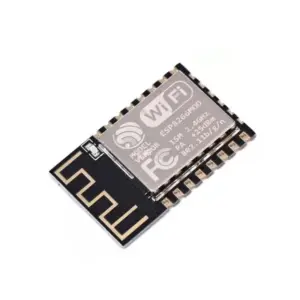
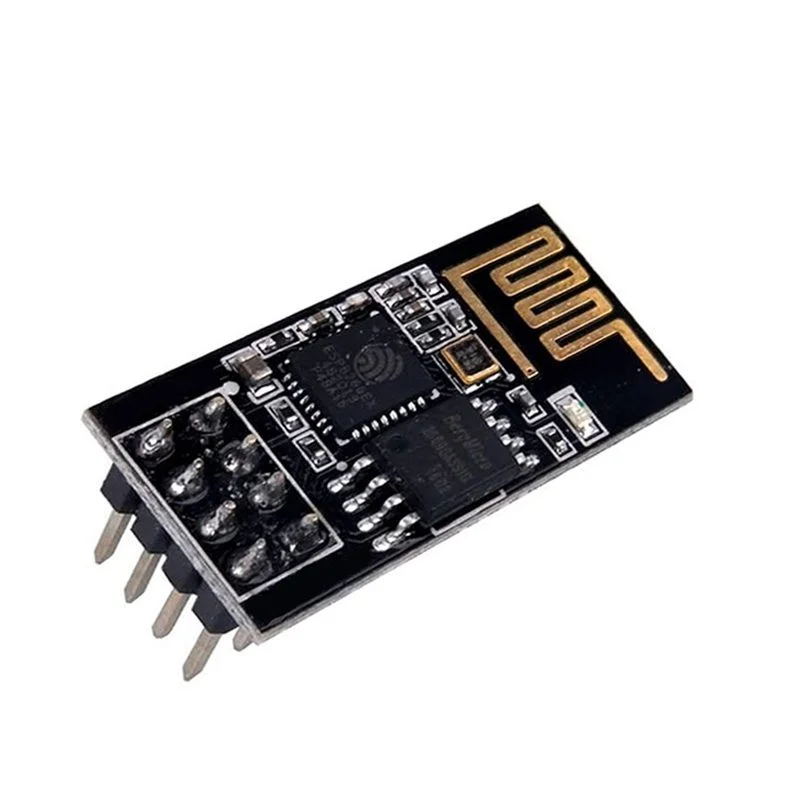
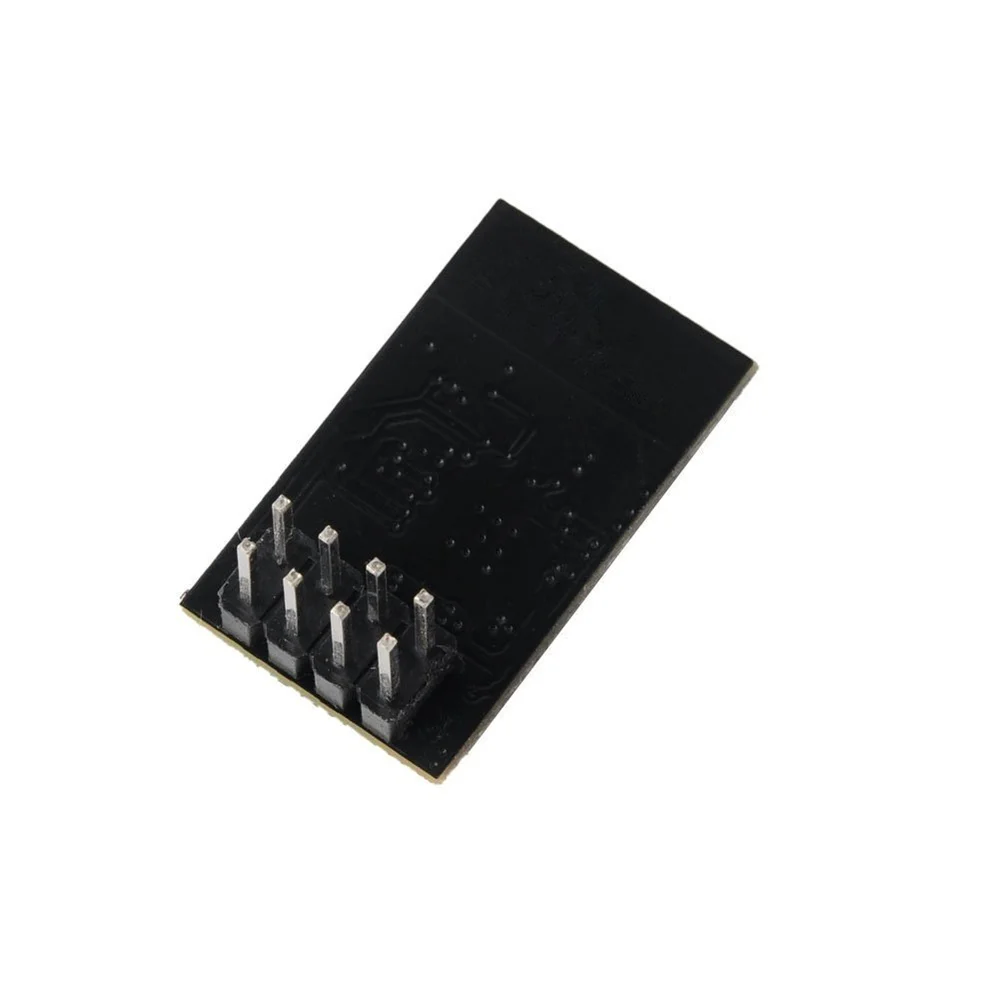
FL-M1S ESP8266 Serial-to-Wi-Fi Module

₹129.00 (Inclusive of all taxes)
Out of Stock

The FL-M1S is an ESP8266-based TTL serial-to-Wi-Fi module, enabling rapid IoT integration for microcontrollers. It provides a complete 802.11 b/g/n Wi-Fi solution with a high-power +19.5dBm PA, soft-AP, and station modes, compatible with Arduino IDE and AT command firmware.

Features

  • Based on the ESP8266 SoC with integrated 32-bit RISC processor, Wi-Fi MAC/BB, RF front-end, and TCP/IP stack.
  • High-power +19.5dBm output in 802.11b mode for extended wireless range exceeding 100 meters.
  • Ultra-low power operation with <10µA deep sleep leakage current for battery-powered IoT nodes.
  • Simple TTL serial (UART) interface for easy integration with Arduino, STM32, or other 3.3V MCUs.
  • Supports Wi-Fi station, soft-AP, and Wi-Fi Direct (P2P) modes for flexible network topologies.

Out of stock

Description

The FL-M1S module encapsulates the full capabilities of the Espressif ESP8266 chip into a compact, surface-mountable form factor. It integrates the RF switch, balun, power amplifier, low-noise amplifier (LNA), and matching network, requiring minimal external components for a functional Wi-Fi node. The module operates from a 3.3V supply and can deliver a robust +19.5dBm transmit power, making it suitable for applications requiring extended range.

Beyond its role as a simple serial-to-Wi-Fi bridge using AT commands, the onboard Tensilica L106 processor can run custom firmware, allowing the module to function as a standalone IoT controller. With integrated SPI, I2C, I2S, and multiple GPIOs, it can directly interface with sensors and peripherals, reducing system complexity and BOM cost for connected device designs.

Key Features

  • Complete 802.11 b/g/n Wi-Fi SoC solution with integrated RF front-end, PA, LNA, and matching network.
  • Onboard 32-bit RISC processor can serve as the primary application MCU or as a Wi-Fi co-processor.
  • High-efficiency +19.5dBm power amplifier for extended outdoor and indoor Wi-Fi coverage.
  • Ultra-low-power design features multiple sleep modes with leakage current under 10µA.
  • Integrated full TCP/IP protocol stack supports HTTP, MQTT, and TLS for secure IoT communication.
  • Hardware-accelerated encryption engines (WEP, TKIP, AES, WAPI) for secure Wi-Fi connections.
  • Flexible interfaces include UART, SPI, I2C, I2S, and PWM-capable GPIOs for sensor integration.
  • Supports Soft-AP, Station, and Wi-Fi Direct (P2P) modes for versatile network configuration.

Applications

  • Serial-to-Wi-Fi bridge for legacy industrial equipment and microcontroller projects.
  • Standalone IoT sensor nodes for smart home automation (temperature, humidity, motion).
  • Wireless data loggers and telemetry systems for remote monitoring.
  • Wi-Fi-enabled smart switches, relays, and lighting controllers.
  • Prototyping and product development for connected consumer electronics.

Technical Specifications

Microcontroller/SoCEspressif ESP8266 (Tensilica L106 32-bit RISC)
Wireless ProtocolIEEE 802.11 b/g/n Wi-Fi
Frequency Range2.4GHz ISM Band
RF Transmit PowerUp to +19.5dBm (802.11b mode)
Supply Voltage3.3V DC
Operating Current~70mA average; Peak up to 500mA during transmit
Sleep Current<10µA (Deep Sleep)
InterfacesUART (TTL), SPI, I2C, I2S, GPIO, PWM, ADC
Antenna ConnectorIntegrated PCB trace antenna or external I-PEX connector (model dependent)
Operating Temperature-40°C to +125°C (typical)
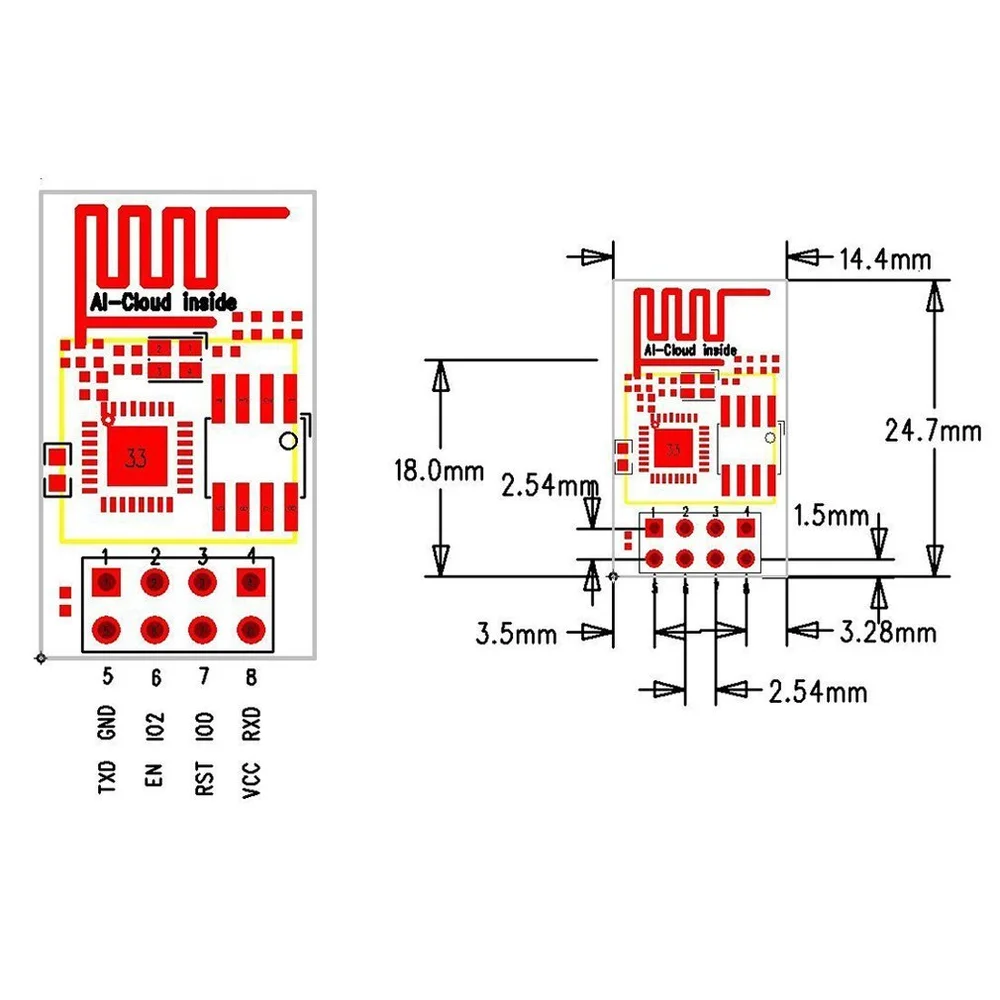
Dimensions (LxW)25mm x 15mm

Frequently Asked Questions

How do I program the FL-M1S ESP8266 module with the Arduino IDE?

First, install the ESP8266 board package via the Arduino IDE Board Manager. Connect the module's TX/RX to a USB-to-Serial adapter (e.g., CP2102) at 3.3V logic. Select 'Generic ESP8266 Module' as the board, set the correct COM port, and choose the appropriate Flash Size and Upload Speed (often 115200 baud). You can then upload standard Arduino sketches to use the module as a standalone device or a Wi-Fi co-processor.

What is the default baud rate for AT commands on this serial Wi-Fi module?

The factory-default firmware typically communicates via UART at 115200 baud, 8 data bits, no parity, and 1 stop bit (8N1). You can send 'AT' commands to configure Wi-Fi modes (STA/AP), connect to networks, or set up TCP/UDP connections. Ensure your host microcontroller uses 3.3V logic levels to avoid damaging the ESP8266's GPIO pins during serial communication.

Can I use an external antenna with the FL-M1S module for better range?

This depends on the specific hardware variant. Some FL-M1S modules have a PCB trace antenna, while others include an IPEX (u.FL) connector for an external antenna. If your module has the connector, you can attach a 2.4GHz Wi-Fi antenna with a matching 50-ohm impedance (e.g., a 3dBi or 5dBi whip) to significantly improve range and signal reliability in noisy environments.

What power supply is required for stable operation of the ESP8266 module?

A stable 3.3V DC power supply capable of delivering at least 500mA peak current is essential. During RF transmission bursts, the module can draw high current. Use a low-noise LDO regulator (e.g., AMS1117-3.3) with adequate input capacitance (10-100µF) near the module's VCC pin. For battery operation, implement proper decoupling and consider using deep sleep modes to minimize average power consumption.

Package Includes

  • 1 x FL-M1S ESP8266 Serial Port To Wi-Fi Module

Additional Information

Weight 0.05 kg
Dimensions 2.5 × 1.5 cm