SKU: IOWC-0662
📋 GST Invoice Available

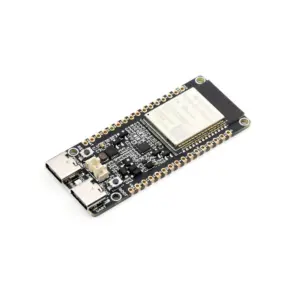
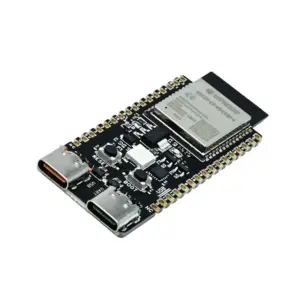
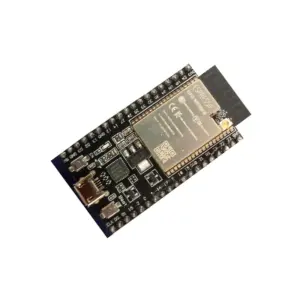
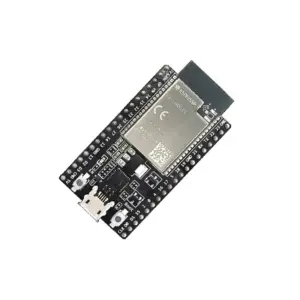
Espressif ESP8684-DevKitM-1-H4X Wi-Fi & BLE Development Board

₹1,469.00 (Inclusive of all taxes)
Out of Stock

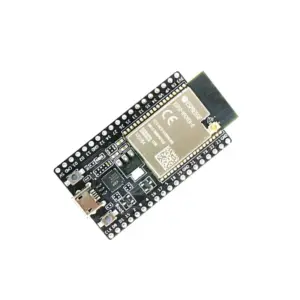
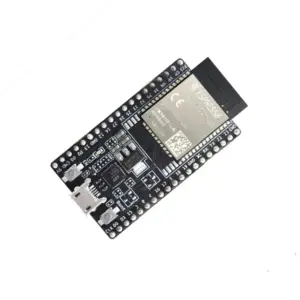
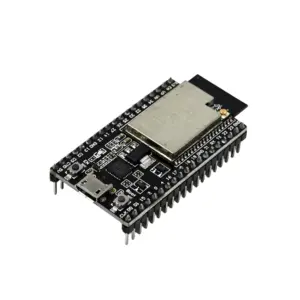
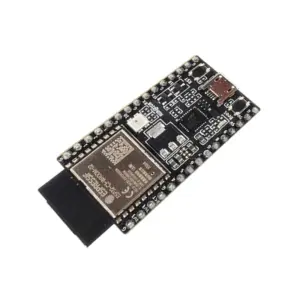
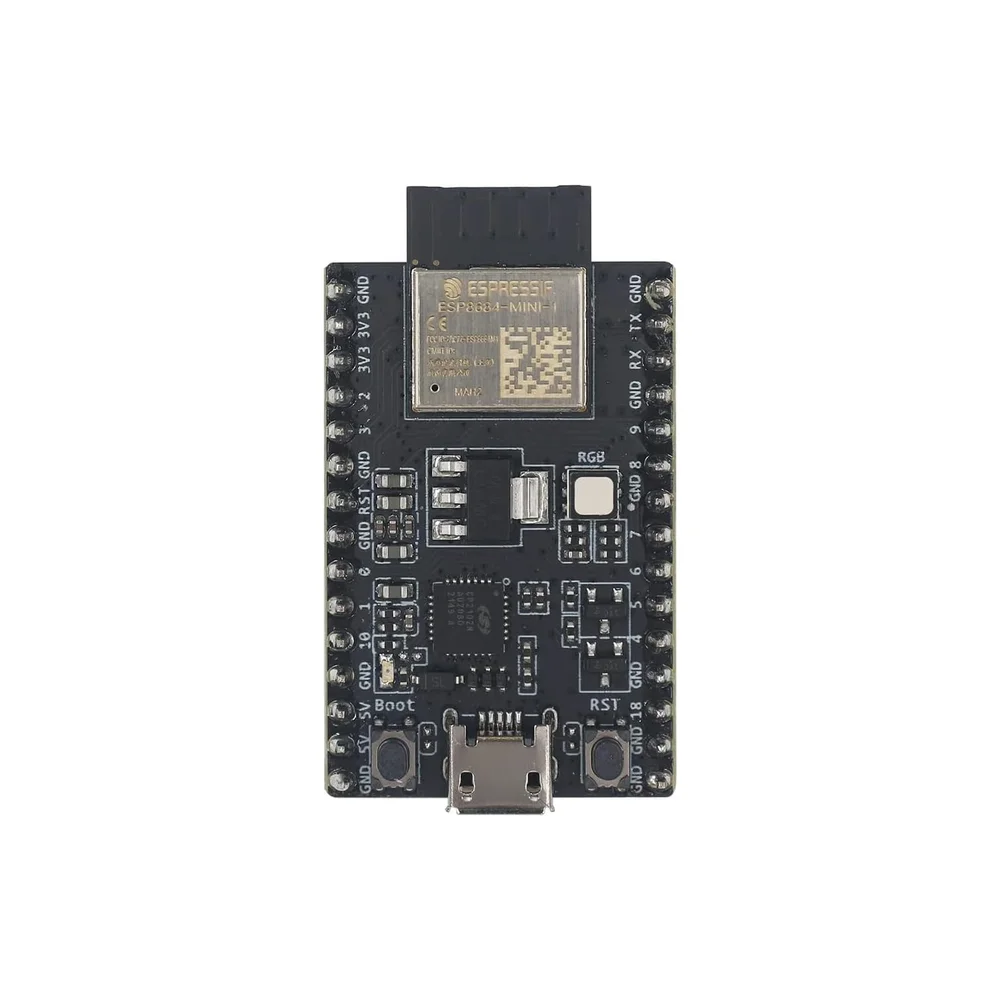
The Espressif ESP8684-DevKitM-1-H4X is an entry-level development board built around the ESP8684-MINI-1 module with 4 MB flash, integrating dual Wi-Fi and Bluetooth LE connectivity for IoT prototyping. It is powered and programmed via Micro-USB, supports ESP-IDF and ESP-AT firmware, and offers a breadboard-friendly design with exposed GPIOs.

Features

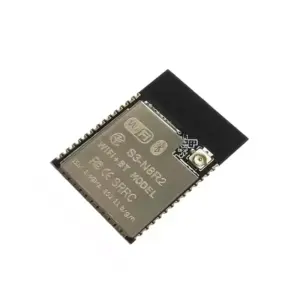
  • ESP8684-MINI-1-H4X Core: Features a compact module with 4 MB SPI flash, integrated Wi-Fi, and Bluetooth LE for dual-mode wireless IoT applications.
  • Rapid Prototyping Ready: Most GPIOs are broken out to dual pin headers, enabling quick breadboard integration and connection to sensors or peripherals.
  • Streamlined Development: Includes Boot and Reset buttons for easy firmware flashing and an onboard RGB LED for application status indication.
  • Flexible Power & Programming: Powered via Micro-USB with an onboard 5V-to-3.3V LDO, supporting additional 5V or 3.3V pin inputs for diverse power scenarios.
  • High-Speed USB Bridge: Integrated USB-to-UART bridge supports data transfer speeds up to 3 Mbps for efficient programming and serial communication.

Out of stock

Description

The ESP8684-DevKitM-1-H4X Development Board provides a compact and accessible entry point for developers working with Espressif’s ESP8684 SoC. Centered on the ESP8684-MINI-1-H4X module, it combines 2.4 GHz Wi-Fi and Bluetooth Low Energy 5.0 connectivity in a single package, backed by 4 MB of SPI flash for application code and data storage. The board is engineered for low-power operation typical of battery-powered IoT endpoints, with the ESP8684 supporting various sleep modes to minimize energy consumption.

Its structural design prioritizes prototyping efficiency. A Micro-USB port serves as the primary interface for both 5V power delivery and serial communication via the onboard CP2102N USB-to-UART bridge, which supports baud rates up to 3 Mbps. A linear regulator provides a stable 3.3V supply to the core module and exposed GPIO pins. The dual-row pin headers grant access to critical signals, including UART (GPIO19/20), SPI, I2C, and ADC, facilitating rapid sensor integration and peripheral expansion without requiring a carrier board.

Key Features

  • Integrated Wireless SoC: Based on the ESP8684-MINI-1-H4X module, providing a complete 2.4 GHz Wi-Fi and Bluetooth LE 5.0 radio subsystem with an integrated PCB antenna.
  • Ample Onboard Storage: Equipped with 4 MB of SPI flash memory for storing application firmware, filesystems, and Over-the-Air (OTA) update packages.
  • Developer-Friendly Interface: Features dedicated Boot and Reset tactile buttons for reliable entry into firmware download mode and system resets.
  • Multi-Protocol Serial Bridge: Incorporates a Silicon Labs CP2102N USB-to-UART bridge supporting high-speed serial communication up to 3 Mbps for fast programming and debugging.
  • Flexible Power Architecture: Accepts 5V input via the Micro-USB port or the dedicated 5V pin, regulated down to 3.3V by an onboard LDO for stable core and I/O voltage.
  • Comprehensive GPIO Access: Exposes most ESP8684 GPIO pins, including UART, SPI, I2C, PWM, and ADC channels, on standard 2.54mm pitch headers for easy prototyping.
  • Visual Status Feedback: Includes an onboard RGB LED connected to GPIO0, GPIO1, and GPIO8, programmable for application-level status or debugging indicators.
  • Broad Framework Support: Fully compatible with the official Espressif IoT Development Framework (ESP-IDF) and the ESP-AT command firmware for rapid network application development.

Applications

  • Smart Home Prototyping: Ideal for developing connected devices like smart plugs, lighting controls, and environmental sensors using Wi-Fi and BLE.
  • IoT Sensor Nodes: Serves as a compact wireless endpoint for remote monitoring of temperature, humidity, motion, or air quality in battery-powered setups.
  • Wireless Device Gateways: Can act as a BLE-to-Wi-Fi bridge, collecting data from BLE peripherals and forwarding it to cloud servers via Wi-Fi.
  • Educational & Maker Projects: A perfect platform for learning embedded systems, wireless communication, and IoT application development with Espressif's ecosystem.
  • Rapid Product Proof-of-Concept: Enables fast hardware validation and firmware development for commercial IoT products before custom PCB design.

Technical Specifications

Microcontroller / SoCESP8684 (integrated within ESP8684-MINI-1-H4X module)
Wireless ProtocolsWi-Fi 802.11 b/g/n, Bluetooth Low Energy 5.0
Frequency Range2.4 GHz ISM Band
Flash Memory4 MB SPI Flash
Antenna TypeIntegrated PCB Antenna
USB InterfaceMicro-USB (Power & Data)
USB-to-UART BridgeCP2102N, up to 3 Mbps
Supply Voltage (Input)5 V (via Micro-USB or 5V Pin)
Operating Voltage (Core)3.3 V
Power Regulator5 V to 3.3 V LDO
GPIO AccessExposed via dual pin headers
Programming ButtonsBoot, Reset
Status IndicatorRGB LED (GPIO0, GPIO1, GPIO8)
Development SupportESP-IDF, ESP-AT
Dimensions (L x W x H)51 x 25 x 10 mm
Weight10 g

Frequently Asked Questions

How do I program the ESP8684-DevKitM-1-H4X development board?

Install the ESP-IDF toolchain or Arduino core for ESP32. Connect the board via the Micro-USB cable to your computer. Use the Boot button to enter download mode: hold Boot, press Reset, release Reset, then release Boot. In your IDE, select the correct COM port and the ESP8684 target, then compile and upload your firmware. The onboard USB-to-UART bridge handles all communication automatically.

What is the power consumption and how can I power it for battery operation?

The ESP8684 SoC is designed for low-power IoT applications, supporting deep sleep modes with microamp-level current draw. For active Wi-Fi transmission, expect currents in the 100-200mA range from the 3.3V rail. For battery operation, supply 3.3V directly to the 3.3V pin or 5V to the 5V pin, bypassing the onboard LDO for better efficiency. Always measure sleep and active currents in your specific application to estimate battery life accurately.

Which GPIO pins are available and what are their recommended uses?

Most ESP8684 GPIOs are broken out on the side headers. Key pins include GPIO19 (UART RX) and GPIO20 (UART TX) for serial communication, and multiple pins supporting SPI, I2C, PWM, and ADC. The RGB LED uses GPIO0, GPIO1, and GPIO8. Consult the official pinout diagram to avoid strapping pins (which affect boot mode) and to identify pins with special functions like touch input or JTAG debugging. Always add pull-up/pull-down resistors as needed for your peripherals.

Package Includes

  • 1 x Espressif ESP8684-DevKitM-1-H4X Development Board

Additional Information

Weight 0.01 kg
Dimensions 5.1 × 2.5 × 1 cm