SKU: IOWC-0703
📋 GST Invoice Available

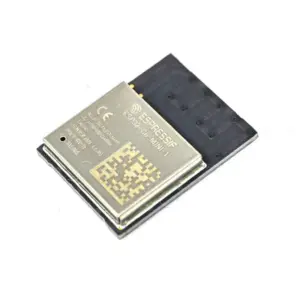
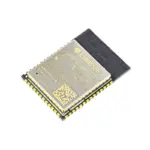
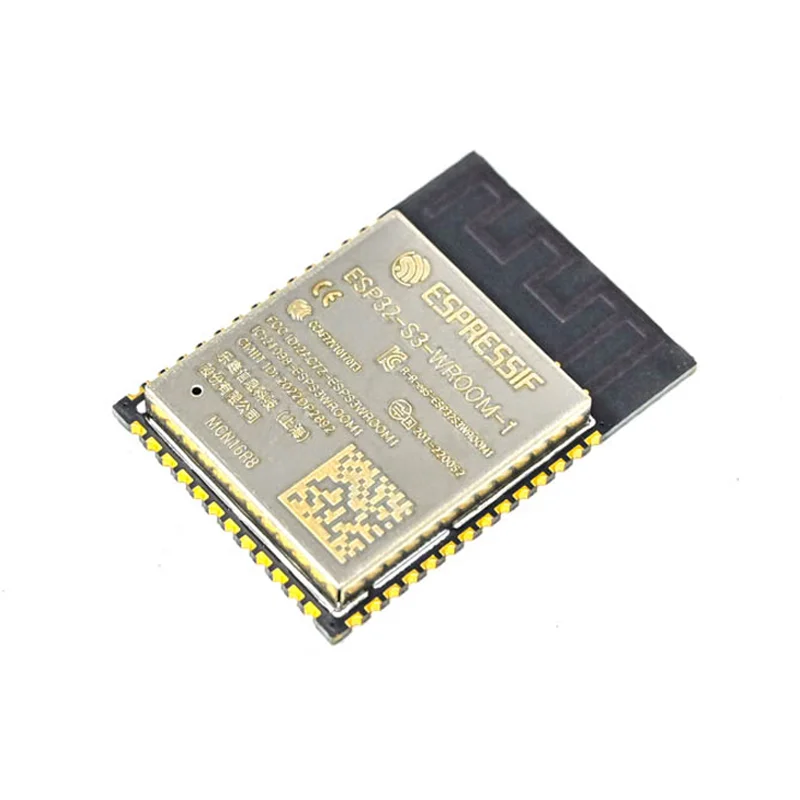
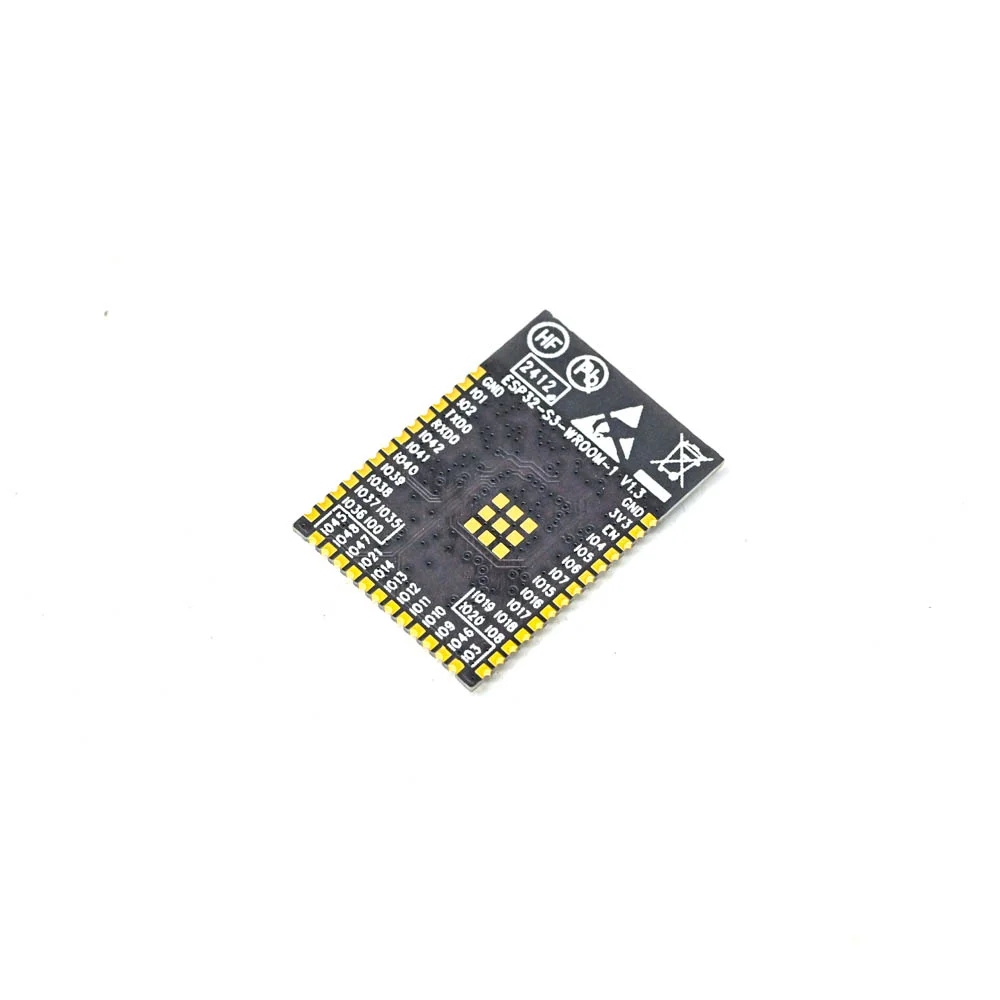
Espressif ESP32-S3-WROOM-1-N16R8 Wi-Fi & Bluetooth LE AIoT Module

₹449.00 (Inclusive of all taxes)
Out of Stock

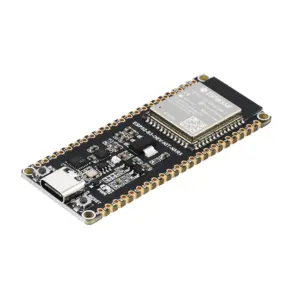
The Espressif ESP32-S3-WROOM-1-N16R8 is a surface-mount AIoT module built around the ESP32-S3 SoC, featuring dual-core LX7 processing, 2.4 GHz Wi-Fi, Bluetooth 5 LE, and on-board neural network acceleration for edge AI workloads.

Features

  • ESP32-S3 dual-core LX7 processor with vector extensions for AI/ML workloads.
  • Integrated 2.4 GHz Wi-Fi (802.11 b/g/n) and Bluetooth 5 LE with on-board PCB antenna.
  • Generous 16 MB flash and 8 MB PSRAM for data-intensive applications.
  • Rich peripheral set including USB OTG, SPI, I2C, I2S, and camera interface.
  • Low-power operation with multiple sleep modes for battery-powered IoT nodes.

Out of stock

Description

The ESP32-S3-WROOM-1-N16R8 is Espressif’s flagship AIoT module, designed for high-performance edge computing applications. It integrates the powerful ESP32-S3 SoC, which combines dual-core 240 MHz Xtensa LX7 CPUs with hardware acceleration for neural network inference and digital signal processing (DSP). This makes it exceptionally capable for real-time AI tasks like voice recognition, image processing, and sensor fusion directly on the device.

The module provides robust wireless connectivity via 2.4 GHz Wi-Fi (802.11 b/g/n) and Bluetooth 5 LE, facilitated by an integrated PCB antenna for simplified design-in. With 16 MB of flash and 8 MB of PSRAM, it offers ample memory for complex firmware, over-the-air (OTA) updates, and buffering sensor or vision data. Its comprehensive I/O suite supports seamless integration with displays, cameras, sensors, and industrial interfaces, making it a versatile core for smart home panels, industrial controllers, and AI-powered appliances.

Key Features

  • AI-optimized SoC with hardware acceleration for neural networks and signal processing.
  • Integrated 2.4 GHz Wi-Fi and Bluetooth 5 LE with PCB antenna for compact designs.
  • High memory configuration (16 MB Flash, 8 MB PSRAM) for data-heavy applications.
  • Extensive peripheral support including USB OTG, SD/MMC, LCD, camera, and touch sensors.
  • Advanced security features with flash encryption, secure boot, and digital signature.
  • Low-power management with multiple deep sleep modes for energy-efficient operation.
  • Full support for ESP-IDF, Arduino, MicroPython, and other popular development frameworks.

Applications

  • Smart home automation hubs and voice-controlled assistants.
  • AIoT edge devices for wake-word detection and speech command recognition.
  • Smart control panels and interactive displays with touch interface.
  • Industrial IoT gateways for wireless sensor data aggregation.
  • Vision-based applications like face detection and recognition systems.
  • Wireless data loggers and telemetry nodes with cloud connectivity.

Technical Specifications

Microcontroller/SoCEspressif ESP32-S3 (dual-core Xtensa LX7, 240 MHz)
Wireless ProtocolsWi-Fi 802.11 b/g/n (2.4 GHz), Bluetooth 5 LE
Frequency Range2.4 GHz
RF Transmit PowerUp to +20 dBm (Wi-Fi)
RF Sensitivity-103.5 dBm
Supply Voltage3.0V to 3.6V
Operating CurrentApprox. 240 mA (average active, Wi-Fi Tx)
InterfacesGPIO, SPI, I2C, I2S, UART, USB OTG, SD/MMC, LCD, Camera, Touch Sensor
Antenna ConnectorIntegrated PCB Antenna
Operating Temperature-40°C to +85°C
DimensionsApprox. 18 mm x 25.5 mm x 3.1 mm (module)

Frequently Asked Questions

What is the main difference between the ESP32-S3-WROOM-1 and earlier ESP32 modules?

The ESP32-S3-WROOM-1 is built on the newer ESP32-S3 dual-core LX7 processor, which includes specific hardware extensions for vector operations and neural network acceleration, making it significantly faster for AI/ML tasks. It also features upgraded Bluetooth 5 LE support, USB OTG, and typically comes with larger, configurable flash and PSRAM options (like this N16R8 variant with 16MB flash and 8MB PSRAM) compared to the standard ESP32.

How do I program the ESP32-S3-WROOM-1 module for a custom project?

You can program the module using Espressif's official ESP-IDF framework, which provides full access to all features and low-level APIs. For rapid prototyping, it is also supported by the Arduino Core for ESP32-S3 via the Arduino IDE or PlatformIO. The typical workflow involves connecting the module's UART0 (TX/RX) and boot/EN pins to a USB-to-serial adapter, placing it into download mode, and flashing your compiled firmware. The USB OTG interface can also be used for programming and debugging in certain configurations.

Can I use an external antenna with the ESP32-S3-WROOM-1-N16R8?

The ESP32-S3-WROOM-1-N16R8 module comes with an integrated PCB antenna as standard. For designs requiring an external antenna, you would need to use the ESP32-S3-WROOM-1U variant, which features an external antenna connector (typically an IPEX or MHF connector). On the WROOM-1 model, the RF output is permanently connected to the on-board trace antenna and is not designed for direct external antenna connection without board-level modification.

What are the power requirements and sleep current for battery operation?

The module requires a stable 3.3V power supply within the 3.0V to 3.6V range. For battery-powered applications, its deep sleep modes are critical. In Deep Sleep mode, with the RTC and ULP co-processor active, current consumption can be as low as 10-20 µA. In Light Sleep mode, it can drop to around 130 µA. Active current varies with CPU load and wireless activity, averaging around 240 mA during Wi-Fi transmission. Proper power management in firmware is essential to maximize battery life.

Package Includes

  • 1 x Espressif ESP32-S3-WROOM-1-N16R8 Module

Additional Information

Weight 0.01 kg
Dimensions 10 × 7 × 2 cm