SKU: IOWC-1741
📋 GST Invoice Available

EDATEC ED-GW1303S-915M LoRaWAN Gateway Module (SX1303, 915MHz, mini PCIe)

₹10,402.00 (Inclusive of all taxes)
Out of Stock

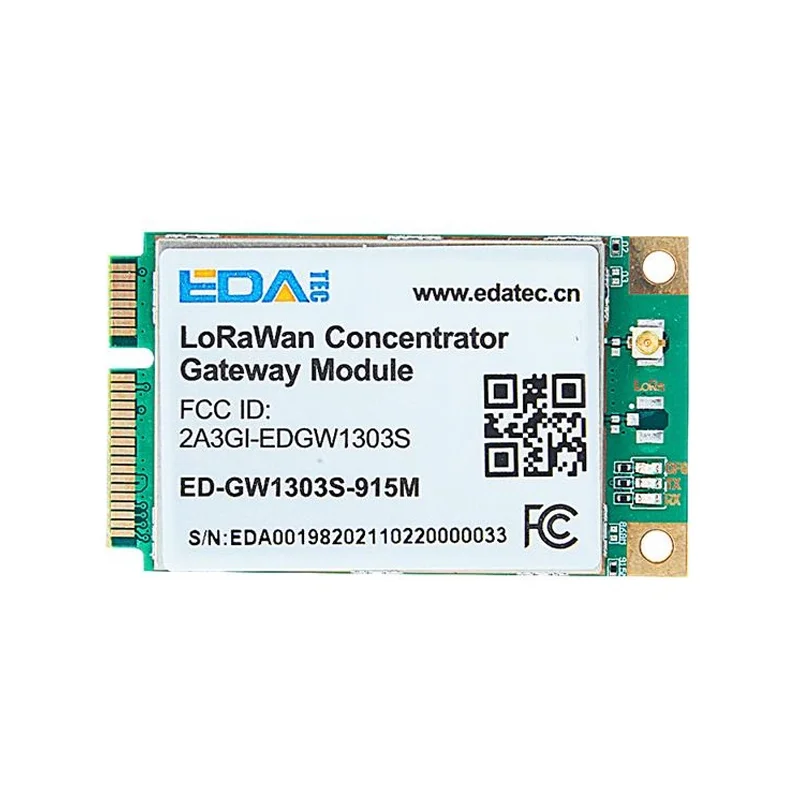
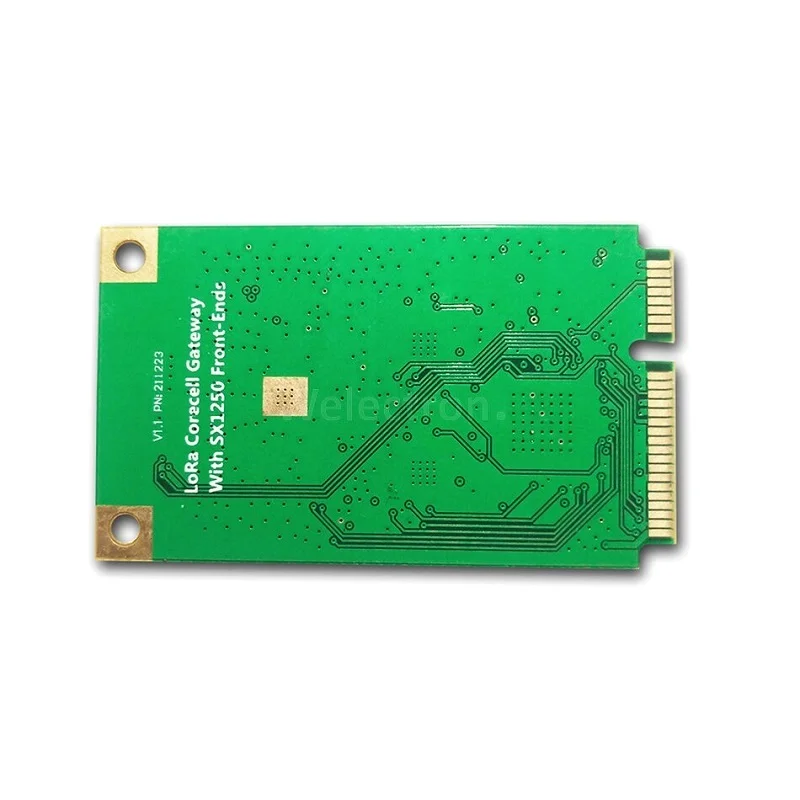
The EDATEC ED-GW1303S-915M is a LoRaWAN gateway module in a mini PCIe form factor, integrating the Semtech SX1303 baseband processor and SX1250 front-end for building US915-band gateways, hotspots, or IoT concentrators with SPI host control.

Features

  • Core Semtech SX1303 & SX1250 ICs for robust LoRaWAN packet forwarding and high RF performance.
  • US915 frequency band (902-928MHz) operation with up to 25dBm (27dBm peak) transmit power.
  • Mini PCIe form factor with SPI interface for easy integration into embedded host systems and single-board computers.
  • Ultra-low power operation and certified for FCC and CE compliance for commercial deployments.
  • Includes UFL antenna connector, GPS_PPS input for timestamping, and a dedicated reset pin for full hardware control.

Out of stock

Description

The EDATEC ED-GW1303S-915M is a dedicated LoRaWAN gateway module designed to simplify the development of professional-grade LPWAN infrastructure. Based on the proven Semtech SX1303 digital baseband processor and SX1250 RF front-end, this module handles the complex packet forwarding, demodulation, and concurrent reception of multiple LoRa channels, offloading these tasks from the host microcontroller.

Housed in a standard mini PCIe form factor, it connects to a host processor—such as those on Raspberry Pi CM4 carrier boards or custom embedded designs—via a simple SPI interface. This provides direct access to the SX1303’s configuration registers for setting spreading factors, bandwidths, and channel plans. The module operates on the US915 license-free band, supporting the technical requirements for LoRaWAN networks in the Americas, and features a UFL connector for an external antenna to maximize range.

Key Features

  • Integrates Semtech's SX1303 baseband processor and SX1250 TX/RX front-end for complete LoRaWAN gateway functionality.
  • Supports US915 (902-928MHz) frequency band for LoRaWAN deployments in North and South America.
  • Mini PCIe form factor with SPI slave interface for straightforward integration with Linux SBCs or custom embedded hosts.
  • High RF performance with a transmit power up to 25dBm (27dBm max) and a receiver sensitivity as low as -141dBm.
  • Includes GPS_PPS input pin for precise timestamping of received packets, enabling location services and network synchronization.
  • Designed for low power consumption and stable operation across a 0°C to +60°C temperature range without active cooling.
  • Pre-certified for FCC and CE regulations, reducing time-to-market and compliance testing for final gateway products.
  • Ideal for building LoRaWAN gateways, Helium/DIY LoRa miner hotspots, and industrial IoT concentrators.

Applications

  • Building private or community LoRaWAN gateways for smart city and industrial IoT networks.
  • Core module for DIY Helium Network or other decentralized LoRa mining hotspots.
  • Industrial IoT (IIoT) data concentrators for telemetry, asset tracking, and environmental monitoring.
  • Embedded into custom carrier boards for Raspberry Pi Compute Module 4 or other SBCs to create compact gateway solutions.
  • Research and development platforms for LPWAN protocol testing and network deployment simulations.

Technical Specifications

Model / Part NumberED-GW1303S-915M
Core Processor / ICSemtech SX1303 Baseband, SX1250 RF Front-end
Wireless ProtocolLoRa, LoRaWAN Gateway
Frequency Range902 MHz to 928 MHz (US915)
RF Transmit PowerUp to 25 dBm (27 dBm max)
Receiver Sensitivity-141 dBm
Supply Voltage3.3 VDC (3.0 V to 3.6 V range)
Operating Current (Rx)54 mA (typical)
Operating Current (Tx)306 mA (typical at max power)
Host InterfaceSPI (Slave)
Antenna ConnectorUFL (IPEX)
Additional I/OGPS_PPS Input, RESET Pin
Operating Temperature0°C to +60°C
Form Factor / MountingMini PCIe Module
CertificationsFCC, CE

Frequently Asked Questions

What host processor or board is required to use this EDATEC LoRaWAN module?

This module requires a host system with an SPI master interface, such as a Raspberry Pi (using a mini PCIe to USB or GPIO adapter board), a Raspberry Pi Compute Module 4 on a carrier with PCIe, or any microcontroller with an SPI peripheral. The host runs the packet forwarder software (e.g., Semtech's packet forwarder) and communicates with the module's SX1303 chip via SPI to configure channels and manage LoRa packets. A 3.3V power supply capable of delivering over 300mA during transmission is also necessary.

How do I configure the module's frequency channels for a specific LoRaWAN network?

Channel configuration is performed by the host processor via SPI commands. You must run a compatible LoRaWAN packet forwarder software (like the Semtech UDP Packet Forwarder) on your host. This software uses a configuration file (global_conf.json) where you define the US915 frequency plan, data rates, and channel masks. The software then sends the appropriate register writes over SPI to the SX1303 IC on the module to set up the 8x multi-channel receivers and the single LoRa packet transmitter.

Can I use this module for the EU868 frequency band, or is it only for US915?

This specific model (ED-GW1303S-915M) is hardware-configured and certified for the US915 frequency band (902-928MHz). The product description notes support for both US915 and EU868, but the part number indicates a 915MHz variant. For EU868 operation, you would need the corresponding EU868 version of the module (likely an ED-GW1303S-868M). The RF matching network and certification are band-specific, so using this US915 module on EU868 frequencies is not recommended and would likely violate regulatory standards.

What is the purpose of the GPS_PPS pin on this LoRa gateway module?

The GPS_PPS (Pulse Per Second) input pin allows you to connect an external GPS module's PPS output. When enabled in the gateway software, this provides a precise, atomic-clock-derived timing reference. This enables the gateway to timestamp received LoRa packets with microsecond accuracy, which is crucial for features like LoRaWAN Class B beacon scheduling, Fine Timestamping for geolocation services (like LoRa Cloud), and synchronizing multiple gateways in a network for Time Difference of Arrival (TDoA) localization algorithms.

What type of antenna should I use, and how is it connected?

You should use a LoRa-specific antenna tuned for the US915 band (902-928MHz) with a UFL (IPEX) male connector. The antenna should have an impedance of 50 ohms and a gain suitable for your coverage needs (typically 3-5 dBi for omni-directional use). Simply attach the antenna's UFL connector directly to the module's UFL RF port. Ensure the antenna is placed away from metal obstructions for optimal performance. For permanent installations, you may use a UFL to SMA pigtail cable to connect to a larger external antenna with an SMA connector.

Package Includes

  • 1 x EDATEC ED-GW1303S-915M LoRaWAN Gateway Module

Additional Information

Weight 0.04 kg
Dimensions 12 × 9 × 4 cm