SKU: SENS-3009
📋 GST Invoice Available

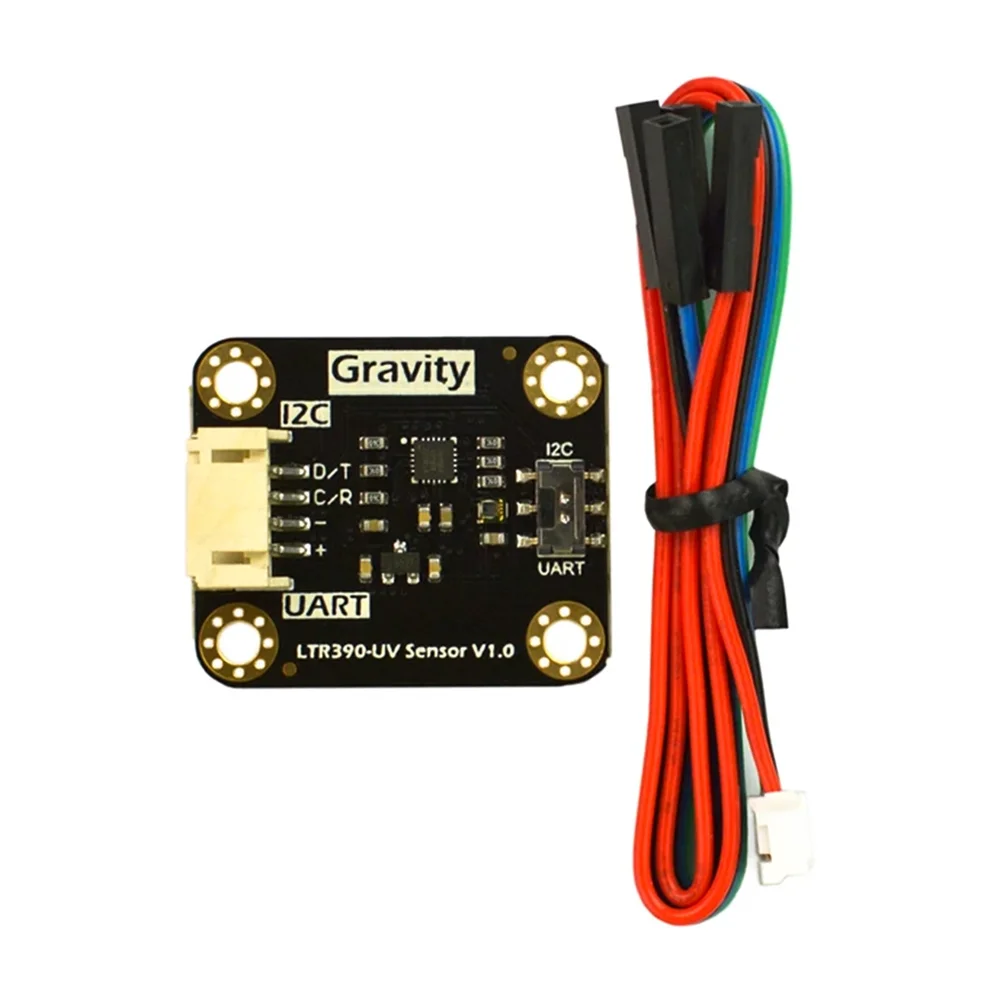
DFRobot Gravity LTR390 UV Sensor 280–430nm I2C UART

₹979.00 (Inclusive of all taxes)
Out of Stock

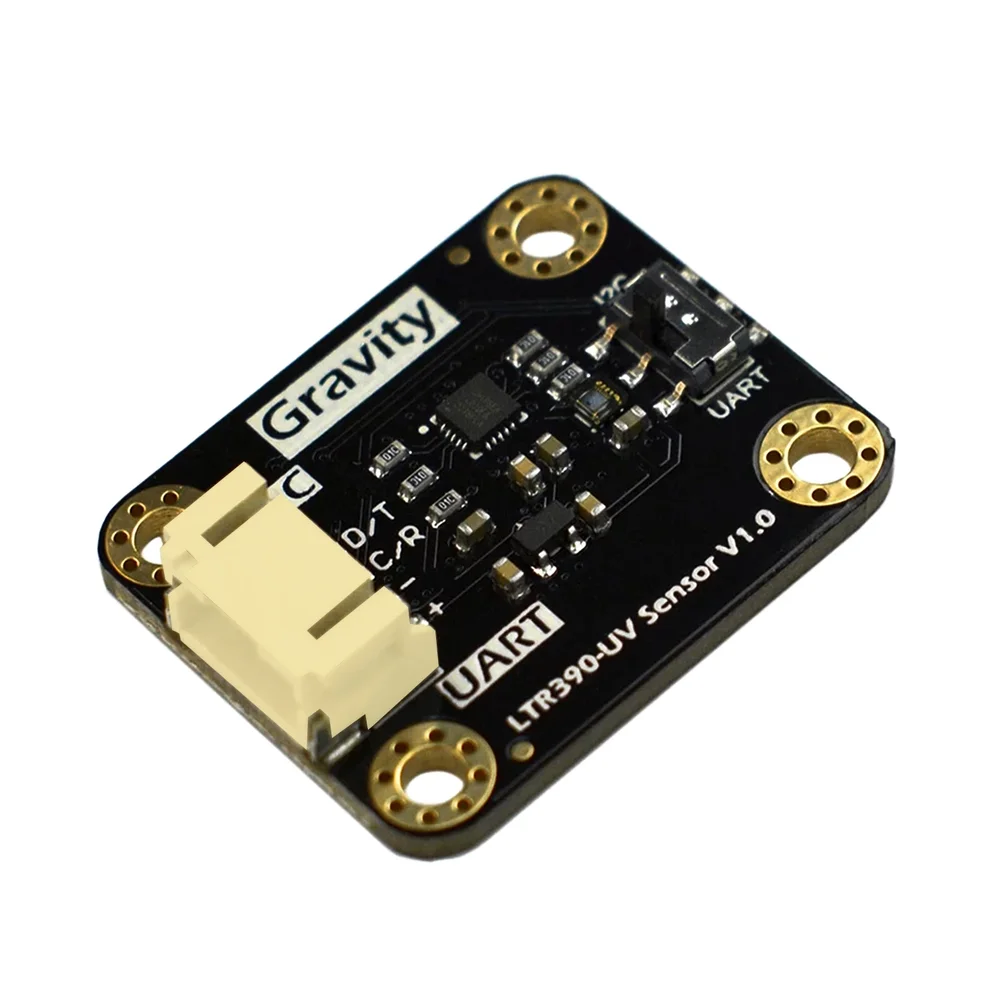
The DFRobot Gravity LTR390 UV Sensor is a digital light sensor module providing simultaneous ambient light and UV intensity measurement with a spectral response from 280nm to 430nm. It features a built-in ADC and MCU for direct digital output via I2C or UART interfaces, making it compatible with Arduino, Raspberry Pi, ESP32, and other 3.3V/5V microcontroller platforms.

Features

  • Dual-function sensor for UV intensity (280–430nm) and ambient light sensing.
  • Digital output via I2C (address 0x1C) or UART serial interface.
  • Wide operating voltage range compatible with 3.3V and 5V logic systems.
  • High-resolution output with programmable 13 to 20-bit effective resolution.
  • Integrated interrupt function with programmable upper and lower thresholds.

Out of stock

Description

The LTR390-UV sensor module integrates a specialized photodiode with a spectral response optimized for ultraviolet light detection from 280nm to 430nm, closely matching the UV-A and UV-B bands relevant for environmental monitoring. Its built-in analog-to-digital converter (ADC) and microcontroller (MCU) perform on-board signal conditioning and digitization, providing stable digital readings directly via I2C or UART protocols, which minimizes noise susceptibility compared to analog sensors.

Engineered for reliability, the module features adjustable gain settings (1, 3, 6, 9, 18) to accommodate a wide dynamic range of light conditions, from low indoor lux levels to direct sunlight. The interrupt function allows the host microcontroller to enter low-power sleep modes, waking only when light levels cross user-defined thresholds, which is ideal for battery-powered monitoring applications. Its Gravity-series connector ensures plug-and-play compatibility with DFRobot’s ecosystem and standard breadboards.

Key Features

  • Dual-channel sensing for UV index and ambient light (lux) measurement.
  • High-sensitivity photodiode with strong anti-interference capability for stable readings.
  • Flexible communication supported via I2C (default address 0x1C) and hardware UART.
  • Programmable interrupt engine with configurable upper and lower threshold alarms.
  • Wide 3.3V to 5V power supply compatibility for easy integration into diverse systems.
  • Adjustable gain and resolution (13–20 bits) for optimal performance across light intensities.
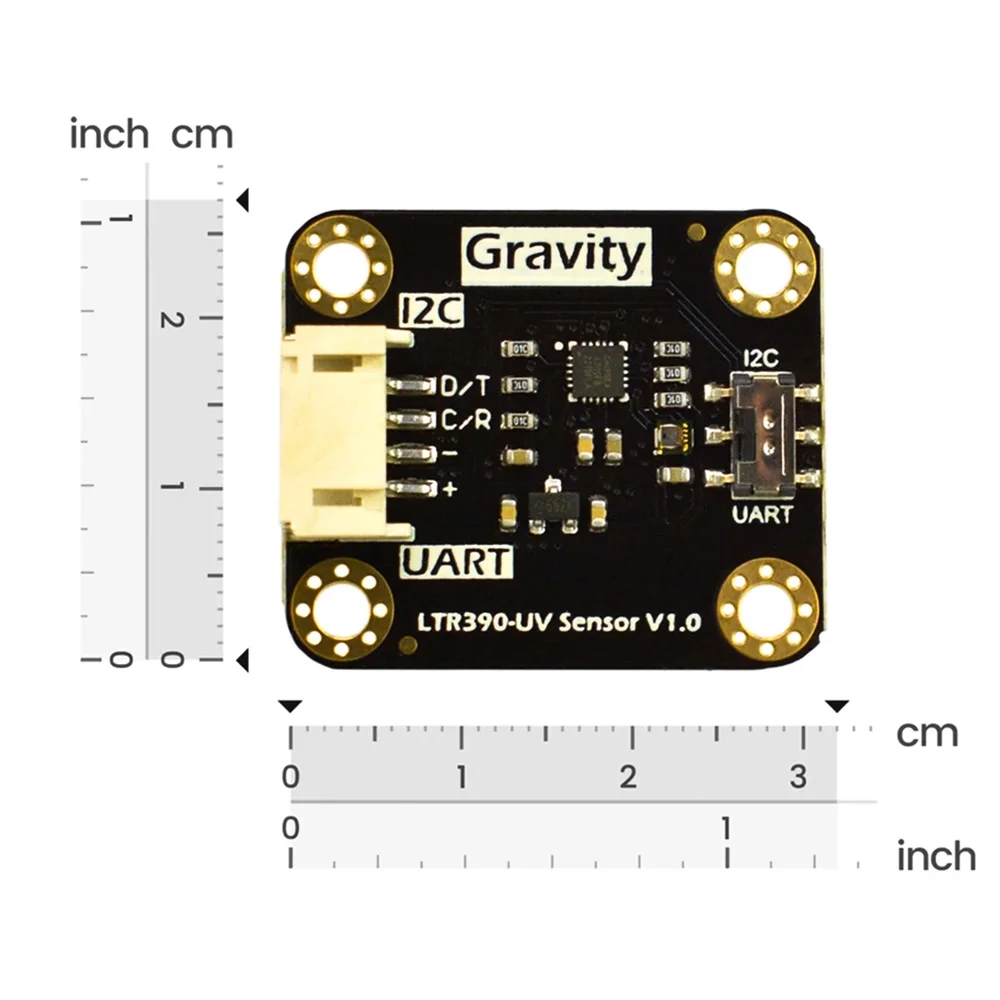
  • Compact Gravity-form factor (32mm x 27mm) with standard 3-pin interface for rapid prototyping.
  • High-value build with onboard signal processing for clean, digital output.

Applications

  • Outdoor UV index monitoring devices for weather stations and personal safety alerts.
  • Light intensity experiments and data logging for educational STEM projects.
  • Smart agriculture systems for monitoring sunlight exposure for crops.
  • Wearable devices for tracking personal UV exposure during outdoor activities.
  • Automated window tinting or blind control systems based on ambient UV levels.

Technical Specifications

Manufacturer Part NumberLTR390-UV-01
Operating Voltage3.3V
Operating Current2.73 mA (typical)
Communication InterfaceI2C, UART
I2C Address0x1C
UV Response Wavelength280 nm to 430 nm
Output TypeDigital
Effective Resolution13 to 20 bits (programmable)
Adjustable Gain1, 3, 6, 9, 18
Module Dimensions32 mm x 27 mm (1.26" x 1.06")
Shipping Weight0.015 kg

Frequently Asked Questions

What is the operating voltage range for the LTR390 UV sensor module?

The module is designed for a 3.3V operating voltage. However, its communication lines are 5V-tolerant, allowing it to interface safely with both 3.3V and 5V microcontroller systems like Arduino Uno (5V) or ESP32 (3.3V) without requiring a logic level shifter.

How do I communicate with the sensor, and what is the I2C address?

The module supports both I2C and UART (serial) communication protocols. For I2C, the default slave address is 0x1C. You can select the interface via the onboard switch or through software configuration of the LTR390 chip. The Gravity connector provides the standard SDA, SCL, TX, and RX pins.

Can this sensor measure UV Index directly, or is calculation required?

The sensor outputs raw digital counts for UV and ambient light channels. To calculate the UV Index, you must apply a calibration coefficient to the UV raw data, as the relationship between sensor counts and UV Index depends on the specific spectral weighting. Example calibration code and formulas are provided in the DFRobot library.

What is the purpose of the interrupt function on this module?

The programmable interrupt allows you to set upper and lower thresholds for UV or ambient light readings. When the measured value crosses these thresholds, an interrupt pin is triggered. This enables your main microcontroller to sleep and conserve power, waking only when a significant light change occurs, which is ideal for battery-powered monitoring stations.

Package Includes

  • 1 x DFRobot Gravity LTR390 UV Light Sensor (280nm to 430nm) - I2C & UART

Additional Information

Weight 0.015 kg
Dimensions 6 × 5 × 3 cm