SKU: IOWC-1993
📋 GST Invoice Available

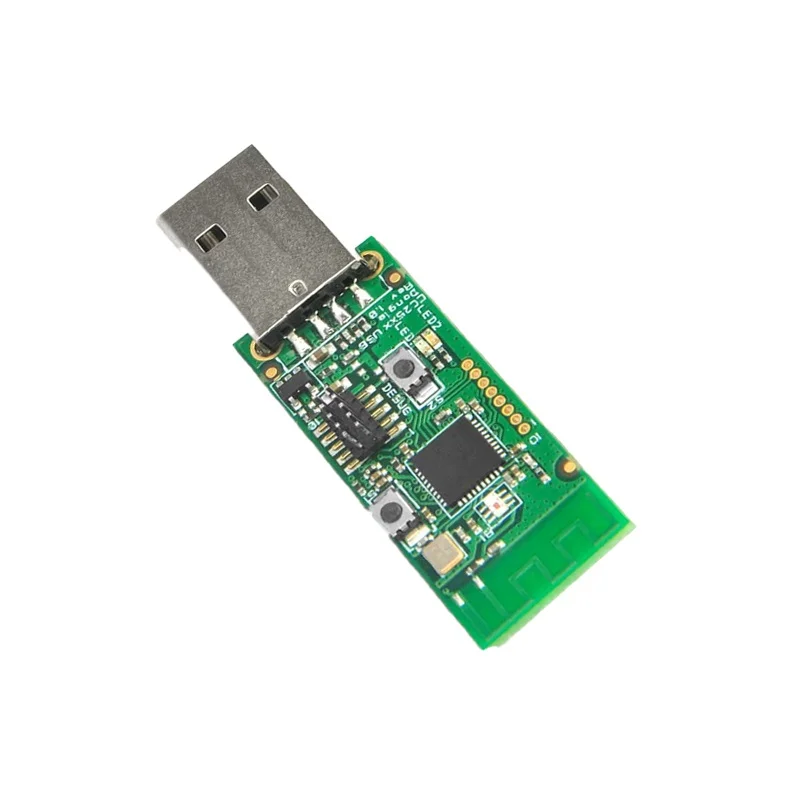
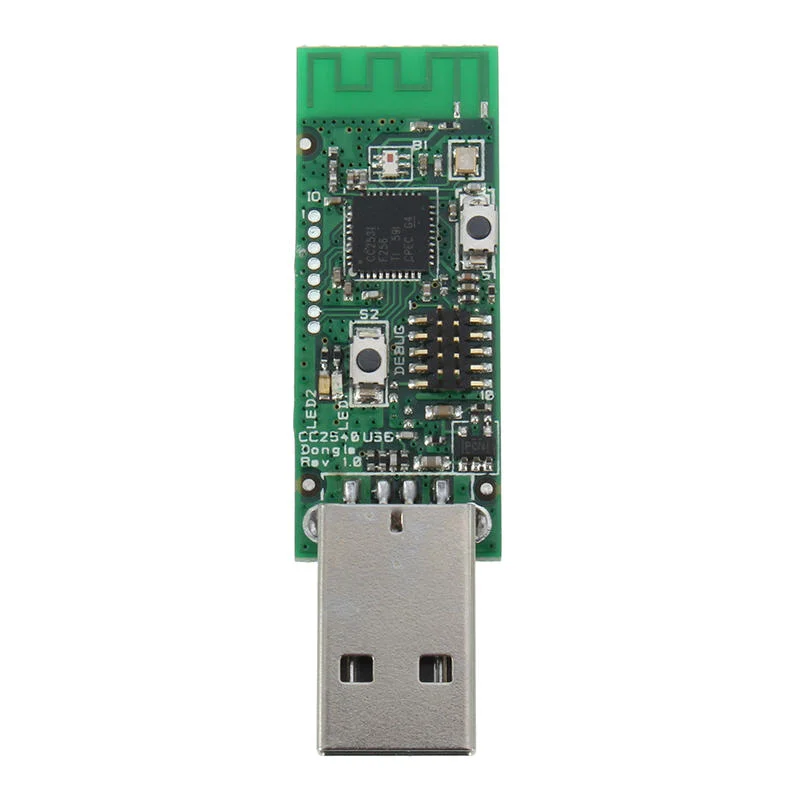
CC2531 Zigbee Sniffer Bare Board

₹459.00 (Inclusive of all taxes)
Out of Stock

This CC2531-based bare board is a dedicated Zigbee protocol sniffer and development platform, operating on the 2.4GHz ISM band. It enables developers to capture, analyze, and debug Zigbee network traffic for custom gateway creation or IoT device integration.

Features

  • Based on the Texas Instruments CC2531 SoC, a dedicated Zigbee transceiver with an integrated 8051 microcontroller.
  • Functions as a dedicated Zigbee sniffer for network traffic capture, analysis, and debugging.
  • Operates on the global 2.4GHz ISM band with a 250 Kbaud data rate, compatible with Zigbee 3.0 and earlier standards.
  • Low power consumption: under 25mA during transmission and under 20mA during reception for energy-efficient monitoring.
  • Provides 8 I/O ports and debug pins for hardware expansion and firmware development.

Out of stock

Description

The CC2531 Zigbee Sniffer Bare Board is a foundational hardware platform centered on the Texas Instruments CC2531 system-on-chip. This SoC combines an 8051 microcontroller core with a robust IEEE 802.15.4-compliant RF transceiver, making it an ideal tool for developers working with Zigbee mesh networks. The board provides direct access to the chip’s I/O and debugging interfaces, allowing for deep integration into custom monitoring solutions or gateway projects.

Designed for low-power operation, the board is suitable for continuous monitoring applications. Its primary function is to capture raw Zigbee packets from the air, which can be processed with sniffer firmware and software like Wireshark for protocol analysis, network debugging, or security auditing. The bare-board form factor offers maximum flexibility for embedding into enclosures or integrating with other system components.

Key Features

  • Core component for building a custom Zigbee gateway or network sniffer.
  • Enables capture and analysis of Zigbee 3.0, Zigbee PRO, and other IEEE 802.15.4-based protocol traffic.
  • Ideal for debugging network joins, packet routing, and mesh topology in smart home or industrial IoT deployments.
  • Low-power design supports always-on monitoring applications.
  • Direct access to all CC2531 I/O and debug pins for full hardware control.
  • Compact, bare-board design for easy integration into custom enclosures or prototypes.

Applications

  • Zigbee network traffic sniffing and protocol analysis for development and debugging.
  • Building custom Zigbee coordinators or gateways for smart home systems (e.g., Home Assistant, Zigbee2MQTT).
  • IoT security research and auditing of Zigbee network communications.
  • Educational tool for learning about IEEE 802.15.4 and Zigbee mesh networking.
  • Embedded sensor node or repeater within a Zigbee mesh network.

Technical Specifications

Microcontroller/SoCTexas Instruments CC2531 (8051 core + RF transceiver)
Wireless ProtocolZigbee (IEEE 802.15.4)
Frequency Range2.4GHz ISM Band (2.045 – 2.485 GHz)
Data Rate250 Kbaud
RF Transmit PowerProgrammable (typical +4.5 dBm)
Supply Voltage2.0V – 3.6V (Typical 3.3V)
Operating Current< 25mA (TX), < 20mA (RX)
Interfaces8x I/O Pins, Debug Pins
Antenna ConnectorIntegrated PCB trace antenna (typical)
Dimensions (LxW)56mm x 16mm

Frequently Asked Questions

What software do I need to use this CC2531 board as a Zigbee sniffer?

You will need to flash dedicated sniffer firmware onto the CC2531, such as the Texas Instruments SmartRF Packet Sniffer firmware. Then, use a compatible software tool like the TI SmartRF Packet Sniffer software or a Wireshark plugin to capture and decode the Zigbee packets on your computer via a USB-to-serial adapter connected to the board's debug pins.

How do I power the CC2531 Sniffer Bare Board?

The board requires a 2.0V to 3.6V DC power supply, with 3.3V being typical. You must provide external power through the appropriate VCC and GND pins. Ensure your power source can deliver at least 50mA to account for peak transmission currents. Do not apply voltage directly to I/O pins without proper level shifting.

Can I use this board to create a Zigbee2MQTT gateway?

Yes, this CC2531 board is a popular hardware choice for a Zigbee2MQTT coordinator. You would need to flash it with the dedicated Zigbee2MQTT coordinator firmware for CC2531 using a CC Debugger programmer. After flashing, connect it via USB-to-serial to your host (like a Raspberry Pi) running the Zigbee2MQTT software to bridge Zigbee devices to your MQTT network.

What is the effective range for sniffing Zigbee signals with this board?

The effective sniffing range depends on the board's PCB trace antenna and environmental factors, typically up to 20-30 meters indoors in open space. For extended range, you can solder an external 2.4GHz antenna (like a 2dBi whip) to the designated RF pad, ensuring proper 50-ohm impedance matching to improve reception and packet capture reliability.

Package Includes

  • 1 x Wireless Zigbee CC2531 Sniffer Bare Board

Additional Information

Weight 0.003 kg
Dimensions 5.6 × 1.6 cm