SKU: SENS-1042
📋 GST Invoice Available

7Semi BNO086 9-DOF IMU Fusion Breakout Qwiic - SH-2 MotionEngine, I2C/SPI/UART

₹2,619.00 (Inclusive of all taxes)
Out of Stock

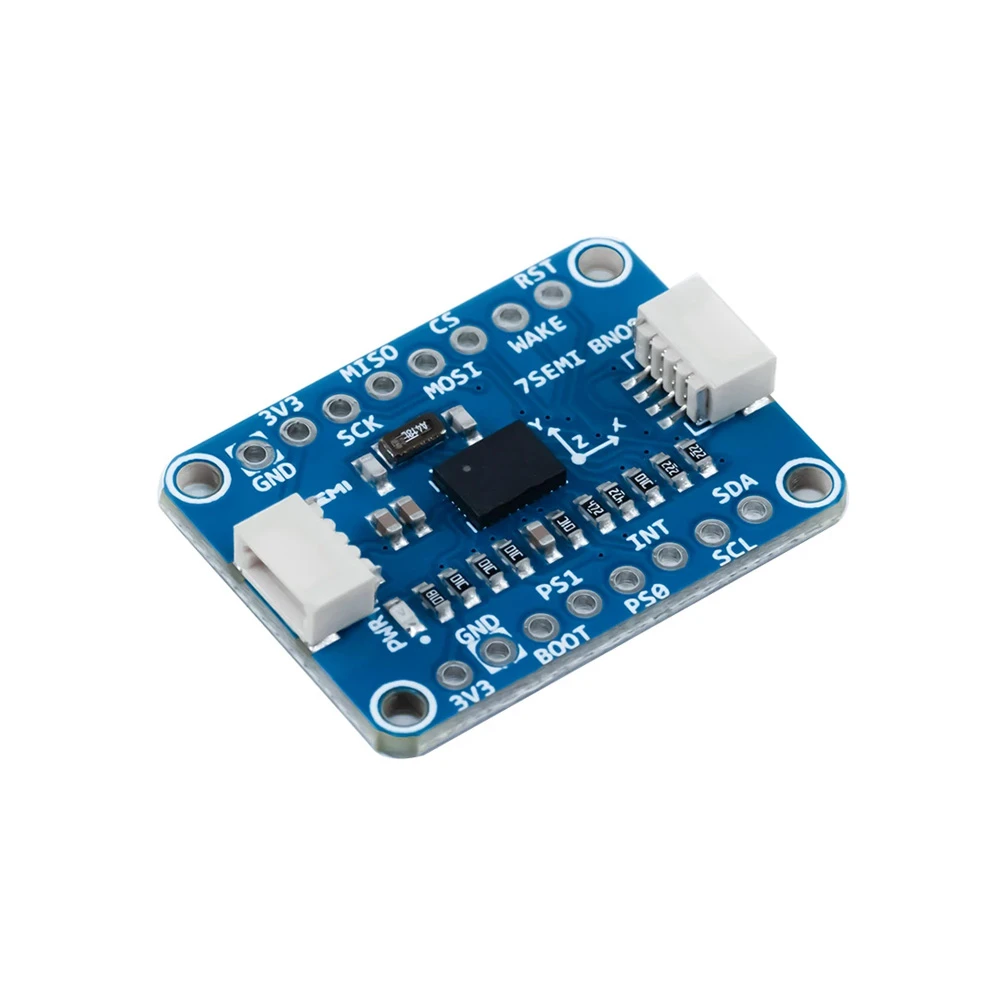
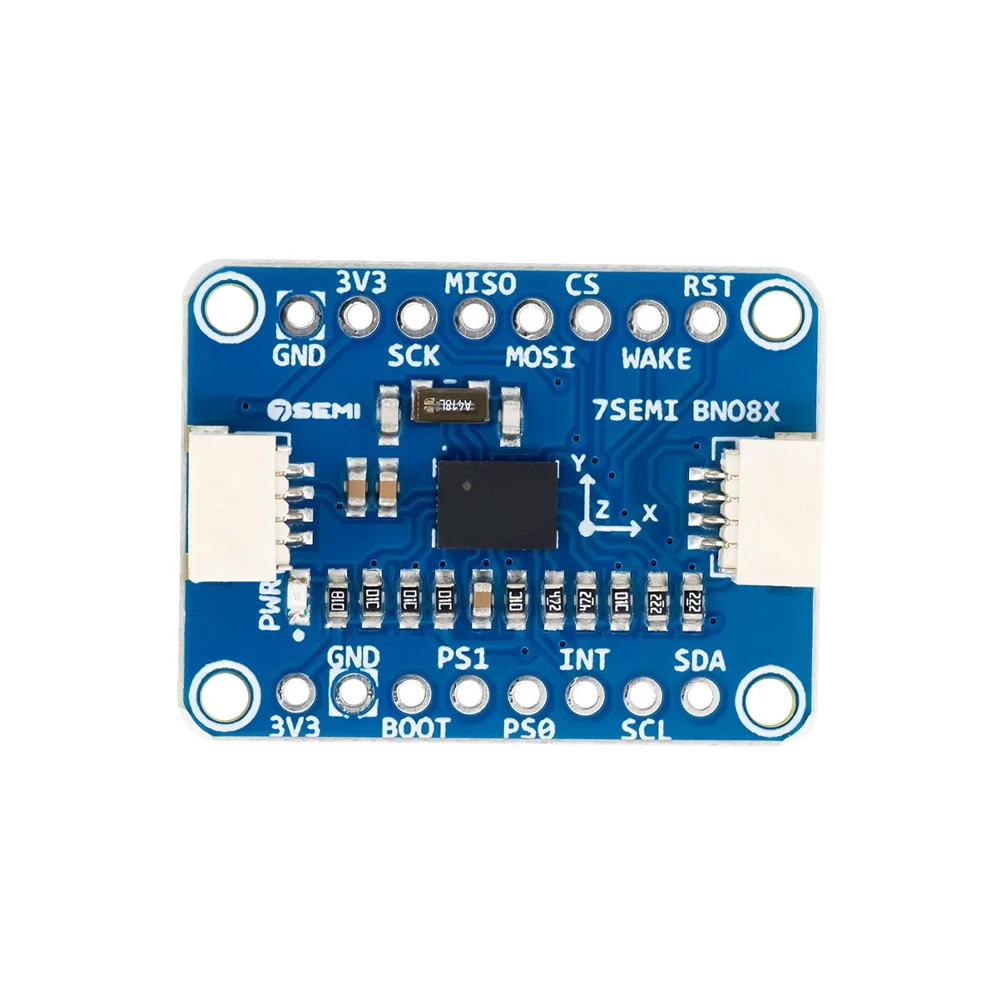
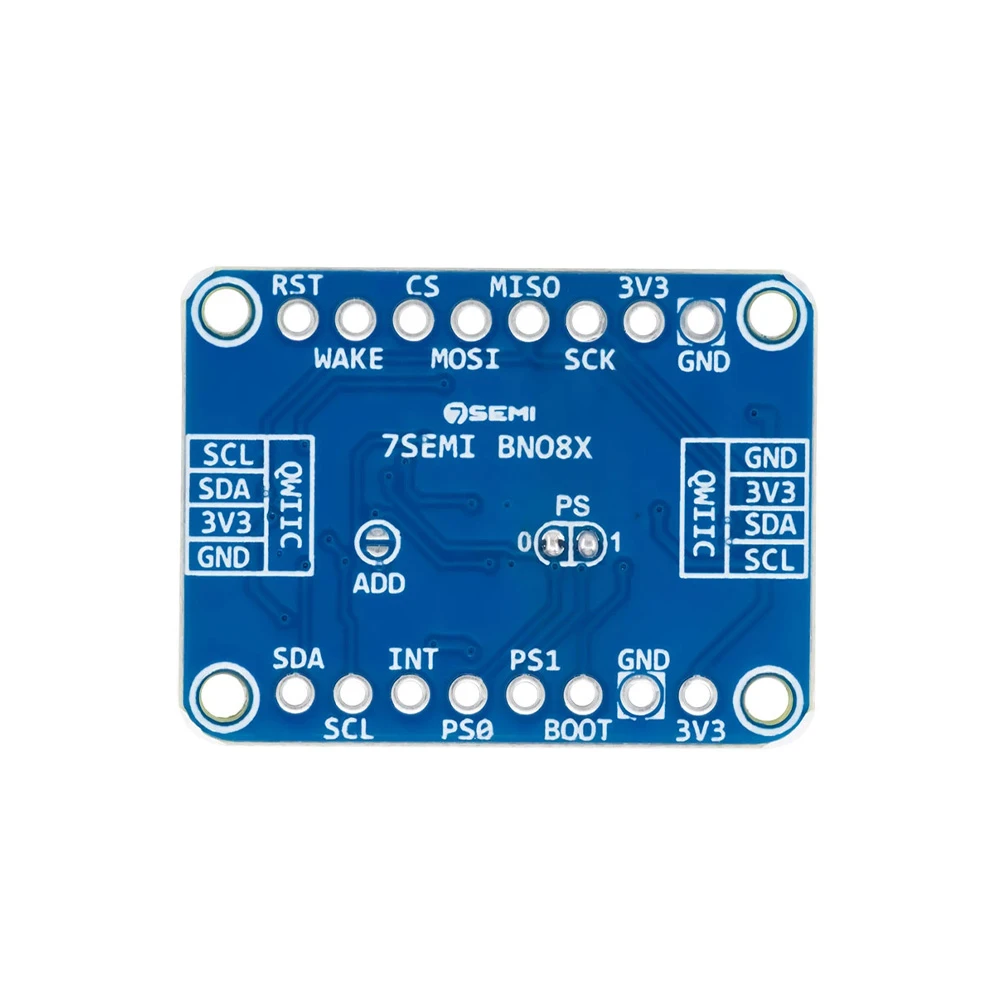
The 7Semi BNO086 is a high-performance 9-DOF IMU fusion breakout module featuring CEVA’s SH-2 MotionEngine for real-time quaternion, linear acceleration, and angular velocity outputs. It provides flexible I2C, SPI, and UART interfaces for seamless integration into robotics, VR/AR headsets, and wearable systems.

Features

  • 9-DOF IMU integrates 3-axis accelerometer (±8g), gyroscope (±2000°/s), and magnetometer.
  • Powered by CEVA SH-2 MotionEngine with 32-bit ARM Cortex-M0+ for real-time sensor fusion.
  • Outputs calibrated quaternion, linear acceleration, gravity Vector Technics, and angular velocity.
  • Flexible host communication via I2C (up to 400 kb/s), SPI, or UART (SHTP protocol).
  • Includes always-on features: step counter, tap detection, stability classifier, and gesture recognition.

Out of stock

Description

The BNO086 is a fully integrated inertial measurement unit that combines a triaxial accelerometer, gyroscope, and geomagnetic sensor with a dedicated 32-bit ARM Cortex-M0+ processor running CEVA’s SH-2 sensor fusion firmware. This architecture offloads complex motion processing from the host microcontroller, delivering stable, calibrated orientation data in the form of quaternions, along with derived vectors for linear acceleration and gravity.

Its dynamic calibration system continuously compensates for temperature drift and sensor aging, while hard-iron and soft-iron algorithms correct for magnetic distortions. The module supports sensor batching and low-power operation modes, making it suitable for battery-powered IoT and wearable applications requiring high-fidelity motion tracking with minimal host intervention.

Key Features

  • High-performance 9-DOF sensor fusion with dedicated SH-2 MotionEngine processor.
  • Outputs calibrated quaternion orientation, linear acceleration, gravity, and angular velocity.
  • Advanced dynamic calibration with temperature compensation and magnetic distortion correction.
  • Multiple interface support: I2C (fast mode), SPI (Mode 1,1), and UART (SHTP/RVC).
  • Integrated always-on detection features including step counting, tap detection, and activity classification.
  • Sensor batching capability with wake and non-wake queues for efficient power management.
  • Compact LGA package (3.8x5.2x1.1 mm) integrated onto a Qwiic-compatible breakout board.
  • Firmware upgradeable via DFU bootloader for future feature enhancements.

Applications

  • Virtual and Augmented Reality (VR/AR) headset orientation and motion tracking.
  • Robotics platform stabilization, inertial navigation, and gesture-based control.
  • Wearable electronics for activity monitoring, step counting, and fall detection.
  • Industrial equipment for vibration analysis, tilt sensing, and condition monitoring.
  • UAV and drone flight controllers for attitude and heading reference systems (AHRS).

Technical Specifications

Sensor Type9-DOF IMU (Accelerometer, Gyroscope, Magnetometer)
Accelerometer Range±8g, 12-bit
Gyroscope Range±2000 °/s, 16-bit
Magnetometer3-axis geomagnetic sensor
Processor32-bit ARM Cortex-M0+
Fusion EngineCEVA SH-2 MotionEngine
Supply Voltage (VDD)2.4 V – 3.6 V
I/O Voltage (VDDIO)1.65 V – 3.6 V
InterfacesI2C (up to 400 kb/s), SPI (CPOL=1, CPHA=1), UART
ProtocolSHTP (Sensor Hub Transport Protocol)
Primary OutputsQuaternion, Linear Acceleration, Gravity, Angular Velocity
Gyro Data RateUp to 1 kHz
CalibrationDynamic (temperature & aging), Hard/Soft-Iron Compensation
Always-On FeaturesStep Counter, Tap Detector, Stability Detector, Gestures
Sensor BatchingSupported
Package28-pin LGA (3.8 × 5.2 × 1.1 mm)
Breakout Dimensions28 x 21 x 5 mm
Breakout Weight5 g

Frequently Asked Questions

What is the primary advantage of the SH-2 MotionEngine in the BNO086?

The integrated CEVA SH-2 MotionEngine is a dedicated 32-bit ARM processor that performs all sensor fusion algorithms onboard. This offloads the computational burden from your main host microcontroller, providing stable, low-latency quaternion, linear acceleration, and gravity outputs without requiring complex math libraries on your system.

What are the voltage requirements for the BNO086 breakout module?

The BNO086 IC requires a core voltage (VDD) between 2.4V and 3.6V. The breakout board's logic level (VDDIO) is flexible and can be supplied from 1.65V to 3.6V, allowing direct compatibility with both 3.3V and 5V microcontroller systems, provided the I2C pull-ups are set to the correct VDDIO level.

How do I communicate with the BNO086, and which protocol should I use?

You can communicate via I2C (up to 400 kHz), SPI, or UART. The recommended protocol is I2C using the Sensor Hub Transport Protocol (SHTP). The Qwiic connector simplifies I2C wiring. For higher data throughput, SPI is available. UART is typically used for specific modes like the Reduced Vector Technics Content (RVC) output.

Does the module require calibration, and how is it managed?

The BNO086 features a sophisticated dynamic calibration system that runs automatically in the background. It compensates for temperature drift, sensor aging, and magnetic distortions (hard-iron and soft-iron). For most applications, no user-initiated calibration is required, though the system can accept and store user-provided calibration data if needed.

What are the 'always-on' features and how do they conserve power?

The always-on features, such as step counting, tap detection, and activity classification, run on the low-power Cortex-M0+ core while the main sensor fusion engine can be in a sleep state. This, combined with sensor batching (collecting data in a queue before waking the host), significantly reduces overall system power consumption for battery-operated devices.

Package Includes

  • 1 x 7Semi BNO086 9-DOF IMU Fusion Breakout Board (Qwiic)
  • 2 x Header Pin Strips

Additional Information

Weight 0.005 kg
Dimensions 2.8 × 2.1 × 0.5 cm