
SKU: SENS-1056
📋 GST Invoice Available

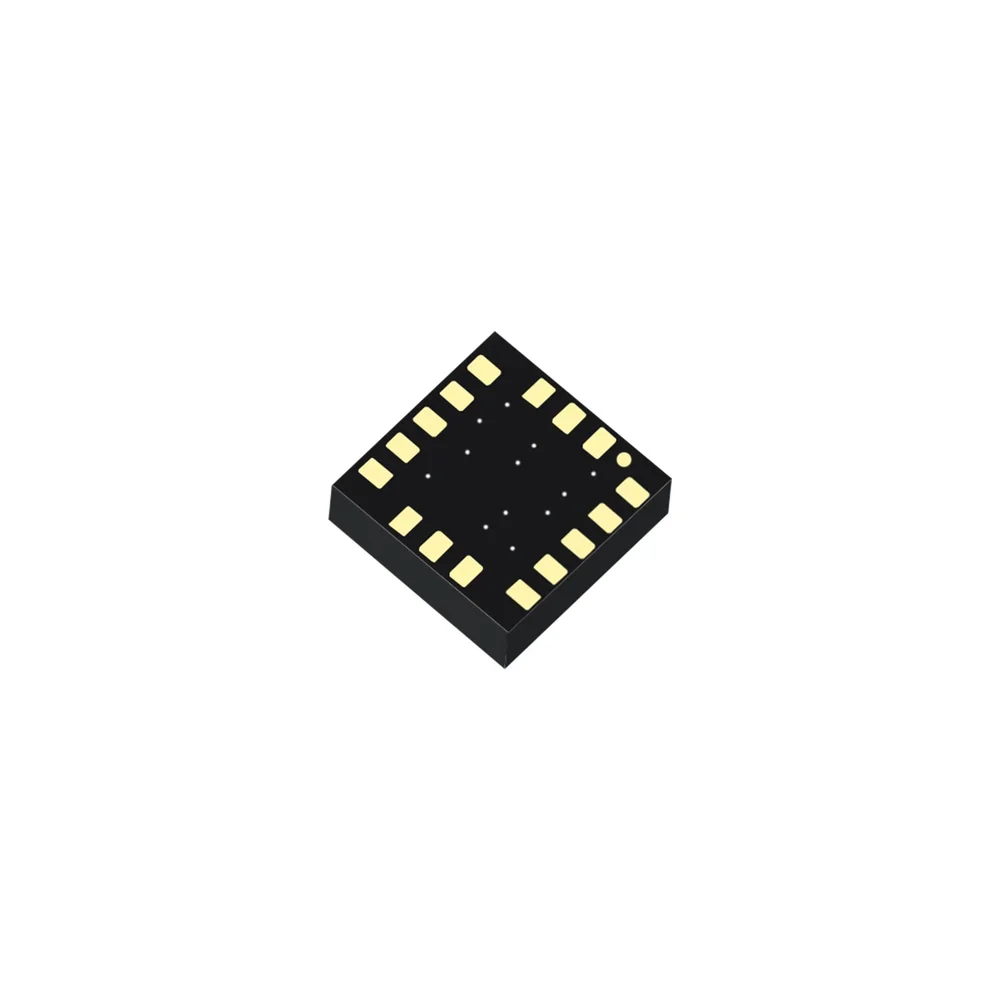
STMicroelectronics LIS3DH 3-Axis Digital Accelerometer, ±2/4/8/16g, Low Power MEMS Sensor - I²C/SPI, LGA Package

₹151.00 (Inclusive of all taxes)
Out of Stock

The STMicroelectronics LIS3DH is a low-power, 3-axis digital MEMS accelerometer supporting I²C and SPI interfaces with selectable full-scale ranges from ±2g to ±16g. It is designed for integration with microcontrollers like Arduino, Raspberry Pi, ESP32, and STM32 for motion detection, orientation sensing, and activity recognition in compact embedded systems.

Features

  • 3-axis digital MEMS accelerometer with selectable full-scale ranges (±2g, ±4g, ±8g, ±16g).
  • Dual digital interface supports both I²C and SPI communication protocols.
  • Ultra-low power operation, with typical current consumption as low as 11µA at 50Hz.
  • Integrated 32-level FIFO buffer and advanced interrupt functions for motion, free-fall, and tap detection.
  • Compact LGA (Land Grid Array) surface-mount package for space-constrained PCB designs.

Out of stock

Description

The LIS3DH is a high-performance, low-power 3-axis linear accelerometer utilizing MEMS capacitive sensing technology. It provides digital output acceleration data with up to 12-bit resolution, enabling precise measurement of static (gravity) and dynamic acceleration across a wide bandwidth. The sensor’s integrated signal conditioning and digital filtering ensure stable and reliable data output.

Engineered for robust operation from -40°C to +85°C, the LIS3DH is suitable for demanding environments. Its flexible I²C and SPI interfaces allow seamless connection to a vast array of microcontrollers and processors, making it a cornerstone component for motion-aware applications requiring minimal power draw and a compact footprint.

Key Features

  • High-Resolution Sensing: Delivers up to 12-bit digital output for precise acceleration measurement across four programmable full-scale ranges.
  • Flexible Communication: Selectable I²C or SPI digital interface provides compatibility with most microcontroller and development platforms.
  • Power-Optimized Architecture: Features multiple power-down and low-power modes, with consumption as low as 6 µA, ideal for battery-powered IoT and wearable devices.
  • Integrated Data Management: Built-in 32-level FIFO buffer allows the host processor to batch-read data, reducing system power consumption and processing overhead.
  • Advanced Embedded Functions: Hardware-implemented features include free-fall detection, 6D/4D orientation recognition, and click/double-click sensing, offloading these tasks from the main CPU.
  • Robust Design: Operates across a wide supply voltage (1.71V to 3.6V) and a full industrial temperature range (-40°C to +85°C).
  • Compact Form Factor: Housed in a small LGA (Land Grid Array) surface-mount package, enabling integration into miniaturized PCB layouts.

Applications

  • Wearable device step counting, gesture recognition, and activity monitoring.
  • IoT sensor nodes for vibration monitoring, tilt sensing, and shock detection.
  • Robotics and drone stabilization systems for orientation and motion control.
  • Industrial equipment for predictive maintenance through vibration analysis.
  • Consumer electronics for screen rotation, gaming controllers, and free-fall protection in laptops.

Technical Specifications

Sensor Type3-Axis Digital MEMS Accelerometer
Measurement RangeSelectable ±2g / ±4g / ±8g / ±16g
InterfaceI²C, SPI (Digital Output)
Supply Voltage (Vdd)1.71 V to 3.6 V
I/O Voltage (Vdd_IO)1.71 V to Vdd + 0.1 V
Typical Current Consumption (@ 50Hz ODR)11 µA
Low Power Mode Current6 µA
Power-Down Current0.5 µA
Output Data Rate (ODR)1 Hz to 5.3 kHz
ResolutionUp to 12-bit
Operating Temperature Range-40°C to +85°C
System BandwidthODR / 2
FIFO Buffer32-level integrated
Interrupt FeaturesMotion detection, free-fall, orientation (6D/4D), tap sensing
Package TypeLGA (Surface Mount)

Frequently Asked Questions

What is the difference between the I²C and SPI interfaces on the LIS3DH?

Both interfaces provide digital acceleration data, but they differ in protocol and connection requirements. I²C uses two wires (SCL, SDA) and supports multiple devices on a single bus, making it simpler for basic setups. SPI uses four wires (SCK, MOSI, MISO, CS) and offers higher maximum data rates, which is beneficial for applications requiring faster sampling or lower latency. The interface is selected by configuring the device's SA0/CS pin.

How do I select the measurement range (±2g, ±4g, etc.) on the LIS3DH?

The full-scale measurement range is software-configurable via the device's internal control registers. By writing specific values to the CTRL_REG4 register, you can select between ±2g, ±4g, ±8g, and ±16g. Choosing a smaller range (e.g., ±2g) provides higher sensitivity and resolution for subtle movements, while a larger range (e.g., ±16g) is necessary for detecting high-acceleration events like impacts or Sharp Microelectronics turns.

What is the purpose of the FIFO buffer in the LIS3DH?

The integrated 32-level FIFO (First-In, First-Out) buffer stores acceleration data samples. This allows the host microcontroller to enter a low-power sleep mode while the sensor continues sampling, waking up only to batch-read data from the full buffer. This architecture significantly reduces overall system power consumption, which is critical for battery-operated IoT devices and wearables.

Can the LIS3DH operate at 5V logic levels?

No, the LIS3DH is designed for a supply voltage (Vdd) between 1.71V and 3.6V. The I/O voltage (Vdd_IO) must be between 1.71V and Vdd + 0.1V. To interface with a 5V microcontroller, you must use a logic level converter or ensure the microcontroller's I/O pins are configured for 3.3V operation. Applying voltages above the absolute maximum rating can permanently damage the sensor.

How do I use the built-in free-fall and tap detection features?

These features are configured through the device's interrupt control registers (INT1_CFG, etc.). You can set thresholds and timing parameters for free-fall or tap events. When a configured event occurs, an interrupt pin (INT1 or INT2) is triggered, signaling the host processor without requiring constant polling of acceleration data. This offloads processing and allows for immediate, low-latency response to specific motion events.

Package Includes

  • 1 x STMicroelectronics LIS3DH 3-Axis Digital Accelerometer IC (LGA Package)

Additional Information

Weight 0.005 kg
Dimensions 2 × 2 × 2 cm