SKU: IOWC-1898
📋 GST Invoice Available

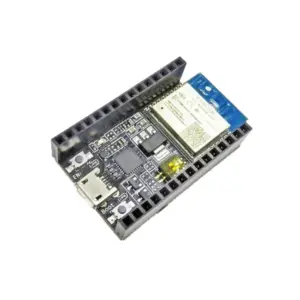
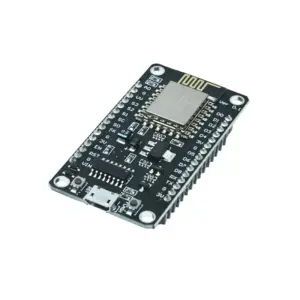
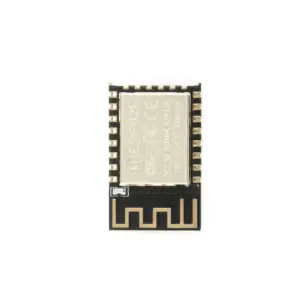
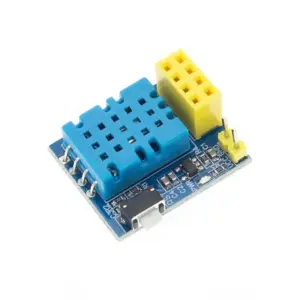
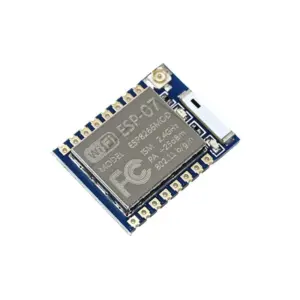
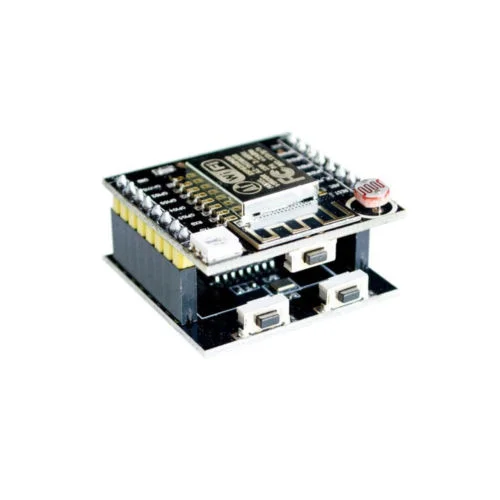
Witty Cloud ESP8266 ESP-12F Development Board w/ LDR & RGB LED

₹249.00 (Inclusive of all taxes)
Out of Stock

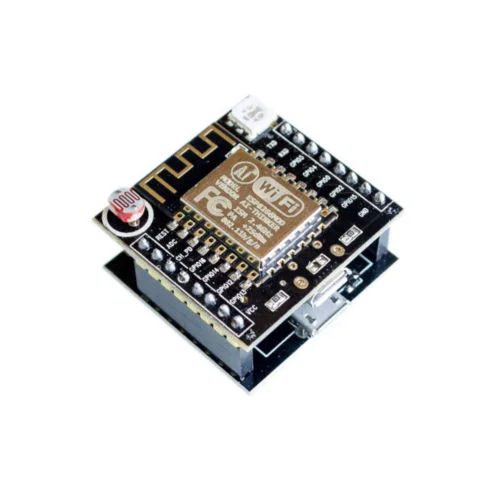
The Witty Cloud is an ESP8266 ESP-12F development board featuring an onboard LDR light sensor, WS2812 RGB LED, and integrated CH340G USB-to-UART programmer. It is fully compatible with the Arduino IDE and NodeMCU firmware for rapid IoT prototyping and Wi-Fi connectivity projects.

Features

  • ESP8266EX SoC with ESP-12F module, 4MB flash, and integrated PCB antenna for 802.11 b/g/n Wi-Fi.
  • Onboard LDR (Light Dependent Resistor) connected to ADC pin for ambient light sensing applications.
  • Integrated WS2812 addressable RGB LED connected to GPIOs 12, 13, and 15 for visual feedback.
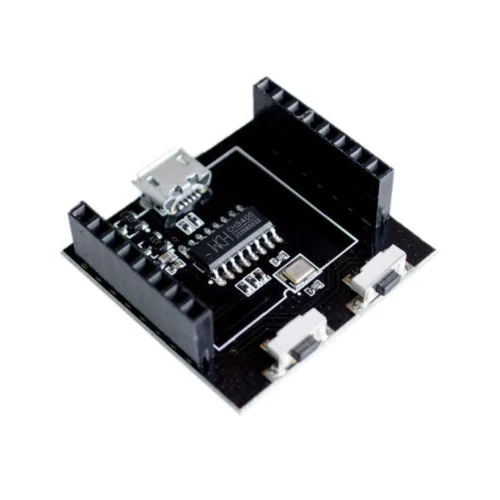
  • Includes detachable CH340G USB-to-UART programmer board for easy firmware flashing and serial debugging.
  • Compact 30mm x 30mm form factor with three tactile buttons (User, Reset, Flash) and dual micro USB ports.

Out of stock

Description

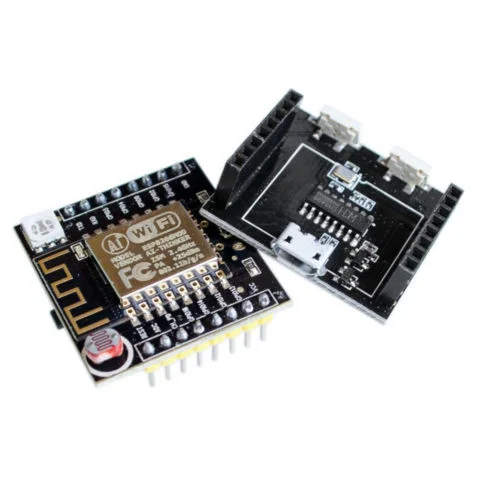
The Witty Cloud Development Board integrates the popular ESP8266EX microcontroller within an ESP-12F module, providing a complete platform for Wi-Fi-enabled IoT projects. Its standout feature is the inclusion of onboard sensors and indicators—a photoresistor for analog light sensing and a programmable RGB LED—eliminating the need for external components during prototyping. The board’s two-part design includes a main processing board and a separable CH340G USB-to-serial adapter, offering flexibility for both standalone deployment and use as a universal programmer for other ESP modules.

Powered via a micro USB port at 3.3V, the board supports all standard ESP8266 wireless modes (AP, STA, and AP+STA) and exposes critical GPIOs, UART, ADC, and power pins through two 8-pin headers. This makes it directly compatible with NodeMCU firmware and the Arduino ecosystem, allowing developers to quickly implement cloud connectivity, sensor data logging, and smart home automation with minimal wiring overhead.

Key Features

  • Complete ESP8266 development system with integrated USB programming and debugging interface.
  • Onboard ambient light sensing via a photoresistor (LDR) connected to the ADC input pin.
  • Visual status indication and effects possible with the built-in WS2812 addressable RGB LED.
  • Detachable CH340G adapter board can be used independently to program other serial modules like ESP-01.
  • Dual micro USB ports: one for powering the main board standalone and one on the programmer for connectivity.
  • Three tactile buttons for user input (GPIO4), hardware reset, and firmware flash mode entry.
  • Fully compatible with NodeMCU Lua firmware, Arduino IDE, and ESP8266 SDK for flexible development.
  • Compact and breadboard-friendly design with all I/O broken out to standard 2.54mm pitch headers.

Applications

  • Smart home automation nodes for lighting, sensing, and notifications.
  • Prototyping IoT sensor devices for environmental monitoring (light, temperature).
  • Wi-Fi-connected gadgets and interactive art installations using the RGB LED.
  • Educational tool for learning ESP8266 programming, IoT, and wireless networking.
  • Cloud data logger transmitting sensor readings to MQTT brokers or web servers.

Technical Specifications

Microcontroller/SoCEspressif ESP8266EX
Wireless ProtocolWi-Fi 802.11 b/g/n
ModuleESP-12F with integrated antenna
Flash Memory4 MB
Supply Voltage3.3V DC (via micro USB)
Onboard SensorsLDR (Light Dependent Resistor)
Onboard IndicatorsWS2812 RGB LED
User Interface3x Tactile Buttons (User, Reset, Flash)
Programming InterfaceCH340G USB-to-UART (detachable)
GPIO Headers2x 8-pin male headers
Dimensions (Main Board)30 mm x 30 mm

Frequently Asked Questions

How do I program the Witty Cloud ESP8266 board?

Connect the included CH340G programmer board via micro USB to your computer. Install the CH340 driver if needed. Use the Arduino IDE with the ESP8266 board package installed, select 'NodeMCU 1.0 (ESP-12E Module)' as your board, set the upload speed to 115200 baud, and press the Flash button on the programmer before uploading your sketch. The board will then run your code on the ESP-12F module.

What is the LDR sensor pinout and how do I read it?

The onboard Light Dependent Resistor (LDR) is connected to the ADC pin (A0) of the ESP8266. In your code, use analogRead(A0) to get a value between 0 and 1023 corresponding to light intensity. Lower values indicate darkness, higher values indicate brightness. No external wiring is required, making it ideal for ambient light detection in automation projects.

Can I use the CH340G programmer board separately for other modules?

Yes, the lower board containing the CH340G USB-to-UART converter can be detached and used independently. It provides TX, RX, VCC (3.3V or 5V selectable via a jumper), and GND pins. You can use it to program other ESP modules like the ESP-01 or any 3.3V/5V serial device by connecting the appropriate pins and using flash tools like esptool.py or the Arduino IDE's serial programmer.

What GPIO pins control the onboard RGB LED?

The integrated WS2812 addressable RGB LED is connected to GPIO 15 (data line). You must use libraries like Adafruit_NeoPixel or FastLED to control it. Note that GPIO 15 has a pull-down resistor at boot, so ensure your code initializes the LED after boot. The LED provides visual feedback without requiring external components.

Package Includes

  • 1 x Witty Cloud ESP8266 ESP-12F Development Board Module
  • 1 x Mini NodeMCU (CH340G USB Programmer Board)

Additional Information

Weight 0.08 kg
Dimensions 3 × 3 cm