SKU: IOWC-1767
📋 GST Invoice Available

Dragino LoRaST IoT Module w/ SX1276/78 LoRa Transceiver & STM32L072

₹2,609.00 (Inclusive of all taxes)
Out of Stock

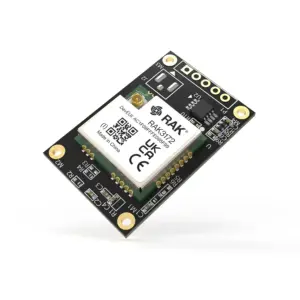
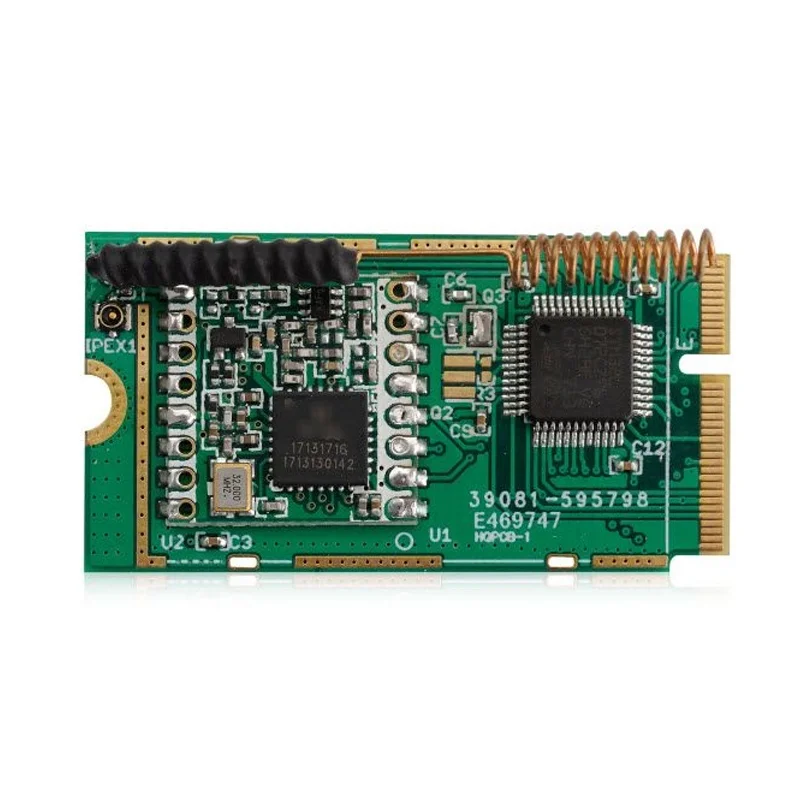
The Dragino LoRaST IoT Module is a compact, industrial-grade LoRa transceiver built around the SX1276/78 modem and an STM32L072CZT6 MCU. Pre-loaded with LoRaWAN 1.0.2 firmware and AT command support, it enables rapid deployment of long-range, low-power sensor networks directly from a 1.9-3.6V supply.

Features

  • Industrial LoRa Core: Integrates the SX1276/78 transceiver for a maximum link budget of 168 dB, +20 dBm transmit power, and programmable data rates up to 300 kbps for robust, long-range communication.
  • Low-Power MCU Architecture: Powered by an energy-efficient STM32L072CZT6 Cortex-M0+ MCU with ultra-low sleep currents (2.7 µA in STOP mode) to maximize battery life in field deployments.
  • Out-of-the-Box LoRaWAN Connectivity: Ships with factory firmware compliant with LoRaWAN 1.0.2 specification and configurable via AT commands over UART, allowing for immediate integration without deep firmware development.
  • Rich I/O for Sensor Integration: Provides 22 digital I/Os, 3x 12-bit ADC channels, 1x 12-bit DAC, I2C, SPI, and USB interfaces for connecting a wide array of sensors and peripherals.
  • Developer-Friendly & Open-Source: Based on STM32Cube HAL drivers with accessible application examples, programmable via USART or ST-LINK, facilitating custom firmware development and prototyping.

Out of stock

Description

The Dragino LoRaST IoT Module is a professional-grade wireless node designed for building scalable, low-power LoRaWAN networks. Its core combines the long-range spread spectrum capabilities of the Semtech SX1276/78 LoRa modem with the processing and peripheral control of an STM32L072 microcontroller. This integration delivers a solution optimized for extreme range—up to 168 dB link budget with -148 dBm receiver sensitivity—while maintaining minimal power consumption through advanced MCU sleep modes.

Architected for industrial IoT applications, the module supports the full LoRaWAN 1.0.2 protocol stack out of the box. Developers can configure network parameters, data rates, and power settings via simple AT commands over a UART interface, significantly reducing time-to-market. For advanced customization, the open-source firmware base built on STM32Cube HAL allows full access to the MCU’s resources, enabling the creation of tailored applications for smart metering, environmental monitoring, or asset tracking.

Key Features

  • High-Performance LoRa Transceiver: Features the SX1276/78, enabling ultra-long-range communication with high interference immunity and configurable RF output up to +20 dBm.
  • Ultra-Low-Power Design: Leverages the STM32L072's deep sleep capabilities (2.7 µA) and efficient radio modes (7.2 mA Rx) for multi-year battery operation in remote sensors.
  • Pre-Programmed LoRaWAN Stack: Comes ready-to-use with compliant LoRaWAN 1.0.2 firmware, allowing quick network joining and data transmission via AT commands.
  • Comprehensive Development Framework: Open-source software based on STM32Cube HAL drivers with example code, programmable via USART1, USART2, or ST-LINK debugger.
  • Extended Connectivity Options: Offers a full suite of interfaces including I2C, SPI, I2S, USB, and multiple UARTs for seamless peripheral and sensor expansion.
  • External Antenna Flexibility: Equipped with an IPEX connector for attaching a high-gain external antenna to maximize range and signal reliability in challenging environments.

Applications

  • Smart Agriculture & Environmental Monitoring: Deploy for soil moisture sensing, weather stations, and irrigation control across vast, unpowered fields.
  • Industrial Telemetry & Smart Metering: Monitor utility consumption (water/gas/electricity), tank levels, and industrial equipment status in hard-to-reach locations.
  • Smart City Infrastructure: Enable smart parking, waste management, streetlight control, and air quality monitoring networks.
  • Asset Tracking & Logistics: Track the location and condition of pallets, containers, or vehicles across supply chains and large facilities.
  • Building Automation: Implement wireless sensor networks for HVAC control, occupancy detection, and energy management in commercial buildings.

Technical Specifications

Microcontroller/SoCSTM32L072CZT6 Cortex-M0+
Wireless ProtocolsLoRa, FSK, GFSK, MSK, LoRaWAN 1.0.2
Frequency RangeSX1276/78 compatible (e.g., 868 MHz, 915 MHz)
RF Transmit PowerUp to +20 dBm (100 mW)
RF SensitivityDown to -148 dBm (LoRa)
Supply Voltage1.9 V to 3.6 V
Operating Current (Tx)125 mA @ +20 dBm
Operating Current (Rx)7.2 mA
Sleep Current (STOP Mode)2.7 µA @ 3.3V
Interfaces22x Digital I/O, 3x 12-bit ADC, 1x 12-bit DAC, I2C, SPI, I2S, USB, LPUSART1, SPI2
Antenna ConnectorIPEX (4th generation)
Dimensions42 mm x 22 mm (L x W)

Frequently Asked Questions

How do I configure the Dragino LoRaST module for my LoRaWAN network?

Connect the module's UART (USART1 or USART2) to a USB-to-serial adapter at 9600 baud. Use AT commands like AT+JOIN to connect to a LoRaWAN server (e.g., The Things Network), AT+BAND to set your regional frequency plan (e.g., EU868), and AT+SEND to transmit data. The factory firmware supports LoRaWAN 1.0.2, so ensure your network server uses a compatible version. Always provide a stable 3.3V power supply during configuration.

What is the power consumption profile, and how can I optimize it for battery operation?

The module draws 125 mA during maximum transmission (+20 dBm), 7.2 mA while receiving, and only 2.7 µA in deep STOP mode. To optimize battery life, design your firmware to maximize time in STOP mode. Use the MCU's wake-up capabilities via UART interrupt or a GPIO pin from a sensor. Schedule transmissions infrequently and use the lowest sufficient transmit power and highest spreading factor your range allows to minimize active radio time and conserve energy.

Can I develop custom firmware for the LoRaST, and what tools are required?

Yes, the module is fully programmable. You need the STM32CubeIDE or Keil MDK development environment with the STM32CubeMX configurator to generate HAL-based code. Connect an ST-LINK/V2 debugger to the module's SWD pins for flashing and debugging. The open-source firmware is based on STM32Cube HAL drivers, providing a foundation. You can override the AT command handler to implement proprietary protocols or complex sensor sampling routines while leveraging the built-in LoRa radio driver.

What antenna should I use, and how is it connected?

Use a LoRa-specific antenna tuned to your operating frequency band (e.g., 868 MHz or 915 MHz) with an IPEX (U.FL) connector. The module has an IPEX 4 socket. For optimal range and to comply with regulatory limits, ensure the antenna has a matching 50-ohm impedance. For permanent installations, solder the included wire antenna or attach a external antenna via a pigtail cable. Proper antenna selection and placement are critical for achieving the module's maximum -148 dBm sensitivity and long-range potential.

Package Includes

  • 1 x Dragino LoRaST Module
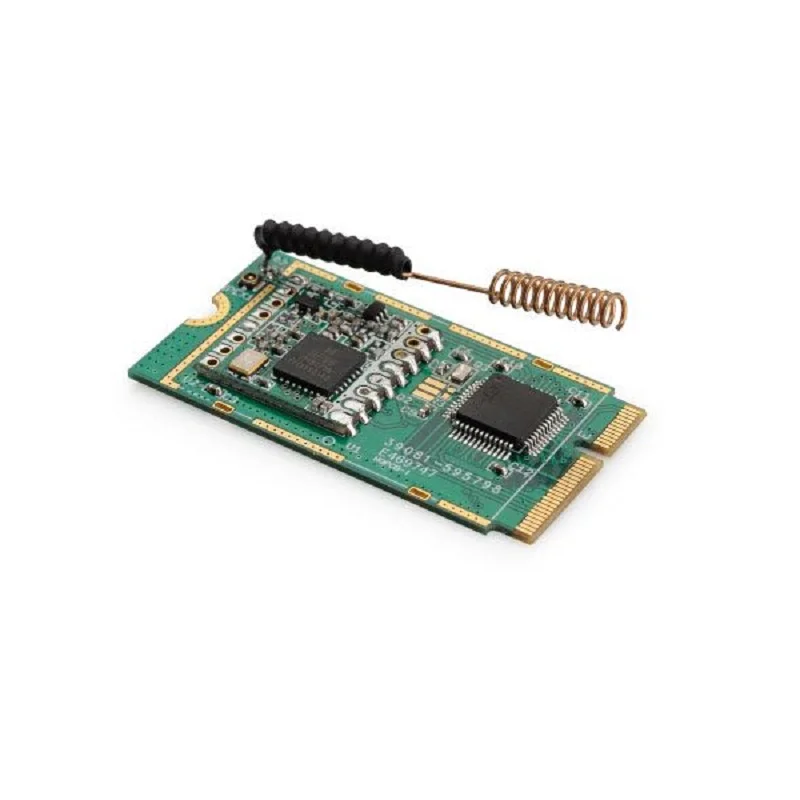
  • 1 x LoRa Antenna (unsoldered)

Additional Information

Weight 0.004 kg
Dimensions 4.2 × 2.2 cm