SKU: IOWC-1694
📋 GST Invoice Available

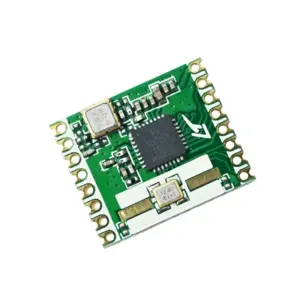
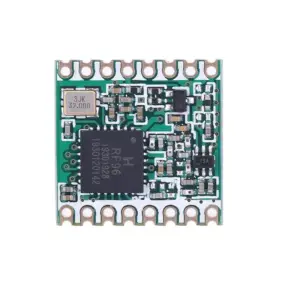
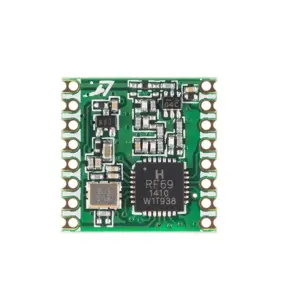
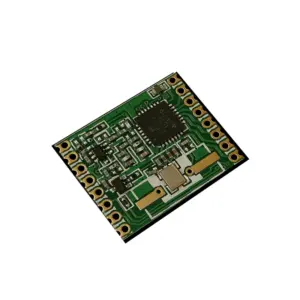
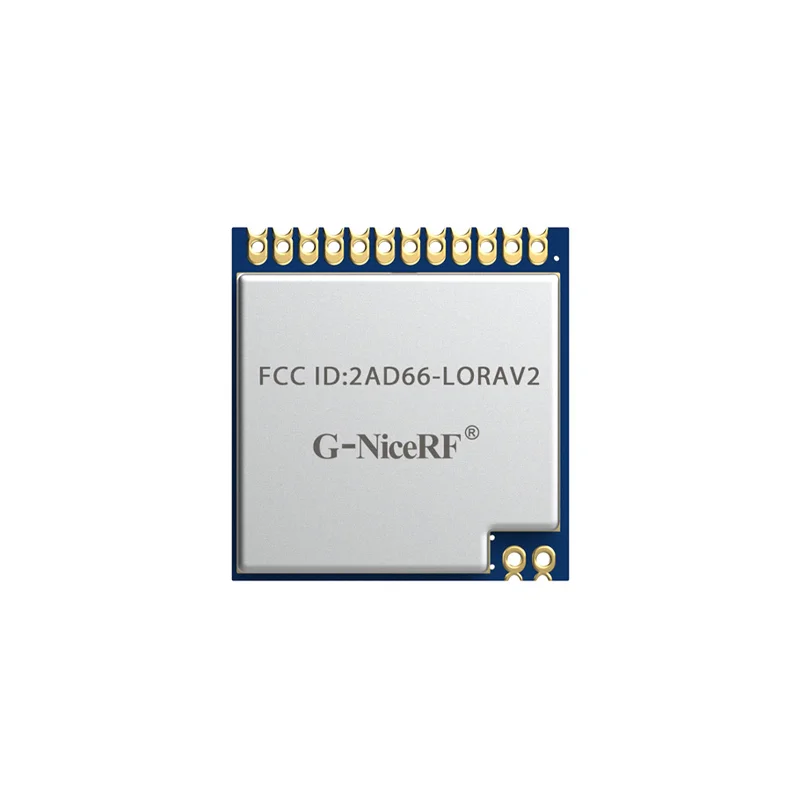
G-NiceRF LoRa1276-915 FCC-Certified 915MHz SX1276 LoRa Module

₹859.00 (Inclusive of all taxes)
Out of Stock

The G-NiceRF LoRa1276-915 is a front-end LoRa module based on the Semtech SX1276 transceiver, operating in the 915MHz ISM band and programmable from 137-1020MHz. It features high RF output power, superior link budget, and SPI interface for integration into long-range, low-power IoT sensor networks.

Features

  • Semtech SX1276 LoRa transceiver with programmable 137-1020MHz frequency range.
  • High RF output power of +20dBm (100mW) and excellent sensitivity of -139dBm for maximum range.
  • Supports LoRa, FSK, and GFSK modulation for flexible network design and legacy compatibility.
  • Integrated antenna switch controlled via chip SPI, simplifying RF front-end design.
  • Low operating voltage range (1.8V-3.7V) and optimized current consumption for battery-powered nodes.

Out of stock

Description

The G-NiceRF LoRa1276-915 is a compact, FCC-certified RF module designed for developers requiring robust, long-range wireless connectivity. It integrates the industry-standard Semtech SX1276 chip, which utilizes LoRa spread spectrum modulation to achieve exceptional link budgets and resilience against interference in crowded RF environments. The module’s front-end architecture includes an integrated antenna switch, reducing external component count and simplifying PCB layout.

Operating from a 1.8V to 3.7V supply, it is optimized for low-power IoT deployments, supporting deep sleep modes and configurable output power. The SPI interface provides direct control for configuring frequency, modulation, data rate, and power settings, making it compatible with a wide range of microcontrollers for building custom LoRaWAN nodes or proprietary point-to-point networks.

Key Features

  • Front-end module based on the Semtech SX1276 LoRa transceiver chip.
  • Programmable operating frequency from 137 MHz to 1020 MHz, default configured for 915MHz ISM band.
  • High RF output power up to +20dBm (100mW) for extended communication range.
  • Excellent receiver sensitivity down to -139dBm (LoRa) for reliable long-distance links.
  • Supports multiple modulation schemes: LoRa, FSK, and GFSK for application flexibility.
  • Integrated antenna switch, controlled via the SX1276, simplifies RF design.
  • Low operating voltage range (1.8V-3.7V) suitable for single-cell Li-ion battery operation.
  • SPI digital interface for easy configuration and integration with host MCUs.

Applications

  • Long-range IoT sensor networks for agriculture (soil moisture, weather stations).
  • Industrial telemetry and remote monitoring (tank levels, equipment status).
  • Smart city applications (parking sensors, waste management, street lighting).
  • Asset tracking and logistics management over wide areas.
  • Proprietary point-to-point or star network communication links.

Technical Specifications

RF TransceiverSemtech SX1276
Wireless ProtocolLoRa, FSK, GFSK
Frequency Range915 MHz (Programmable 137-1020 MHz)
Max RF Output Power20 dBm (100 mW)
Receiver Sensitivity-139 dBm (LoRa)
Air Data RateLoRa: 0.018-37.5 Kbps, FSK: 1.2-300 Kbps
Supply Voltage1.8 - 3.7 V
Communication InterfaceSPI
Antenna ConnectorIntegrated Antenna Switch (Requires external antenna)
Dimensions (approx.)9 x 7 x 1 cm
Weight (approx.)0.005 kg

Frequently Asked Questions

How do I configure the operating frequency of the LoRa1276-915 module?

The module's frequency is programmable via the SX1276 chip's SPI registers. You must write to the appropriate frequency setting registers (e.g., Frf) using an SPI host microcontroller like an STM32 or ESP32. The default center frequency is 915MHz, but you can reconfigure it anywhere within the 137MHz to 1020MHz range supported by the SX1276. Ensure your antenna is tuned for your selected frequency band.

What microcontroller interfaces are needed to control this LoRa module?

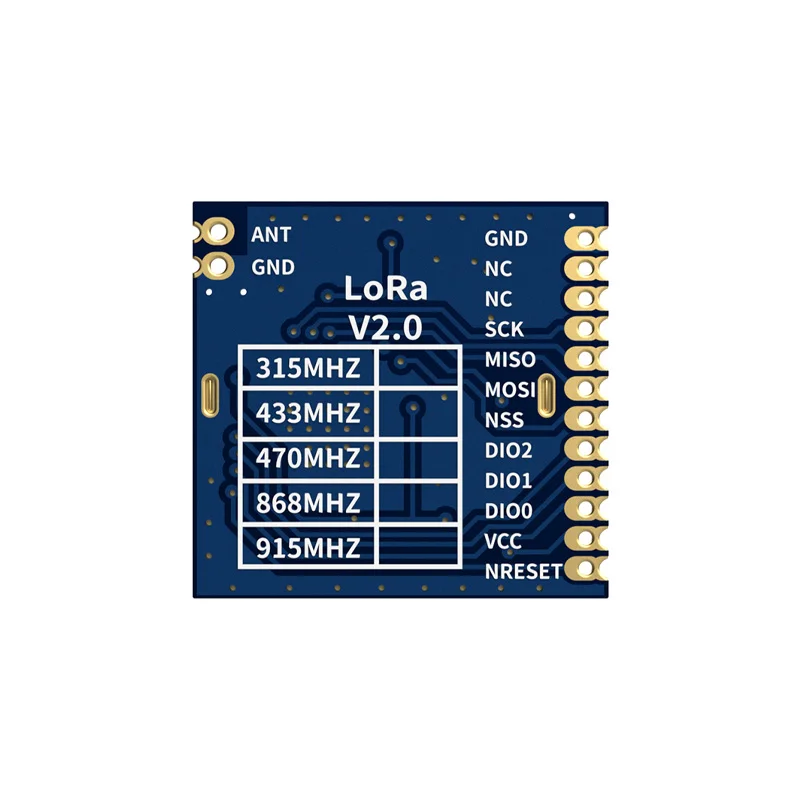
The module requires a 4-wire SPI interface (SCK, MOSI, MISO, NSS/CS) from your host microcontroller for all configuration and data transactions. Additionally, you need to connect the RESET and DIO0-DIO5 pins for hardware reset and interrupt-driven event handling (e.g., TxDone, RxDone). Libraries like RadioHead or LoRaMAC-node for the SX1276 can be adapted, using the SPI and GPIO functions of your chosen MCU platform (Arduino, STM32Cube, ESP-IDF).

What is the typical current consumption during transmission and reception?

Current consumption depends on the configured output power and operating mode. At the maximum +20dBm output power, the transmit current can reach approximately 120mA from a 3.3V supply. In continuous receive mode (LoRa), the current is typically around 10-12mA. For lowest power, utilize the SX1276's sleep and standby modes, which draw microamps, and implement periodic wake-up and listen-before-talk routines in your firmware to maximize battery life in field deployments.

Package Includes

  • 1 x G-NiceRF LoRa1276-915 LoRa Module

Additional Information

Weight 0.005 kg
Dimensions 7 × 9 × 1 cm