SKU: IOWC-1642
📋 GST Invoice Available

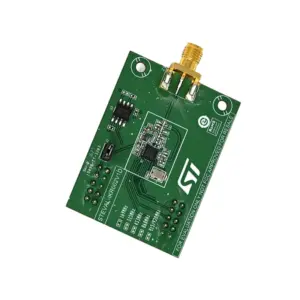
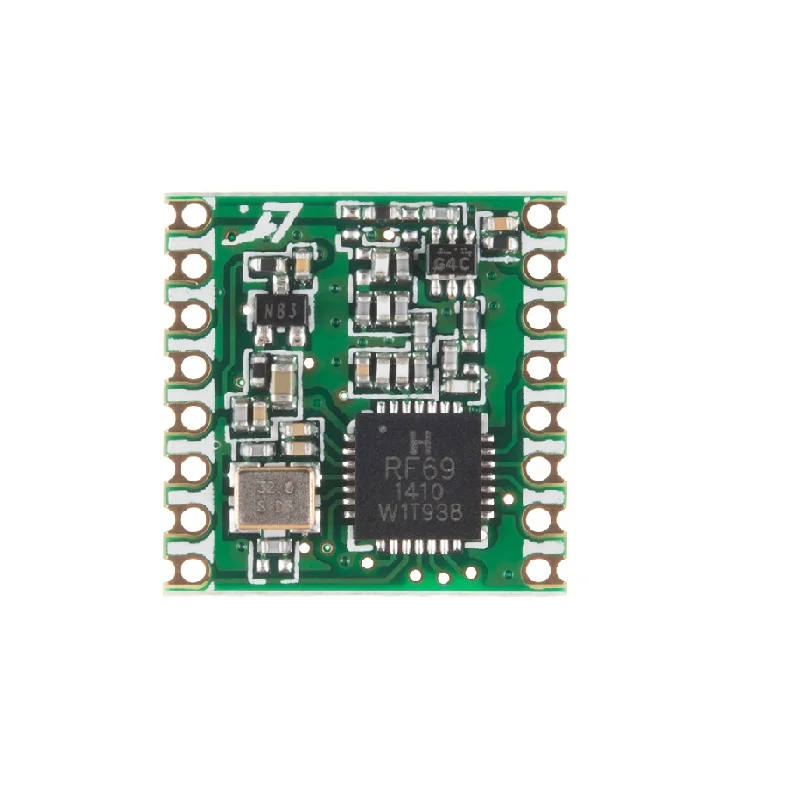
RFM69HCW Wireless Transceiver Module - 434MHz FSK/OOK

₹269.00 (Inclusive of all taxes)
Out of Stock

The RFM69HCW is a low-power, high-bandwidth 434MHz FSK/OOK wireless transceiver module designed for long-range digital communication in global ISM bands. It interfaces via SPI and is ideal for building robust, encrypted sensor networks with Arduino, Raspberry Pi, or other microcontrollers.

Features

  • Operates on the global 434MHz ISM band with FSK/OOK modulation for reliable, license-free communication.
  • Features up to +13dBm (20mW) transmit power and -120dBm receiver sensitivity for ranges up to 800m line-of-sight.
  • Supports data rates up to 300kbps, configurable for high bandwidth or ultra-low power sensor networks.
  • Integrates AES hardware encryption and supports 256 networks with 255 nodes each for secure, scalable deployments.
  • Ultra-low power profile with 16mA RX current, 45mA TX current, and <0.1µA standby current for battery-operated IoT nodes.

Out of stock

Description

The RFM69HCW wireless module is a versatile sub-1GHz transceiver engineered for robust, long-range digital communication in the 434MHz ISM band. Its core architecture utilizes FSK and OOK modulation schemes, providing a balance between data rate, range, and power consumption, making it a cornerstone for DIY IoT and industrial wireless networks.

Designed for extreme efficiency, the module operates from a 1.8V to 3.6V supply, featuring deep sleep currents below 0.1µA to maximize battery life in remote sensing applications. The integrated +13dBm power amplifier and high-sensitivity receiver (-120dBm at 1.2kbps) enable reliable communication through obstacles, suitable for building-wide or open-field deployments exceeding 500 meters. Configuration and data exchange are handled via a standard SPI interface, compatible with popular platforms like Arduino, ESP32, and Raspberry Pi.

Key Features

  • Global 434MHz ISM band operation for license-free use in many regions.
  • FSK and OOK modulation support for flexible communication strategies.
  • High-performance RF front-end with configurable output power up to +13dBm.
  • Integrated AES-128 hardware encryption engine for secure data transmission.
  • Supports large network topologies: 256 networks with up to 255 nodes each.
  • Ultra-low power consumption with programmable sleep and standby modes.
  • SPI digital interface for easy integration with microcontrollers and SBCs.
  • Compact 20mm x 16mm form factor with a 50Ω antenna impedance.

Applications

  • Wireless Sensor Networks (WSN) for environmental monitoring (temperature, humidity, soil moisture).
  • Industrial telemetry, remote control, and low-power data logging (IIoT).
  • Smart agriculture systems for asset tracking and field condition reporting.
  • Home and building automation for secure, long-range device control.
  • Logistics tracking, electronic shelf labels, and warehouse management systems.

Technical Specifications

Wireless TransceiverRFM69HCW
Operating Frequency434 MHz
ModulationFSK / OOK
Max Transmit Power+13 dBm (approx. 20 mW)
Receiver Sensitivity-120 dBm (at 1.2 kbps, OOK)
Max Data Rate300 kbps
Supply Voltage1.8V - 3.6V DC
TX Current45 mA (@ +13 dBm)
RX Current16 mA
Standby Current< 0.1 µA
Data InterfaceSPI
Antenna Impedance50 Ω
Operating Temperature-40°C to +85°C
Dimensions20 mm x 16 mm x 2 mm

Frequently Asked Questions

How do I connect and configure the RFM69HCW module with an Arduino?

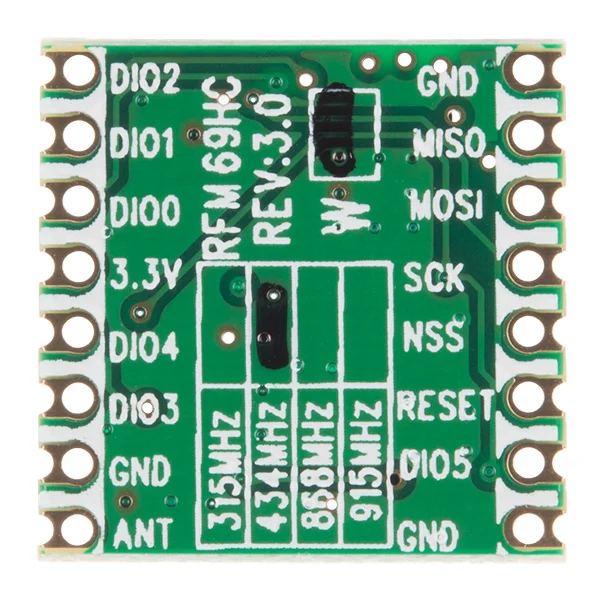
Connect the module's SPI pins (MISO, MOSI, SCK) and chip select (NSS) to your Arduino's corresponding SPI pins, plus power (3.3V) and ground. Use the popular RadioHead or LowPowerLab RFM69 library in the Arduino IDE. Initialize the library with your specific frequency (434MHz), node ID, and network ID. You must also connect a 50-ohm antenna, such as a quarter-wave whip, to the ANT pad for proper operation. The library handles packetization, encryption (AES), and reliable data transfer.

What is the maximum communication range I can achieve with this module?

The practical range depends on data rate, output power, antenna type, and environment. At +13dBm output, a low data rate (1.2kbps), and with a simple wire antenna in an open field, you can achieve 500-800 meters line-of-sight. Through urban or indoor environments with walls, expect 50-200 meters. To maximize range, configure the library for the lowest reliable data rate and highest transmit power, and use an external antenna with proper gain mounted clear of obstructions. Range tests are recommended for your specific deployment.

Can I use this module for bidirectional communication in a mesh network?

Yes, the RFM69HCW is a full transceiver, capable of both transmitting and receiving. While it does not have built-in mesh routing logic, you can implement network topologies like star or peer-to-peer using its support for 256 networks and 255 nodes per network. For a true self-healing mesh, you would need to implement a routing protocol (e.g., a custom or adapted protocol) in your microcontroller firmware, using the module as the physical radio layer. Libraries like RadioHead provide basic addressing and relaying features to build such networks.

What are the power supply requirements and how do I minimize current consumption?

The module requires a clean 1.8V to 3.6V DC supply; 3.3V is typical. Current draw peaks at 45mA during transmission at full power and 16mA while receiving. To minimize consumption, leverage the module's sleep modes. Using the library commands, you can put the radio into standby or sleep mode, reducing current to below 1µA. Design your firmware to wake the radio periodically, send/receive data quickly, and return to deep sleep. A low-dropout regulator (LDO) or dedicated power management IC is recommended for battery-powered nodes to ensure stable voltage during RF bursts.

Package Includes

  • 1 x RFM69HCW Wireless Transceiver Module (434 MHz)

Additional Information

Weight 0.01 kg
Dimensions 2 × 1.6 × 0.2 cm