SKU: IOWC-1600
📋 GST Invoice Available

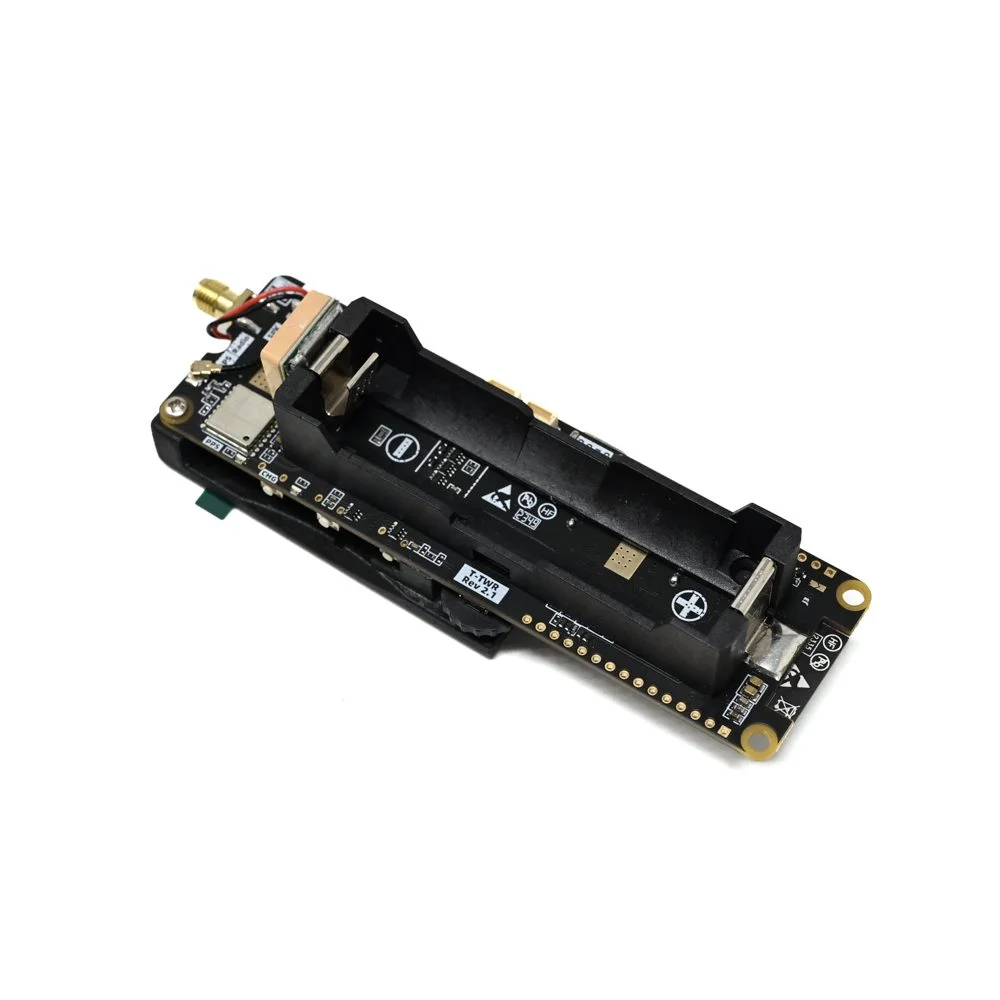
LilyGO T-TWR Plus ESP32-S3 LoRa Walkie-Talkie Dev Board w/ OLED & GPS

₹6,559.00 (Inclusive of all taxes)
Out of Stock

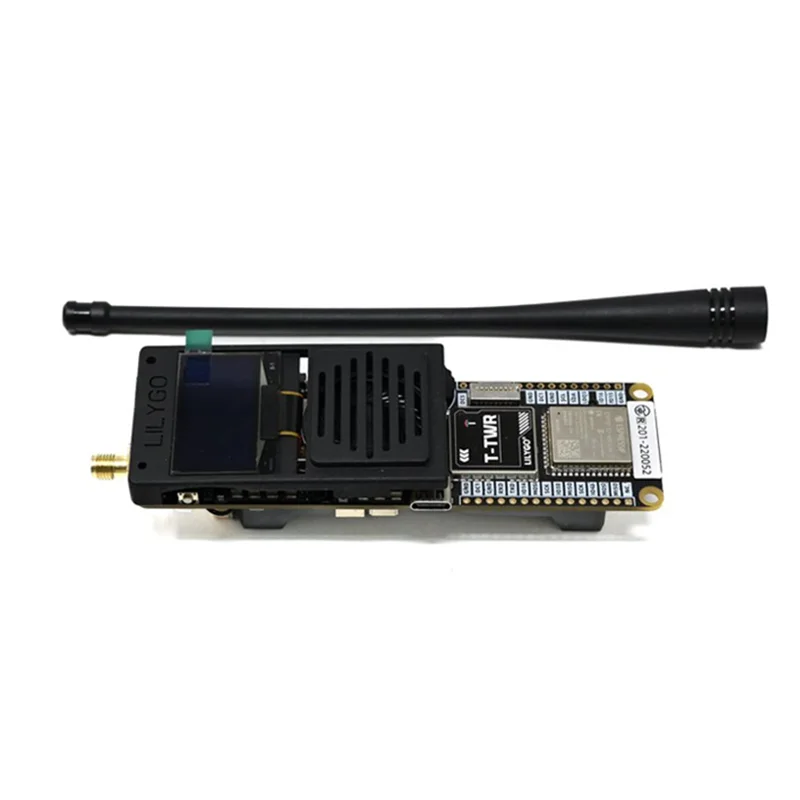
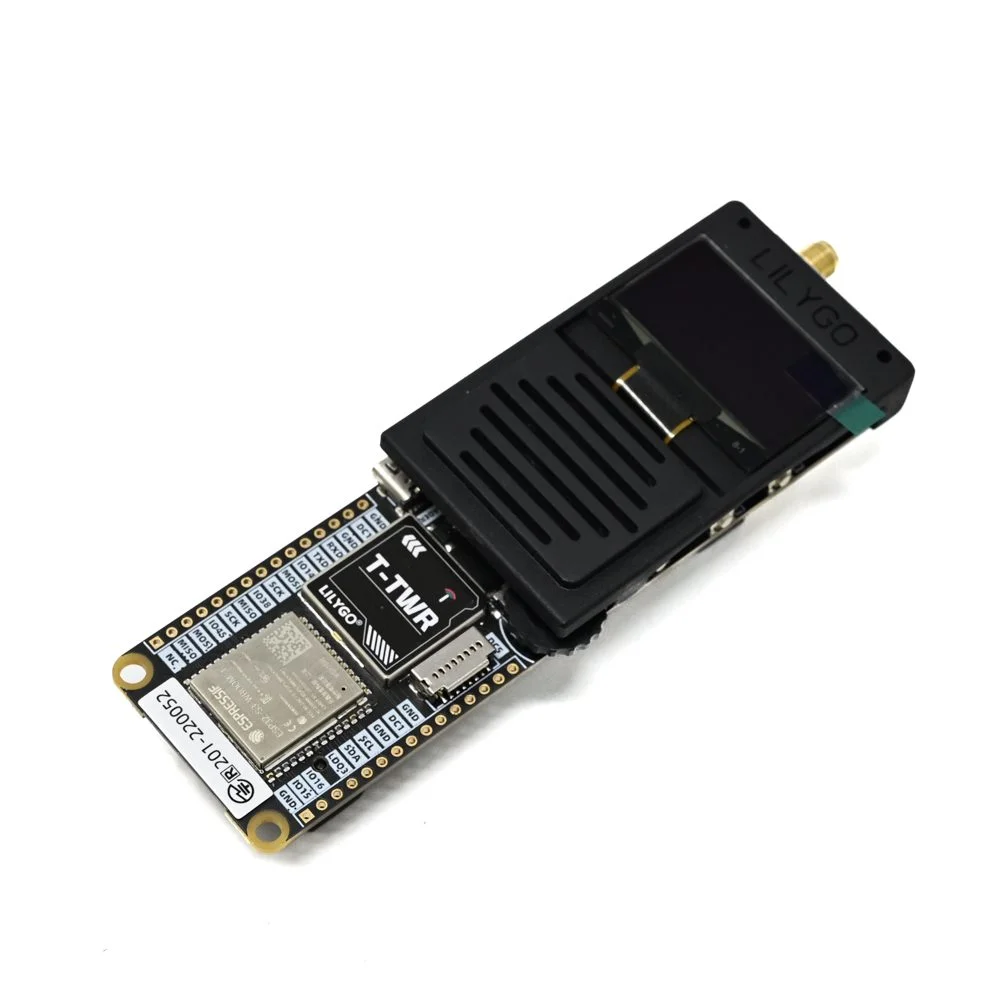
The LilyGO T-TWR Plus is a multi-radio development board built around the ESP32-S3-WROOM-1-N16R8, integrating Wi-Fi, Bluetooth 5.0, and an SA868 LoRa transceiver for long-range walkie-talkie functionality, IoT telemetry, and location tracking via its onboard L76K GNSS module.

Features

  • ESP32-S3-WROOM-1-N16R8 Core: Dual-core 240MHz Xtensa LX7 MCU with 16MB flash and 8MB PSRAM for demanding IoT applications and firmware like ESP-IDF, Arduino, or MicroPython.
  • Triple Wireless Connectivity: Combines 2.4GHz Wi-Fi, Bluetooth Low Energy 5.0, and an SA868 LoRa transceiver for versatile short and long-range (LoRa) communication projects.
  • Integrated Walkie-Talkie System: SA868 transceiver enables real-time, half-duplex voice communication, ideal for building custom push-to-talk (PPT) devices and mesh networks.
  • Onboard Location & Display: Features a 128×64 pixel OLED screen for data visualization and a L76K GNSS module for GPS/BeiDou positioning in tracking applications.
  • Flexible Power Architecture: Powered by the AXP2102 PMU, supporting USB-C, or single-cell 21700/18650 Li-ion batteries via spring contacts for portable deployments.

Out of stock

Description

The LilyGO T-TWR Plus is a feature-rich IoT development platform engineered for wireless communication system prototyping. Its foundation is the powerful ESP32-S3 microcontroller, providing ample processing headroom and memory for complex firmware stacks. The board’s standout feature is the integrated SA868 LoRa transceiver, which enables long-range, low-power data transmission and real-time voice communication, effectively turning the board into a programmable walkie-talkie core.

Power management is handled by the dedicated AXP2102 PMU, optimizing efficiency across various input sources including USB-C and user-provided lithium batteries. This, combined with the onboard 128×64 OLED and L76K GNSS receiver, makes the T-TWR Plus a complete solution for developing portable telemetry units, asset trackers, and decentralized communication nodes. The accessible GPIO via edge connectors allows for sensor integration, while the dedicated PPT, Boot, Power, and Reset buttons provide direct hardware control.

Key Features

  • Multi-Radio Development Platform: Unifies Wi-Fi, BLE, and LoRa connectivity on a single board for hybrid network applications.
  • Real-Time Voice over LoRa: SA868 transceiver supports half-duplex audio transmission for custom walkie-talkie and intercom systems.
  • High-Performance Processing: ESP32-S3 dual-core processor with 8MB PSRAM handles data processing, display rendering, and network protocols simultaneously.
  • Portable Power Design: Advanced AXP2102 power management IC supports wide input voltage range and efficient battery charging/discharging.
  • Integrated User Interface: Monochrome OLED display provides immediate feedback for signal strength, GPS coordinates, or system status.
  • Precise Geolocation: Onboard L76K multi-constellation GNSS module delivers accurate positioning for tracking and navigation projects.
  • Expandable Storage: TF (MicroSD) card slot allows for local data logging, audio file storage, or firmware updates.
  • Developer-Friendly Layout: Exposed I2C, UART, and GPIO pins facilitate easy connection of external sensors, actuators, or peripherals.

Applications

  • Portable LoRa Walkie-Talkies: Develop custom push-to-talk communication devices for security, event coordination, or outdoor activities.
  • Hybrid IoT Sensor Nodes: Deploy environmental monitoring stations that use LoRa for long-range telemetry and Wi-Fi for local configuration.
  • GPS Asset Trackers: Build battery-powered trackers for vehicles, equipment, or wildlife, transmitting location data via LoRaWAN or cellular backhaul.
  • Mesh Network Prototyping: Create decentralized communication networks for remote areas using LoRa for node-to-node links.
  • Educational IoT Platform: Ideal for learning wireless protocols, embedded systems programming, and power management techniques.

Technical Specifications

Microcontroller/SoCESP32-S3-WROOM-1-N16R8 (Dual-core 240MHz)
Wireless Protocols2.4GHz Wi-Fi, Bluetooth 5.0 LE, SA868 LoRa Transceiver
Memory16MB Flash, 8MB PSRAM
Display0.96" OLED, 128x64 pixels
GNSS ModuleL76K (GPS/BeiDou)
Power ManagementAXP2102 PMU
Power SupplyUSB Type-C, 21700/18650 Li-ion Battery (via spring contacts)
Storage ExpansionMicroSD (TF) Card Slot
User ControlsPPT, Boot, Power, Reset buttons
Bus InterfacesI2C, UART, GPIO
Dimensions (Shipping)19 x 10 x 5 cm
Weight (Shipping)0.19 kg

Frequently Asked Questions

How do I program the LilyGO T-TWR Plus development board?

The board is programmable via the Arduino IDE, ESP-IDF, or MicroPython. Connect the USB-C port to your computer. In Arduino IDE, install the ESP32 board support via the Boards Manager. Select 'ESP32S3 Dev Module' as the target, configure the correct USB CDC port, and set the flash mode to 'QIO 80MHz'. Use the onboard Boot and Reset buttons to enter download mode if automatic reset fails. The extensive 16MB flash allows for large application binaries.

What is the purpose of the SA868 module and how do I use it for voice?

The SA868 is a LoRa transceiver that supports FSK and LoRa modulation for data and audio. For walkie-talkie functionality, you configure it for half-duplex mode at a specific frequency (e.g., 868MHz EU). The onboard 'PPT' button is wired to trigger transmission. Firmware handles audio capture via an ADC, packetizing the data, and sending it via the SA868. Reception involves decoding the LoRa packets and outputting audio through a DAC or PWM to a connected speaker. You must match frequency and modulation settings between communicating units.

Can I power the T-TWR Plus with a battery and what is the expected battery life?

Yes, it supports a single 21700 or 18650 Li-ion cell via the spring contacts. The AXP2102 PMU manages efficient charging via USB and discharge. Battery life depends on usage profiles: in deep sleep with periodic GPS fixes and LoRa transmissions, it can last weeks. Continuous operation with OLED on and radio active will drain a 3000mAh battery in approximately 8-15 hours. Optimize firmware using ESP32's light-sleep/deep-sleep modes and powering down the GNSS and OLED when not needed to maximize runtime.

How do I connect external sensors or antennas to this board?

External I2C or serial sensors connect to the exposed GPIO pin headers. Refer to the pinout diagram to identify SDA/SCL for I2C or TX/RX for UART. For the SA868 LoRa transceiver, an external antenna can be connected via its dedicated IPEX (U.FL) connector for improved range; a compatible 868/915MHz LoRa antenna is required. The GPS uses a passive ceramic antenna onboard, but for better satellite acquisition, you can attach an external active GPS antenna to the designated IPEX connector, ensuring a 3.3V supply for active antennas.

Package Includes

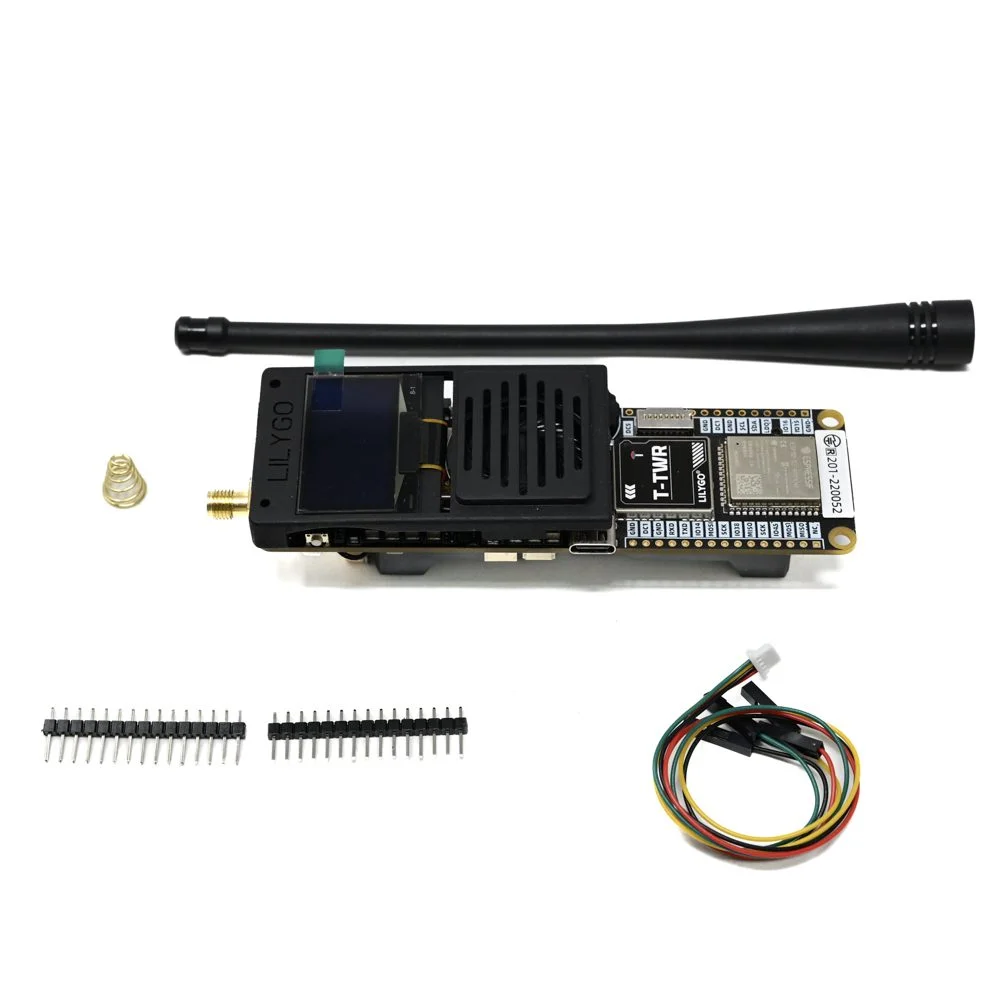
  • 1 x LilyGO T-TWR Plus Development Board

Additional Information

Weight 0.19 kg
Dimensions 19 × 10 × 5 cm