SKU: IOWC-1437
📋 GST Invoice Available

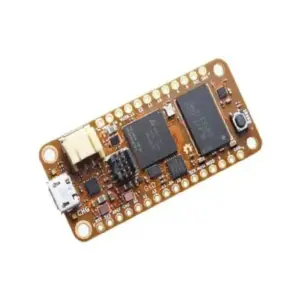
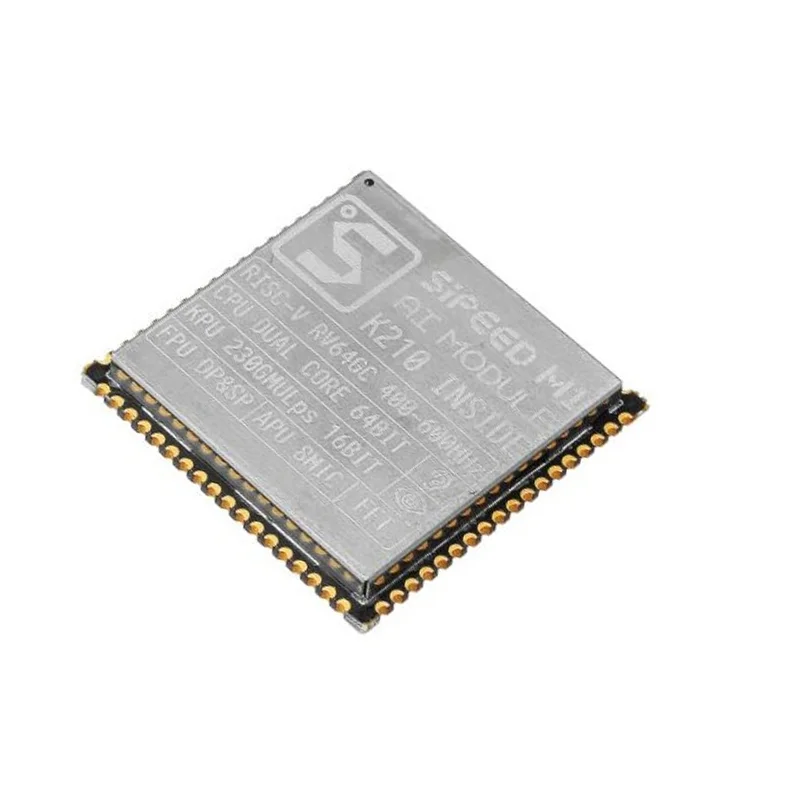
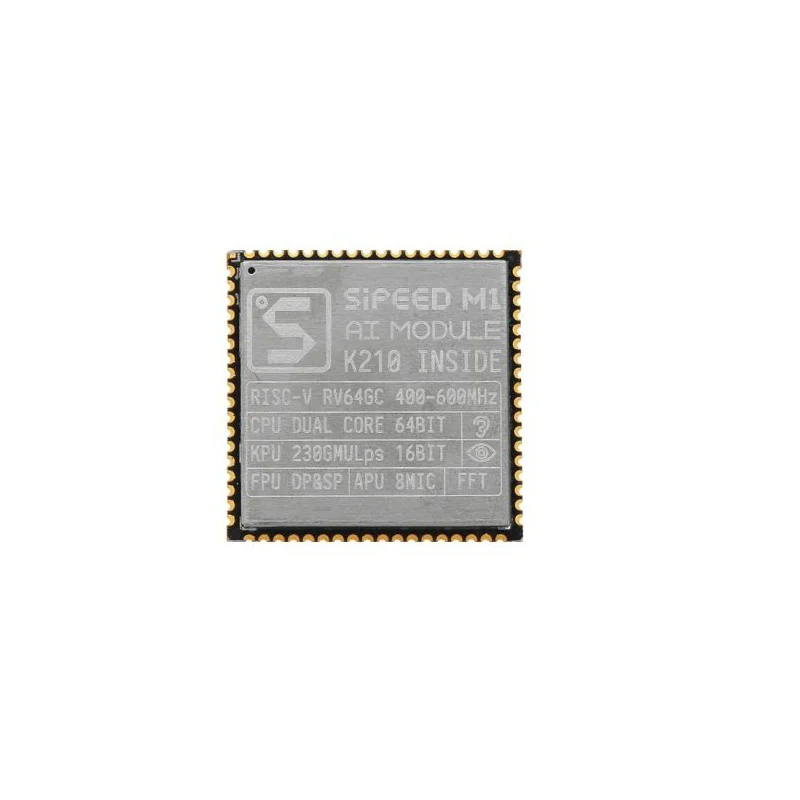
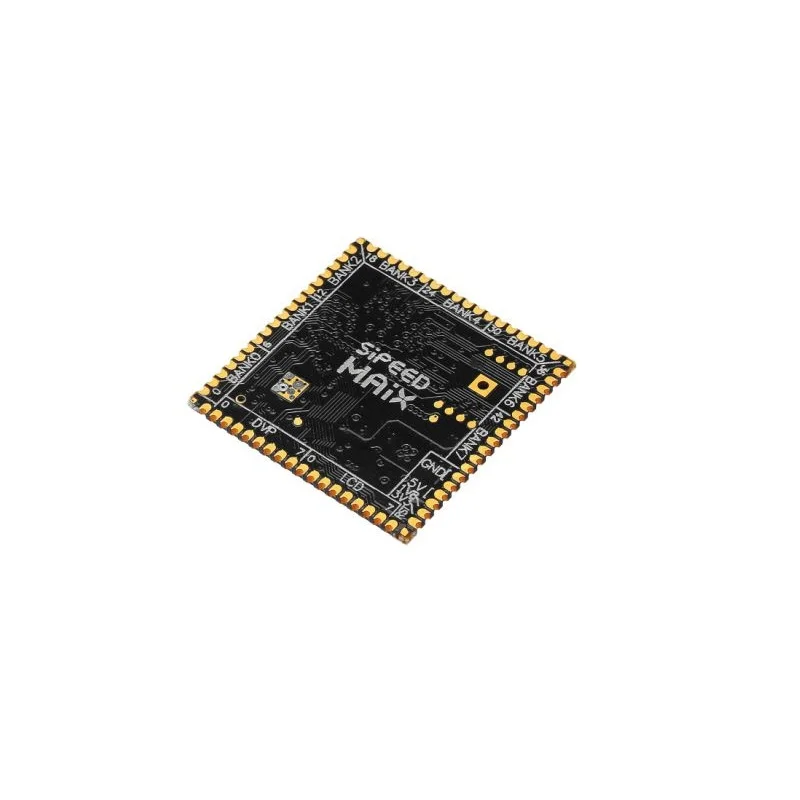
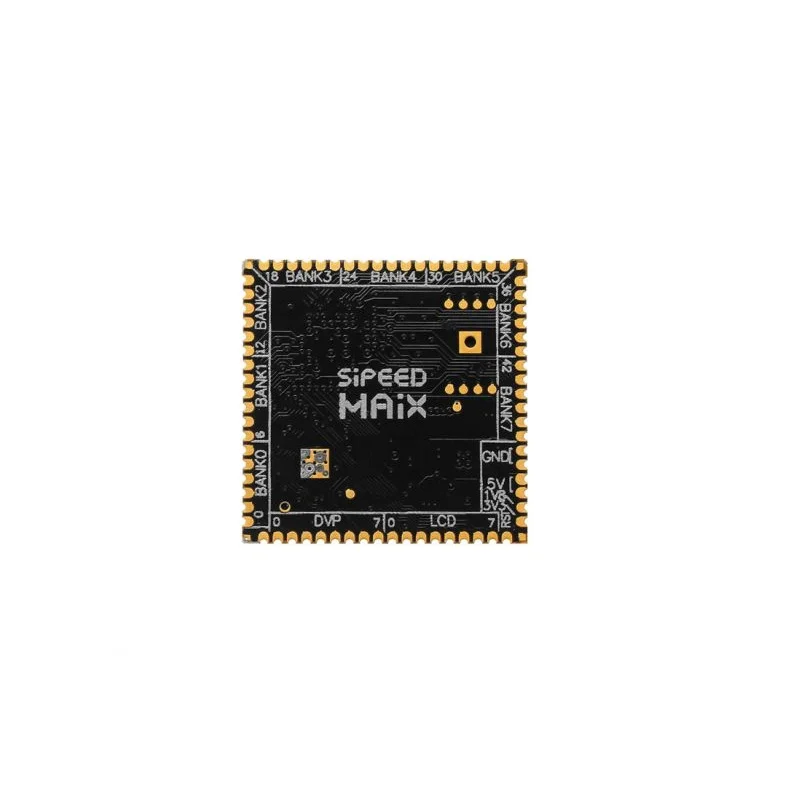
Sipeed MAIX-I Module w/o WiFi (RISC-V 64 AIoT, K210)

₹2,099.00 (Inclusive of all taxes)
Out of Stock

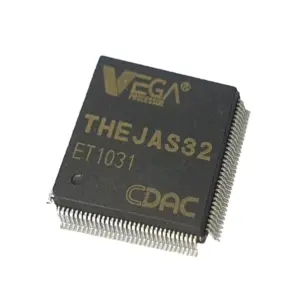
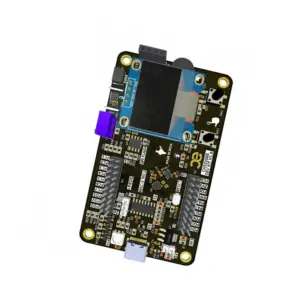
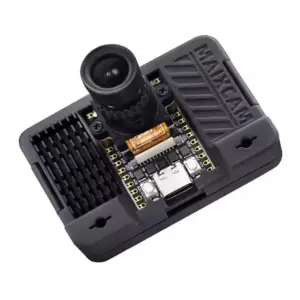
The Sipeed MAIX-I module is a compact RISC-V 64-bit AIoT platform featuring the Kendryte K210 SoC, designed for deploying TinyML, computer vision, and audio processing at the edge. It integrates a dual-core CPU, a dedicated KPU neural network processor, and an APU for microphone arrays, supporting development with C/C++ SDK, FreeRTOS, and MicroPython.

Features

  • Dual-core 64-bit RISC-V CPU (K210) running at 400MHz (overclockable to 800MHz) with an on-chip 8MB high-speed SRAM for rapid AI inference and data processing.
  • Integrated KPU (Neural Network Processor) delivers up to 0.5 TOPS for real-time object detection at 60fps@VGA, supporting models like Tiny YOLO and MobileNet.
  • Built-in APU (Audio Processor) supports 8-channel microphone arrays, 192kHz sample rate, and hardware FFT for advanced sound source localization and beamforming.
  • Flexible FPIOA (Field Programmable IO Array) allows mapping of 255 internal functions to 48 GPIOs, with selectable I/O voltages of 1.8V or 3.3V for versatile peripheral integration.
  • Direct interfaces for DVP cameras and MCU LCDs, enabling complete vision systems, and includes accelerators for AES, SHA256, and FFT.

Out of stock

Description

The Sipeed MAIX-I module encapsulates the Kendryte K210 RISC-V AI SoC into a 1-inch square form factor, providing a full-featured edge AI processing unit. It combines a high-performance dual-core processor with a dedicated convolutional neural network accelerator (KPU) and an audio processing unit (APU), enabling low-latency, offline inference for machine vision and hearing applications without relying on cloud connectivity.

Power management is handled by an integrated 3-channel DC-DC converter, supporting a 5V ±0.2V supply with typical operational currents around 300mA. The module’s design emphasizes low power consumption and a small physical footprint, making it suitable for embedding into battery-powered IoT devices, robotics, and industrial predictive maintenance systems where privacy and bandwidth are constraints.

Key Features

  • First-generation competitive RISC-V 64-bit AI chip (K210) with a dedicated Neural Network Processor (KPU) for edge TensorFlow Lite and custom model deployment.
  • High-performance Audio Processor Unit (APU) enables multi-channel microphone array processing with hardware FFT for real-time beamforming and sound source localization in up to 16 directions.
  • Field Programmable IO Array (FPIOA) offers extreme flexibility, allowing developers to remap UART, SPI, I2C, I2S, PWM, and other functions to any of the 48 available GPIO pins.
  • On-chip large memory architecture includes 6MB general-purpose SRAM and 2MB dedicated AI SRAM (total 8MB), facilitating complex model inference without external RAM.
  • Comprehensive development ecosystem support includes native C/C++ SDK, FreeRTOS port, and MicroPython, with tools for model compilation from mainstream frameworks.
  • Direct camera and display interfaces via DVP (up to 640x480) and MCU LCD parallel bus, enabling standalone computer vision applications.
  • Integrated hardware accelerators for AES-256 encryption, SHA-256 hashing, and FFT computations offload these tasks from the main CPU cores.

Applications

  • Edge AI Vision Systems: Real-time object detection, face recognition, and anomaly detection for smart security, retail analytics, and industrial quality inspection.
  • Intelligent Audio Devices: Voice-controlled interfaces, sound event classification, and beamforming microphone arrays for conferencing or smart home assistants.
  • Predictive Maintenance & IIoT: Vibration analysis, thermal monitoring, and operational telemetry on factory floors using on-device TinyML models.
  • Educational & Maker Projects: Learning RISC-V architecture, neural network deployment, and building autonomous robots or drones with local sensor processing.
  • Embedded Robotics: Serving as the main perception and decision-making brain for mobile robots, drones, and robotic arms requiring low-latency vision.

Technical Specifications

Microcontroller / SoCKendryte K210 (Dual-core 64-bit RISC-V IMAFDC)
CPU Frequency400MHz (adjustable, overclockable to 800MHz)
On-Chip SRAM8MB total (6MB general-purpose + 2MB AI-specific)
Neural Network ProcessorKPU (0.25 TOPS @ 0.3W, 400MHz)
Audio ProcessorAPU supporting 8 mics, up to 192kHz sample rate
Vision InterfaceDVP camera interface (max 640x480)
GPIO & I/O Flexibility48 GPIOs via FPIOA, voltage selectable (1.8V / 3.3V)
Supply Voltage5.0V ±0.2V
Typical Operating Current~300 mA
Operating Temperature-30°C to 85°C
Dimensions (L x W x H)25 mm x 25 mm x 1 mm
Weight8 g

Frequently Asked Questions

How do I power and program the Sipeed MAIX-I module?

The module requires a stable 5V ±0.2V power supply connected to its designated power pins, drawing approximately 300mA under typical load. For programming, connect a USB-to-serial adapter (e.g., CP2102) to the module's UART0 TX/RX pins. Use the official Kendryte SDK or MicroPython firmware, flashing via the kflash.py utility with the correct serial port and baud rate (typically 115200). The FPIOA must be configured to map the UART function to the physical pins you are using for communication.

What camera and display interfaces does the MAIX-I support?

It features a Digital Video Port (DVP) parallel interface supporting camera sensors like the OV2640 with a maximum resolution of 640x480 pixels. For displays, it provides a standard MCU LCD parallel interface (e.g., for SPI or RGB panels). You will need an FPC adapter or breakout board to connect common camera modules or LCDs. The SDK includes drivers for initializing the DVP bus and handling frame capture, which can then be processed directly by the integrated KPU for object detection or classification tasks.

How do I deploy a custom TensorFlow Lite model to the KPU?

First, train or obtain a quantized TensorFlow Lite model compatible with the K210's KPU constraints (e.g., specific layer types and parameter limits). Use the official NNCase compiler toolchain from Sipeed to convert the .tflite file into a .kmodel format. Flash this .kmodel to the module's external flash memory. In your C or MicroPython application, load the model using the KPU API, pass image data from the DVP camera (pre-processed to the correct dimensions), and call the KPU inference function to get classification or detection results on the edge.

What is the FPIOA and how is it configured for GPIO?

The Field Programmable IO Array (FPIOA) is a unique hardware peripheral on the K210 that allows you to assign any of 255 internal functions (UART, SPI, I2C, GPIO, etc.) to any of the 48 physical GPIO pins. Configuration is done in software at initialization. For example, to set pin 3 as a UART TX, you call the FPIOA function to map the UART1_TX internal io number to physical pin 3. This provides immense flexibility for board design but requires careful pin planning in your firmware's setup code before using any peripheral.

Package Includes

  • 1 x Sipeed MAIX-I module (without WiFi)

Additional Information

Weight 0.008 kg
Dimensions 2.5 × 2.5 × 0.1 cm