SKU: IOWC-1085
📋 GST Invoice Available

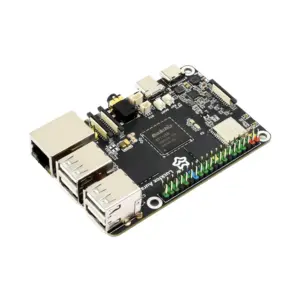
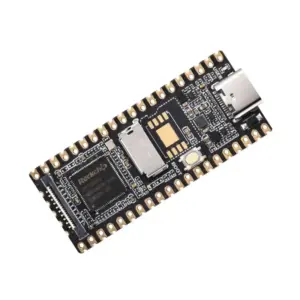
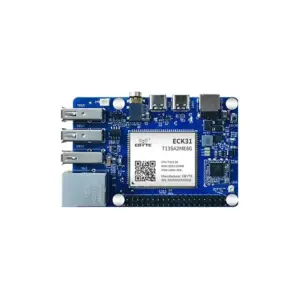
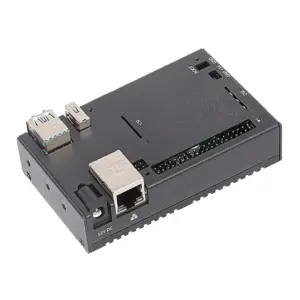
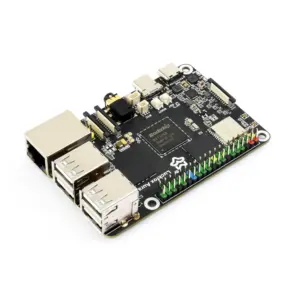
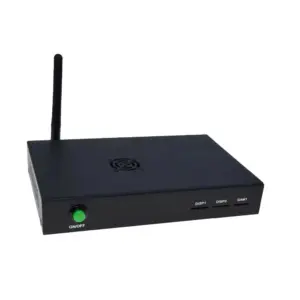
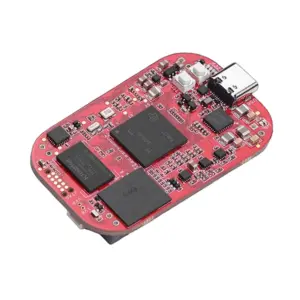
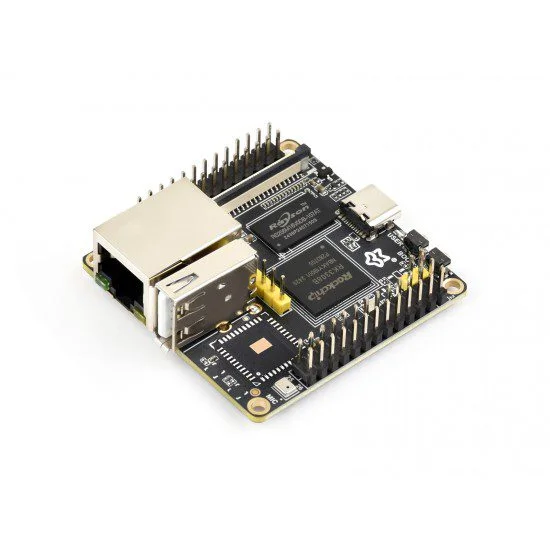
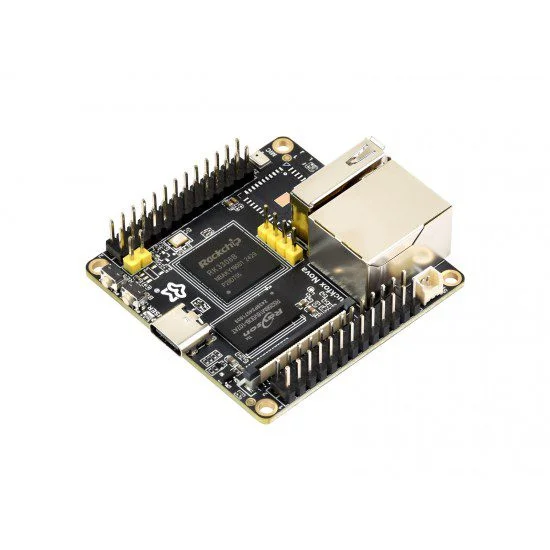
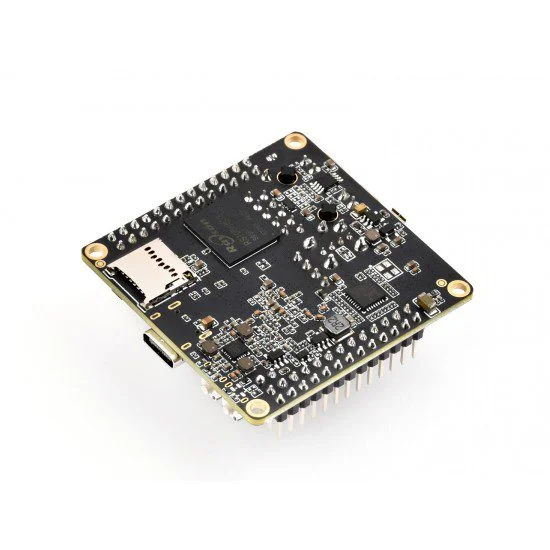
Luckfox Nova Micro Development Board, Rockchip RK3308B, 8GB eMMC, Audio Codec

₹3,279.00 (Inclusive of all taxes)
Out of Stock

The Luckfox Nova Micro Development Board is a compact, quad-core ARM Cortex-A35 embedded platform based on the Rockchip RK3308B SoC, featuring an integrated high-performance audio codec with 8-channel mic inputs and 8GB eMMC storage, ideal for voice interaction and edge AI applications.

Features

  • Quad-core ARM Cortex-A35 processor at 1.3GHz delivers robust performance for embedded voice and multimedia tasks.
  • Integrated Audio Codec with Voice Activity Detection (VAD) and support for up to 8-channel microphone inputs enables advanced audio processing.
  • Onboard 8GB eMMC storage plus TF card slot (SDIO 3.0) provides ample, expandable space for application data and OS.
  • Dual 26-pin GPIO headers expose UART, SPI, and I2C interfaces for flexible peripheral and sensor connectivity.
  • Compact 50x50mm form factor with 512MB DDR3 RAM is optimized for space-constrained, power-efficient edge devices.

Out of stock

Description

The Luckfox Nova Micro Development Board leverages the Rockchip RK3308B SoC, a processor engineered for smart voice interaction and digital multimedia. Its 64-bit quad-core ARM Cortex-A35 architecture, clocked at 1.3GHz, provides the computational muscle needed for real-time audio processing, lightweight computer vision, and running embedded Linux distributions. The integrated high-performance audio codec subsystem, complete with Voice Activity Detection (VAD), simplifies the development of far-field voice pickup and noise suppression algorithms.

Designed for system integrators and product developers, the board features a dense I/O layout with two 26-pin headers granting access to serial communication buses, GPIOs, and power rails. The inclusion of 8GB eMMC flash offers reliable, high-speed onboard storage for the operating system and application data, while the microSD slot allows for further expansion. With its minimal power footprint and support for MIPI CSI-2 camera interfaces, the Nova board serves as a capable foundation for building intelligent edge devices, from voice-controlled assistants to embedded vision systems.

Key Features

  • Rockchip RK3308B SoC with 64-bit quad-core ARM Cortex-A35 CPUs @ 1.3GHz for efficient embedded processing.
  • Integrated Audio Codec with Voice Activity Detection (VAD) and support for 8-channel microphone array input.
  • Onboard 512MB DDR3 RAM ensures smooth multitasking and application performance.
  • 8GB eMMC flash storage provides fast, reliable boot media and data logging capacity.
  • Dual 26-pin GPIO headers for extensive peripheral interfacing (UART, SPI, I2C, PWM, ADC).
  • MIPI CSI-2 camera interface enables connection to modern image sensors for vision applications.
  • Compact 50mm x 50mm form factor with USB Type-C for power and data transfer.
  • MicroSD card slot (SDIO 3.0) allows for storage expansion and portable data exchange.

Applications

  • Smart voice interaction devices and far-field voice control terminals.
  • Embedded AI audio processing and multi-microphone array systems for noise cancellation.
  • Edge computing platforms for lightweight computer vision and TinyML inference.
  • Digital signage and multimedia playback systems requiring local storage.
  • Industrial IoT gateways for data aggregation and protocol conversion.

Technical Specifications

Processor / SoCRockchip RK3308B (Quad-core ARM Cortex-A35 @ 1.3GHz)
RAM512MB DDR3
Internal Storage8GB eMMC
Expansion StorageMicroSD Slot (SDIO 3.0)
Audio CodecIntegrated, with VAD, 8-channel Mic Input
Camera InterfaceMIPI CSI 2-lane
GPIO & Interfaces2 x 26-pin Headers (UART, SPI, I2C, GPIO, ADC)
USB PortsUSB Type-C (Power/Data), USB Type-A Host
Audio ConnectorMX1.25 2P Connector
Dimensions50mm x 50mm (LxW)
Weight24g

Frequently Asked Questions

What operating systems are supported by the Luckfox Nova board?

The Luckfox Nova development board typically runs a custom Buildroot-based Linux distribution provided by Luckfox. You can download the official system image and toolchain from the Luckfox Wiki. The board boots from its onboard 8GB eMMC storage, which comes pre-flashed with a baseline Linux OS. Developers can modify the kernel, root filesystem, and applications using the provided SDK to create custom embedded solutions for voice, vision, or gateway applications.

How do I connect microphones and audio output to the board?

Audio input is handled via the onboard audio codec's 8-channel microphone input lines, accessible through the MX1.25 2-pin connector and specific GPIO pins for array configurations. You will need compatible microphone modules with matching interfaces. For audio output, the codec also supports speaker connections. Detailed pin mapping and example schematics for connecting digital MEMS microphones or analog mic arrays are provided in the hardware design documentation from Luckfox to ensure proper signal integrity and bias voltage.

Can I connect a camera module to the Luckfox Nova for vision projects?

Yes, the board features a MIPI CSI-2 2-lane camera interface, allowing you to connect compatible image sensors. You will need a camera module with a matching MIPI CSI-2 interface, such as those commonly used with Raspberry Pi. Driver support for popular sensors is included in the Luckfox kernel source. After physically connecting the camera via the FPC connector, you can enable it in the device tree and use standard V4L2 tools or higher-level frameworks like OpenCV (compiled for ARM) to capture and process video for your embedded vision application.

What is the power requirement and how do I supply power to the board?

The Luckfox Nova board is powered via its USB Type-C port. The typical input voltage is 5V DC. You should use a stable 5V/2A USB power adapter connected to the Type-C port to ensure reliable operation, especially when peripherals are attached. The board does not support Power-over-Ethernet (PoE) by default. You can monitor the system's power consumption via software, but expect idle currents in the hundreds of milliamps and higher under full CPU load, making it suitable for mains-powered or large-battery applications.

How do I access the GPIOs and serial console for development?

The board's dual 26-pin headers provide access to multiple GPIOs, UARTs, SPI, and I2C buses. Pinout diagrams are available in the Luckfox documentation. For initial setup and serial console access, connect the board's USB Type-C port to your computer. A USB-to-serial bridge on the board creates a COM port. Use a terminal emulator like PuTTY or screen at the correct baud rate (typically 1500000) to access the Linux console. You can then control GPIOs using sysfs or a library like libgpiod, and develop applications in C, Python, or other supported languages.

Package Includes

  • 1 x Luckfox Nova Micro Development Board
  • 1 x USB Type-A to Type-C Cable (~1m)

Additional Information

Weight 0.024 kg
Dimensions 5 × 5 cm