SKU: IOWC-1037
📋 GST Invoice Available

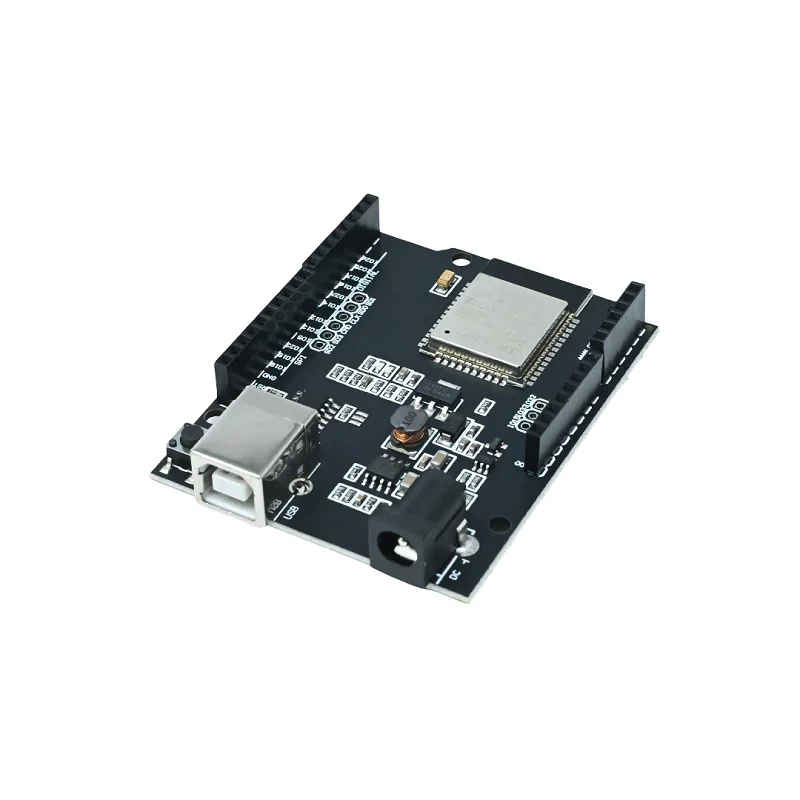
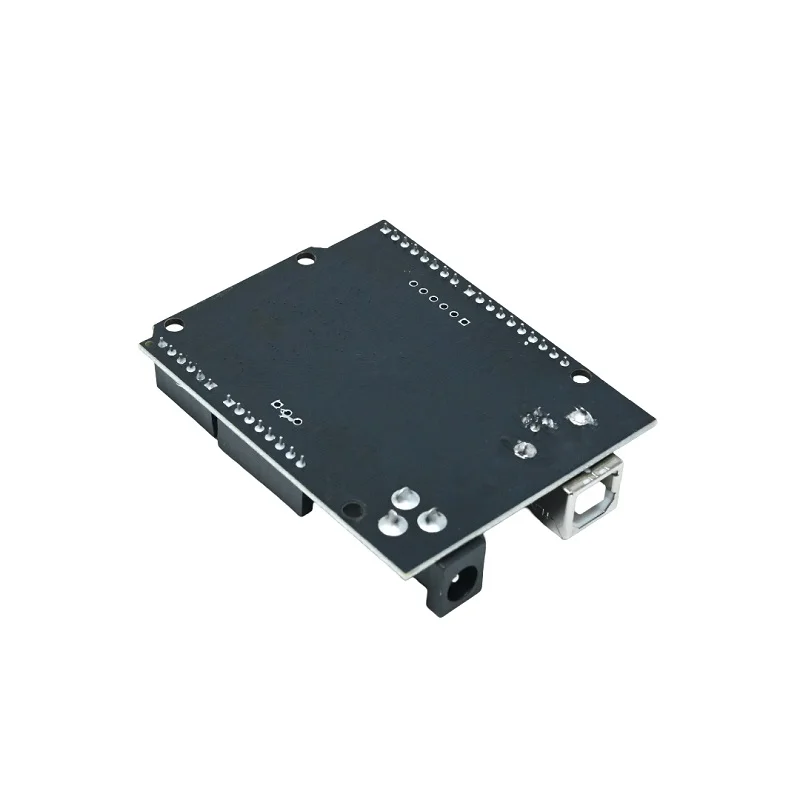
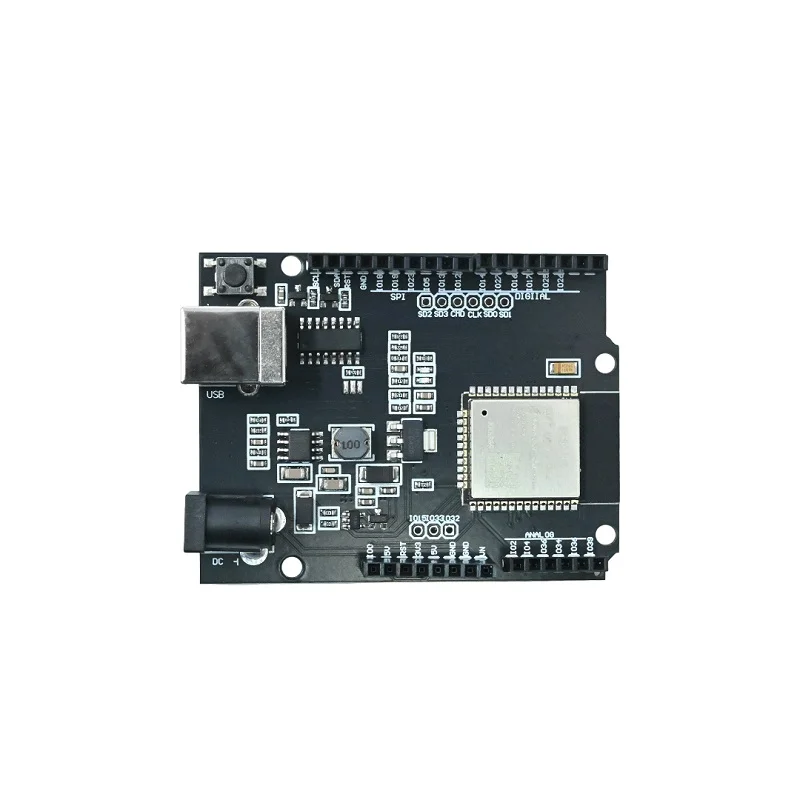
ESP32 UNO D1 R3 R32 WiFi Bluetooth Development Board

₹459.00 (Inclusive of all taxes)
Out of Stock

This ESP32 development board adopts the classic Arduino UNO R3 form factor and pinout, integrating a dual-core ESP32 SoC for 2.4GHz Wi-Fi and Bluetooth 4.2 connectivity, powered via USB-B with CH340 serial chip for easy programming in Arduino IDE or ESP-IDF.

Features

  • Arduino UNO R3 Form Factor: Directly compatible with a vast ecosystem of existing Arduino shields and prototyping accessories.
  • ESP32 Dual-Core SoC: Provides robust processing power for IoT applications alongside integrated 2.4GHz Wi-Fi and Bluetooth 4.2.
  • Broad Power Input Range: Supports 5V to 12V DC input, offering flexibility for various power supply scenarios.
  • CH340 USB-to-Serial Interface: Ensures stable firmware uploads and serial communication via a standard USB-B port.
  • Maker & IoT Ready: Fully compatible with the Arduino IDE, ESP-IDF, and MicroPython for rapid prototyping of connected devices.

Out of stock

Description

The ESP32 UNO D1 R3 R32 Development Board merges the ubiquitous Arduino UNO physical layout with the advanced wireless capabilities of the Espressif ESP32. This design allows developers and makers to leverage their existing shield investments while upgrading projects to include Wi-Fi and Bluetooth connectivity. The board is built around the ESP32 dual-core Xtensa LX6 microprocessor, which handles wireless protocols and application logic efficiently.

Power is supplied through a wide 5V to 12V input range, accommodating various wall adapters or battery packs. The onboard CH340 USB-to-serial converter provides a reliable link for programming and serial debugging via a USB-B port. With its standard UNO R3 pin mapping, this board serves as a direct drop-in replacement for traditional Arduino boards in IoT, home automation, and wireless sensor network projects, significantly expanding their functionality.

Key Features

  • ESP32-based development board in the classic Arduino UNO R3 footprint and pinout.
  • Integrated 2.4GHz IEEE 802.11 b/g/n Wi-Fi and Bluetooth 4.2 BR/EDR/BLE for dual wireless connectivity.
  • Powered by a dual-core Xtensa LX6 CPU, offering high performance for complex IoT applications.
  • Features a CH340 USB-to-serial chip for stable programming and communication via USB-B interface.
  • Accepts a wide DC input voltage range from 5V to 12V for flexible power sourcing.
  • Includes one analog input channel with a 3.2V maximum input range for sensor interfacing.
  • Full compatibility with the Arduino IDE, ESP-IDF framework, and MicroPython for versatile development.
  • Ideal for prototyping IoT devices, smart home controllers, and wireless data loggers.

Applications

  • IoT Prototyping & Smart Home Automation Hubs
  • Wireless Sensor Nodes for Environmental Monitoring
  • Educational Platforms for Learning Embedded Systems & Wireless Communication
  • Retrofit Upgrades for Existing Arduino Shield-Based Projects
  • Bluetooth-Controlled Devices and Beacons

Technical Specifications

Microcontroller / SoCESP32 (Dual-core Xtensa LX6)
Wireless ProtocolsWi-Fi 802.11 b/g/n, Bluetooth 4.2 BR/EDR/BLE
Frequency Range2.4GHz ISM Band
Supply Voltage5V - 12V DC
Analog Inputs1 channel (Max 3.2V)
USB InterfaceUSB-B with CH340 Serial Converter
Dimensions (L x W)70mm x 53mm
Weight26g

Frequently Asked Questions

How do I program this ESP32 UNO board using the Arduino IDE?

First, install the ESP32 board support via the Arduino IDE Board Manager using the ESP32 by Espressif Systems URL. Connect the board via USB-B cable, select 'ESP32 Dev Module' as your board, choose the correct COM port, and set upload speed to 115200 baud. The onboard CH340 chip handles serial communication for uploading your sketches. Ensure you have the necessary Wi-Fi and Bluetooth libraries installed for wireless functionality.

What is the maximum input voltage for the analog pin on this board?

The single analog input channel on this ESP32 UNO board has a maximum voltage rating of 3.2V. Applying a voltage higher than this can damage the ESP32's ADC. For reading sensors with higher output voltages, you must use a voltage divider circuit to scale the signal down to within the 0-3.2V safe range before connecting it to the analog pin.

Can I power this development board directly from a 12V wall adapter?

Yes, the board supports a wide input voltage range from 5V to 12V DC. You can connect a 12V wall adapter to the DC power jack or appropriate pins, as the onboard voltage regulator will step it down to the required levels for the ESP32 and other components. Always ensure the polarity of your power supply is correct and that it can provide sufficient current for your specific project's needs.

Are all Arduino shields compatible with this board's UNO form factor?

Most shields designed for the standard Arduino UNO R3 pinout will be physically and electrically compatible, as this board replicates that layout. However, you must verify compatibility regarding voltage levels. The ESP32 operates at 3.3V logic, while some older shields might expect 5V logic. For digital communication, it's usually fine, but for analog sensors or specific components, check their data sheets for 3.3V compatibility to avoid issues.

Package Includes

  • 1 x ESP32 UNO D1 R3 R32 WiFi Bluetooth Development Board

Additional Information

Weight 0.026 kg
Dimensions 7 × 5.3 cm