SKU: IOWC-0819
📋 GST Invoice Available

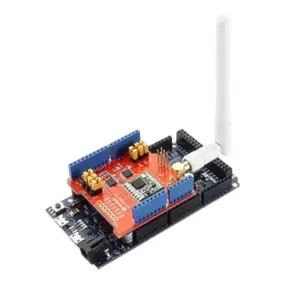
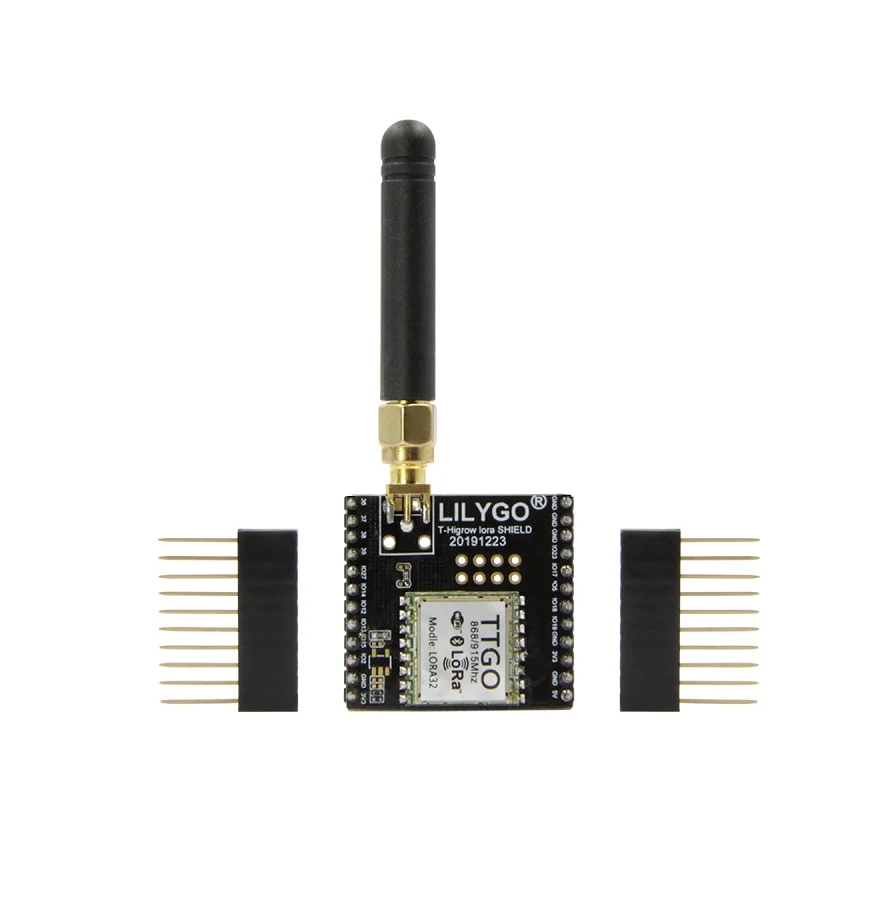
Generic LoRa 915MHz Shield for LilyGO T-SIM7000G Module

₹1,779.00 (Inclusive of all taxes)
Out of Stock

This unsoldered LoRa 915MHz shield adds long-range, low-power LoRa connectivity to LilyGO T-SIM7000G modules, enabling hybrid cellular/LoRa IoT projects with Arduino IDE compatibility.

Features

  • Adds SX1276-based LoRa (915MHz) connectivity to LilyGO T-SIM7000G cellular modules for dual-network IoT solutions.
  • Features high RF sensitivity (-148 dBm) and +20 dBm output power for extended communication range.
  • Designed for easy integration with onboard IPEX antenna connector and 3.3-7V wide voltage input.
  • Perfectly supports the Arduino development environment for rapid prototyping and firmware deployment.
  • Unsoldered design provides flexibility for custom pin header installation based on project requirements.

Out of stock

Description

This LoRa 915MHz expansion shield is engineered to seamlessly integrate with the LilyGO T-SIM7000G module, creating a powerful dual-radio IoT node combining 4G LTE cellular and long-range LoRa connectivity. Based on the Semtech SX1276 transceiver, it operates in the 915MHz ISM band, delivering robust communication with high sensitivity and configurable output power for challenging environments.

The board requires manual soldering of pin headers, offering makers and developers the flexibility to choose their preferred connector orientation and height. It includes an IPEX connector for an external antenna, crucial for optimizing the LoRa link budget. With wide 3.3-7V input voltage compatibility, it can be powered directly from the host module or an external source, making it suitable for field deployments.

Key Features

  • SX1276 LoRa transceiver chipset for reliable long-range, low-power communication.
  • Operates on the 915MHz frequency band, ideal for regions like North America.
  • High receiver sensitivity of -148 dBm for decoding weak signals at extreme distances.
  • Configurable RF output power up to +20 dBm for maximizing range.
  • Onboard IPEX (U.FL) connector for attaching an external LoRa antenna.
  • Wide operating voltage range (3.3V to 7V) for flexible power supply options.
  • Unsoldered pin header design allows for custom installation and stacking.
  • Fully compatible with the Arduino IDE and popular LoRa libraries for quick development.

Applications

  • Hybrid cellular/LoRa asset tracking and fleet management devices.
  • Remote environmental monitoring stations requiring redundant connectivity.
  • Agricultural IoT sensors using LoRa for local data collection and 4G for backhaul.
  • Industrial telemetry gateways that aggregate LoRa sensor data and transmit via LTE.
  • Smart city infrastructure nodes for distributed sensing and long-range communication.

Technical Specifications

LoRa TransceiverSX1276
Wireless ProtocolLoRa
Frequency Range915 MHz
RF Transmit PowerUp to +20 dBm
Receiver SensitivityUp to -148 dBm
Supply Voltage3.3 – 7 V
Antenna ConnectorIPEX (U.FL)
Operating Temperature-40 to 90°C
CompatibilityLilyGO T-SIM7000G Module
Development SupportArduino IDE

Frequently Asked Questions

How do I connect this LoRa shield to my LilyGO T-SIM7000G module?

You must solder pin headers to the shield's through-holes, aligning with the GPIO pins on your LilyGO T-SIM7000G board. Typical connections include SPI pins (MISO, MOSI, SCK, NSS/CS) for the SX1276, along with 3.3V and GND. Consult the specific pinout for your T-SIM7000G variant to map the correct GPIOs for the LoRa module's DIO0, DIO1, and RESET pins.

What antenna should I use with the IPEX connector, and is it required?

An external antenna is required for proper operation; without it, signal strength will be severely degraded. You need a 915MHz LoRa antenna with an IPEX (U.FL) male connector. Select an antenna with an appropriate gain (e.g., 3dBi) and radiation pattern for your application. Ensure the antenna's impedance is 50 ohms to match the RF circuitry for optimal power transfer and range performance.

How do I program and use this shield with the Arduino IDE?

Install the popular 'LoRa' library by Sandeep Mistry via the Arduino Library Manager. In your sketch, include the library and initialize the LoRa object, specifying the correct CS and RESET pins connected on your shield. Configure the frequency to 915E6 (for 915MHz). You can then use library functions to begin packet transmission and reception. Example code is widely available for basic send/receive routines.

What is the power consumption of this LoRa shield during operation?

Power consumption depends on the operating mode set via firmware. During transmission at maximum +20 dBm output, current draw can reach approximately 120 mA. In receive mode, it typically draws around 10-15 mA. The SX1276 supports low-power sleep modes, reducing current to microamps, which is essential for battery-powered IoT nodes. You must manage these modes programmatically to optimize battery life.

Package Includes

  • 1 x Unsoldered LoRa 915MHz Shield for LilyGO T-SIM7000G Module

Additional Information

Weight 0.04 kg
Dimensions 4 × 6 × 3 cm