SKU: IOWC-0669
📋 GST Invoice Available

Espressif ESP32-C5-DevKitC-1-N8R8 Wi-Fi 6 & BLE Dev Board

₹1,829.00 (Inclusive of all taxes)
Out of Stock

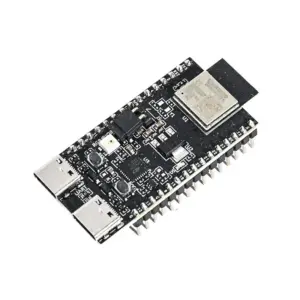
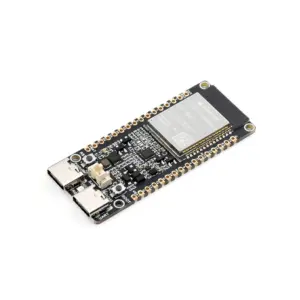
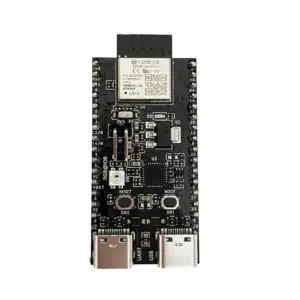
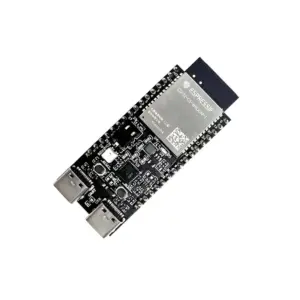
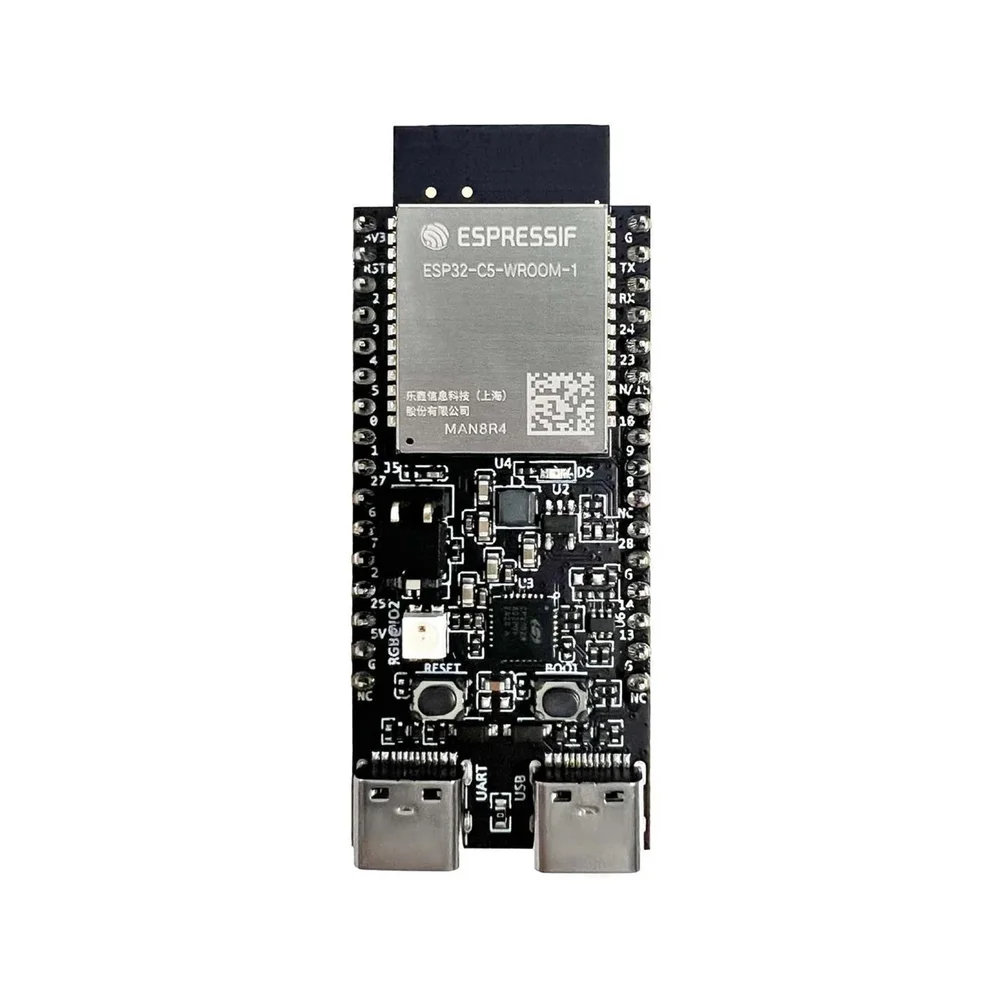
The Espressif ESP32-C5-DevKitC-1-N8R8 is a feature-rich development board based on the ESP32-C5-WROOM-1(U) module, offering dual-band Wi-Fi 6, Bluetooth LE, Zigbee, and Thread connectivity for next-generation IoT applications. It is programmable via the Arduino IDE and ESP-IDF, powered by a USB Type-C port, and includes accessible GPIO headers for rapid prototyping.

Features

  • Multi-Protocol Wireless SoC: Features the ESP32-C5 with integrated 2.4/5 GHz Wi-Fi 6, Bluetooth Low Energy, Zigbee, and Thread for versatile IoT connectivity.
  • Modern USB-C Interface: Provides a single USB Type-C port for power delivery, programming, serial communication, and JTAG debugging up to 12 Mbps.
  • Developer-Friendly Design: Includes accessible pin headers, Boot/Reset buttons, and an addressable RGB LED for straightforward hardware integration and debugging.
  • Flexible Power Options: Can be powered via the USB-C port or directly from external 5V or 3.3V/GND headers for embedded deployments.

Out of stock

Description

The ESP32-C5-DevKitC-1-N8R8 Development Board is Espressif’s platform for building advanced wireless IoT nodes. Centered on the ESP32-C5-WROOM-1(U) module, it integrates a powerful RISC-V core with a comprehensive RF front-end supporting the latest Wi-Fi 6 standard across both 2.4 GHz and 5 GHz bands, alongside concurrent Bluetooth LE, Zigbee, and Thread protocol stacks. This enables developers to create high-throughput, low-latency, and energy-efficient mesh networks for smart home and industrial automation.

The board’s design prioritizes developer experience with a USB Type-C connector handling all power, programming, and data transfer needs, complemented by an onboard USB-to-UART bridge. Most GPIOs are broken out to standard pin headers, facilitating easy connection to sensors, actuators, and displays. With support for deep sleep modes and multiple external power inputs, it is suitable for both battery-powered edge devices and mains-powered gateways. Its compact form factor and comprehensive wireless feature set make it an ideal foundation for prototyping and deploying next-generation connected systems.

Key Features

  • Integrated ESP32-C5 SoC with dual-core 32-bit RISC-V processor for efficient IoT processing.
  • Concurrent support for Wi-Fi 6 (802.11ax) on 2.4 GHz & 5 GHz, Bluetooth LE 5.0, Zigbee 3.0, and Thread wireless protocols.
  • USB 2.0 Full-Speed Type-C interface for streamlined power, programming, and serial communication.
  • Onboard CP2102N USB-to-UART bridge provides reliable serial connectivity for firmware uploads and debugging.
  • Comprehensive GPIO access via male pin headers for seamless integration with peripherals and breadboards.
  • Dedicated Boot and Reset buttons simplify the development and flashing workflow.
  • Addressable RGB LED (WS2812) connected to GPIO27 for visual status indication and prototyping.
  • Multiple power supply inputs: USB Type-C, external 5V pin, or external 3.3V pin for deployment flexibility.

Applications

  • Smart Home Automation Hubs and End Devices
  • High-Throughput Industrial IoT (IIoT) Sensor Nodes
  • Wireless Mesh Networks using Thread or Zigbee
  • Prototyping Next-Generation Wi-Fi 6 Connected Devices
  • Educational Platforms for Embedded Systems and Wireless Protocols

Technical Specifications

Microcontroller/SoCESP32-C5 (RISC-V) within ESP32-C5-WROOM-1(U) Module
Wireless ProtocolsWi-Fi 6 (2.4 & 5 GHz), Bluetooth LE 5.0, Zigbee 3.0, Thread
USB InterfaceUSB Type-C (USB 2.0 Full-Speed)
USB Data RateUp to 12 Mbps
USB-to-UART BridgeCP2102N (Up to 3 Mbps)
Supply Voltage5V via USB-C, or 5V/3.3V via external headers
GPIO AccessStandard 2.54mm pin headers
Indicators & ControlsAddressable RGB LED (GPIO27), Boot Button, Reset Button
Dimensions51 × 26 × 13 mm
Weight15 g

Frequently Asked Questions

How do I program the ESP32-C5-DevKitC-1-N8R8 development board?

You can program the board using the Arduino IDE with the ESP32 board package or Espressif's official ESP-IDF framework. Connect the board via the provided USB Type-C cable, select the correct COM port, and choose 'ESP32-C5 DevKit' as the target. The onboard USB-to-UART bridge handles the serial communication for uploading code and serial debugging without external hardware.

What are the power supply requirements and options for this board?

The primary power source is the USB Type-C port, accepting standard 5V. For standalone deployment, you can supply 5V to the '5V' pin header or 3.3V to the '3V3' pin header, with the corresponding GND. Ensure your external supply can deliver sufficient current for your connected peripherals, especially when using the radio modules at full transmit power.

Can I use both Wi-Fi 6 and Bluetooth LE simultaneously on the ESP32-C5?

Yes, the ESP32-C5 SoC supports concurrent operation of its multi-protocol radios. You can run a Wi-Fi 6 station or access point while simultaneously advertising or connecting as a Bluetooth LE peripheral. This is managed through the ESP-IDF's network stack, allowing for scenarios like a BLE sensor gateway that streams data over a high-speed Wi-Fi 6 connection to the cloud.

How do I access the GPIO pins for connecting sensors and other hardware?

All usable GPIO pins from the ESP32-C5 module are broken out to standard 2.54mm male pin headers on both sides of the board. Refer to the official pinout diagram to identify pins for I2C, SPI, UART, ADC, and digital I/O. You can connect components directly with jumper wires or plug the board into a breadboard for prototyping.

Package Includes

  • 1 x Espressif ESP32-C5-DevKitC-1-N8R8 Development Board

Additional Information

Weight 0.015 kg
Dimensions 2.6 × 5.1 × 1.3 cm