SKU: IOWC-1892
📋 GST Invoice Available

Wemos D1 ESP-WROOM-02 ESP8266 Mini WiFi NodeMCU Module w/ 18650 Battery

₹469.00 (Inclusive of all taxes)
Out of Stock

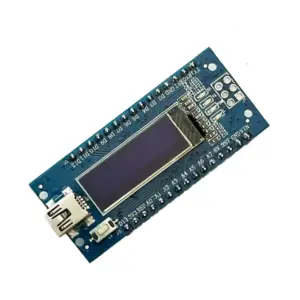
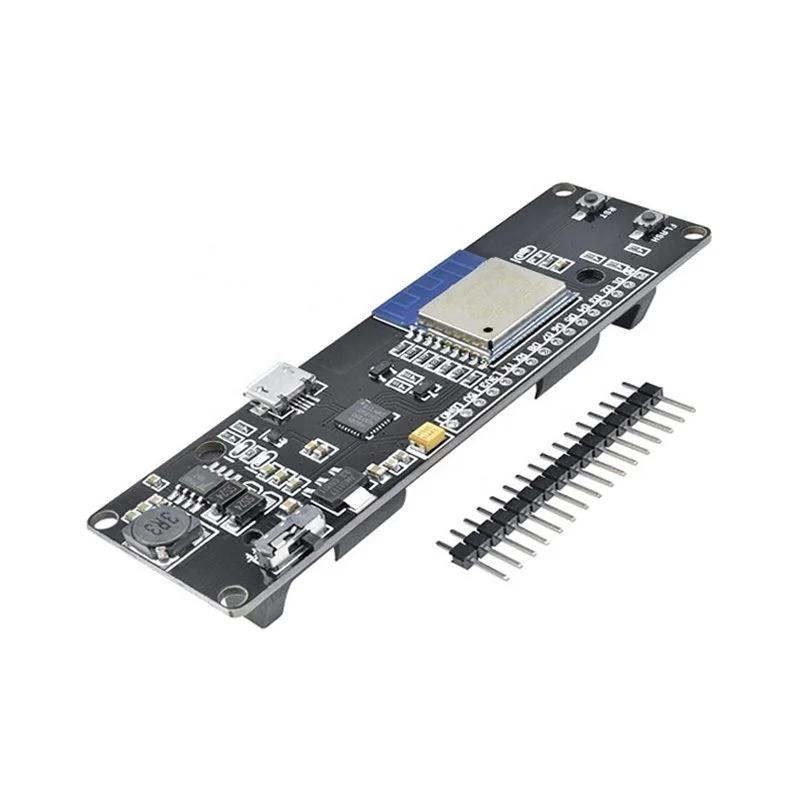
The Wemos D1 ESP-WROOM-02 is a compact ESP8266-based development board integrating a 18650 battery charging circuit with TP5410 boost converter, enabling simultaneous operation and charging. It is fully compatible with the Arduino IDE and NodeMCU firmware for IoT prototyping.

Features

  • Integrated ESP-WROOM-02 module (ESP8266) with Wi-Fi connectivity for IoT applications.
  • Onboard TP5410 charging & 5V boost circuit for 18650 Li-Ion batteries with overcharge/discharge protection.
  • Features a programmable LED (GPIO16), analog input, Micro USB, and CP2102 USB-to-serial converter for easy programming.
  • Includes five directional buttons connected to GPIOs (D5, D6, D7, FLATH, RSET) and solder terminal for deep sleep mode configuration.
  • Compact form factor (92mm x 26mm) designed for portable, battery-powered Wi-Fi sensor nodes and remote control projects.

Out of stock

Description

The Wemos D1 ESP-WROOM-02 board is a highly integrated development platform centered on the Espressif ESP8266 SoC. It combines the core Wi-Fi networking capabilities of the ESP-WROOM-02 module with a comprehensive power management system built around the TP5410 IC. This design allows the board to be powered directly from a single 18650 Li-Ion cell, handling charging via Micro USB and boosting the battery voltage to a stable 5V for the ESP8266 and peripherals.

Beyond power, the board includes practical development features such as a CP2102 USB-to-serial chip for reliable firmware flashing, a dedicated analog input with a voltage divider, and accessible pins for connecting an OLED display (I2C via D1/D2). The inclusion of five tactile buttons and a user-controllable LED streamlines the creation of interactive devices. Its design philosophy prioritizes portable, always-on IoT applications where managing battery life and simplifying power supply are critical.

Key Features

  • ESP8266-based Wi-Fi connectivity with integrated ESP-WROOM-02 certified module.
  • Complete 18650 battery management system with charging, 5V boost, and protection circuits.
  • Enables simultaneous operation and charging via Micro USB port for continuous uptime.
  • Integrated CP2102 USB-to-serial converter for stable programming and serial communication.
  • Five programmable directional buttons and a user LED for interactive project development.
  • Dedicated analog input pin with onboard voltage divider for sensor interfacing.
  • Compact, breadboard-friendly design with accessible GPIOs for rapid prototyping.
  • Full compatibility with Arduino IDE, NodeMCU, and ESP8266 SDK for flexible firmware development.

Applications

  • Portable Wi-Fi sensor nodes for environmental monitoring (temperature, humidity, air quality).
  • Battery-powered IoT remote controls and smart home automation switches.
  • Wireless data loggers and telemetry units for field deployments.
  • Prototyping interactive gadgets and educational tools with integrated buttons and display options.

Technical Specifications

Microcontroller/SoCESP8266 (ESP-WROOM-02 Module)
Wireless ProtocolWi-Fi 802.11 b/g/n
Supply Voltage5V via Micro USB, 3.3V via onboard regulator
Battery SupportSingle 18650 Li-Ion cell (Charging & Boost)
Charging ICTP5410
USB-to-SerialCP2102
User I/OProgrammable LED (GPIO16), 5x Buttons, Analog Input
InterfacesMicro USB, GPIO Headers
Dimensions92mm x 26mm
Weight25g

Frequently Asked Questions

How do I program the Wemos D1 ESP-WROOM-02 board?

Connect the board via its Micro USB port to your computer. Install the CP2102 USB driver if needed. In the Arduino IDE, add the ESP8266 board support via the Board Manager. Select "NodeMCU 1.0 (ESP-12E Module)" as the board, choose the correct COM port, and upload your sketch. Ensure the battery switch is ON and the battery is not being charged during programming to avoid instability.

What is the correct way to connect and charge the 18650 battery?

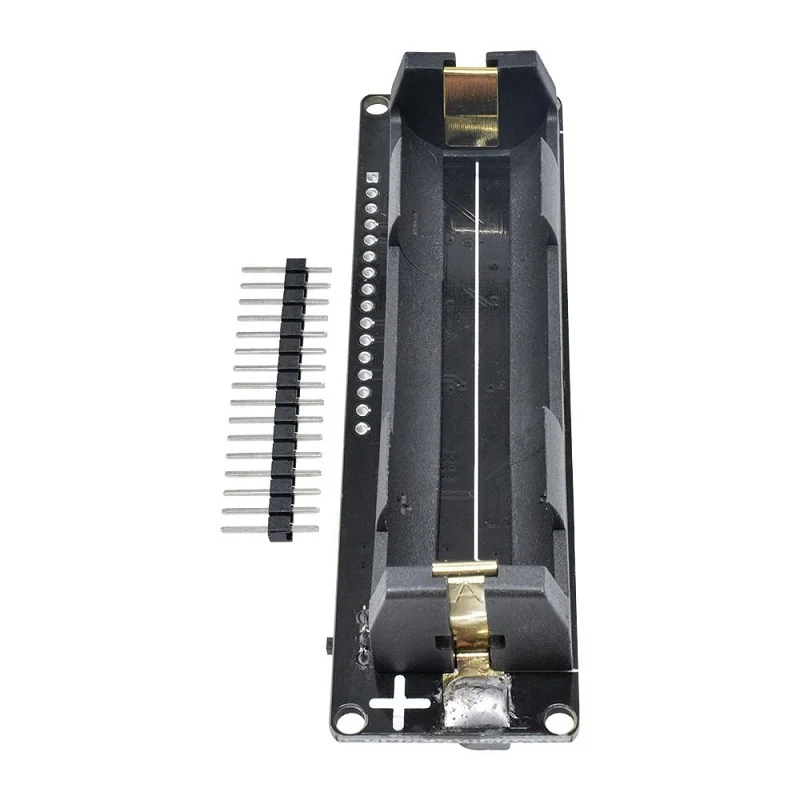
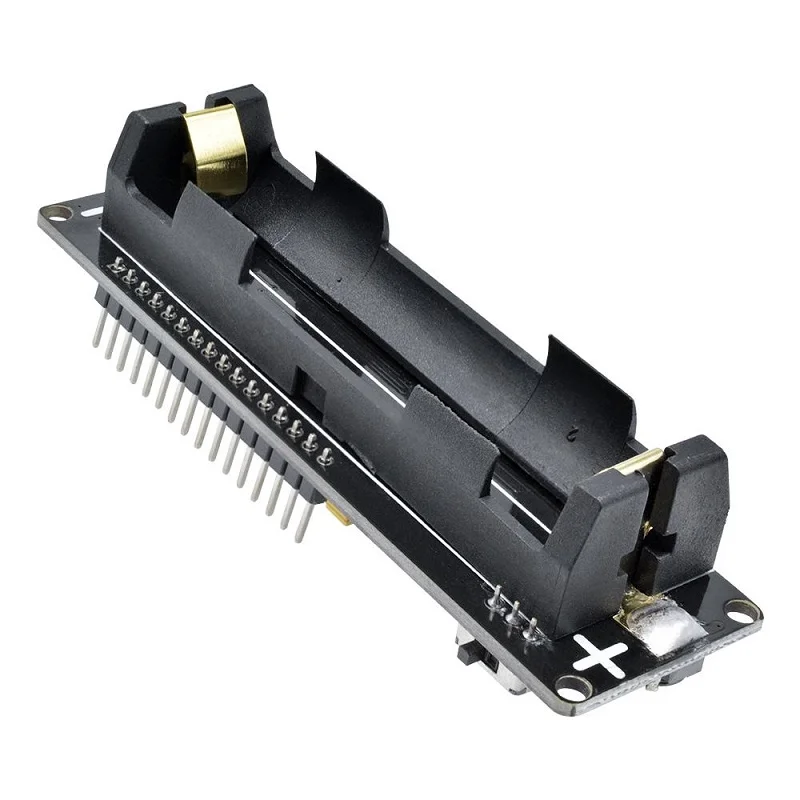
Insert the 18650 Li-Ion cell into the holder, ensuring the positive (+) terminal aligns with the board's "+" marking. A reversed battery can instantly destroy the TP5410 charging chip. Charging occurs via the Micro USB port (5V input). The red LED indicates charging, and green shows full charge. The board can operate from USB power while charging the battery simultaneously.

How do I use the deep sleep feature to conserve battery power?

The board has a solder terminal labeled for sleep mode. To enable deep sleep, connect GPIO16 (D0) to the RESET pin via a wire or solder bridge. In your code, use `ESP.deepSleep(microseconds)` to put the ESP8266 into low-power mode. It will wake up via the internal RTC timer, resetting the board. This drastically reduces current draw, extending battery life for sensor nodes that transmit data periodically.

Can I connect an OLED display to this board?

Yes. The I2C pins for an OLED (SDA and SCL) are available on the pin headers. SDA connects to the D1 (GPIO5) pin, and SCL connects to D2 (GPIO4). You will need to supply 3.3V and GND from the board. Use libraries like Adafruit_SSD1306 or U8g2 in your Arduino sketch to control the display. The integrated buttons are ideal for creating menu interfaces.

Package Includes

  • 1 x Wemos D1 ESP-WROOM-02 Board

Additional Information

Weight 0.025 kg
Dimensions 9.2 × 2.6 cm