SKU: IOWC-1657
📋 GST Invoice Available

Waveshare ESP32-S3 LoRa Development Board w/ LR1121 RF Chip HF Version

₹1,809.00 (Inclusive of all taxes)
Out of Stock

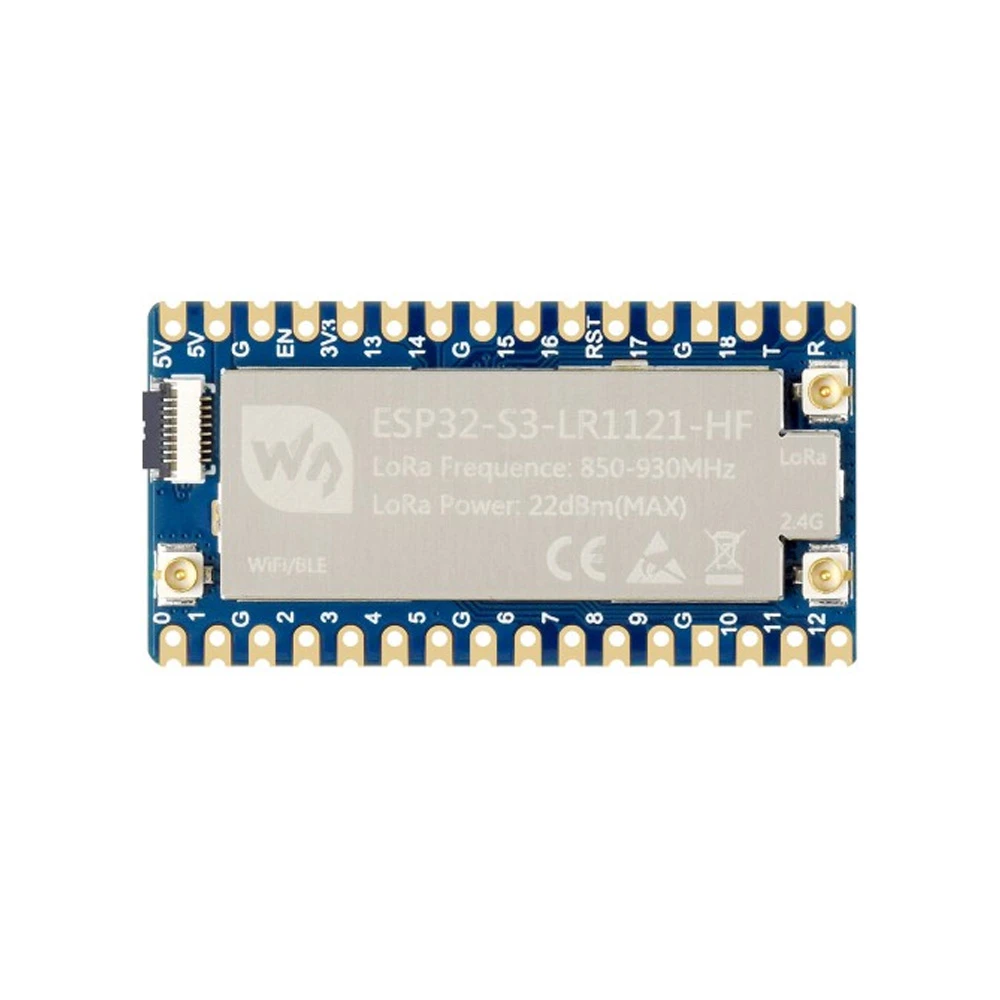
The Waveshare ESP32-S3 LoRa Development Board integrates a dual-core ESP32-S3 processor with a third-generation LR1121 RF chip for multi-protocol IoT connectivity, supporting Wi-Fi 2.4GHz, Bluetooth 5.0 LE, and long-range LoRa/(G)FSK/LR-FHSS communication across Sub-GHz and S-bands.

Features

  • Dual-core ESP32-S3 LX7 processor running at up to 240 MHz with 4MB Flash and 2MB PSRAM for complex IoT application logic.
  • Integrated LR1121 RF chip supports multi-band LoRa, (G)FSK, and LR-FHSS modulation across 850-930MHz (Sub-GHz) and 2000-2500MHz (S-band/ISM).
  • Onboard TCXO ensures stable frequency performance for reliable long-range communication up to 5km in Sub-GHz bands.
  • Rich peripheral interfaces including SPI, I2C, UART, I2S, and ADC enable seamless sensor and actuator integration.
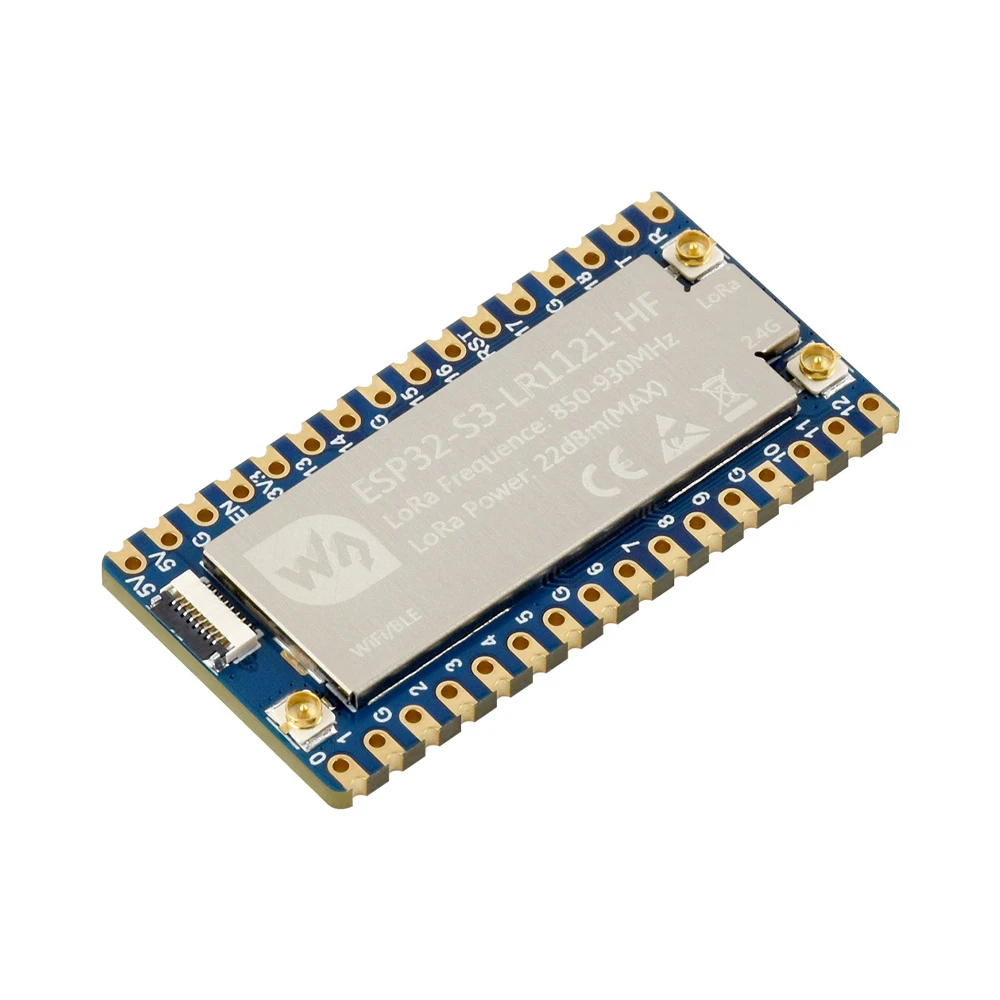
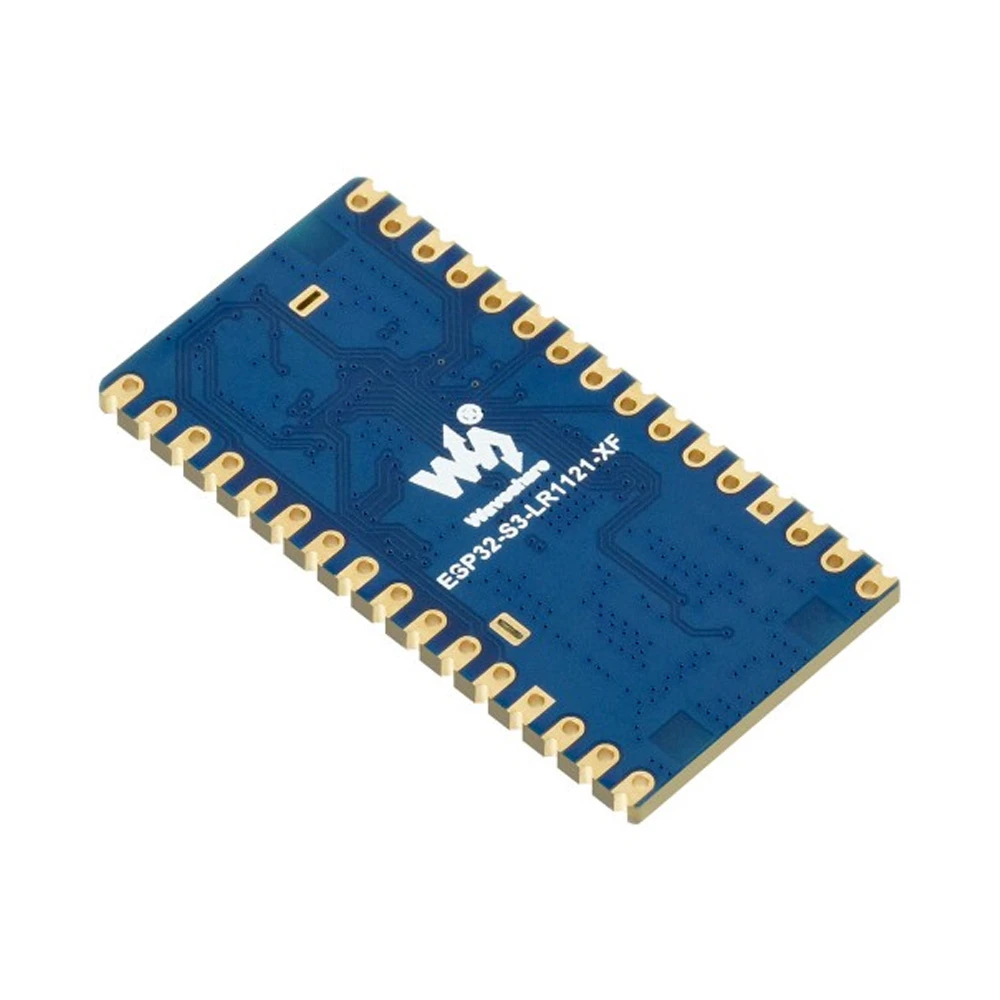
  • Castellated module design with 2.54mm pitch allows for direct PCB soldering, ideal for compact and industrial embedded systems.

Out of stock

Description

The Waveshare ESP32-S3 LoRa Development Board is a highly integrated wireless module designed for demanding LPWAN and IoT edge applications. It combines the computational power of Espressif’s dual-core ESP32-S3 microcontroller with the versatile multi-band RF capabilities of the Semtech LR1121 transceiver, enabling concurrent Wi-Fi, BLE, and long-range sub-GHz/S-band communication in a single compact footprint.

Engineered for signal integrity and low-power operation, the board features a temperature-compensated crystal oscillator (TCXO) for stable frequency generation across its operating temperature range of -40°C to 85°C. The LR1121 chip provides configurable output power up to 22dBm in Sub-GHz bands and supports advanced modulation schemes like LoRa, (G)FSK, and LR-FHSS, offering developers flexibility in balancing data rate, range, and power consumption for specific deployment scenarios.

Key Features

  • Multi-protocol wireless SoC: ESP32-S3 provides integrated 2.4GHz Wi-Fi and Bluetooth 5.0 LE alongside the dedicated LR1121 LoRa transceiver.
  • Third-generation LR1121 RF chip enables communication in Sub-GHz (850-930MHz) and S-band/ISM (2.0-2.5GHz) frequencies for global deployment.
  • Advanced modulation support includes LoRa (SF5-SF12), Gaussian Frequency-Shift Keying (GFSK), and Long Range Frequency Hopping Spread Spectrum (LR-FHSS).
  • Onboard memory includes 4MB of flash for firmware and 2MB of PSRAM for data-intensive applications and graphics buffers.
  • Secure communication is enabled by hardware-accelerated AES-128 encryption for data integrity over wireless links.
  • Castellated edge design facilitates direct surface-mount integration onto custom carrier PCBs, reducing final product size.
  • Comprehensive GPIO breakout provides multiple serial interfaces (SPI, I2C, UART, I2S) and ADC channels for peripheral expansion.
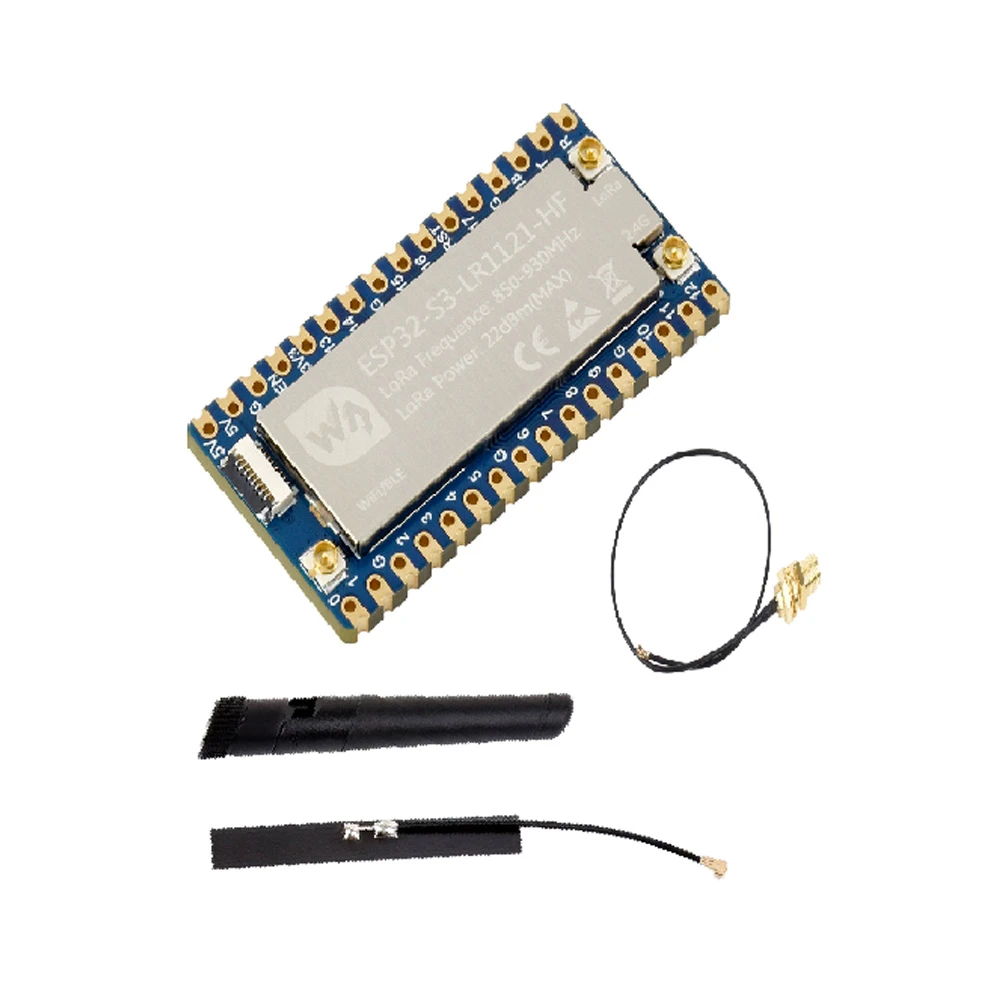
  • IPEX-1 antenna connector allows for external antenna connection, with an adapter cable and antennas included for rapid prototyping.

Applications

  • Long-range industrial telemetry and IIoT sensor nodes for remote monitoring of equipment and environmental conditions.
  • Smart agriculture systems for soil moisture sensing, livestock tracking, and automated irrigation control over wide areas.
  • Asset tracking and fleet management solutions utilizing both GPS (via external module) and multi-band LoRa for hybrid connectivity.
  • Smart city infrastructure such as smart parking, waste management, and utility meter reading with extended battery life.
  • Private LoRaWAN network gateways or mesh nodes capable of operating in both Sub-GHz and 2.4GHz license-free bands.

Technical Specifications

Microcontroller/SoCEspressif ESP32-S3 (Xtensa LX7 dual-core, up to 240MHz)
Wireless ProtocolsWi-Fi 2.4GHz, Bluetooth 5.0 LE, LoRa/(G)FSK/LR-FHSS via LR1121
Frequency RangeSub-GHz: 850-930MHz; S-band/ISM: 2000-2500MHz
RF Transmit PowerSub-GHz: -9 to 22 dBm; ISM: -18 to 13 dBm
Supply Voltage3.3V typical (via external regulator/carrier board)
Operating CurrentTransmit: 111.2mA @22dBm (Sub-GHz), 49.6mA @13dBm (ISM)
InterfacesSPI, I2C, UART, I2S, ADC, GPIO
Antenna ConnectorIPEX-1 (with included SMA adapter cable)
Operating Temperature-40°C to +85°C
Dimensions41mm x 21mm x 3.2mm

Frequently Asked Questions

What development frameworks are supported for programming this ESP32-S3 LoRa board?

The board is fully compatible with the ESP-IDF (Espressif IoT Development Framework) for low-level control and Arduino Core for ESP32 via the Arduino IDE for simplified development. You can also use MicroPython or PlatformIO for a managed workflow. The LR1121 transceiver is controlled via SPI commands, with libraries available from Semtech and community repositories for LoRaWAN stack integration, FSK configuration, and LR-FHSS mode setup.

How do I connect an antenna and what are the power output specifications?

Use the included IPEX-1 to SMA adapter cable to connect an external SMA antenna to the board's IPEX-1 connector. For Sub-GHz operation (850-930MHz), the LR1121 supports configurable output power from -9 dBm up to +22 dBm. For the 2.4GHz ISM band, the range is -18 dBm to +13 dBm. Optimal range is achieved with a matched 50-ohm antenna. The supplied 2dBi SMA antenna is suitable for general use, but higher-gain antennas can be used for extended range, considering local regulatory limits.

What is the power supply requirement and how can I minimize current consumption?

The core module requires a stable 3.3V DC supply. Current draw peaks during RF transmission, reaching approximately 111mA at +22dBm output in Sub-GHz mode. To minimize consumption, leverage the ESP32-S3's deep sleep modes (consuming microamps) and the LR1121's standby/sleep states. Design your firmware to wake periodically, transmit data quickly using optimal SF and bandwidth settings, and return to sleep. Ensure your power supply or battery can handle the peak current demands during transmit bursts.

Can this board act as a LoRaWAN gateway or is it only an end-device node?

Primarily designed as a Class A or C LoRaWAN end-device (node), its architecture is optimized for sensor data uplink and downlink. While theoretically capable of single-channel gateway functionality with custom firmware, it lacks the concurrent multi-channel reception capability of dedicated gateway chips like the SX1301. For building a full LoRaWAN gateway, a board with a concentrator design is recommended. This module excels as a powerful, long-range sensor node or as a translator bridge between Wi-Fi/BLE networks and a LoRaWAN backend.

Package Includes

  • 1x Waveshare ESP32-S3 LoRa Development Board (LR1121 HF Version)
  • 1x IPEX-1 to SMA Adapter Cable
  • 1x 2dBi SMA Antenna (for Sub-GHz/S-band)
  • 2x 2.4GHz Antennas (for Wi-Fi/BLE)

Additional Information

Weight 0.02 kg
Dimensions 3 × 5 × 1 cm