SKU: SBCD-0570
📋 GST Invoice Available

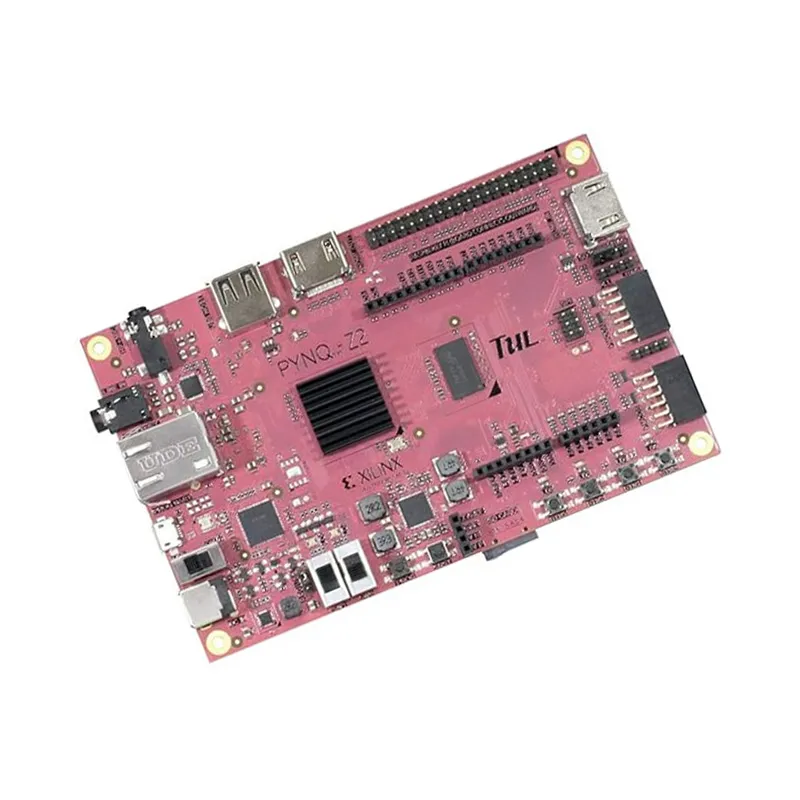
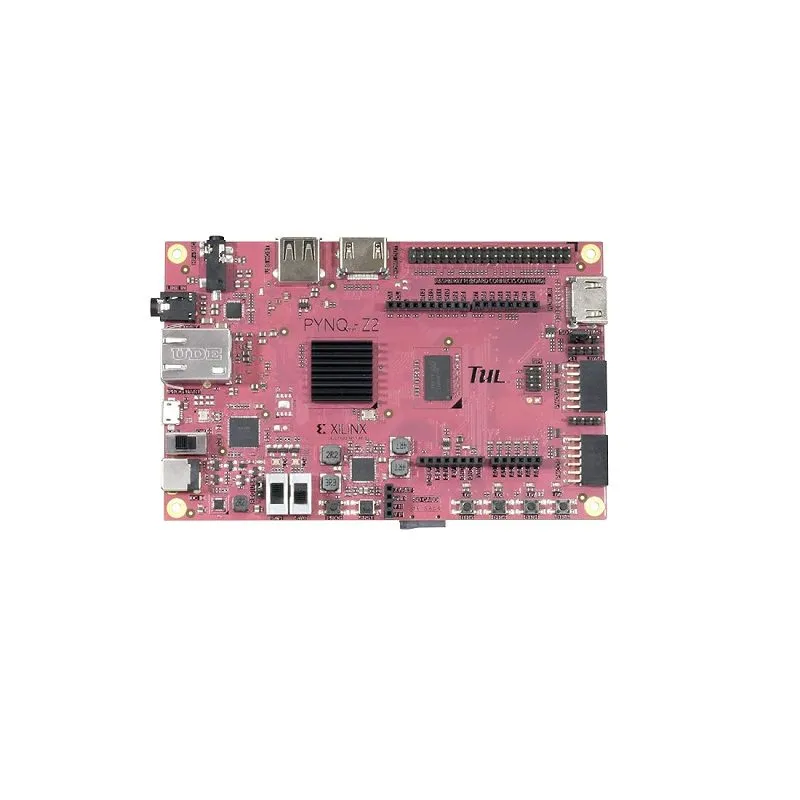
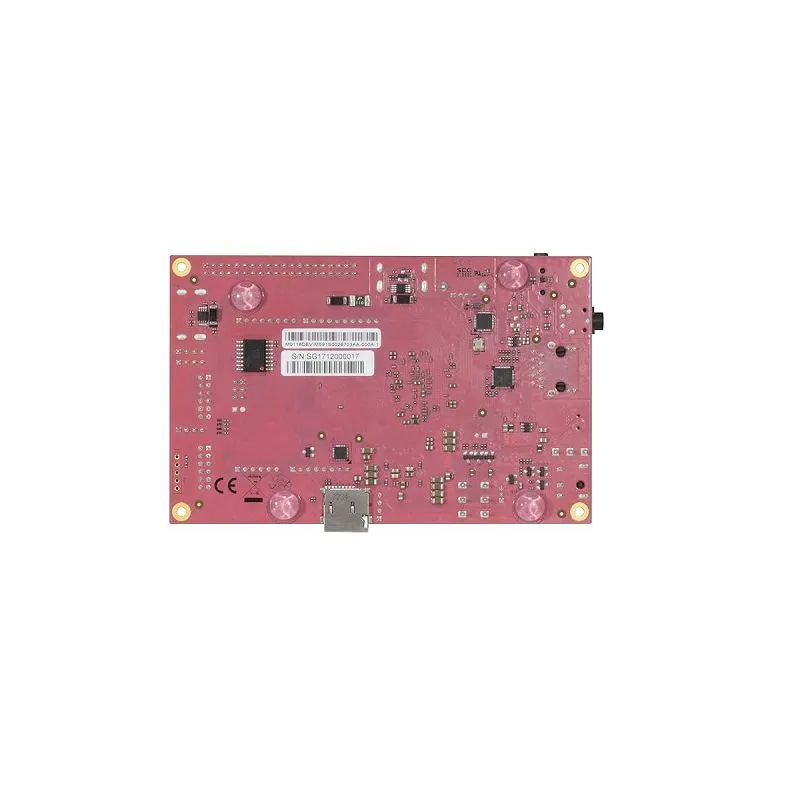
TUL Corporation PYNQ-Z2 FPGA Board w/ Xilinx Zynq XC7Z020, 512MB DDR3

₹23,099.00 (Inclusive of all taxes)
Out of Stock

The TUL Corporation PYNQ-Z2 FPGA Board integrates a Xilinx Zynq XC7Z020 SoC, combining a dual-core ARM Cortex-A9 processor with Artix-7 programmable logic, designed for Python-based hardware development through the PYNQ framework.

Features

  • Features a Xilinx Zynq XC7Z020 SoC with Artix-7 FPGA logic.
  • Equipped with a dual-core ARM Cortex-A9 processor clocked at 650 MHz.
  • Includes 512MB DDR3 SDRAM for robust application and data handling.
  • Enables Python-based FPGA development using the accessible PYNQ framework.
  • Offers versatile I/O, including HDMI input/output, audio codec, and Arduino/Raspberry Pi compatible headers.

Out of stock

Description

The TUL Corporation PYNQ-Z2 FPGA Board is an advanced development platform built around the Xilinx Zynq-7000 SoC, specifically the XC7Z020. This System-on-Chip design uniquely merges a powerful dual-core ARM Cortex-A9 processor with Artix-7 series programmable logic, offering a flexible and high-performance environment for embedded systems and digital design.

Its key differentiator is native support for the PYNQ framework, which empowers developers to program the FPGA using Python, streamlining the development workflow by abstracting complex hardware description languages. With a rich set of peripherals like HDMI I/O, an audio codec, and expansion headers compatible with Arduino and Raspberry Pi ecosystems, the PYNQ-Z2 is well-suited for a wide array of applications including multimedia processing, computer vision, and IoT prototyping. Its open-source ecosystem and affordability make it an excellent choice for educational, research, and professional development.

Key Features

  • Integrated Xilinx Zynq XC7Z020 SoC with Artix-7 programmable logic.
  • Dual-core ARM Cortex-A9 processor operating at 650 MHz.
  • 220 DSP slices optimized for high-speed signal processing tasks.
  • Three clock management tiles featuring PLL and MMCM for precise clock generation.
  • 630KB of fast block RAM for efficient data storage and retrieval.
  • HDMI input and output for video processing and display applications.
  • On-board audio codec for sound input and output capabilities.
  • Arduino and Raspberry Pi-compatible headers for broad shield and HAT expandability.
  • Multiple PMOD connectors for diverse peripheral integration.

Applications

  • Embedded systems development and prototyping.
  • Multimedia projects and video processing.
  • Computer vision and image processing applications.
  • IoT prototyping and edge computing.
  • Digital design education and research.

Technical Specifications

SoCXilinx Zynq XC7Z020 (Artix-7 FPGA)
ProcessorDual-core ARM Cortex-A9
Processor Speed650 MHz
RAM512MB DDR3 SDRAM
DSP Slices220
Clock Management3 PLL & MMCM Tiles
Block RAM630KB
Wireless Standard (Implied)Bluetooth
Operating System SupportLinux
Dimensions132 mm × 85 mm

Frequently Asked Questions

What is the primary advantage of the PYNQ-Z2's architecture?

The PYNQ-Z2 integrates a Xilinx Zynq SoC, combining a dual-core ARM Cortex-A9 processor with Artix-7 programmable logic. This unique architecture allows for seamless hardware-software co-design, enabling users to leverage the speed of FPGA logic with the flexibility of a Linux-capable ARM processor for complex embedded applications.

Which programming languages and frameworks does the PYNQ-Z2 support?

The PYNQ-Z2 primarily supports Python-based hardware programming through the PYNQ framework. This allows developers to interact with the FPGA and design custom hardware overlays using high-level Python APIs, significantly simplifying the development process compared to traditional hardware description languages like VHDL or Verilog.

What are the key I/O interfaces available on the PYNQ-Z2 for peripheral expansion?

The board offers a comprehensive set of I/O interfaces including HDMI input/output for multimedia applications, an audio codec, and general-purpose I/O headers compatible with Arduino shields and Raspberry Pi HATs. It also provides multiple PMOD connectors, facilitating easy integration with various sensors and actuators.

Can the PYNQ-Z2 be used for AI and machine learning applications at the edge?

Yes, the combination of a powerful ARM Cortex-A9 processor and the integrated Artix-7 FPGA logic makes the PYNQ-Z2 well-suited for edge AI. The FPGA can accelerate specific machine learning tasks like inference, while the ARM processor handles data management and higher-level application logic, optimizing performance for on-device AI deployments.

Package Includes

  • 1 x TUL Corporation PYNQ-Z2 FPGA Board with Xilinx Zynq XC7Z020

Additional Information

Weight 0.096 kg
Dimensions 13.2 × 8.5 cm