SKU: IOWC-1676
📋 GST Invoice Available

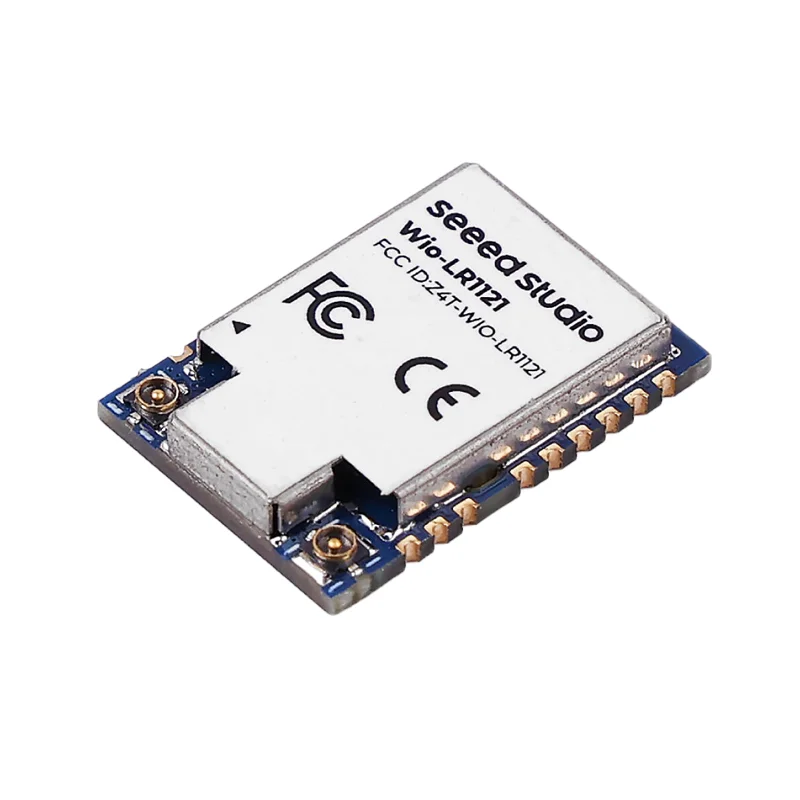
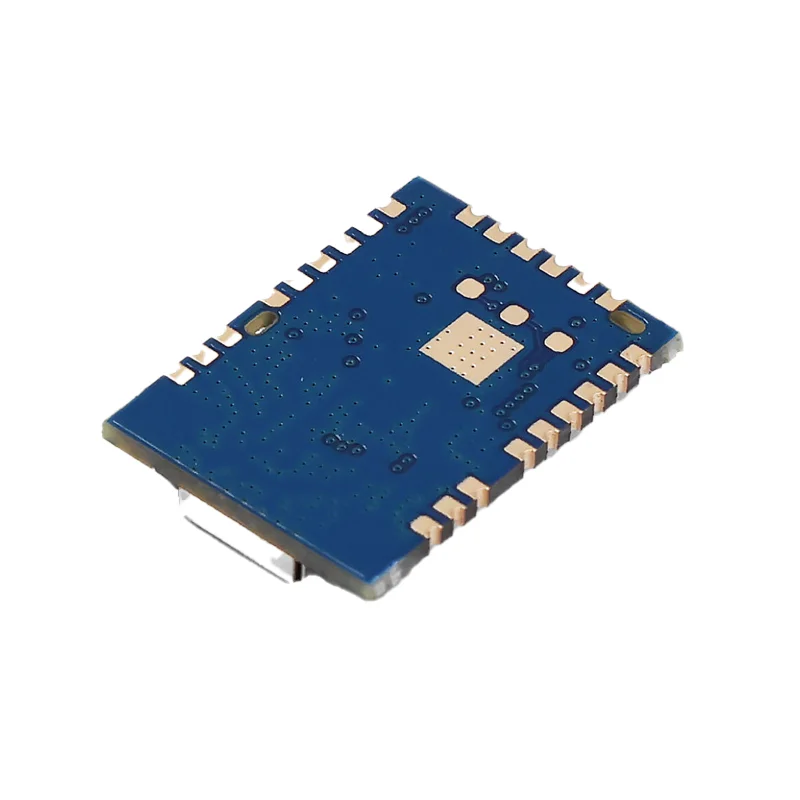
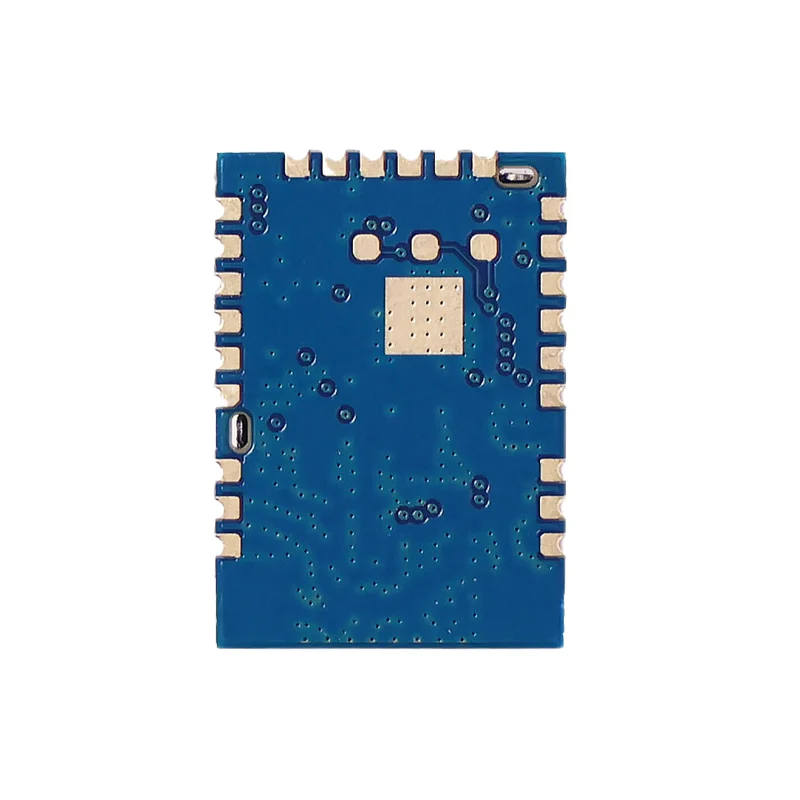
Seeed Studio Studio Wio-LR1121 Wireless LoRa Module w/ IPEX

₹1,079.00 (Inclusive of all taxes)
Out of Stock

The Seeed Studio Studio Wio-LR1121 is an ultra-low-power, multi-band LoRa module powered by the LR1121 chip, supporting sub-GHz (863-928MHz), 2.4GHz ISM, and 2.1GHz S-band frequencies for global LoRaWAN and satellite IoT connectivity. Operating at 3.3V, it enables long-range, scalable deployments in remote sensing and industrial telemetry applications.

Features

  • Multi-band LoRa transceiver supporting sub-GHz (863-928MHz), 2.4GHz ISM, and 2.1GHz satellite S-band for global coverage.
  • Ultra-low power operation with a deep sleep current of just 1.35µA, maximizing battery life for remote IoT nodes.
  • High transmit power up to 33dBm on sub-GHz bands for reliable, long-range communication exceeding 10km.
  • Integrated TCXO and RF switch ensure stable frequency generation and seamless band switching.
  • Compact 17x12x2.6mm SMT footprint with IPEX4 antenna connector for space-constrained PCB designs.

Out of stock

Description

The Seeed Studio Studio Wio-LR1121 Wireless Module is a sophisticated LoRa transceiver module built around Semtech’s LR1121 chip, engineered for global IoT deployments. It uniquely supports three distinct frequency bands: the sub-GHz spectrum (863-928MHz) for regional LoRaWAN, the 2.4GHz ISM band for worldwide operation, and the 2.1GHz S-band for direct-to-satellite connectivity. This multi-band capability, managed by an integrated RF switch, provides unparalleled flexibility for hybrid terrestrial and non-terrestrial network (NTN) applications.

Architected for extreme power efficiency, the module features a deep sleep current of 1.35µA, making it ideal for battery-powered sensors deployed in smart agriculture, environmental monitoring, and asset tracking. Its high output power of up to 33dBm on sub-GHz bands, coupled with excellent receiver sensitivity down to -140dBm, ensures robust communication links over extended ranges. The integrated TCXO guarantees stable frequency reference across temperature variations, critical for maintaining network synchronization and regulatory compliance.

Key Features

  • Multi-band LoRa operation across sub-GHz, 2.4GHz ISM, and 2.1GHz S-band for global terrestrial and satellite IoT.
  • Ultra-low power architecture with 1.35µA sleep current enables multi-year battery life on a single charge.
  • High-performance RF front-end with up to 33dBm transmit power and -140dBm sensitivity for maximum link budget.
  • Integrated precision TCXO ensures frequency stability for reliable LoRaWAN Class A, B, and C operation.
  • Compact surface-mount (SMT) design (17x12x2.6mm) with IPEX4 connector for easy PCB integration and antenna flexibility.
  • Pre-certified for FCC and CE standards, accelerating time-to-market for commercial IoT products.
  • Supports all LoRa spreading factors (SF5-SF12) and bandwidths for adaptive data rate (ADR) optimization.

Applications

  • Global asset tracking and logistics with hybrid LoRaWAN & satellite fallback connectivity.
  • Remote environmental monitoring stations for agriculture, weather, and soil sensing.
  • Smart city infrastructure: utility metering (water/gas), smart parking, and waste management.
  • Industrial IoT (IIoT) for telemetry and condition monitoring in remote facilities.
  • Direct-to-satellite IoT deployments for applications beyond terrestrial network coverage.

Technical Specifications

Wireless ProtocolLoRa, LoRaWAN, (FSK/GFSK for 2.4GHz)
Frequency RangeSub-GHz: 863-928MHz, 2.4GHz ISM: 2.4-2.5GHz, Satellite S-band: 2.1GHz
RF Transmit PowerUp to 33dBm (Sub-GHz), 11dBm (2.4GHz)
Receiver SensitivityDown to -140dBm (LoRa, SF12, 125kHz)
Supply Voltage3.3V Typical
Operating CurrentPeak TX: ~120mA @ 20dBm; RX: ~10mA
Sleep Current1.35µA (Deep Sleep)
InterfacesSPI (for host MCU communication)
Antenna ConnectorIPEX4 (1.5mm)
Dimensions17mm x 12mm x 2.6mm (LxWxH)
Operating Temperature-40°C to +85°C (Typical for LR1121)

Frequently Asked Questions

How do I interface the Wio-LR1121 module with my host microcontroller?

The Wio-LR1121 communicates with a host MCU via an SPI interface. You must connect the module's SPI pins (MOSI, MISO, SCK, CS) and a reset pin to your microcontroller. Initialization involves pulling the reset pin low, then high, before sending configuration AT commands or LoRaMAC-node library commands over SPI to set the frequency band, spreading factor, and output power. Ensure your firmware handles the specific SPI timing requirements of the LR1121 chip.

What is the procedure for switching between the sub-GHz and 2.4GHz frequency bands?

Band switching is managed through the LR1121's internal RF switch, controlled via specific SPI register writes. Your firmware must send a command sequence to deactivate the current radio, reconfigure the RF front-end parameters (center frequency, bandwidth) for the new band, and then re-enable the radio. The integrated TCXO maintains stability during the switch. Reference the Semtech LR1121 datasheet and Seeed Studio's example code for the exact register values for 868MHz, 915MHz, or 2.4GHz ISM operation.

What antenna should I use with the IPEX4 connector, and how does it affect range?

Use a 50-ohm antenna with an IPEX4 (1.5mm) plug matched to your target frequency band. For sub-GHz (868/915MHz), a λ/4 whip or PCB antenna with ~3dBi gain is typical. For 2.4GHz, a smaller chip or dipole antenna is used. Antenna gain directly impacts the link budget; a 3dBi gain antenna can effectively add 3dB to both transmit and receive performance. Ensure the antenna is impedance-matched to 50 ohms to prevent VSWR issues that reduce efficiency and range. Keep the RF trace short on your PCB.

How do I achieve the ultra-low 1.35µA sleep current in my design?

To achieve the specified 1.35µA sleep current, you must correctly use the module's deep sleep mode. After communication, send the SPI command to put the LR1121 into its lowest power sleep state. Crucially, your host MCU must also tri-state (set to high-impedance) its SPI lines connected to the module. Any GPIO pins held high or low by the MCU can create a current leakage path. Power the entire node from a low-quiescent-current LDO regulator. Measure sleep current with a multimeter in series with the battery.

Package Includes

  • 1 x Seeed Studio Studio Wio-LR1121 Wireless Module with IPEX (on Tape Reel)

Additional Information

Weight 0.003 kg
Dimensions 1.63 × 1.13 × 0.26 cm