SKU: IOWC-1400
📋 GST Invoice Available

Seeed Studio Studio CANBed Arduino CAN-Bus DevKit w/ ATmega32U4 & MCP2515

₹3,149.00 (Inclusive of all taxes)
Out of Stock

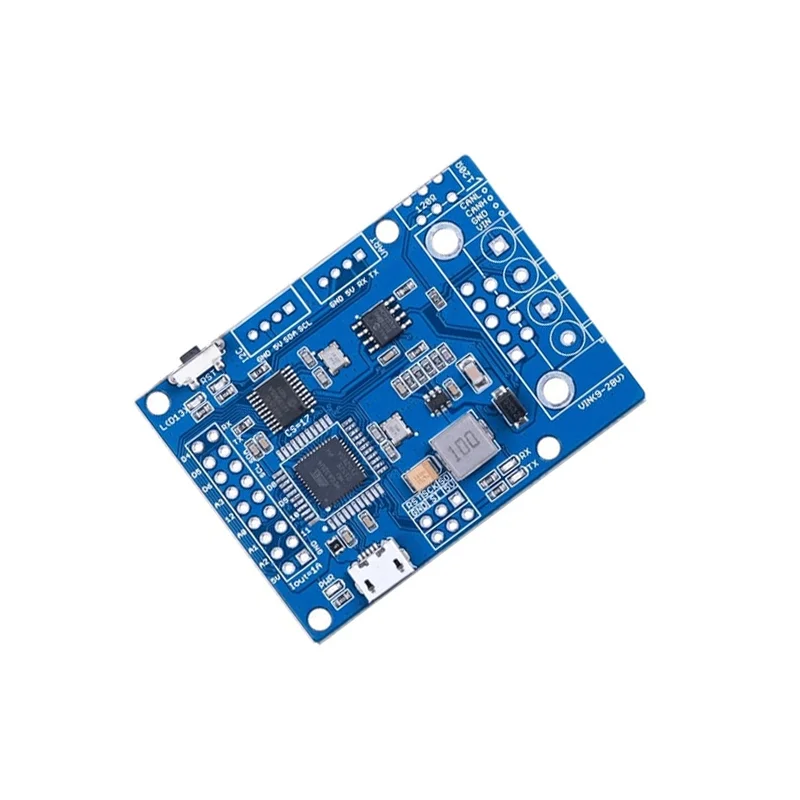
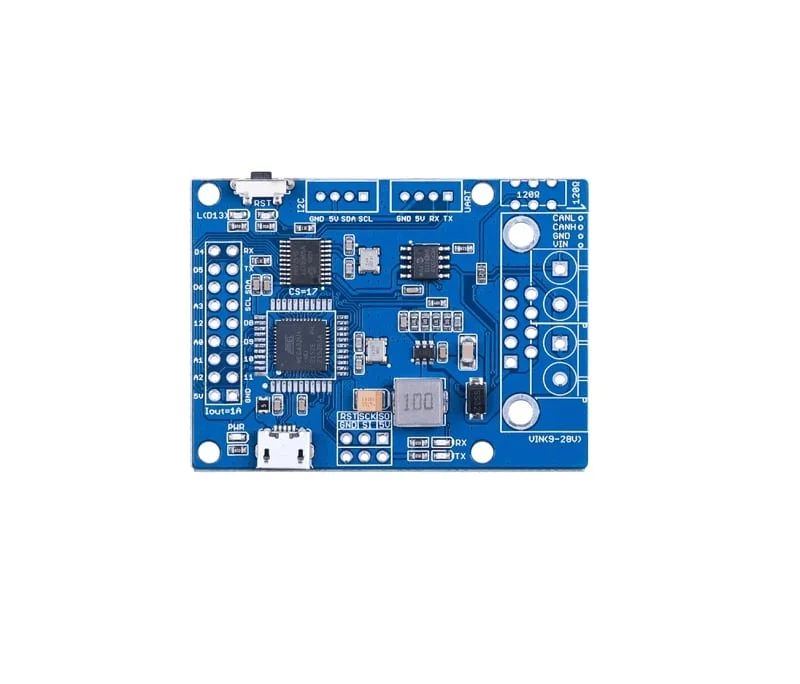
The CANBed is an integrated Arduino-compatible development board featuring an ATmega32U4 microcontroller, MCP2515 CAN controller, and MCP2551 transceiver, designed for direct prototyping and deployment of CAN-Bus networks without additional shields.

Features

  • Integrated ATmega32U4 MCU with Arduino Leonardo bootloader eliminates the need for a separate host controller.
  • Onboard MCP2515 CAN controller and MCP2551 transceiver provide native CAN 2.0B protocol support.
  • Dual CAN interfaces: Sub-D9 connector and 4-pin terminal block for flexible industrial wiring.
  • Full Arduino IDE compatibility with dedicated CAN-Bus libraries for rapid firmware development.
  • Features 18 accessible I/O pins including digital, analog, UART, and I2C interfaces.

Out of stock

Description

The CANBed development kit consolidates a complete CAN-Bus node onto a single PCB, combining an ATmega32U4 microcontroller with an MCP2515 CAN controller and MCP2551 CAN transceiver. This integration allows developers to implement CAN 2.0B communication protocols directly, supporting data rates up to 1 Mbps, without requiring an external Arduino board or complex wiring. The board is designed for robust industrial environments, accepting a wide 9-28V supply on the CAN side and 5V via microUSB for logic.

Its architecture provides direct access to 18 GPIOs, including analog inputs and serial communication lines, enabling sensor integration and system control alongside CAN messaging. The dual physical interfaces—a standard Sub-D9 connector and a screw terminal block—offer compatibility with automotive OBD-II systems and industrial control panels. Pre-flashed with the Arduino Leonardo bootloader, it ensures seamless integration into existing Arduino IDE workflows, significantly accelerating development cycles for automotive diagnostics, industrial automation, and vehicular telemetry projects.

Key Features

  • All-in-one CAN-Bus development board integrating MCU, controller, and transceiver.
  • Supports CAN 2.0B protocol with SPI communication to the ATmega32U4 host.
  • Wide operating voltage range (9-28V) for direct connection to vehicle or industrial power rails.
  • Dual interface options: standard Sub-D9 connector and 4-pin terminal block for wiring flexibility.
  • Full Arduino Leonardo pinout compatibility for easy expansion with shields and modules.
  • Pre-installed bootloader allows immediate programming via the Arduino IDE.
  • Compact form factor designed for space-constrained installations and prototyping.

Applications

  • Automotive diagnostics and OBD-II data logging systems.
  • Industrial machinery monitoring and control networks (CANopen, DeviceNet).
  • Vehicle telemetry and fleet management data acquisition.
  • Prototyping embedded systems for robotics and autonomous vehicles.
  • Educational tool for learning real-time in-vehicle network protocols.

Technical Specifications

MicrocontrollerATmega32U4 (Arduino Leonardo bootloader)
CAN ControllerMCP2515
CAN TransceiverMCP2551
Flash Memory32 KB
SRAM2.5 KB
EEPROM1 KB
CAN Supply Voltage9-28V
Logic Supply Voltage5V (MicroUSB)
Clock Frequency16 MHz
InterfacesSPI (to MCP2515), UART, I2C, Digital & Analog GPIO
CAN ConnectorsSub-D9, 4-pin terminal block
DimensionsApprox. 10 x 6.5 x 2 cm (from shipping data)

Frequently Asked Questions

How do I program the CANBed board using the Arduino IDE?

Connect the CANBed to your computer via a microUSB cable. In the Arduino IDE, select 'Arduino Leonardo' as the board from the Tools menu. Install the MCP2515 CAN-Bus library via the Library Manager. Then, you can open example sketches, modify them for your network, and upload directly to the onboard ATmega32U4 microcontroller to start communicating on the CAN bus.

What is the difference between the Sub-D9 and terminal block CAN connections?

The Sub-D9 connector provides a standard OBD-II compatible interface for direct plug-in to automotive diagnostic ports. The 4-pin terminal block offers a screw-down connection for custom wiring in industrial control panels or when integrating into machinery. Both interfaces connect to the same MCP2551 transceiver, so you can choose based on your system's physical layer requirements.

What power supply should I use for a 12V automotive application?

For a 12V vehicle system, you can power the CANBed directly from the vehicle's 12V rail by connecting it to the board's CAN power input terminals, which accept 9-28V. The onboard regulator will supply the logic circuits. Ensure ground is properly connected. The microUSB port can also provide 5V for logic if the CAN side is not powered, useful for bench testing.

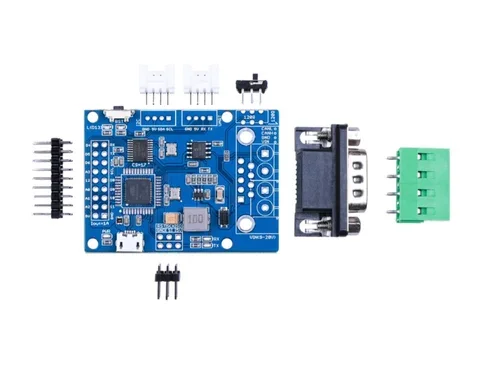
Package Includes

  • 1 x CANBed PCBA (Main Board)
  • 1 x Sub-D Connector
  • 1 x 4-PIN Terminal Block
  • 2 x 4-PIN 2.0mm Connectors
  • 1 x 9x2 2.54mm Header
  • 1 x 3x2 2.54mm Header

Additional Information

Weight 0.03 kg
Dimensions 6.5 × 10 × 2 cm