SKU: IOWC-0854
📋 GST Invoice Available

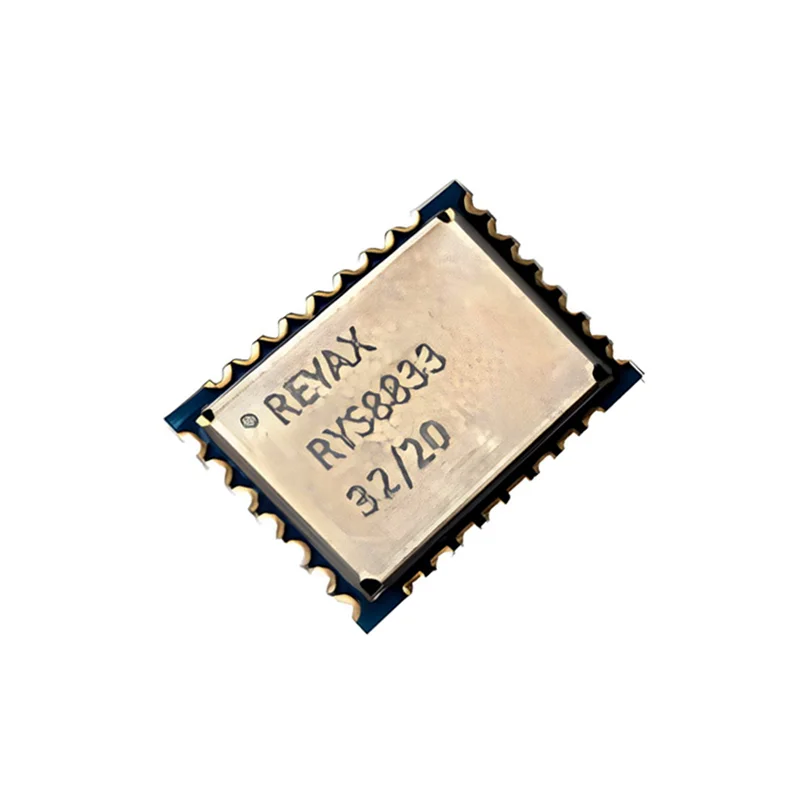
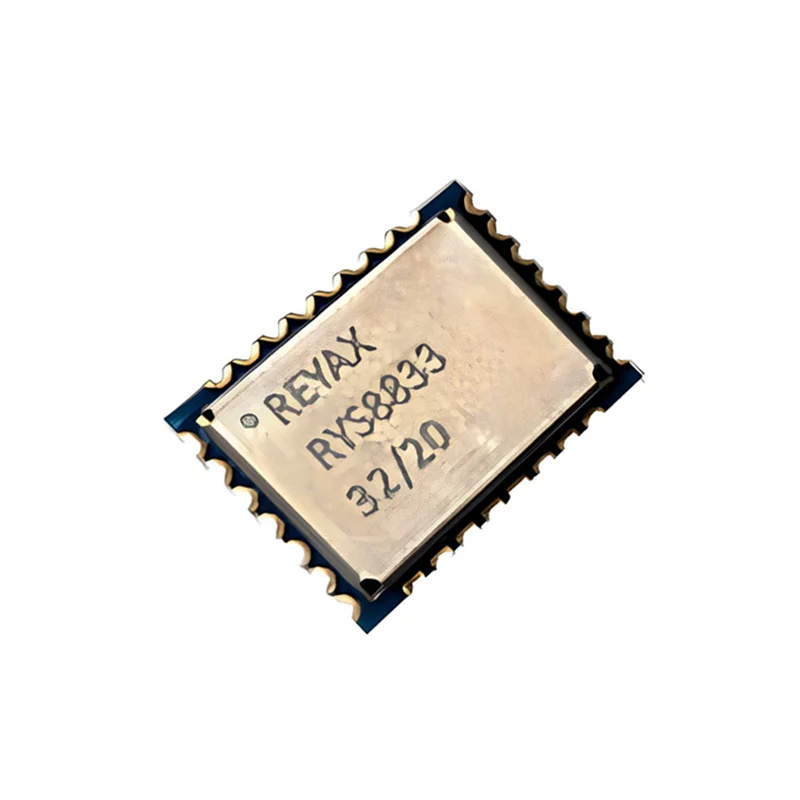
Reyax RYS8833 Ultra Low Power 1.8V UART/I2C GNSS Module

₹909.00 (Inclusive of all taxes)
Out of Stock

The Reyax RYS8833 is an ultra-low-power GNSS module featuring a Sony CXD5605AGF engine for multi-constellation tracking (GPS, GLONASS, Galileo, BeiDou, SBAS, QZSS). It operates on a 0.9-1.95V supply with a 3.7mA idle current, making it ideal for battery-powered IoT asset trackers and portable devices.

Features

  • Ultra-Low Power GNSS: Operates from 0.9-1.95V with a 3.7mA idle current for extended battery life in portable IoT devices.
  • Multi-Constellation Tracking: Supports GPS, GLONASS, Galileo, BeiDou, SBAS, and QZSS for high-accuracy global positioning.
  • Sony CXD5605AGF Engine: High-sensitivity receiver with integrated SAW filter, LNA, and TCXO for robust signal acquisition.
  • Flexible Interface: Configurable for UART or I2C communication, simplifying integration with microcontrollers like ESP32 or STM32.
  • Embedded Signal Processing: Includes digital noise filters and a spectrum analyzer for improved performance in RF-challenged environments.

Out of stock

Description

The Reyax RYS8833 GNSS module is engineered for power-sensitive IoT applications requiring reliable global positioning. Its core is the high-performance Sony CXD5605AGF receiver, which delivers multi-constellation support and enhanced sensitivity through an integrated front-end with SAW filter, LNA, and TCXO. The module’s ultra-low voltage range and minimal idle current enable deployment in solar-powered environmental sensors, wearable trackers, and long-term asset monitoring systems.

Advanced signal integrity is managed by onboard digital noise filters and a spectrum analyzer, mitigating interference in complex RF landscapes. The configurable UART/I2C interface provides flexible connectivity to host processors for firmware development in Arduino IDE, ESP-IDF, or other embedded platforms. With an operating temperature range of -40°C to 85°C and a cold start time of 35 seconds, the RYS8833 delivers industrial-grade reliability for outdoor and remote telemetry projects.

Key Features

  • Ultra-low voltage operation (0.9V to 1.95V) for direct battery connection.
  • Multi-GNSS engine supporting GPS, GLONASS, Galileo, BeiDou, SBAS, and QZSS.
  • Integrated RF front-end with SAW filter, Low-Noise Amplifier (LNA), and Temperature-Compensated Crystal Oscillator (TCXO).
  • Embedded digital noise filtering and spectrum analysis for superior signal clarity.
  • Selectable UART or I2C communication interface for host controller integration.
  • Compact form factor suitable for space-constrained PCB designs.
  • Extended industrial temperature range for harsh environmental operation.

Applications

  • Battery-powered asset tracking and fleet management devices.
  • Portable wearable devices and personal safety beacons.
  • Solar-powered environmental monitoring and agricultural sensors.
  • IoT telemetry modules for remote logistics and supply chain tracking.
  • Maritime and automotive navigation systems requiring multi-GNSS support.

Technical Specifications

GNSS EngineSony CXD5605AGF
Supported ConstellationsGPS (L1 C/A), GLONASS (L1 OF), Galileo (E1 CBOC), BeiDou (B1), SBAS, QZSS
Supply Voltage0.9V to 1.95V
Idle Current3.7 mA
Cold Start Time35 seconds
Operating Temperature-40°C to +85°C
InterfaceUART / I2C (Configurable)
Internal Flash8 M-bit
Dimensions (Shipping)6 cm x 5 cm x 1 cm
Weight (Shipping)0.005 kg

Frequently Asked Questions

What is the default communication interface for the RYS8833 module, and how do I configure it?

The Reyax RYS8833 module supports both UART and I2C interfaces, selectable via configuration commands or hardware pin strapping. For UART mode, connect the TX/RX pins to your microcontroller's serial port with a default baud rate typically set to 9600 or 115200 bps. For I2C mode, connect the SDA and SCL pins to your host controller's I2C bus, ensuring proper pull-up resistors are present. Refer to the RYS8833 datasheet for the specific command set to switch between interface protocols and configure the baud rate or I2C address.

How do I achieve the ultra-low power consumption figures in my battery-powered design?

To achieve the specified 3.7mA idle current, ensure your power supply provides a stable voltage within the 0.9V to 1.95V range. Implement power cycling strategies in your firmware, placing the module into periodic sleep or standby modes between position fixes. Use the module's built-in power management commands to disable unused constellations or reduce update rates. For lowest system current, design your voltage regulator to be highly efficient at low loads and consider using a direct Li-ion or 2xAA battery connection if within the voltage spec.

What firmware or library support is available for integrating the RYS8833 with an ESP32 or Arduino?

The RYS8833 outputs standard NMEA sentences over its serial interface, compatible with common GNSS libraries like TinyGPS++ or NeoGPS for the Arduino IDE. For ESP32 integration, you can use the HardwareSerial library to parse NMEA data or implement custom I2C communication if configured. No proprietary driver is required; the module communicates via AT-like commands for configuration. For advanced use cases, you can develop custom drivers in ESP-IDF or PlatformIO to manage power modes, multi-constellation selection, and raw data logging.

Package Includes

  • 1 x Reyax RYS8833 Ultra Low Power GNSS Module

Additional Information

Weight 0.005 kg
Dimensions 5 × 6 × 1 cm