SKU: IOWC-1722
📋 GST Invoice Available

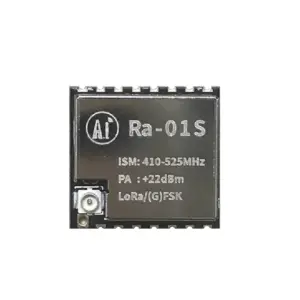
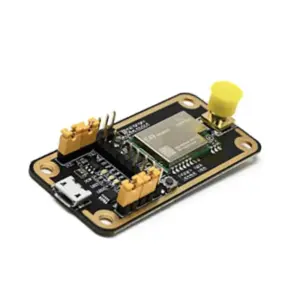
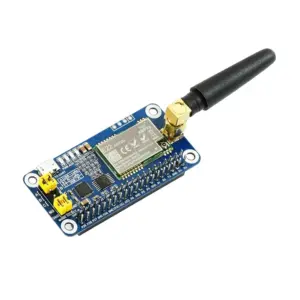
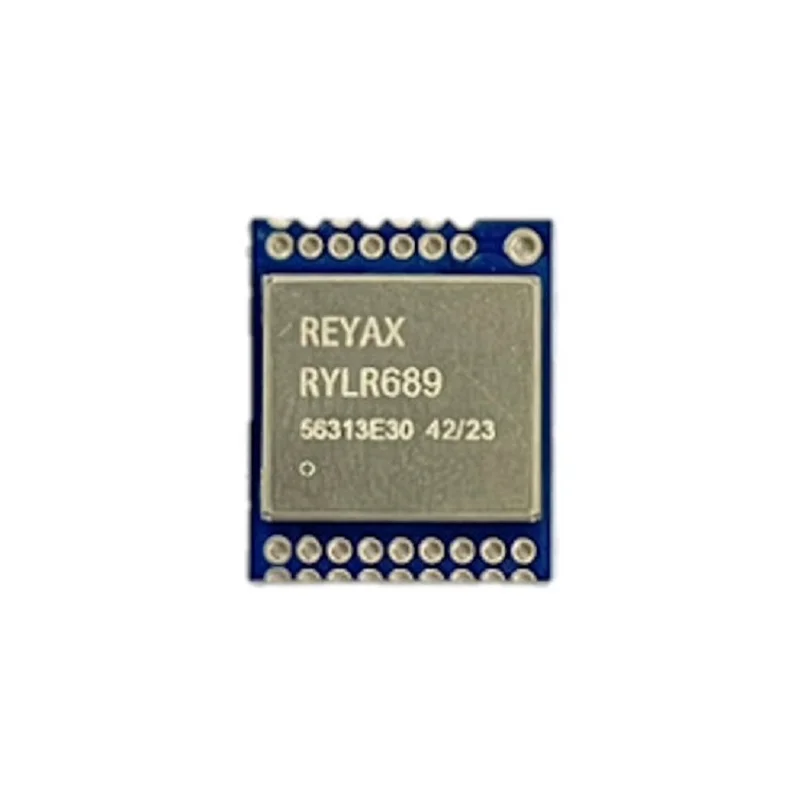
Reyax RYLR689 868/915MHz LoRa/(G)FSK Transceiver Module

₹629.00 (Inclusive of all taxes)
Out of Stock

The Reyax RYLR689 is a long-range wireless transceiver module based on the Semtech LLCC68 chip, supporting both LoRa and (G)FSK modulation for flexible IoT deployments across 868-938MHz ISM bands.

Features

  • Based on the Semtech LLCC68 chip for robust LoRa and (G)FSK modulation.
  • Wide frequency range from 858MHz to 938MHz, supporting 868MHz and 915MHz ISM bands.
  • High RF sensitivity of -129dBm for exceptional long-range reception.
  • Programmable transmit power from -20dBm up to +22dBm for range vs. power optimization.
  • Low sleep current of 600µA and extended operating temperature from -40°C to 85°C.

Out of stock

Description

The Reyax RYLR689 is a versatile, long-range wireless transceiver module engineered for demanding IoT applications. Built around the proven Semtech LLCC68 chip, it provides developers with a dual-modulation solution, supporting both the chirp spread spectrum of LoRa for maximum range and link budget, as well as the higher data rates of (G)FSK for applications requiring faster throughput. This flexibility makes it suitable for a wide spectrum of telemetry, sensor networking, and industrial control scenarios.

Designed for reliability, the module features a metal cover for effective EMI shielding, ensuring stable operation in electrically noisy environments. It offers configurable output power and is available in both SMT and DIP package options, simplifying integration into both new PCB designs and prototyping setups. With its low sleep current and industrial-grade temperature tolerance, the RYLR689 is built for always-on, battery-powered deployments in remote or harsh conditions.

Key Features

  • Dual modulation support for LoRa (long-range, low data rate) and (G)FSK (higher data rate) operation.
  • Semtech LLCC68-based design ensures reliable, industry-standard LoRa performance.
  • Programmable RF output power from -20dBm to +22dBm for optimal link budget control.
  • Metal shielding cover provides enhanced protection against electromagnetic interference (EMI).
  • Available in both surface-mount (SMT) and through-hole (DIP) package options for design flexibility.
  • Integrated antenna design option simplifies RF front-end implementation.
  • Low power consumption profile with a deep sleep current of just 600µA.
  • Industrial operating temperature range from -40°C to +85°C for harsh environment deployment.

Applications

  • Long-range sensor telemetry networks for agriculture (soil moisture, weather stations).
  • Industrial IoT (IIoT) monitoring and control in remote facilities.
  • Asset tracking and logistics management across large campuses or warehouses.
  • Smart city infrastructure for utility metering (water, gas) and environmental sensing.
  • Wireless alarm and security systems requiring reliable, low-power communication.

Technical Specifications

Model / Core ChipRYLR689 (Semtech LLCC68)
Wireless ProtocolsLoRa, (G)FSK
Frequency Range858 MHz to 938 MHz
RF Transmit Power-20 dBm to +22 dBm (Programmable)
RF Sensitivity (LoRa)-129 dBm
Data Rate (FSK)Up to 300 kbps
Data Rate (LoRa)Up to 62.5 kbps
Supply VoltageNot Specified
Sleep Current600 µA
Operating Temperature-40°C to +85°C
Package OptionsSMT, DIP
Antenna OptionIntegrated
DimensionsApprox. 30mm x 15mm (Estimated from DIP footprint)

Frequently Asked Questions

What is the primary difference between using LoRa and (G)FSK mode on the RYLR689?

LoRa mode uses Chirp Spread Spectrum modulation, offering exceptional sensitivity (-129dBm) and long-range capability at lower data rates (up to 62.5kbps), ideal for sporadic sensor data. (G)FSK mode uses Gaussian Frequency-Shift Keying, providing higher data rates (up to 300kbps) for applications requiring faster data transfer, such as firmware updates or more frequent telemetry, but with a reduced link budget compared to LoRa. The mode is selectable via configuration commands.

How do I configure the RYLR689 module's parameters like frequency and transmit power?

The RYLR689 is configured via AT commands sent over a serial UART interface. You need to connect the module's TX and RX pins to a microcontroller's UART pins, set the correct baud rate (default is often 9600), and send text commands. For example, to set the frequency to 868MHz, you might send 'AT+FREQ=868000000'. To set transmit power to 20dBm, a command like 'AT+POWER=20'. Always refer to the specific Reyax command set documentation for the exact syntax and parameter ranges.

What power supply is recommended for the RYLR689 module during active transmission?

While the exact voltage range isn't specified in the provided data, modules based on the Semtech LLCC68 typically operate from 1.8V to 3.6V. A stable 3.3V supply is commonly used. It is critical to ensure your power source can deliver sufficient current during transmission peaks, especially at the maximum +22dBm output, which may draw over 100mA. Use a well-regulated LDO or DC-DC converter and include adequate decoupling capacitors (e.g., 10µF and 0.1µF) close to the module's VCC and GND pins to prevent voltage sag and noise.

Can I use an external antenna with the RYLR689, and what type is required?

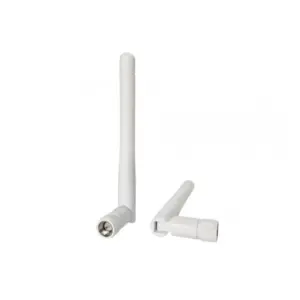
The product description mentions an 'Antenna option,' which typically means variants exist: one with an integrated PCB antenna and one with a connector (like IPEX/u.FL) for an external antenna. If your module has a connector, you must use a 868/915MHz antenna matched to 50 ohms. For the integrated antenna variant, ensure the PCB keep-out area guidelines are followed. An external antenna generally provides better performance and range. Always impedance-match the antenna to minimize VSWR and maximize radiated power.

How do I achieve the lowest power consumption for battery-powered sensor nodes?

To minimize power, place the RYLR689 into its sleep mode via the 'AT+SLEEP' command when not actively transmitting or receiving, reducing current to 600µA. Design your firmware to wake the module periodically, send data in burst mode at the highest permissible power and data rate to minimize on-air time, and return to sleep immediately. Ensure your microcontroller also enters a deep sleep mode. Optimize the LoRa spreading factor and bandwidth settings; a higher SF increases range but also increases time-on-air and energy per packet.

Package Includes

  • 1 x Reyax RYLR689 868/915MHz LoRa/(G)FSK Transceiver Module

Additional Information

Weight 0.01 kg
Dimensions 5 × 3 × 3 cm