SKU: SBCD-0905
📋 GST Invoice Available

Raspberry Pi Pico-WH: RP2040 Dev Board w/ Wi-Fi & Headers

₹799.00 (Inclusive of all taxes)
Out of Stock

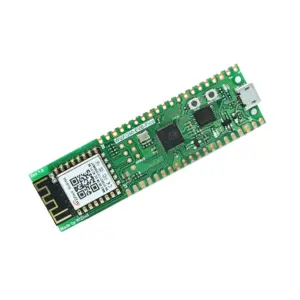
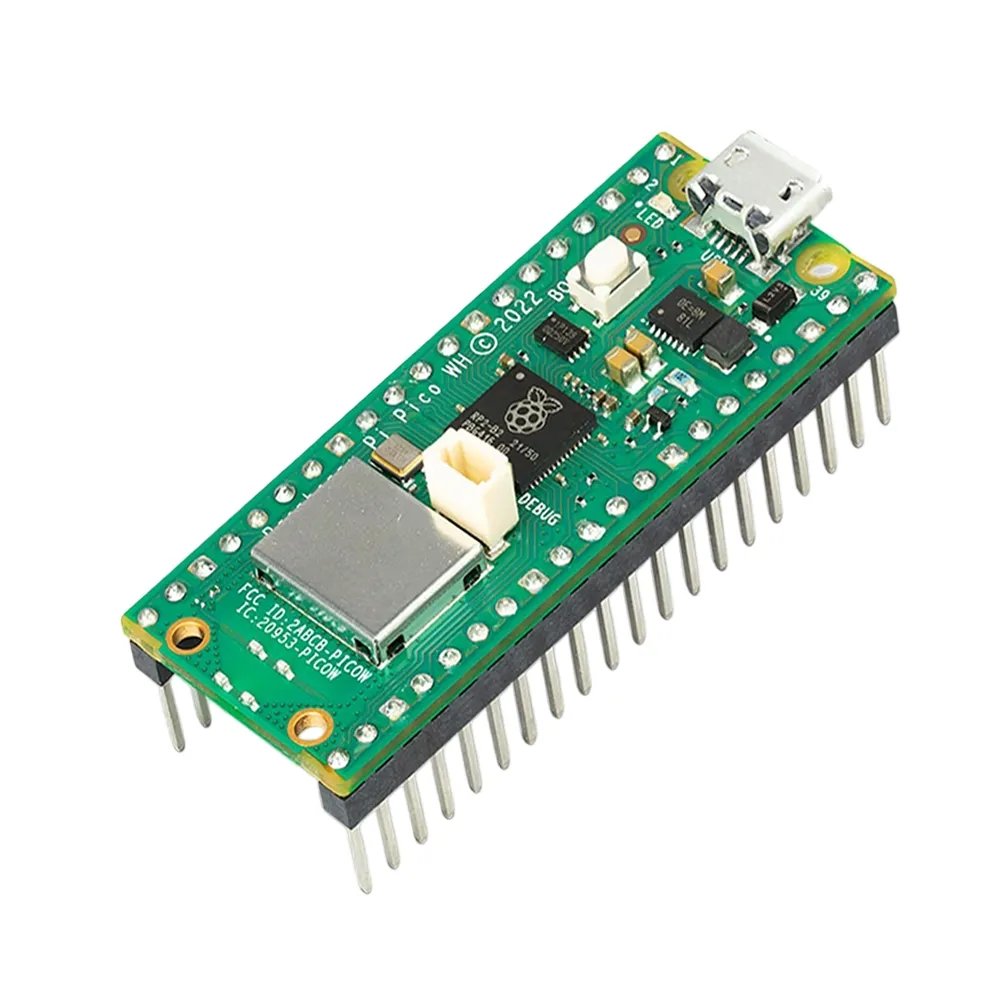
The Raspberry Pi Pico-WH is a powerful microcontroller board featuring the dual-core ARM Cortex-M0+ RP2040 processor, integrated 2.4GHz Wi-Fi, and pre-soldered headers. Ideal for IoT, embedded systems, and rapid prototyping, it offers 264KB SRAM and 2MB flash memory.

Features

  • Integrated RP2040 dual-core ARM Cortex-M0+ microcontroller clocked at 133MHz.
  • Features on-board 2.4GHz Wi-Fi (802.11n) for wireless connectivity and IoT applications.
  • Comes with convenient pre-soldered headers for immediate use with breadboards or custom PCBs.
  • Equipped with 2MB QSPI flash memory for code and data storage, plus 264KB of SRAM.
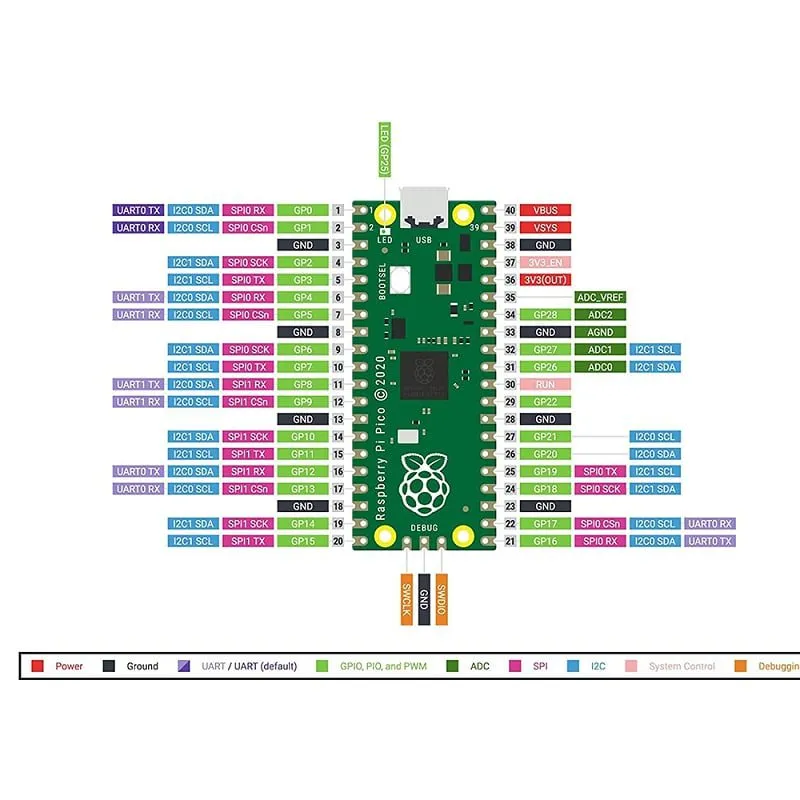
  • Offers 26 versatile multi-function GPIO pins, including 3 ADC-capable pins.

Out of stock

Description

The Raspberry Pi Pico-WH represents an advanced iteration of the original Pico, building upon the robust foundation of the Raspberry Pi-designed RP2040 microcontroller. This compact development board integrates a powerful dual-core ARM Cortex-M0+ processor, capable of running at up to 133MHz, complemented by 264KB of multi-bank high-performance SRAM and 2MB of dedicated QSPI Flash memory. Its flexible architecture supports diverse embedded applications, from basic learning to complex IoT deployments.

A significant upgrade in the Pico-WH is the inclusion of an Infineon Technologies CYW43439 wireless chip, providing integrated 2.4GHz 802.11n Wi-Fi capabilities directly on the board. While the chip also supports Bluetooth 5.2, only wireless LAN is enabled at launch. This addition greatly expands the board’s utility for network-connected projects. Furthermore, the Pico-WH maintains the familiar 21mmx51mm DIP-style form factor, now with pre-soldered headers for enhanced convenience and quicker setup, making it an excellent choice for developers seeking a low-cost, high-performance solution with wireless connectivity.

Key Features

  • RP2040 microcontroller with dual ARM Cortex-M0+ cores running up to 133MHz.
  • On-board single-band 2.4GHz wireless interface (802.11n) via Infineon Technologies CYW43439.
  • Micro USB B port for power, data, and simplified flash reprogramming.
  • Compact 21mm x 51mm form factor with pre-soldered 0.1" through-hole pins and edge castellations.
  • Exposes 26 multi-function 3.3V General Purpose I/O (GPIO) pins, including 3 ADC-capable pins.
  • Integrated 2MB QSPI flash memory for robust code and data storage.
  • Features a 3-pin ARM serial wire debug (SWD) port for advanced debugging.
  • Flexible power supply options, allowing power from Micro USB, external sources, or batteries.
  • Comprehensive SDK, extensive software examples, and detailed documentation available.

Applications

  • Internet of Things (IoT) devices and smart home automation.
  • Embedded sensing and data logging solutions.
  • Low-power network-connected applications.
  • Robotics control and motor driver integration.
  • Educational projects and learning MicroPython/C++.
  • Wearable technology and compact prototypes.

Technical Specifications

MicrocontrollerRaspberry Pi RP2040
CoresDual-core ARM Cortex-M0+
Clock SpeedUp to 133 MHz
SRAM264KB
Flash Memory2MB QSPI
Wireless Connectivity2.4GHz 802.11n Wi-Fi
USB InterfaceMicro USB B
GPIO Pins26 multi-function (23 digital-only, 3 ADC capable)
Debug Interface3-pin ARM Serial Wire Debug (SWD)
Board Dimensions51mm × 21mm
Header TypePre-soldered 0.1" through-hole pins
Power OptionsMicro USB, External, Battery

Frequently Asked Questions

What is the primary difference between Raspberry Pi Pico and Pico-WH?

The Pico-WH significantly upgrades the original Pico by integrating an Infineon Technologies CYW43439 chip, providing 2.4GHz 802.11n Wi-Fi connectivity directly on the board. Additionally, the 'WH' variant comes with pre-soldered headers, simplifying breadboard integration and prototyping without the need for manual soldering.

Which programming languages and SDKs are supported by the Raspberry Pi Pico-WH?

The Pico-WH is primarily supported by the C/C++ SDK provided by Raspberry Pi, offering low-level control and high performance. It also has excellent official support for MicroPython, making it an ideal platform for rapid prototyping and educational purposes with an accessible scripting language.

What are the power supply options for the Raspberry Pi Pico-WH?

The Pico-WH offers versatile power supply options. It can be powered directly via its Micro USB B port, or through external regulated 3.3V supplies connected to the VBUS and GND pins. Battery power is also feasible, typically using a 3.7V LiPo battery connected to the VSYS pin through appropriate power management circuitry.

Does the Pico-WH support Bluetooth connectivity?

While the integrated Infineon Technologies CYW43439 wireless chip in the Pico-WH supports Bluetooth 5.2 in its specifications, Raspberry Pi has stated that only wireless LAN (Wi-Fi) functionality is supported at launch. Bluetooth support may be enabled in future software updates, but it is not available out-of-the-box.

How many GPIO pins does the Raspberry Pi Pico-WH provide?

The Raspberry Pi Pico-WH exposes 26 multi-function General Purpose Input/Output (GPIO) pins. Out of these, 23 are digital-only, suitable for general digital I/O operations, while the remaining three pins also offer Analog-to-Digital Converter (ADC) capabilities, allowing for analog sensor readings.

Package Includes

  • 1 x Raspberry Pi Pico-WH Development Board

Additional Information

Weight 0.02 kg
Dimensions 7 × 4 × 2 cm