SKU: IOWC-0859
📋 GST Invoice Available

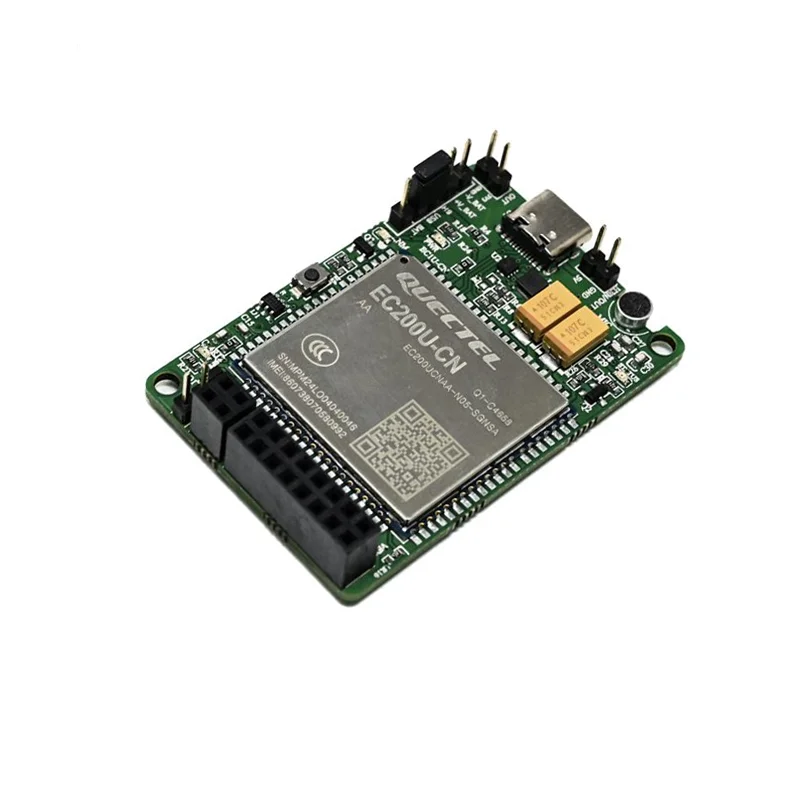
Quectel EC200U 4G LTE CAT1 & GNSS Module for IoT

₹2,819.00 (Inclusive of all taxes)
Out of Stock

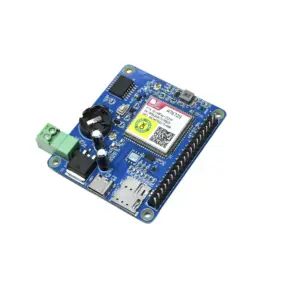
The Quectel EC200U is a compact 4G LTE CAT1 cellular module with integrated multi-constellation GNSS (GPS, BeiDou, Glonass, Galileo), designed for global IoT and M2M deployments. It provides reliable data connectivity and precise positioning via AT commands over UART or USB, compatible with 3.3V/5V MCU platforms like ESP32, STM32, and Arduino.

Features

  • 4G LTE CAT1 Connectivity: Delivers up to 10 Mbps downlink / 5 Mbps uplink for reliable, low-power IoT data transmission over global 2G/3G/4G networks.
  • Integrated Multi-GNSS Receiver: Supports GPS, BeiDou, Glonass, Galileo, and QZSS for accurate global positioning and timing in asset tracking and telematics.
  • Developer-Friendly Interfaces: Features onboard UART (up to 921600 bps), USB-C, GPIO, I2C, and SPI pins with 3.3V/5V logic level compatibility for easy integration.
  • Flexible Power Management: Operates from 3.7V-4V VBAT, USB-C (3.7V-5V), or VIN, supporting direct lithium battery connection and low-power modes.
  • Comprehensive Protocol Support: Enables TCP/UDP, MQTT, HTTP(S), FTP(S), SMS, and voice calls, ready for cloud platform and industrial IoT applications.

Out of stock

Description

The Quectel EC200U module combines a robust 4G LTE CAT1 cellular modem with a high-sensitivity multi-constellation GNSS receiver in a compact 37.97mm x 55.7mm form factor. Engineered for industrial IoT environments, it operates across a wide temperature range from -35°C to +75°C, ensuring reliability in harsh conditions. The module’s architecture includes dedicated antenna interfaces for main cellular and GNSS signals, supporting external active or passive antennas for optimal RF performance.

Its integrated voltage translator allows seamless communication with both 3.3V and 5V microcontroller systems, simplifying design-in for platforms like ESP32, STM32, and Arduino. The module supports comprehensive AT command sets over UART with hardware flow control (RTS/CTS) and USB-C for firmware updates and high-speed data transfer, making it suitable for firmware-over-the-air (FOTA) updates and remote management in deployed M2M solutions.

Key Features

  • Global 4G LTE CAT1, 3G, and 2G fallback connectivity with support for FDD and TDD bands.
  • High-precision positioning via integrated GPS, BeiDou, Glonass, Galileo, and QZSS GNSS systems.
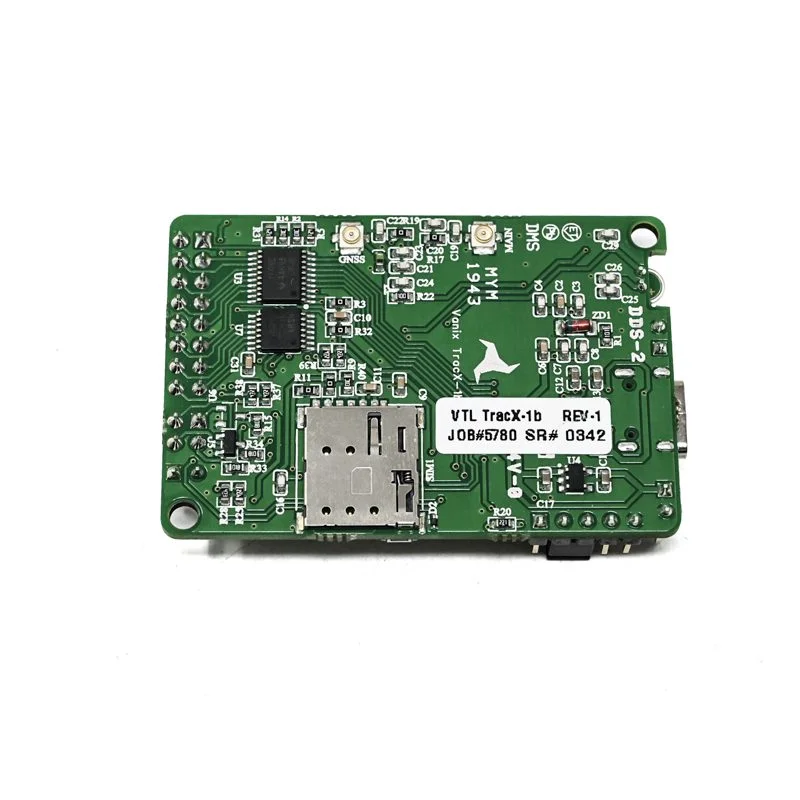
  • Onboard nano-SIM slot supporting 1.8V/3V SIM cards with easy-access edge placement.
  • Dual communication interfaces: UART for AT commands/data (up to 921600 bps) and USB for direct PC connection.
  • Built-in voltage level shifting for 3.3V/5V MCU compatibility (STM32, ESP32, Arduino).
  • Multiple power inputs: VBAT for 3.7V Li-ion batteries, VIN, and USB-C port (3.7V-5V).
  • Comprehensive protocol stack including TCP/IP, SSL, MQTT, HTTP(S), FTP(S), and SMS in PDU/text mode.
  • Three status LED indicators for power, network, and GNSS lock monitoring.

Applications

  • Asset Tracking & Fleet Management: For real-time GPS location, telematics data, and cellular reporting in vehicles and logistics.
  • Industrial IoT & Remote Monitoring: Connects remote sensors, smart meters, and SCADA systems over cellular networks with MQTT/HTTP.
  • Mobile POS & Kiosks: Provides wireless payment processing and inventory data sync for portable retail and vending systems.
  • Automotive Telematics: Enables in-vehicle diagnostics, emergency call (eCall), and connected infotainment systems.
  • Portable Wi-Fi Routers/Hotspots: Serves as the cellular modem core for creating mobile broadband access points.

Technical Specifications

Cellular ModemQuectel EC200U, LTE CAT1 (10 Mbps DL / 5 Mbps UL), 2G/3G fallback
GNSSIntegrated Multi-Constellation (GPS, BeiDou, Glonass, Galileo, QZSS)
Supply VoltageVBAT: 3.7V - 4V, USB-C/VIN: 3.7V - 5V
Operating CurrentTypical supply voltage 3.8V (specific current data sheet dependent)
InterfacesUART (921600 bps max), USB 2.0, GPIO, I2C, SPI, Nano-SIM Slot
Antenna ConnectorsMain Cellular (ANT_MAIN), GNSS (ANT_GNSS)
Operating Temperature-35°C to +75°C
Dimensions37.97mm (W) x 55.7mm (L) x 4mm (H)

Frequently Asked Questions

How do I communicate with the EC200U module and what is the default baud rate?

Primary communication is via the UART interface using AT commands. The default UART baud rate is 115200 bps, but it is configurable up to 921600 bps for faster data throughput. Connect the module's UART_TX and UART_RX pins to your microcontroller's corresponding RX and TX pins, ensuring common ground. Hardware flow control pins MAIN_RTS and MAIN_CTS are also available for reliable high-speed data transfer in noisy environments.

What power supply options are supported and how do I connect a lithium battery?

The module supports three input methods: a 3.7V to 4V lithium battery connected directly to the VBAT and GND pins, a 3.7V to 5V supply via the VIN pin, or power through the USB-C port (3.7V-5V). For battery-operated field deployments, use the VBAT input. The onboard voltage regulation and translator circuits ensure stable operation and make the digital I/O pins compatible with both 3.3V and 5V logic microcontrollers without external level shifters.

How do I enable GNSS positioning and which satellite systems are supported?

Enable the GNSS receiver by sending the AT+QGPS=1 command via UART. The module supports multiple global navigation systems: GPS (USA), BeiDou (China), Glonass (Russia), Galileo (EU), and QZSS (Japan). For optimal performance, connect an active GNSS antenna to the dedicated ANT_GNSS MHF4 connector. NMEA data sentences containing position, time, and satellite data will be output on the UART, which can be parsed by your host MCU for tracking applications.

Can I use this module with an ESP32 or Arduino, and how is logic level compatibility handled?

Yes, integration is straightforward. The EC200U includes a built-in voltage translator on its UART, GPIO, I2C, and SPI pins, making them directly compatible with both 3.3V systems like ESP32 and 5V systems like some Arduino boards. Simply connect the UART pins from your development board to the module. No external logic level shifter is required. For Arduino IDE development, utilize libraries that manage AT command parsing or leverage the module's HTTP/MQTT client capabilities for direct cloud connectivity.

What are the steps to insert and configure the SIM card for network registration?

Insert a nano-SIM card (supporting 1.8V or 3V) into the onboard slot. The module will automatically detect the SIM and attempt to register on the network. Monitor the network status LED or use the AT+COPS? command to check registration status. Ensure your SIM has active data service and is not PIN-locked. For global use, confirm that the module's variant supports your region's LTE bands (FDD/TDD). First-time setup typically involves sending basic AT commands to verify communication before configuring APN settings for data access.

Package Includes

  • 1 x Quectel EC200U 4G/GSM Module with GPS/GNSS

Additional Information

Weight 0.06 kg
Dimensions 5.57 × 3.797 × 0.4 cm