SKU: IOWC-1346
📋 GST Invoice Available

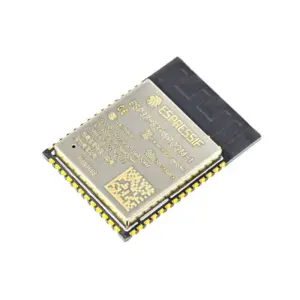
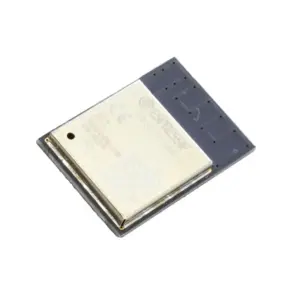
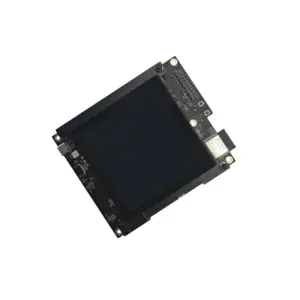
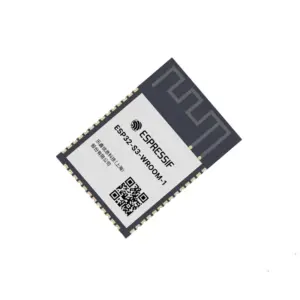
LilyGO T-Camera ESP32-S3 OV2640 FN1 6R8 Development Board

₹1,994.00 (Inclusive of all taxes)
Out of Stock

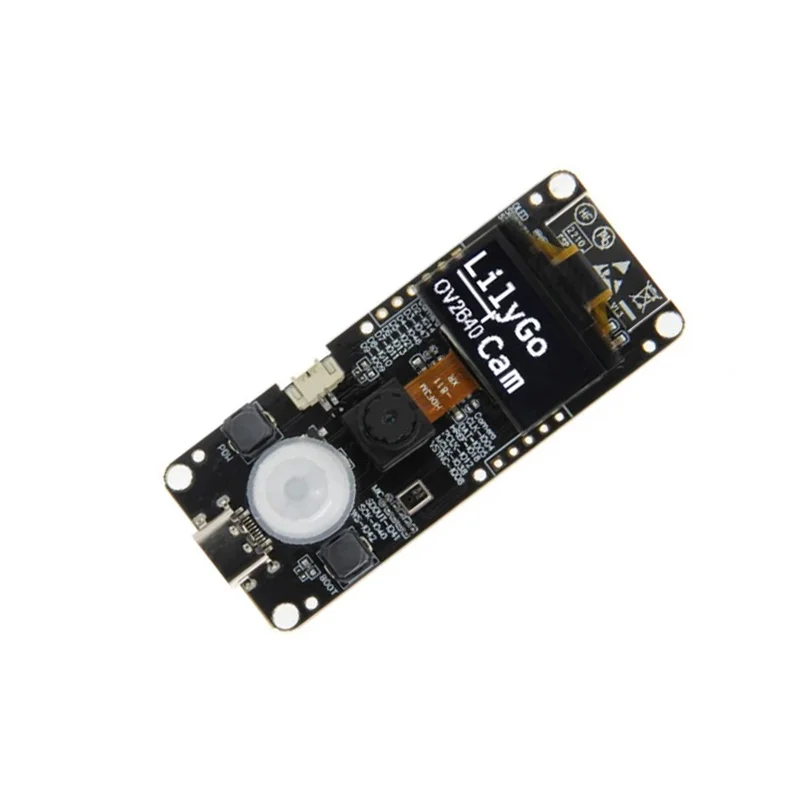
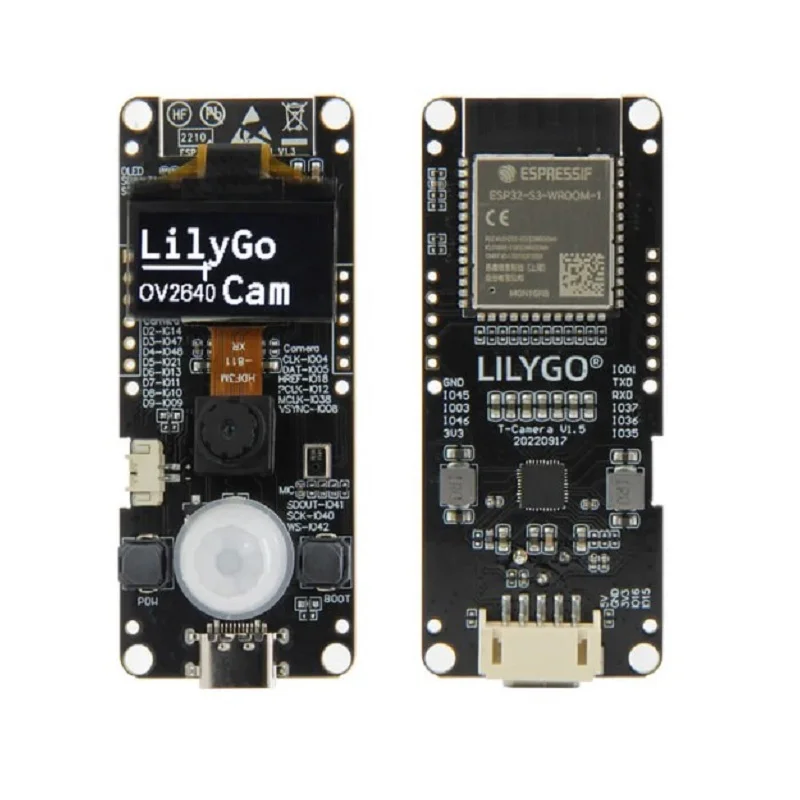
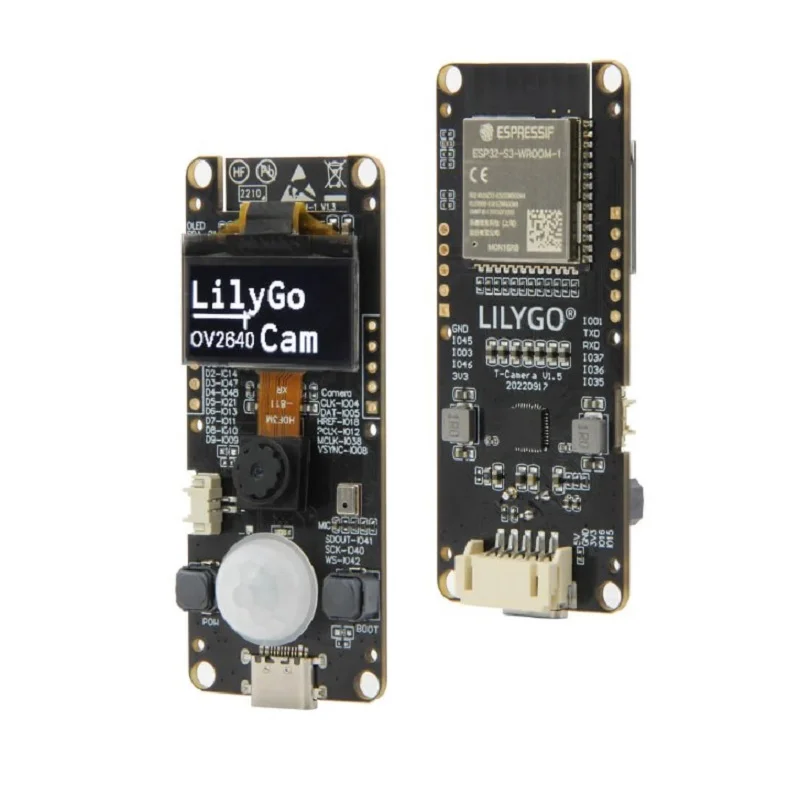
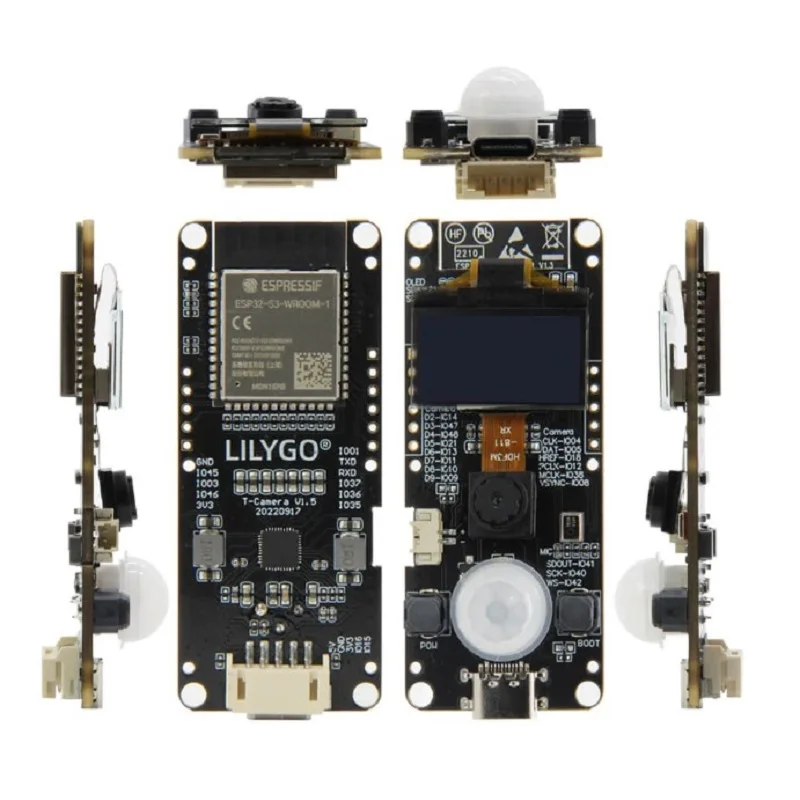
The LilyGO T-Camera is an ESP32-S3FN1 6R8 development board with an integrated OV2640 camera, providing a compact platform for IoT projects requiring image capture, processing, and dual-band Wi-Fi/Bluetooth 5.0 connectivity, programmable via Arduino IDE or ESP-IDF.

Features

  • Dual-core ESP32-S3FN1 6R8 microcontroller with 16MB flash and 8MB PSRAM for demanding image processing tasks.
  • Integrated OV2640 camera sensor capable of 2MP (UXGA) resolution for still capture and video streaming.
  • Dual-band Wi-Fi and Bluetooth 5.0 (LE) connectivity for wireless data transfer and remote control applications.
  • Compact, all-in-one form factor includes camera, MCU, and I2C display interface, simplifying prototype deployment.
  • FN1 6R8 variant offers enhanced noise reduction for improved performance in audio and RF-sensitive environments.

Out of stock

Description

The LilyGO T-Camera ESP32-S3 OV2640 FN1 6R8 is a specialized development board designed for embedded vision and audio applications. It combines Espressif’s powerful ESP32-S3 dual-core processor with a direct-connected OV2640 CMOS camera sensor, creating a single-board solution for IoT projects requiring local image capture, processing, and wireless transmission. The FN1 6R8 chip variant provides optimized RF performance and internal noise reduction, making the board suitable for environments where signal integrity is critical.

With 16MB of flash memory and 8MB of PSRAM, the board has ample resources for storing firmware, buffering high-resolution image frames, and running lightweight machine learning models for on-device inference. The integrated Wi-Fi and Bluetooth 5.0 stack enables seamless connectivity for streaming video to a cloud dashboard, sending compressed images via MQTT, or creating a Bluetooth-controlled surveillance device. The board’s 3.3V power requirement and compact footprint make it ideal for battery-powered or space-constrained deployments like smart doorbells, wildlife monitors, or industrial quality inspection nodes.

Key Features

  • Integrated vision system with ESP32-S3 processor and OV2640 camera sensor on a single PCB.
  • High memory configuration (16MB Flash, 8MB PSRAM) supports complex firmware and image buffer storage.
  • Dual-band Wi-Fi (2.4GHz) and Bluetooth 5.0 with Long Range support for flexible wireless communication.
  • FN1 6R8 chip variant provides enhanced RF shielding and noise reduction for stable wireless performance.
  • I2C protocol interface for connecting peripheral displays, sensors, or control panels.
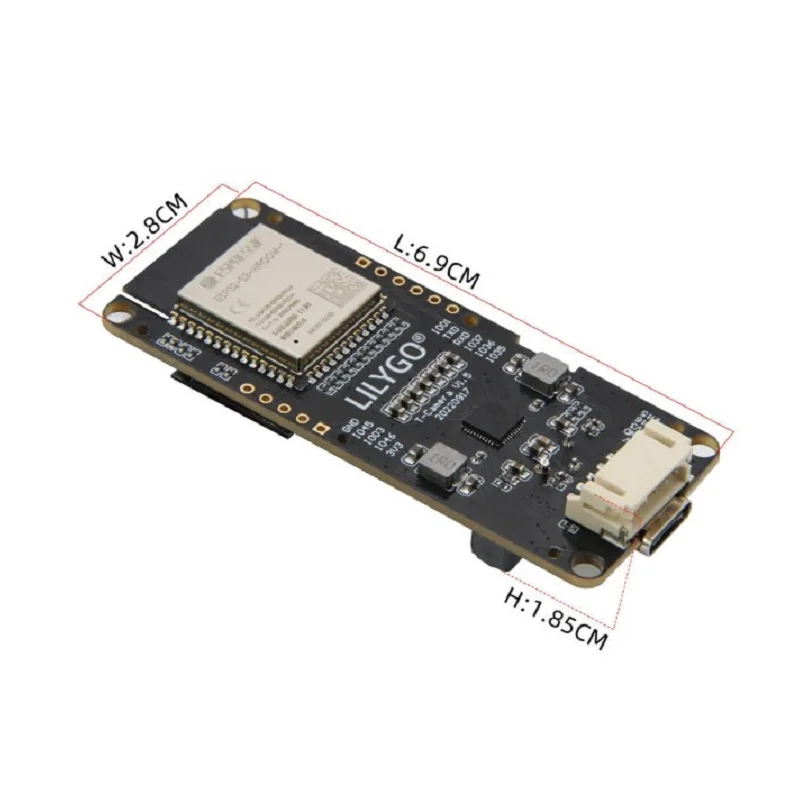
  • Compact and lightweight design (approx. 19g) enables integration into final product enclosures.
  • Fully compatible with Arduino IDE, ESP-IDF, and MicroPython for rapid development.
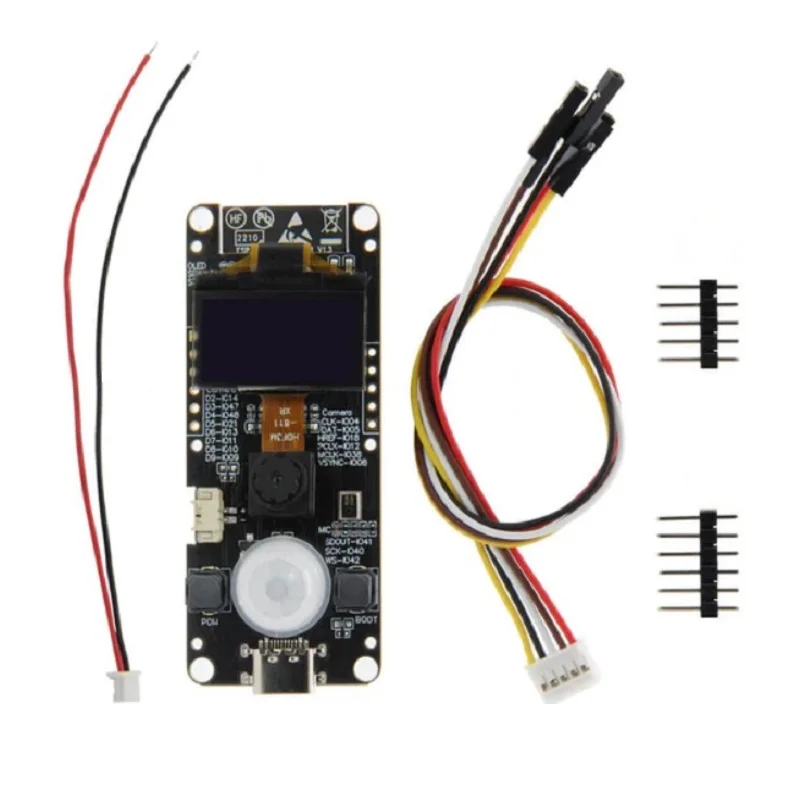
  • Includes essential connectors and headers in the package for immediate prototyping.

Applications

  • Smart home security cameras and video doorbells with local processing.
  • IoT-based wildlife monitoring and environmental observation stations.
  • Industrial machine vision for simple quality control or object detection.
  • Edge AI prototypes for person detection, face recognition, or QR code scanning.
  • Wireless streaming devices for educational or telepresence projects.

Technical Specifications

Microcontroller / SoCESP32-S3FN1 6R8 Dual-core microprocessor
Wireless ProtocolsWi-Fi 802.11 b/g/n, Bluetooth 5.0 (LE)
Camera SensorOV2640 CMOS
Max Image Resolution2 Megapixel (UXGA 1622x1200)
Flash Memory16MB
PSRAM8MB
Supply Voltage3.3V
Primary Interface ProtocolI2C
Weight19g

Frequently Asked Questions

What development frameworks are compatible with this T-Camera board?

The board is fully compatible with the Arduino IDE using the ESP32-S3 board package, Espressif's official ESP-IDF for advanced control, and MicroPython for scripting. You need to install the correct board definition and drivers, then connect via USB for programming. The OV2640 camera can be accessed using dedicated libraries like ESP32-Camera.

How do I power the board and what is the typical operating current?

Power the board via its USB-C port or the 3.3V input pin, strictly at 3.3V. The operating current depends on active components; with Wi-Fi active and camera streaming, expect peaks above 200mA. Use a stable 3.3V/1A supply for reliable operation, especially when using the flash for photography.

What is the purpose of the FN1 6R8 suffix on the ESP32-S3 chip?

The FN1 6R8 denotes a specific chip variant with 6mm x 6mm QFN packaging and integrated 6.8nH matching inductor for the RF section. This built-in inductor enhances noise reduction and RF performance stability, which is beneficial for applications sensitive to wireless interference or requiring cleaner audio capture alongside Wi-Fi/Bluetooth operations.

Can I interface an external display or other sensors with this board?

Yes, the board exposes GPIOs and features an I2C interface, allowing you to connect OLED displays, environmental sensors, or other peripherals. The included male pin headers and JST connector facilitate wiring. Ensure you manage power budget and pin conflicts, especially when using the camera and Wi-Fi simultaneously.

Package Includes

  • 1 x LilyGO T-Camera ESP32-S3 OV2640 FN1 6R8 Development Board
  • 1 x 2.0mm 5 Pin to Jumper Wire (20cm)
  • 1 x JST 2.0mm 2P Connector
  • 1 x 2.54mm Male Pin Header (5-Pin)
  • 1 x 2.54mm Male Pin Header (6-Pin)

Additional Information

Weight 0.041 kg
Dimensions 6 × 9 × 4 cm