SKU: IOWC-1753
📋 GST Invoice Available

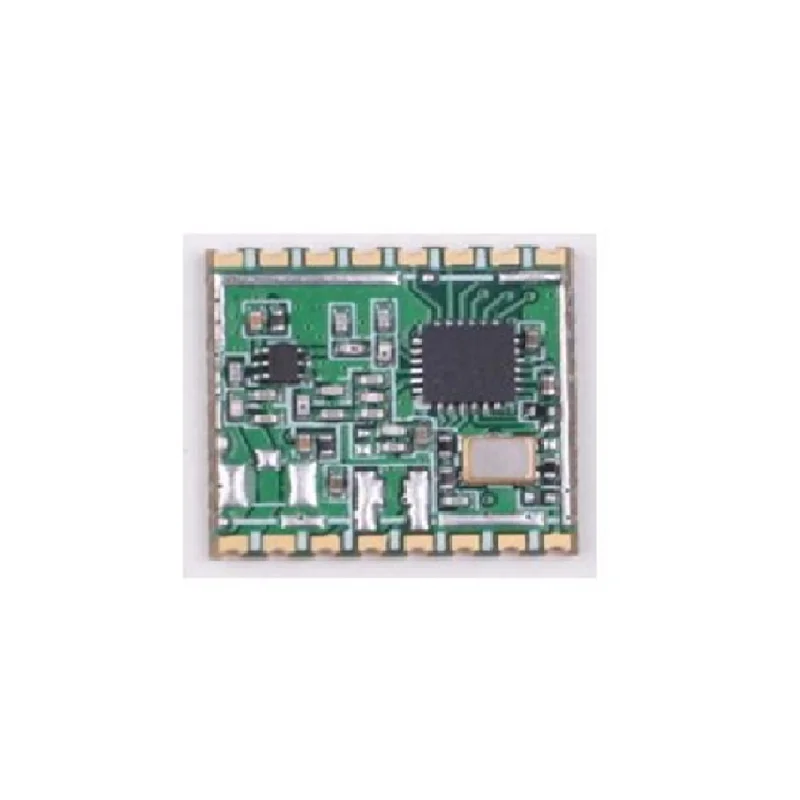
HopeRF RFM90W-915S2R LoRa Module 915MHz

₹619.00 (Inclusive of all taxes)
Out of Stock

The HopeRF RFM90W-915S2R is a sub-GHz LoRa radio transceiver module designed for long-range, low-power IoT applications in the 915MHz ISM band, supporting LoRa and (G)FSK modulation for LPWAN and legacy protocols.

Features

  • High-power +22dBm RF output for extended communication range in the 915MHz frequency band.
  • Ultra-low 8mA active receive current and 600nA register retention sleep current for long battery life.
  • Supports dual modulation: LoRa for LPWAN networks and (G)FSK/(G)MSK for proprietary or legacy systems.
  • Global sub-GHz frequency coverage from 150MHz to 960MHz, compliant with ETSI, FCC, and ARIB regulations.
  • Compact 16x16mm module footprint with 16-pin interface for easy integration into sensor nodes and trackers.

Out of stock

Description

The RFM90W-915S2R is a robust, industry-grade LoRa transceiver module built around the RFM90 IC. It is engineered for mission-critical IoT deployments requiring reliable long-range communication coupled with minimal power consumption. The module’s highly integrated synthesizer and efficient power amplifier enable stable RF performance from +22dBm transmit power down to sensitive receive levels, supporting dynamic ranges up to 127dB.

Designed for global compliance, it operates across major sub-GHz ISM bands and meets regulatory standards including ETSI EN 300 220 and FCC Part 15. Its configurable architecture allows developers to implement the LoRaWAN standard for open network connectivity or utilize proprietary (G)FSK protocols for private network control, making it a versatile core for wireless sensor networks, telemetry systems, and asset tracking solutions.

Key Features

  • LoRa modem for long-range, low-power wide-area network (LPWAN) connectivity.
  • High-efficiency integrated power amplifier delivering up to +22dBm output power.
  • Ultra-low power consumption with 8mA active RX current and 600nA sleep retention.
  • Supports (G)FSK, (G)MSK, and LoRa modulation for protocol flexibility.
  • Built-in bit synchronizer, preamble detection, and automatic Channel Activity Detection (CAD).
  • Continuous frequency coverage from 150 MHz to 960 MHz for global deployment.
  • Designed to comply with ETSI, FCC, and ARIB radio regulatory standards.
  • Compact 16x16mm form factor with 16-pin interface for space-constrained designs.

Applications

  • Smart meter reading and utility monitoring networks.
  • Supply chain, logistics, and asset tracking systems.
  • Building automation for HVAC, lighting, and security sensors.
  • Agricultural sensors for soil moisture, temperature, and irrigation control.
  • Smart city infrastructure: street light control, parking sensors, environmental monitoring.
  • Retail store sensor networks for inventory and climate monitoring.
  • Remote safety, security, and healthcare sensor applications.

Technical Specifications

Transceiver ICRFM90
Wireless ProtocolsLoRa, (G)FSK, (G)MSK
Frequency Range150 MHz - 960 MHz (Module: 915 MHz)
RF Transmit PowerUp to +22 dBm
Supply Voltage0.5V - 3.9V (Max Operating: 3.7V)
Operating Current (RX)8 mA
Sleep Current (Retention)600 nA
InterfacesSPI (via 16-pin module interface)
Antenna ConnectorNot specified (typically pad or pin for external antenna)
Operating TemperatureUp to +70 °C
Dimensions16 x 16 mm (Module)

Frequently Asked Questions

What is the primary communication interface for the RFM90W-915S2R module?

The module communicates via an SPI interface, which is accessed through its 16-pin layout. Developers must connect the module's SPI pins (MOSI, MISO, SCK) and chip select (NSS) to their host microcontroller, such as an STM32 or ESP32, to send configuration commands and transmit/receive data packets. The datasheet provides the precise pin mapping for the SPI bus and interrupt lines required for efficient packet handling.

How do I configure the module for LoRaWAN versus proprietary (G)FSK operation?

Configuration is performed by writing specific values to the module's internal registers via SPI commands. For LoRaWAN, you set the modulation mode to LoRa, configure spreading factor, bandwidth, and coding rate as per the LoRaWAN regional parameters. For proprietary (G)FSK, you select FSK mode and set the desired bit rate (up to 300kbps), frequency deviation, and packet formatting. Most developers use existing libraries like RadioHead or Semtech's LoRaMAC-node to simplify these low-level register settings.

What antenna should I use with this 915MHz module, and how is it connected?

You should use a 915MHz antenna with a 50-ohm impedance, such as a whip or PCB antenna, matched to the ISM band. The module typically has an RF pad or pin for antenna connection; you may need to design a matching network (pi-network) on your PCB for optimal performance. Ensure the antenna gain complies with local regulatory limits for your output power setting. Proper grounding and keeping the RF trace short are critical for maintaining signal integrity and meeting emission standards.

Package Includes

  • 1 x HopeRF RFM90W-915S2R LoRa Module

Additional Information

Weight 0.01 kg
Dimensions 5 × 4 × 1 cm