SKU: IOWC-1613
📋 GST Invoice Available

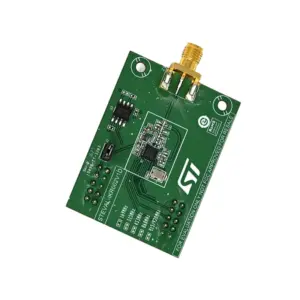
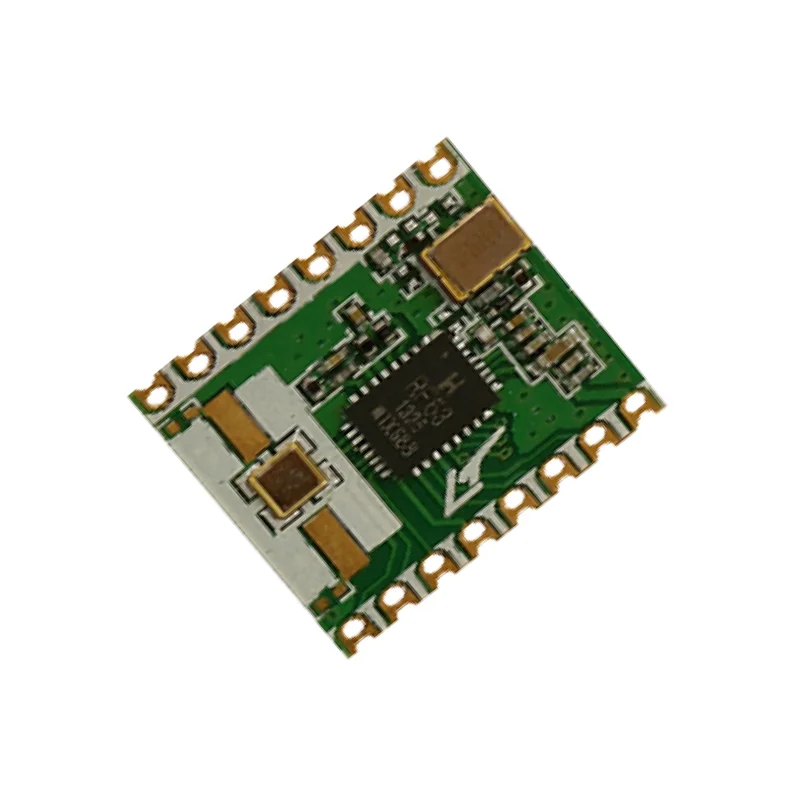
HopeRF RFM63W-868MHz Sub-1GHz RF Transceiver Module

₹389.00 (Inclusive of all taxes)
Out of Stock

The HopeRF RFM63W is a low-power, high-performance sub-1GHz FSK/OOK transceiver module operating at 868MHz, designed for long-range wireless sensor networks and industrial telemetry with data rates up to 200 kb/s and programmable RF output power up to +12 dBm.

Features

  • Dual-band 868/915MHz FSK/OOK transceiver module with ultra-low 3mA Rx current for battery-powered IoT nodes.
  • Programmable RF output power up to +12 dBm in 8 steps and excellent receiver sensitivity down to -105 dBm for robust links.
  • Integrated packet handler with 64-byte FIFO, automatic CRC generation, data whitening, and sync word recognition.
  • Supports high data rates up to 200 kb/s (NRZ) and features a wide 70dB dynamic range RSSI indicator.
  • Compact 19.7x16mm module form factor, compliant with ETSI EN 300-220 and FCC Part 15.247/15.249 standards.

Out of stock

Description

The RFM63W from HopeRF is a cost-optimized, license-free ISM band transceiver engineered for reliable, medium-data-rate wireless communication in the 868MHz and 915MHz spectrum. Its architecture integrates a fully programmable RF front-end with a sophisticated baseband modem, enabling robust FSK and OOK modulation schemes. The module is designed for extreme power efficiency, featuring deep sleep modes and a current draw of just 3mA in active receive mode, making it ideal for solar-powered or battery-operated remote sensors.

System integration is streamlined through the onboard packet handling engine, which manages framing, error checking via automatic CRC, and data whitening to reduce DC bias. The integrated 64-byte FIFO buffer offloads timing-critical tasks from the host microcontroller. With programmable parameters for output power, frequency deviation, and data rate, the RFM63W offers developers fine-grained control over the RF link budget and spectral efficiency for diverse deployment scenarios, from dense urban environments to rural industrial sites.

Key Features

  • Ultra-low power consumption: 3mA in receiver mode and 25mA at +10 dBm transmit power for extended battery life.
  • High sensitivity receiver down to -105 dBm and programmable output power up to +12 dBm for superior range and link reliability.
  • Integrated packet handler with automatic CRC generation, data whitening, and sync word recognition simplifies firmware development.
  • On-chip frequency synthesizer and bit-synchronizer for clock recovery ensure stable data transmission up to 200 kb/s.
  • Compliant with key regulatory standards: ETSI EN 300-220 for Europe and FCC Part 15.247/15.249 for North America.
  • Compact 19.7mm x 16mm module footprint with optimized circuit configuration for low-cost, high-volume integration.
  • Wide RSSI dynamic range of 70dB provides accurate signal strength measurement for network optimization.
  • Supports both FSK and OOK modulation for flexibility in balancing data rate against power consumption.

Applications

  • Wireless sensor networks for environmental monitoring (temperature, humidity, pressure).
  • Automated Meter Reading (AMR) systems for water, gas, and electricity utilities.
  • Home and building automation for security alarms, lighting control, and HVAC management.
  • Industrial monitoring and control (IIoT) for telemetry, machine health, and process automation.
  • Remote wireless control systems for agricultural irrigation, gate controllers, and signage.

Technical Specifications

Wireless ProtocolFSK, OOK
Frequency Range868 MHz, 915 MHz
RF Output PowerProgrammable up to +12 dBm (8 steps)
Receiver SensitivityDown to -105 dBm
Data RateUp to 200 kb/s (NRZ)
Supply Voltage2.1 - 3.6 VDC
Operating Current (Rx)3 mA (typical)
Operating Current (Tx)25 mA @ +10 dBm
ModulationFSK, OOK
InterfaceSPI
FIFO Buffer64 bytes
Operating Temperature-40°C to +85°C
Dimensions19.7 mm x 16 mm
ComplianceETSI EN 300-220, FCC Part 15.247/15.249

Frequently Asked Questions

What is the primary communication interface for the RFM63W module and how is it configured?

The RFM63W module communicates with a host microcontroller exclusively via an SPI interface. You must connect the module's SI (MOSI), SO (MISO), SCK (Clock), and NSEL (Chip Select) pins to corresponding SPI pins on your MCU. Configuration and data transfer are performed by writing and reading to the module's internal registers over SPI, typically at a clock rate of up to 10 MHz. The interface supports 4-wire SPI mode and requires careful attention to the timing diagrams in the datasheet for proper initialization and packet handling.

How do I set the output power and frequency on the RFM63W for my specific region?

Output power and operating frequency are set by writing specific values to the module's configuration registers via SPI commands. The output power is programmable in 8 steps up to +12 dBm by setting the 'txPower' register. The center frequency is set by programming the 'frequency' register, which controls the on-chip synthesizer. For 868MHz operation in Europe, you would program the corresponding frequency value. Always ensure your chosen frequency and output power comply with local regulatory standards (ETSI for EU, FCC for USA). The module's low-level driver library or example code from HopeRF typically provides helper functions for these settings.

What is the typical power supply requirement and how do I achieve the lowest power consumption?

The RFM63W requires a supply voltage between 2.1V and 3.6V, with 3.3V being the typical operating point. To minimize power consumption, utilize the module's built-in sleep modes by sending the appropriate SPI command to put it into a low-power state when not actively transmitting or receiving. Ensure your microcontroller can control the module's enable or shutdown pin if available. For lowest average current, design your firmware to wake the module, perform a quick transmission or reception burst, and immediately return it to sleep. A stable, low-noise LDO regulator is recommended for the RF supply rail.

Does the RFM63W require an external antenna and what type of connector does it use?

Yes, the RFM63W requires an external antenna for operation. The module features a small pad or a miniature connector (like an IPEX/u.FL footprint) for antenna attachment. You must solder a matched 50-ohm antenna, such as a wire antenna, helical antenna, or PCB trace antenna, designed for the 868MHz (or 915MHz) band. Proper antenna matching is critical for achieving the specified output power and receiver sensitivity. For best performance, keep the RF trace short, use a ground plane beneath it, and avoid placing components near the antenna area on your PCB.

Package Includes

  • 1 x HopeRF RFM63W-868MHz RF Transceiver Module

Additional Information

Weight 0.01 kg
Dimensions 1.97 × 1.6 cm