SKU: IOWC-1635
📋 GST Invoice Available

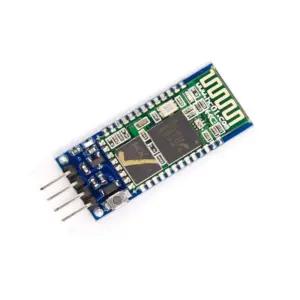
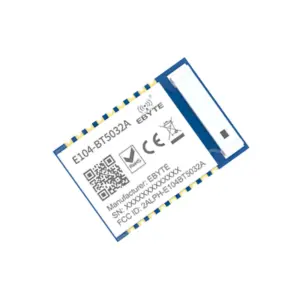
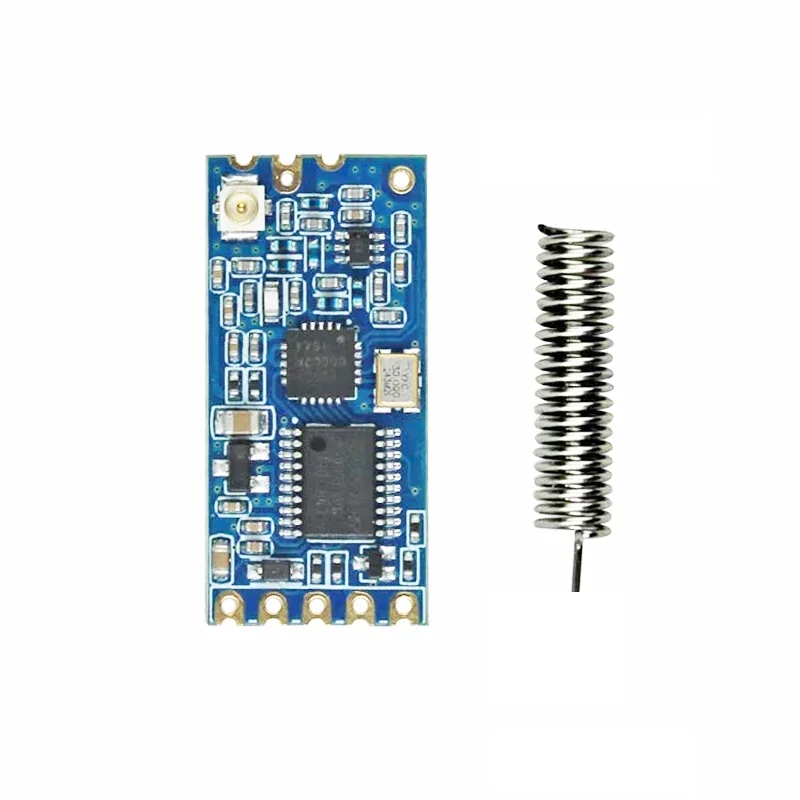
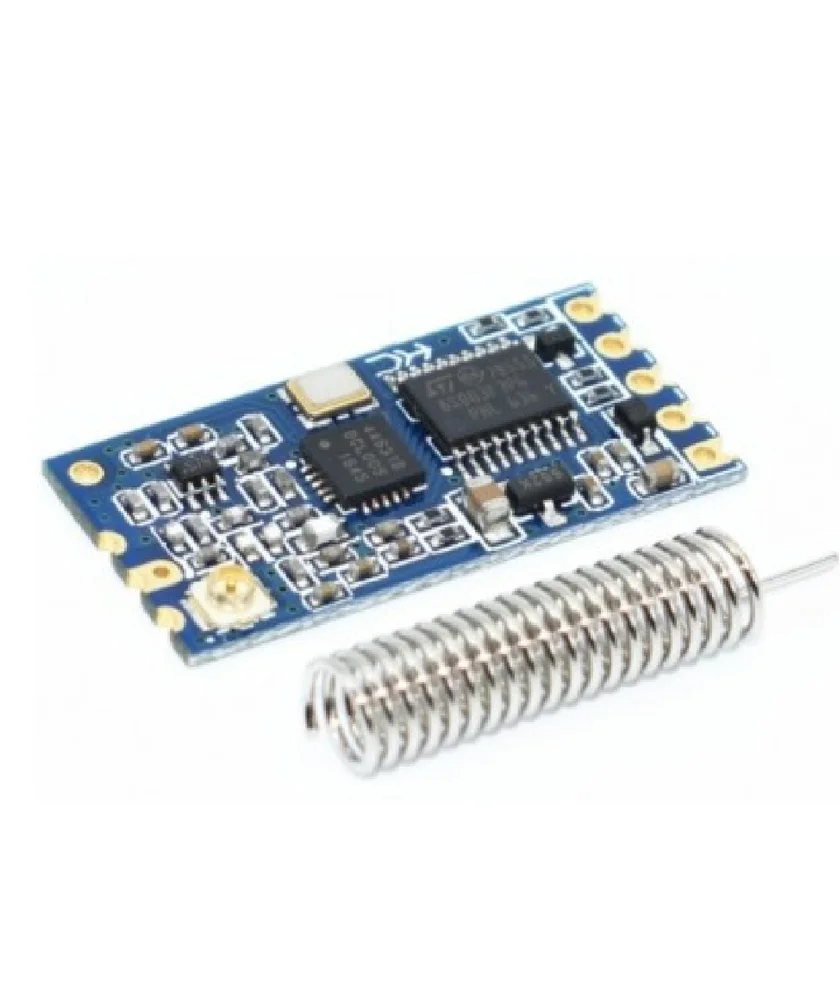
HC-12 SI4463 433MHz Wireless Serial Module

₹209.00 (Inclusive of all taxes)
Out of Stock

The HC-12 is a 433MHz wireless serial UART module based on the Silicon Labs SI4463 EZRadioPro transceiver, offering long-range communication up to 1000 meters. It integrates an STM8S003F3P6 MCU for easy AT command configuration and TTL serial data exchange, compatible with Arduino and other microcontroller platforms.

Features

  • Long-Range 433MHz RF Transceiver: Features the SI4463 chip for robust communication up to ~1000 meters in open air with a maximum transmit power of 20dBm (100mW).
  • Simple Serial Interface: Communicates via TTL UART (RX, TX, GND) with an integrated STM8 MCU, eliminating the need for user programming—just send and receive serial data.
  • Configurable Multi-Channel Operation: Supports 100 channels within the 433.4–473.0MHz band with 400kHz steps, selectable via AT commands for flexible network deployment.
  • Low Power Consumption: Offers multiple operating modes (FU1-FU4) with average currents as low as 80μA, ideal for battery-powered IoT sensor nodes and remote telemetry.
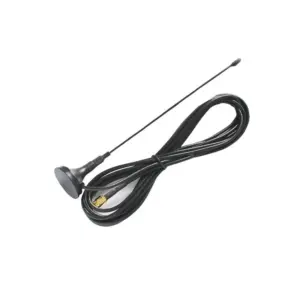
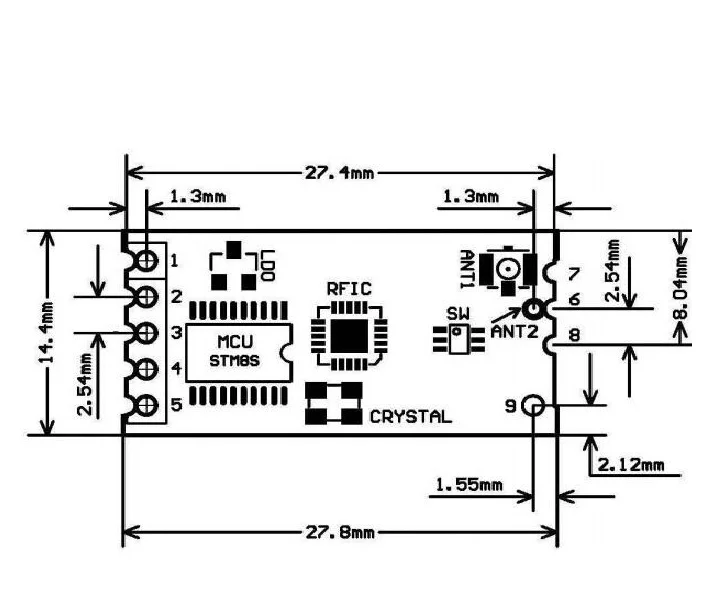
  • Dual Antenna Options: Provides a PCB antenna socket (ANT1) for external coaxial antennas and solder pads (ANT2) for attaching a spring antenna, ensuring optimal signal range.

Out of stock

Description

The HC-12 wireless serial module is a versatile embedded RF transceiver designed for reliable long-distance data links in the 433MHz ISM band. Its core is the Silicon Labs SI4463, a high-performance chip supporting (G)FSK, (G)MSK, and OOK modulation with a receiver sensitivity of -116dBm, ensuring stable communication even at low signal levels. The onboard STM8S003F3P6 microcontroller handles all radio configuration and packet management, presenting a simple serial TTL interface to the host system.

Engineered for low-power IoT applications, the module supports several UART transmission modes with varying current profiles, allowing developers to balance data throughput against battery life. Its stamped hole encapsulation and compact 27.4mm x 13.2mm footprint facilitate direct soldering and embedding into final products. The module’s architecture supports a highly configurable packet handler with TX/RX FIFOs, automatic frequency control (AFC), and automatic gain control (AGC), making it suitable for dynamic RF environments.

Key Features

  • Long-range wireless serial bridge using the high-performance SI4463 EZRadioPro transceiver chip.
  • Integrated STM8S MCU manages radio operations, providing a plug-and-play serial UART interface without requiring firmware development.
  • Configurable via AT commands for setting channel, power, baud rate, and operating mode (FU1, FU2, FU3, FU4).
  • Ultra-low power consumption with standby currents in the microamp range, extending battery life in remote sensor deployments.
  • Robust RF performance with a wide 433.4–473.0MHz frequency range, 100 channels, and support for multiple modulations including FSK and OOK.
  • Dual antenna interface options: an IPEX/u.FL-compatible socket for external antennas and solder pads for a spring antenna.
  • Compact, solderable form factor designed for easy integration into embedded systems and custom PCB designs.
  • Compliant with key regulatory standards including FCC Part 15.247 and ETSI, simplifying product certification.

Applications

  • Long-range wireless sensor networks for environmental monitoring (temperature, humidity, soil moisture).
  • Remote control and telemetry systems for industrial equipment and agricultural machinery.
  • Wireless data links for DIY electronics, robotics, and RC model communication.
  • Battery-powered asset tracking and GPS data relay in logistics and fleet management.
  • Home automation and smart garden systems requiring reliable sub-GHz communication.

Technical Specifications

Wireless TransceiverSilicon Labs SI4463
Integrated MCUSTM8S003F3P6
Wireless ProtocolProprietary RF, UART Serial Bridge
Frequency Range433.4 – 473.0 MHz
RF Transmit PowerUp to 20 dBm (100 mW)
Receiver Sensitivity-116 dBm @ 5000 bps
Supply Voltage3.2V to 5.5V DC
Operating Current (Typical)3.6 mA (FU1), 80 μA (FU2), 16 mA (FU3/FU4)
Peak Current~100 mA (Full Power TX)
InterfaceTTL UART (RX, TX, GND)
Antenna ConnectorPCB Socket (ANT1) & Solder Pads (ANT2)
Operating Temperature-25°C to +75°C
Dimensions27.4 mm x 13.2 mm x 4 mm

Frequently Asked Questions

How do I configure the HC-12 module's channel and baud rate?

Connect the module's TX/RX pins to a USB-to-serial adapter or microcontroller UART. Power it with 3.3V-5V, open a serial terminal at the default 9600 baud, and send AT commands like AT+Cxxx to set the channel (001-100) or AT+BAUDx to change the baud rate. Ensure to set both communicating modules to identical parameters for successful wireless data transfer. The onboard MCU handles all radio configuration automatically.

What is the difference between the FU1, FU2, FU3, and FU4 operating modes?

These UART transmission modes balance power consumption and responsiveness. FU1 offers normal operation (~3.6mA). FU2 is a special low-power sleep mode (~80μA) waking on serial data. FU3 and FU4 are transparent transmission modes (~16mA) with different packet handling. Select the mode via AT command (AT+FUx) based on your application's need for battery life versus instant data throughput, as changing modes affects current draw and latency.

Can I use an external antenna with the HC-12, and how do I connect it?

Yes, for extended range, use a 433MHz antenna with an IPEX/u.FL connector plugged into the ANT1 socket. Alternatively, solder a spring or wire antenna directly to the ANT2 pads. Ensure the antenna is tuned to the module's operating frequency (e.g., 433MHz) for optimal impedance matching and radiation efficiency. An external antenna with proper gain can significantly improve line-of-sight distance beyond the built-in PCB trace option.

What is the maximum reliable data rate and packet size for the HC-12?

The HC-12 supports data rates from 1200 bps to 115200 bps, configurable via AT+BAUD. The reliable throughput depends on RF environment; lower baud rates like 9600 are more robust for long distances. The SI4463 chip has 64-byte TX/RX FIFOs, but the module's firmware may handle larger serial buffers. For best performance, structure your data into packets under 64 bytes and implement software flow control or acknowledgments in your host microcontroller code.

How do I interface the HC-12 with an Arduino or ESP32 development board?

Connect VCC to 5V (or 3.3V if your module variant supports it), GND to GND, the HC-12's TX pin to an Arduino RX pin (e.g., Digital 2), and the HC-12's RX pin to an Arduino TX pin (e.g., Digital 3). Use a SoftwareSerial library on these pins for communication. Remember to logic level shift if your Arduino is 5V and the module is 3.3V logic. Then, use standard Serial.write() and Serial.read() functions in your sketch to send and receive data wirelessly.

Package Includes

  • 1 x HC-12 SI4463 433MHz Wireless Serial Module

Additional Information

Weight 0.002 kg
Dimensions 2.75 × 1.35 × 0.4 cm