SKU: SENS-0376
📋 GST Invoice Available

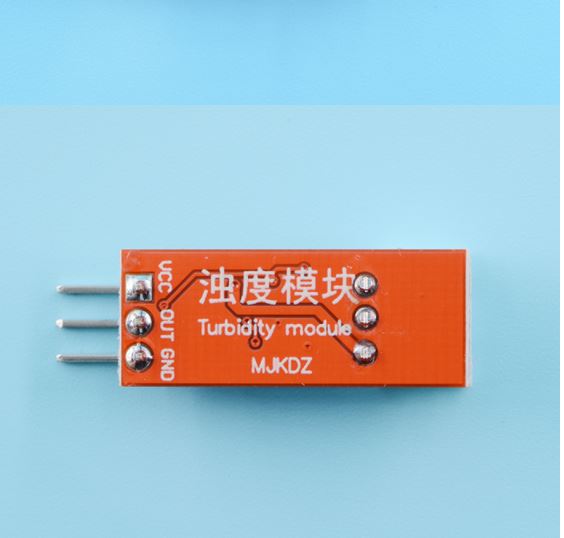
Generic Turbidity Sensor with Module - 0-1000 NTU Range, Analog/Digital Output

₹489.00 (Inclusive of all taxes)
Out of Stock

This turbidity sensor module provides a 0-1000 NTU measurement range via analog or digital output, designed for direct integration with Arduino, Raspberry Pi, AVR, and PIC microcontrollers for water quality monitoring applications.

Features

  • Infrared optical sensing principle for 0-1000 NTU turbidity measurement.
  • Provides both analog and digital signal outputs for flexible system integration.
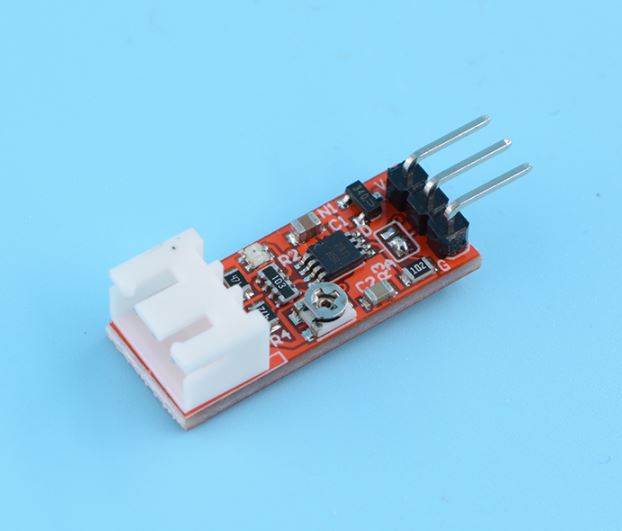
  • On-board trimpot for precise sensitivity and threshold adjustment.
  • Wide operating temperature range from -30°C to +80°C.
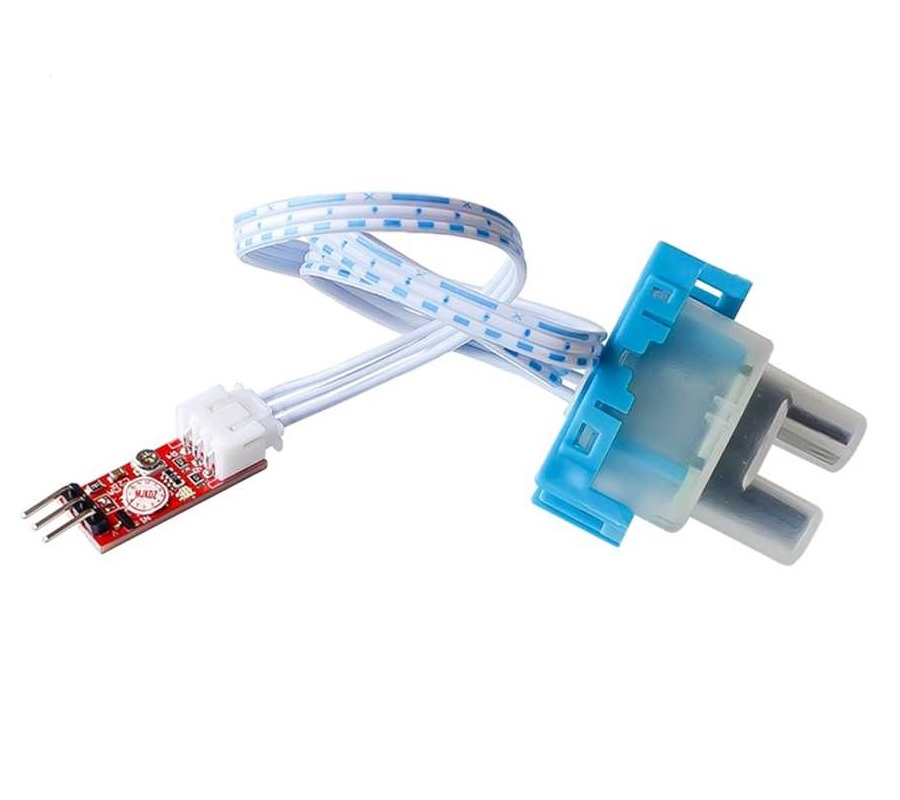
  • Compact module design with included 40cm connecting cable.

Out of stock

Description

This turbidity sensor operates on an infrared light transmittance and scattering principle. An internal IR LED emits light through the water sample, while a photodetector measures the transmitted light intensity, which inversely correlates with the concentration of Total Suspended Solids (TSS). The accompanying signal conditioning module amplifies the raw sensor signal and provides both a linear analog voltage output and a configurable digital switch output.

Designed for durability in aqueous environments, the sensor probe is constructed for direct immersion. The module supports a wide 5VDC supply range and consumes a maximum of 30mA, making it suitable for portable and embedded monitoring systems. Its fast response time of under 500ms enables real-time water quality assessment.

Key Features

  • Infrared optical sensing for accurate turbidity detection independent of water color.
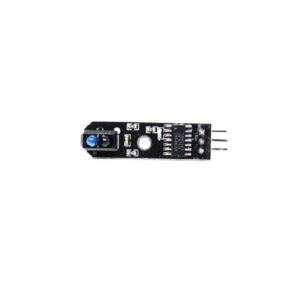
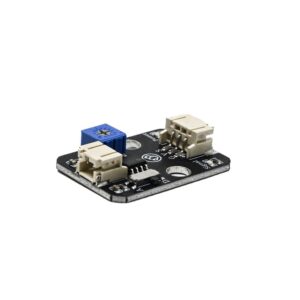
  • Integrated signal conditioning module with analog and digital output pins.
  • User-adjustable sensitivity via on-board trimpot for calibration to specific water bodies.
  • Robust construction for continuous operation in temperatures from -30°C to 80°C.
  • Low power consumption (30mA max) suitable for battery-powered data loggers.
  • High insulation resistance (100 MΩ Min) ensures signal integrity and safety.
  • Direct compatibility with 5V logic microcontrollers like Arduino and Raspberry Pi.
  • Compact form factor with pre-attached cable for easy deployment.

Applications

  • Real-time turbidity monitoring in rivers, streams, and lakes for environmental studies.
  • Water quality assessment in laboratory settings and research catchment sites.
  • Effluent and process water monitoring in industrial tanks and treatment systems.
  • Aquaculture and hydroponic system water clarity monitoring.
  • DIY and educational projects for Arduino-based environmental sensing.

Technical Specifications

Operating Voltage5 VDC
Maximum Current30 mA
Measuring Range0 ~ 1000 NTU
Output InterfaceAnalog & Digital
Response Time<500 ms
Operating Temperature-30°C to +80°C
Insulation Resistance100 MΩ (Min)
Cable Length40 cm
Sensor Dimensions (L x W)33 mm x 20 mm
Weight55 g

Frequently Asked Questions

What is the output signal type of this turbidity sensor?

The sensor module provides both an analog voltage output, which varies linearly with turbidity, and a digital output that switches at a user-defined threshold set by the onboard trimpot. This allows for both precise measurement and simple alarm functionality.

How do I calibrate this sensor for accurate readings?

Calibration involves using standard turbidity solutions. Adjust the onboard trimpot while measuring the analog output against known NTU values. For the digital output, set the trimpot until the signal toggles at your desired turbidity alarm level. The sensor should be calibrated in clean, air-free water for a baseline.

Is this sensor suitable for continuous submersion?

The sensor probe is designed for direct contact with liquids and can operate within its specified temperature range. For long-term continuous submersion, ensure the installation avoids mechanical stress on the cable entry point. The operating temperature range of -30°C to +80°C covers most ambient water conditions.

Can I interface this sensor directly with a 3.3V system like a Raspberry Pi?

The module requires a 5V power supply. The digital output pin is typically 5V logic. For direct connection to a 3.3V GPIO pin like on a Raspberry Pi, a simple voltage divider or logic level converter is recommended to avoid damaging the microcontroller. The analog output can be read by a 5V-tolerant ADC.

Package Includes

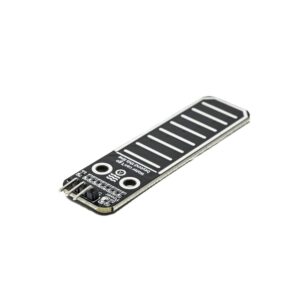
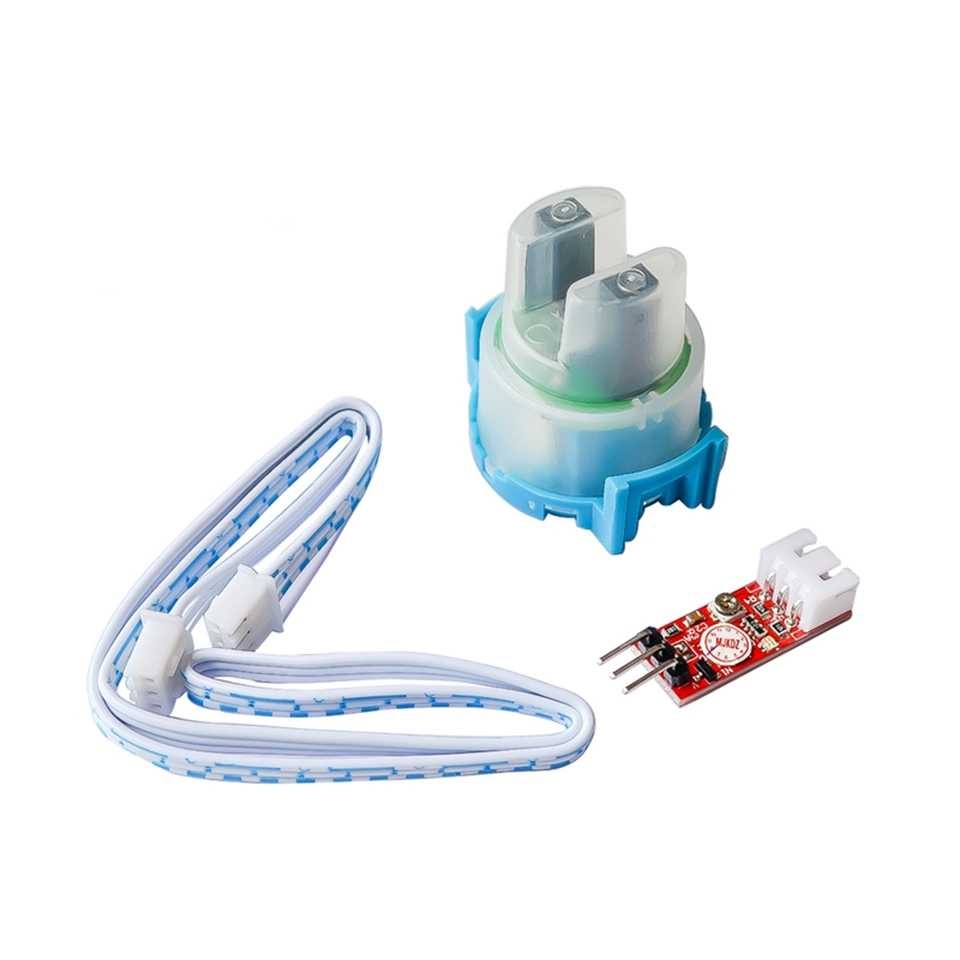
  • 1 x Turbidity Sensor Probe
  • 1 x Signal Conditioning Module
  • 1 x 40cm Connecting Cable

Additional Information

Weight 0.055 kg
Dimensions 3.3 × 2 cm