SKU: SENS-0699
📋 GST Invoice Available

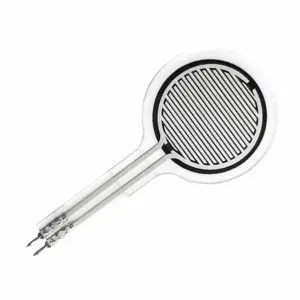
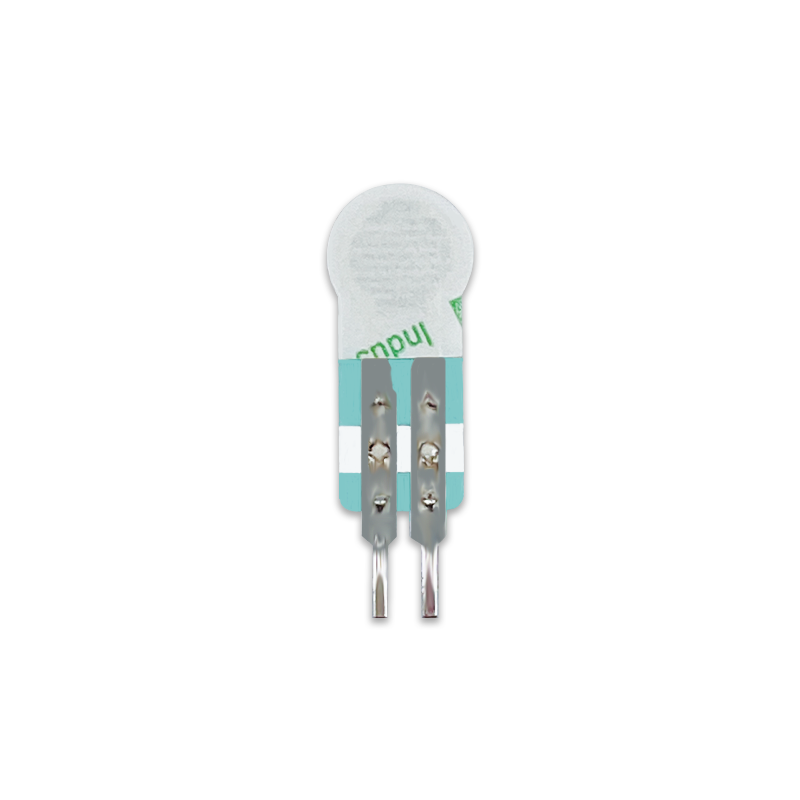
Force Sensitive Resistor RP-C7.6ST-LF2 (2g-1.5kg) - 0.3mm Thin Film

₹166.00 (Inclusive of all taxes)
Out of Stock

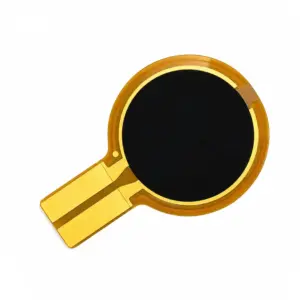
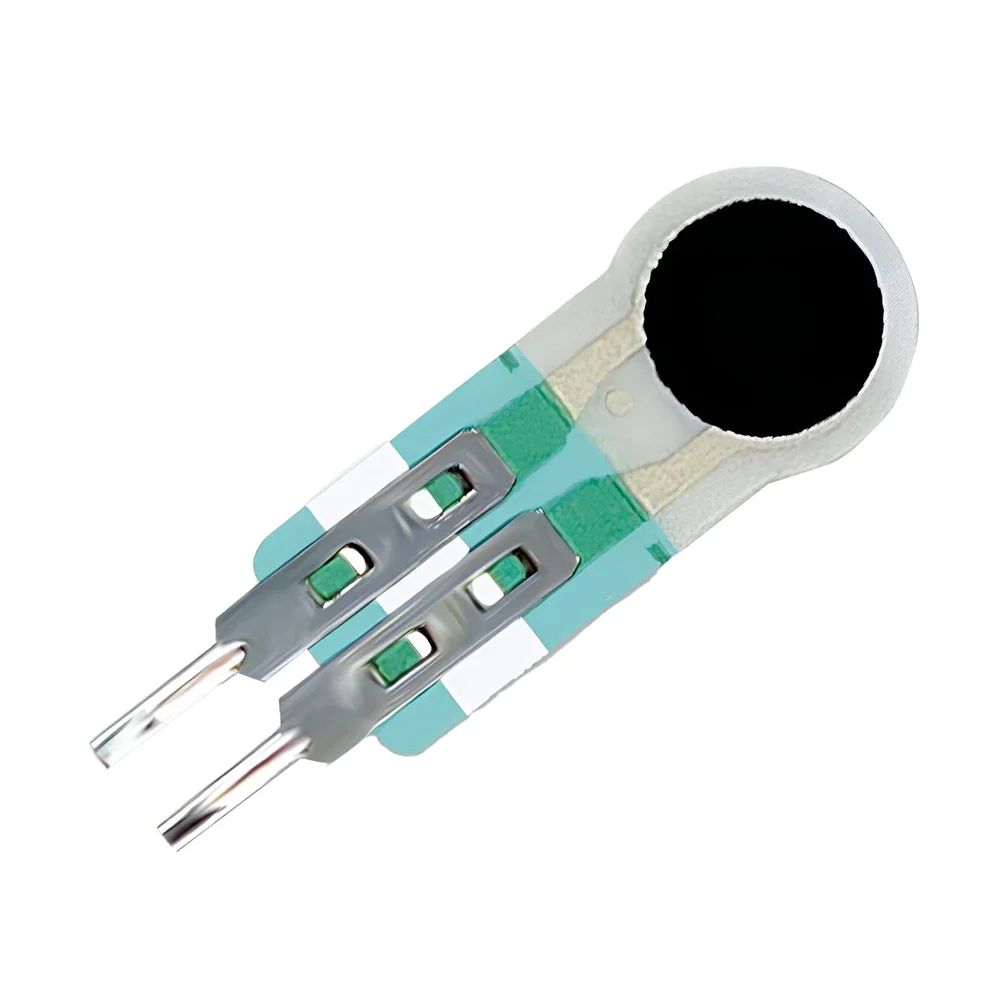
The RP-C7.6ST-LF2 is a thin-film force-sensitive resistor (FSR) providing variable resistance output from 500KΩ to 500Ω over a force range of 2g to 1.5kg, ideal for integration into Arduino, Raspberry Pi, and other microcontroller-based projects requiring compact, low-profile force detection.

Features

  • Ultra-thin 0.3mm profile with rear adhesive for easy mounting
  • Wide force sensitivity range from 2 grams up to 1.5 kilograms
  • Analog resistance output varies from ~500KΩ (light touch) to ~500Ω (full force)
  • Robust operating temperature range from -40°C to +85°C
  • Compact and durable construction for embedded tactile sensing applications

Out of stock

Description

The RP-C7.6ST-LF2 force-sensitive resistor operates on the principle of piezoresistivity, where the electrical resistance of its active area decreases predictably with increasing applied force. This analog output provides a simple, unamplified signal that can be read directly by a microcontroller’s analog-to-digital converter (ADC) through a voltage divider circuit, enabling precise force measurement in interactive systems.

Constructed with a 0.3mm thin-film substrate and a protective layer, this FSR is designed for durability and repeated use. Its wide operating temperature range from -40°C to +85°C ensures reliable performance in diverse environmental conditions, from industrial settings to consumer electronics. The sensor’s rear adhesive backing facilitates secure installation onto flat or curved surfaces.
Key Features

  • High-Resolution Analog Sensing: Delivers a continuous, non-linear resistance change corresponding directly to applied force, enabling detailed pressure mapping.
  • Ultra-Low Profile Design: The 0.3mm thickness allows for seamless integration into space-constrained assemblies without compromising structural integrity.
  • Broad Dynamic Range: Accurately measures forces from a light 2-gram touch up to a substantial 1.5-kilogram load, covering a wide spectrum of interaction forces.
  • Robust Environmental Tolerance: Engineered to maintain consistent performance across an extensive temperature range from -40°C to +85°C.
  • Simplified System Integration: The variable resistance output interfaces directly with standard microcontroller ADCs, requiring minimal external signal conditioning.
  • Durable, Flexible Construction: Built with resilient materials to withstand repeated actuation cycles, ensuring long-term reliability in tactile interfaces.

Applications

  • Robotic gripper and end-effector tactile feedback systems for object handling and force control.
  • Interactive consumer electronics, such as pressure-sensitive buttons, touchpads, and gaming controllers.
  • Biomedical devices for monitoring applied pressure in rehabilitation equipment or patient monitoring systems.
  • Industrial process control for detecting presence, weight, or compression in assembly lines.
  • Prosthetic and assistive technology interfaces requiring nuanced force and touch input.

Technical Specifications

ModelRP-C7.6ST-LF2
Sensing PrinciplePiezoresistive (Force-Sensitive Resistor)
Force Sensitivity Range2 g to 1.5 kg
Actuation Force (for response)~30 g (Resistance ≤ 200 kΩ)
Resistance Range (Output)~500 kΩ (Min. Force) to ~500 Ω (Max. Force)
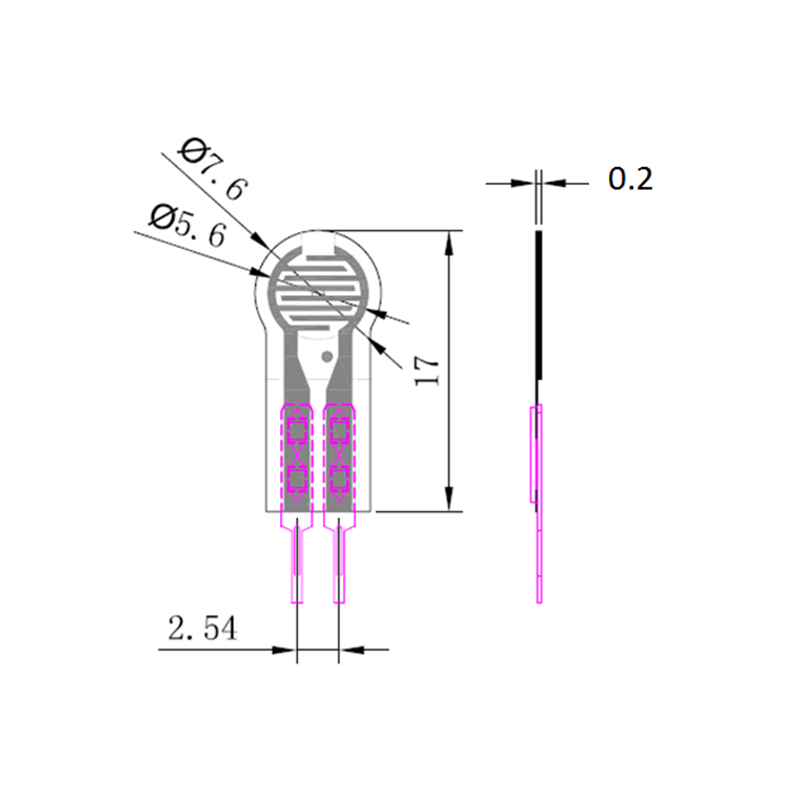
Thickness0.3 mm (with adhesive backing)
Operating Temperature-40°C to +85°C
Output TypeAnalog Resistance (Variable)
Interface CompatibilityMicrocontroller ADC (via voltage divider)

Frequently Asked Questions

How do I interface this force-sensitive resistor with an Arduino or Raspberry Pi?

Connect the FSR in a simple voltage divider circuit with a fixed resistor (e.g., 10kΩ) between the sensor and ground. The junction point connects to an analog input pin on your microcontroller. As force applied to the sensor changes its resistance, the voltage at the analog pin will vary proportionally, which your code can read and map to a force value.

What is the relationship between applied force and the sensor's resistance?

The resistance decreases non-linearly as applied force increases. At the minimum detectable force (~2-30g), resistance is very high (near 500kΩ). At the maximum rated force (1.5kg), resistance drops to approximately 500Ω. The response curve is inverse and logarithmic, requiring calibration for precise force measurement.

Can this sensor be used for continuous pressure measurement or only for touch detection?

It is suitable for both continuous pressure measurement and binary touch detection. For continuous measurement, map the analog reading to your calibrated force curve. For simple on/off detection, set a threshold resistance or voltage value in your code to determine when a significant force (e.g., above the 30g actuation force) has been applied.

What is the purpose of the adhesive backing, and how should it be mounted?

The adhesive backing provides a secure, permanent mounting solution onto clean, flat, and dry surfaces. It ensures the sensing area remains firmly in place and maintains consistent mechanical coupling for accurate force transfer. For best results, apply to a rigid substrate and avoid mounting on flexible surfaces that could dampen or distort the applied force.

Package Includes

  • 1 x Force Sensitive Resistor RP-C7.6ST-LF2