SKU: IOWC-1070
📋 GST Invoice Available

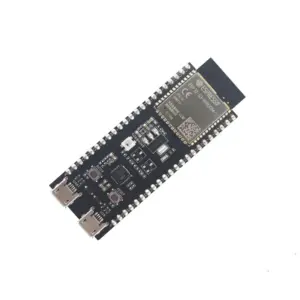
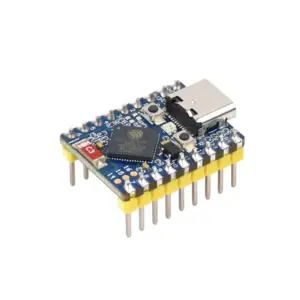
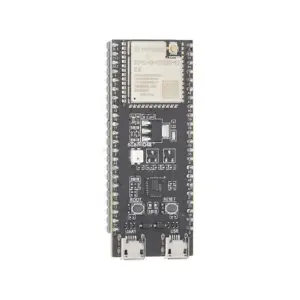
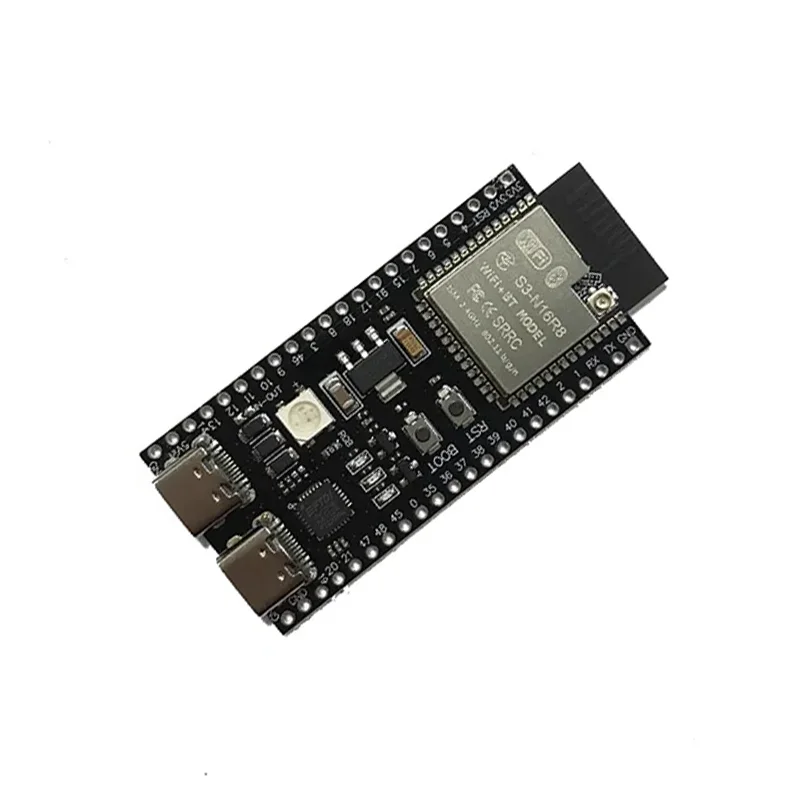
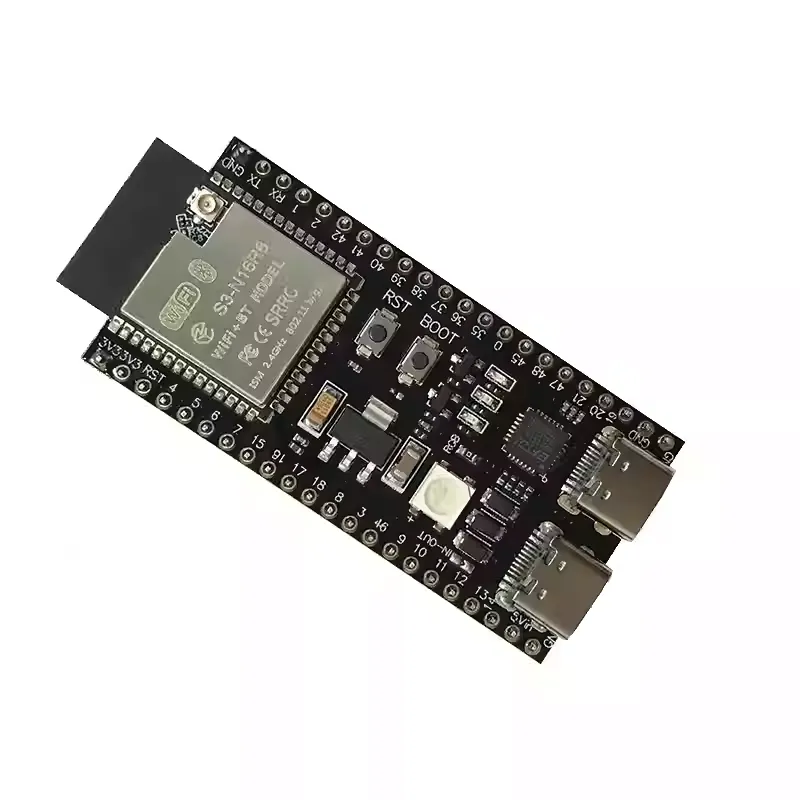
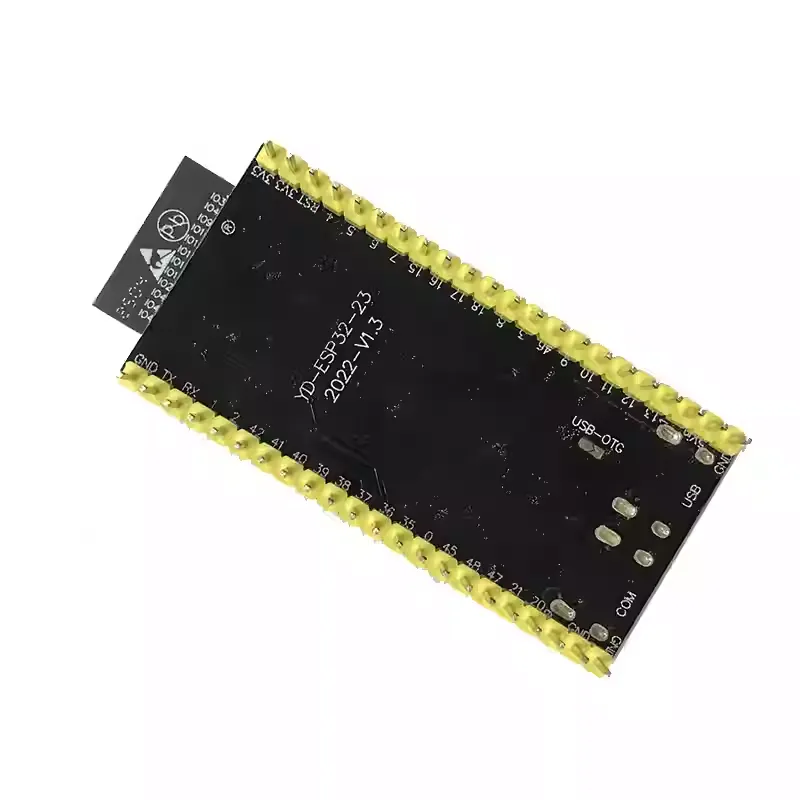
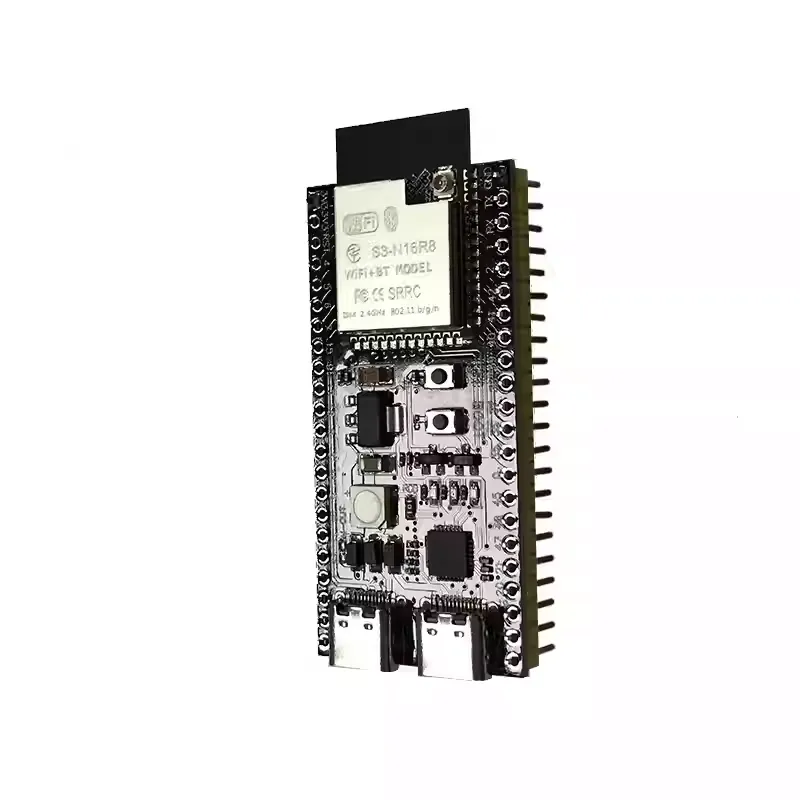
ESP32-S3-N16R8 AI Voice Chat Robot Learning Board (Unsoldered)

₹549.00 (Inclusive of all taxes)
Out of Stock

This ESP32-S3-N16R8 development board is preloaded with Xiaozhi AI voice chat firmware, enabling speech recognition and interaction projects. It connects via Wi-Fi for web-based configuration and is ideal for Arduino IDE, ESP-IDF, or MicroPython development.

Features

  • Powered by ESP32-S3-N16R8 SoC with dual-core Xtensa LX7 processor, 16MB flash, and 8MB PSRAM for demanding AI voice tasks.
  • Preloaded Xiaozhi AI voice assistant firmware for immediate speech recognition, chat interaction, and edge computing projects.
  • Web-based configuration portal accessible via Wi-Fi (default IP 192.168.4.1) for easy setup without complex software installation.
  • Unsoldered pin headers provide full GPIO access for custom sensor integration, motor drivers, or peripheral expansion in DIY robotics.
  • Certified hardware (3C approved) with comprehensive tutorials and firmware support for rapid prototyping and educational use.

Out of stock

Description

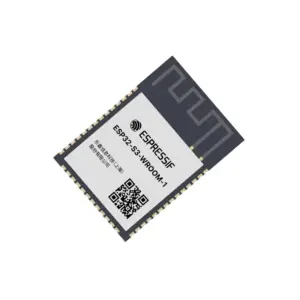
The ESP32-S3-N16R8 AI Voice Chat Robot Learning Board is engineered for developers and makers entering the realm of embedded AI and voice interaction. Its core is the ESP32-S3 module, which integrates 2.4 GHz Wi-Fi and Bluetooth LE 5.0, providing robust wireless connectivity for IoT applications. The substantial 16MB flash and 8MB PSRAM are specifically allocated to handle the memory-intensive demands of the pre-installed Xiaozhi speech recognition firmware, enabling offline voice command processing.

Designed for hands-on integration, the board comes with unsoldered pin headers, offering complete flexibility for custom hardware stacks, such as adding servo controllers for robotics or environmental sensors for smart home automation. Power management is handled efficiently, supporting a typical operating voltage range compatible with USB or external Li-Po batteries, making it suitable for portable voice-controlled devices. The board’s compact footprint and direct browser-based configuration streamline the development workflow from unboxing to a functional AI voice node.

Key Features

  • Edge AI Voice Processing: Execute speech recognition and natural language interaction locally on the ESP32-S3, reducing cloud dependency and latency.
  • High-Capacity Memory Configuration: 16MB flash stores complex voice models and application code, while 8MB PSRAM handles dynamic audio data buffers.
  • Wireless Web Configuration: Connect to the board's built-in Wi-Fi AP to access a configuration portal for setting up voice commands and network parameters.
  • Developer-Focused Design: Unsoldered through-hole pins allow for custom stacking with shields, breadboards, or direct wiring to actuators and sensors.
  • Comprehensive Learning Ecosystem: Supported by step-by-step tutorials, wiring diagrams, and open-source firmware links for educational and prototyping use.
  • Dual-Band Wireless Core: Leverage the ESP32-S3's integrated 2.4 GHz Wi-Fi for network connectivity and Bluetooth LE 5.0 for proximity-based control or beacon applications.

Applications

  • DIY AI Voice Robots: Create interactive robots or toys with local speech command recognition and response capabilities.
  • Smart Home Voice Control: Develop offline voice assistants to control lights, appliances, or security systems via Wi-Fi or BLE.
  • AI & IoT Education: An ideal platform for students and hobbyists to learn embedded AI, speech processing, and wireless IoT development.
  • Prototyping Edge AI Devices: Serve as a core module for prototyping voice-interactive kiosks, information terminals, or accessibility tools.

Technical Specifications

Microcontroller / SoCESP32-S3 (Dual-core Xtensa LX7, up to 240 MHz)
Wireless ProtocolsWi-Fi 802.11 b/g/n (2.4 GHz), Bluetooth LE 5.0
Flash Memory16 MB
PSRAM8 MB
Supply Voltage5V via USB Type-C (typical)
InterfacesGPIO, UART, I2C, I2S, SPI, USB, Touch Sensor
Antenna ConnectorIntegrated PCB antenna
Operating Temperature-40°C to +85°C (typical for ESP32-S3)
Dimensions (LxW)65 mm x 30 mm
WeightApprox. 10 g

Frequently Asked Questions

How do I configure the Xiaozhi AI voice firmware on this board?

Power the board via USB, connect your computer to its Wi-Fi access point (SSID typically broadcast by the board), then open a browser and navigate to http://192.168.4.1. This web portal allows you to configure Wi-Fi credentials, set up custom voice commands, and adjust interaction parameters without needing to flash new firmware initially. For advanced customization, you can download the source firmware from provided links and program it using the Arduino IDE or ESP-IDF with the board in download mode.

What development environments are compatible with this unsoldered ESP32-S3 board?

The board is fully compatible with the Arduino IDE using the ESP32 board manager, Espressif's official ESP-IDF framework for advanced control, and MicroPython for rapid scripting. You will need to solder pin headers to access all GPIOs for peripheral connections. Ensure you select the correct board variant (e.g., ESP32-S3 Dev Module) in your IDE and install the necessary USB drivers for the on-board USB-to-serial chip to enable serial communication and firmware uploading.

Can I power this board with a battery for a portable voice assistant project?

Yes, the board can be powered via its USB Type-C port or through the VIN pin (typically accepting 3.3V to 5V). For portable use, connect a 3.7V Li-Po battery to the VIN and GND pins, ensuring you include appropriate charging circuitry if needed. Monitor the ESP32-S3's operating current, especially during Wi-Fi transmission and speech processing, to calculate battery life. Utilize the chip's deep sleep modes between voice interactions to significantly extend battery runtime in field deployments.

Package Includes

  • 1 x ESP32-S3-N16R8 AI Voice Chat Robot Learning Board (Unsoldered)

Additional Information

Weight 0.01 kg
Dimensions 6.5 × 3 cm