SKU: IOWC-0572
📋 GST Invoice Available

DFRobot ESP32-S3 AI Camera Module w/ Night Vision & Voice

₹2,899.00 (Inclusive of all taxes)
Out of Stock

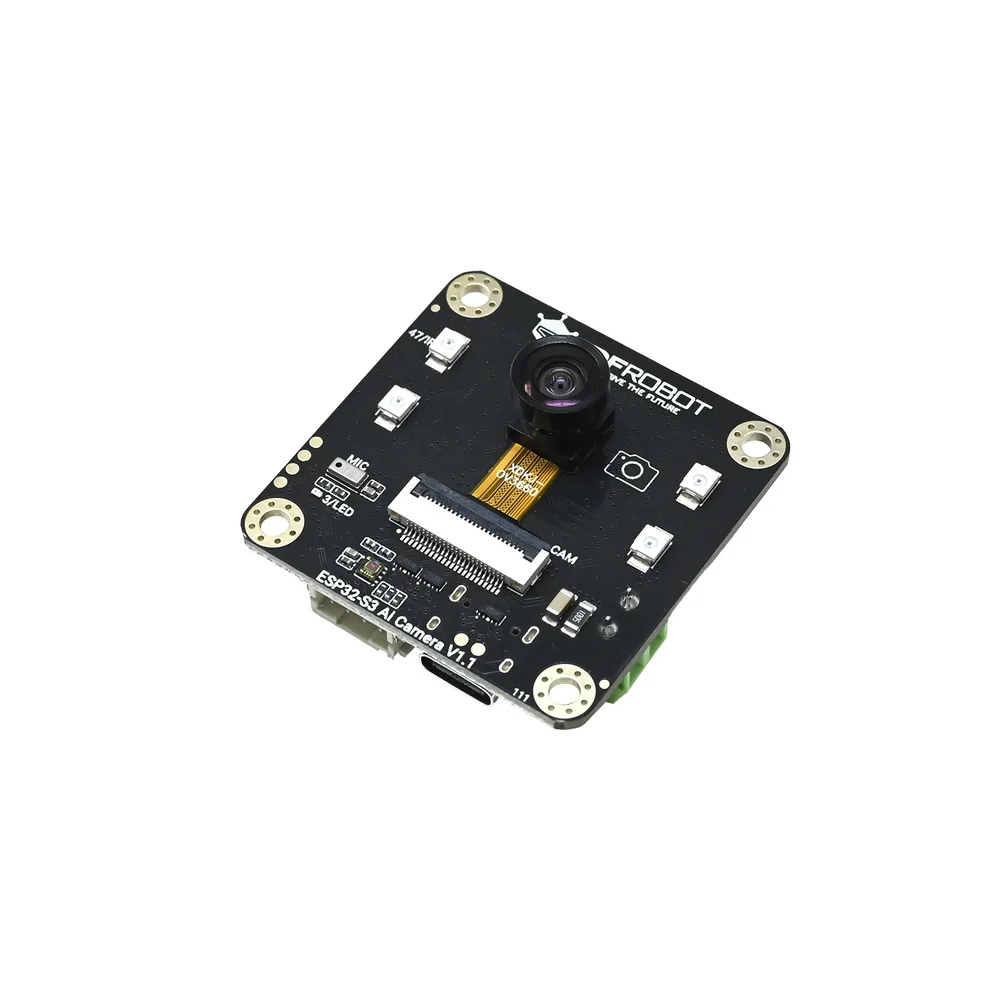
The DFRobot ESP32-S3 AI Camera Module integrates a 2MP OV3660 sensor with IR night vision, an onboard microphone, and speaker for edge AI vision and voice applications, powered by the ESP32-S3 for Wi-Fi/BLE 5.0 connectivity and compatible with OpenCV, YOLO, and Edge Impulse.

Features

  • ESP32-S3-powered edge AI camera with 2MP OV3660 sensor and 160° wide-angle IR night vision for 24/7 monitoring.
  • Onboard microphone and speaker enable voice command processing and ChatGPT-powered voice/image interaction.
  • Supports local AI inference frameworks including OpenCV, YOLOv5, and Edge Impulse for computer vision tasks.
  • Dual-band Wi-Fi (802.11b/g/n) and Bluetooth Low Energy 5.0 for wireless data streaming and remote control.
  • Compact 40x44mm form factor with USB Type-C, I2C/UART expansion, and microSD card slot for data logging.

Out of stock

Description

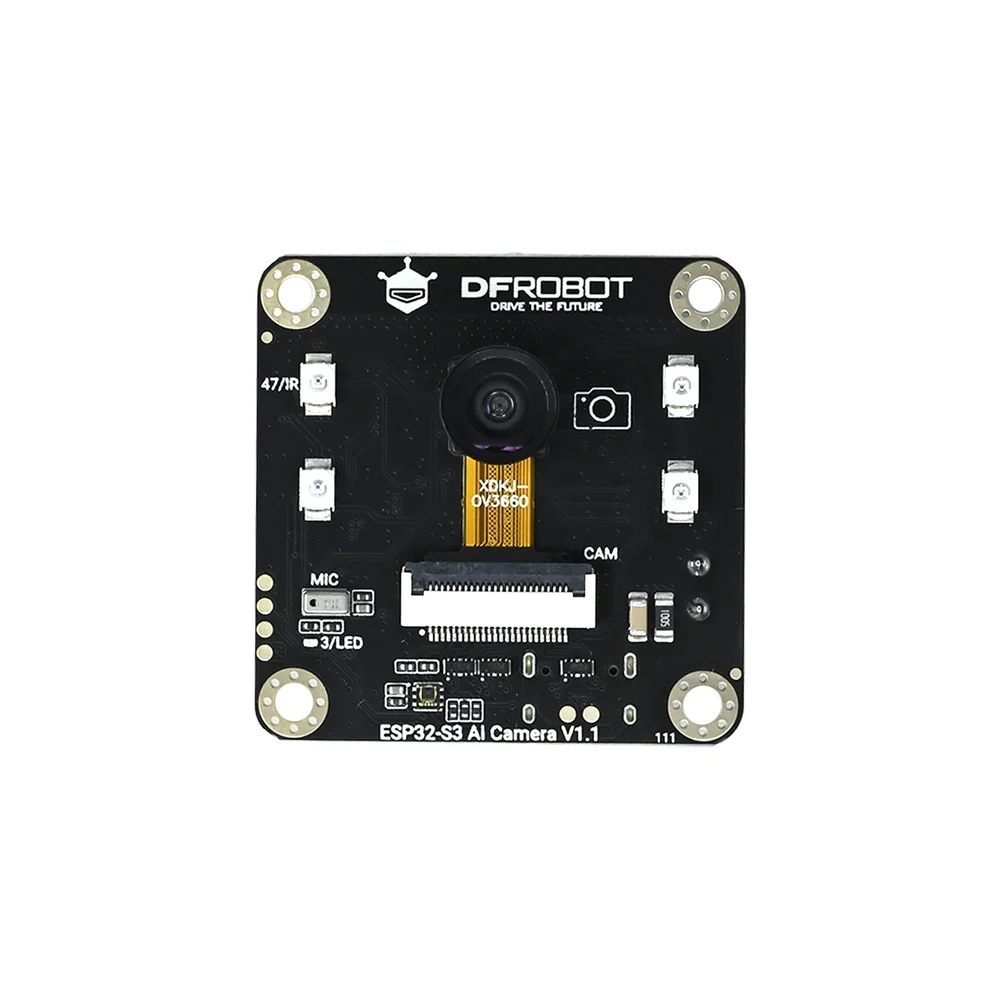
The DFRobot ESP32-S3 AI Camera Module is a compact, all-in-one vision and voice processing platform built around the Espressif ESP32-S3 dual-core Xtensa LX7 microcontroller. It combines a 2-megapixel OV3660 CMOS sensor with a 160-degree wide-angle lens and 940nm infrared LEDs for clear night vision, enabling 24/7 operation in low-light environments. The module features integrated audio hardware including a MEMS microphone and a speaker amplifier, facilitating real-time automatic speech recognition (ASR) and voice-based interactions, which can be enhanced with cloud AI services like ChatGPT.

Designed for edge computing, the board offloads image recognition, object detection, and facial recognition tasks from the cloud to the local ESP32-S3 processor, significantly reducing latency and bandwidth usage. It supports popular machine learning frameworks such as TensorFlow Lite for Microcontrollers, Edge Impulse, and OpenCV, allowing developers to deploy custom models directly onto the hardware. With its robust Wi-Fi and BLE 5.0 stack, the module can serve as a wireless camera node in smart home automation, industrial inspection systems, or interactive AI robots, streaming processed data or serving a video feed over HTTP/WebSocket protocols.

Key Features

  • Edge AI Processing: Perform local computer vision inference using the ESP32-S3's vector instructions and 512KB SRAM, compatible with YOLO, OpenCV, and Edge Impulse.
  • Integrated Voice Interface: Built-in high-sensitivity microphone and 1W speaker amplifier enable voice control, audio feedback, and cloud AI dialogue integration.
  • IR-Enhanced Night Vision: 940nm infrared LEDs paired with the OV3660 sensor provide clear monochrome imaging in total darkness with a 160° field of view.
  • Dual Wireless Connectivity: Simultaneous Wi-Fi (802.11b/g/n) for video streaming and Bluetooth Low Energy 5.0 for low-power peripheral communication and device pairing.
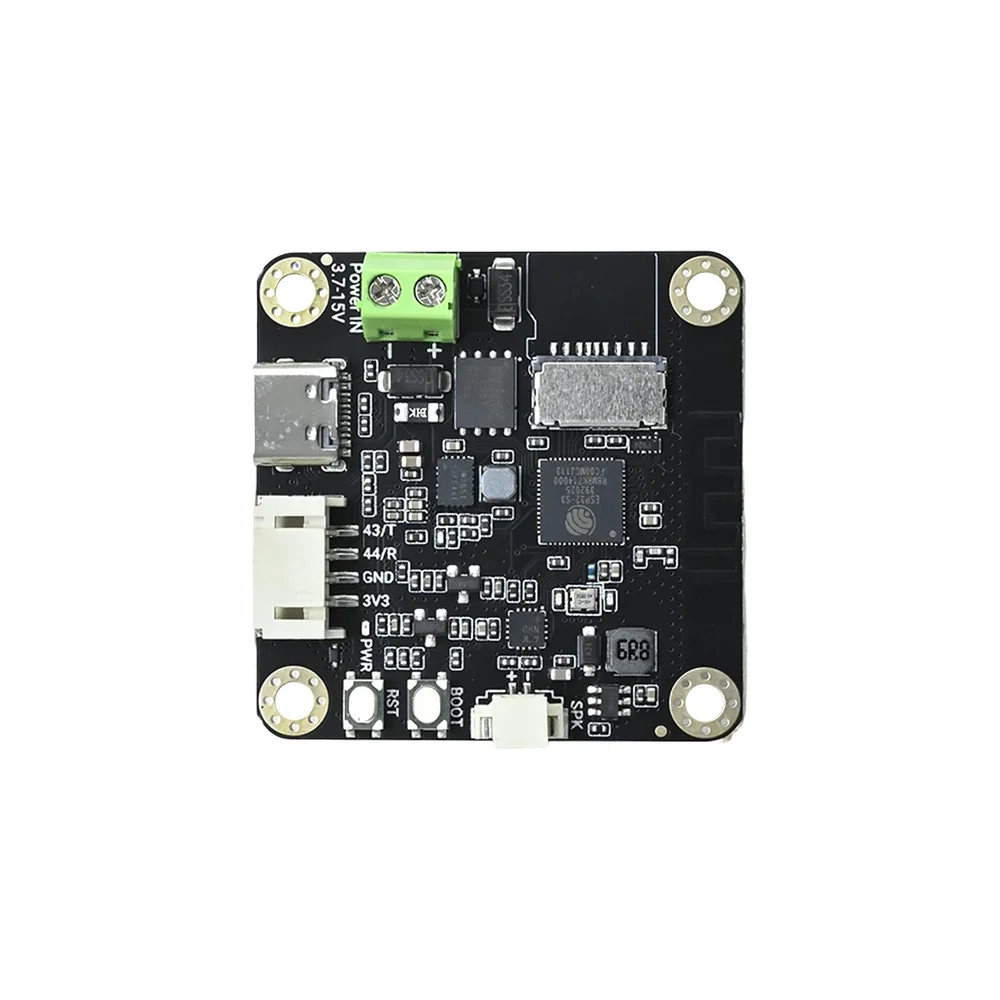
  • Developer-Optimized Expansion: Exposes I2C/UART via a Gravity-4P connector for adding sensors, includes a microSD card slot for data logging, and is programmable via Arduino IDE or ESP-IDF.
  • Compact and Power-Efficient Design: Measures just 40x44mm, operates from a 5V USB Type-C supply, and supports deep sleep modes to minimize power consumption in battery-powered applications.

Applications

  • Smart Home Surveillance: DIY security cameras with person detection, intrusion alerts, and night vision for doorbells or baby monitors.
  • AI Assistant Robots: Vision and voice-enabled interactive robots for education, hospitality, or personal assistance using edge AI and ChatGPT.
  • Industrial Visual Inspection: Edge-based quality control systems for detecting defects, counting objects, or monitoring assembly lines.
  • IoT Automation Triggers: Use gesture or face recognition to trigger smart home scenes, lighting control, or access control systems.
  • Wildlife Monitoring & Time-Lapse Photography: Battery-powered field deployments for environmental sensing and capturing time-lapse sequences with AI-based animal detection.

Technical Specifications

Microcontroller/SoCEspressif ESP32-S3 (Dual-core Xtensa LX7, 240 MHz)
Image SensorOV3660 CMOS, 2 Megapixels
Lens Field of View160° Wide-Angle
Night Vision940nm Infrared LEDs
Audio I/OBuilt-in MEMS Microphone & 1W Speaker Amplifier
Wireless ProtocolsWi-Fi 802.11b/g/n, Bluetooth 5.0 (BLE)
Supply Voltage5V via USB Type-C
Operating Current160mA - 300mA (Active)
InterfacesUSB Type-C, Gravity-4P I2C/UART, microSD Card Slot
Operating Temperature-10°C to 60°C
Dimensions40mm (W) x 44mm (L)
Weight12g

Frequently Asked Questions

How do I program the DFRobot ESP32-S3 AI Camera Module for computer vision tasks?

You can program the module using the Arduino IDE with the ESP32 board package or Espressif's official ESP-IDF framework. For AI vision, install libraries like ESP32-Camera and TensorFlow Lite for Microcontrollers. Load your trained model (converted for TFLite) onto the microSD card or flash memory. Use example sketches for face detection or object recognition, adjusting the camera pins and model parameters in your code. The board's I2C port can also connect additional sensors for data fusion.

What is the power requirement and typical current consumption of this AI camera module?

The module requires a stable 5V power supply delivered via its USB Type-C port. During active operation with Wi-Fi streaming and camera enabled, it draws between 160mA to 300mA. For battery-powered projects, utilize the ESP32-S3's deep sleep modes, which reduce current to microamps. Disable the IR LEDs and speaker when not needed to save power. A 2000mAh LiPo battery can provide several hours of intermittent operation, depending on your wake/sleep cycle configuration and wireless transmission intervals.

Can I use this camera with ChatGPT or other cloud AI services for voice interaction?

Yes, the onboard microphone and speaker allow for voice capture and playback. You can stream audio to cloud services like OpenAI's ChatGPT API via Wi-Fi using HTTP/WebSocket requests. On the device, implement a voice activity detection algorithm to trigger recording. After capturing audio, encode it and send it to your cloud endpoint. Process the text or audio response and use the speaker for output. For offline operation, consider integrating a local speech recognition engine like Vosk for basic command words.

Package Includes

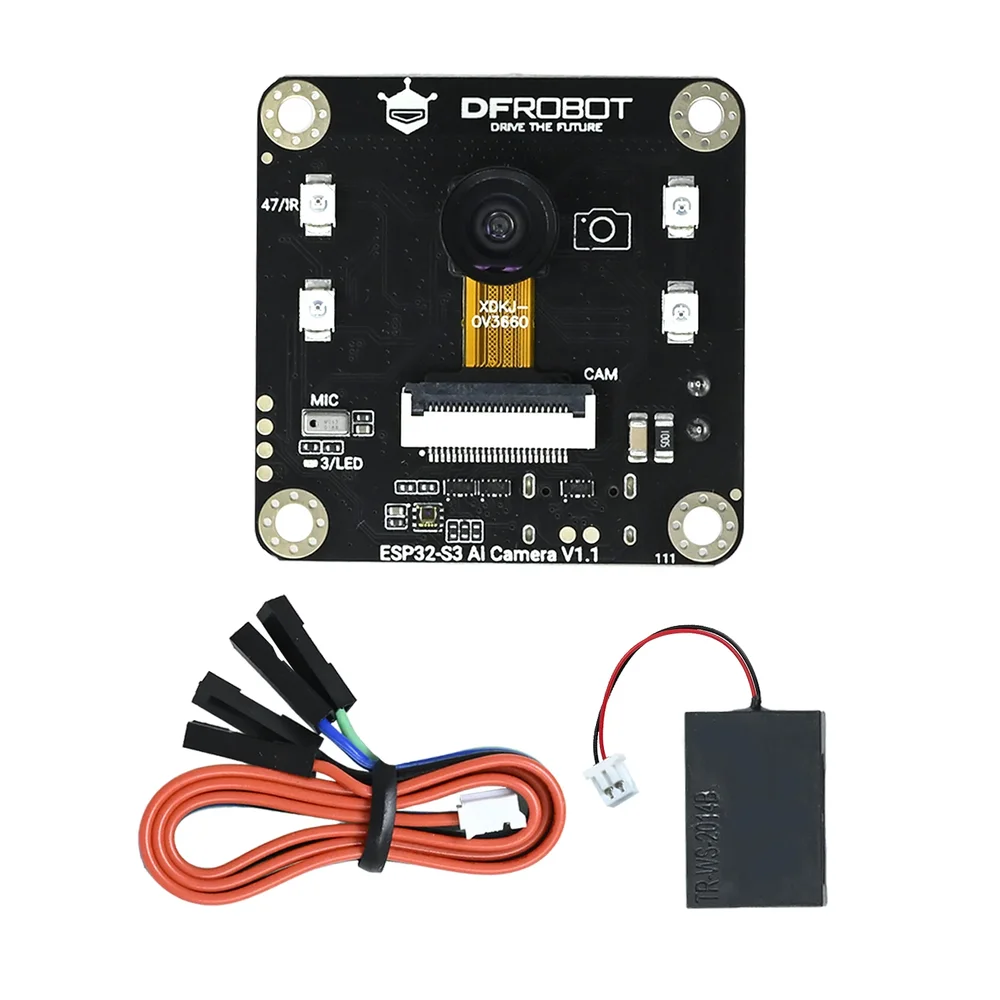
  • 1 x ESP32-S3 AI Camera Development Board (with pre-attached camera)
  • 1 x Speaker
  • 1 x Gravity-4P I2C/UART Sensor Connection Cable

Additional Information

Weight 0.012 kg
Dimensions 4.4 × 4 cm