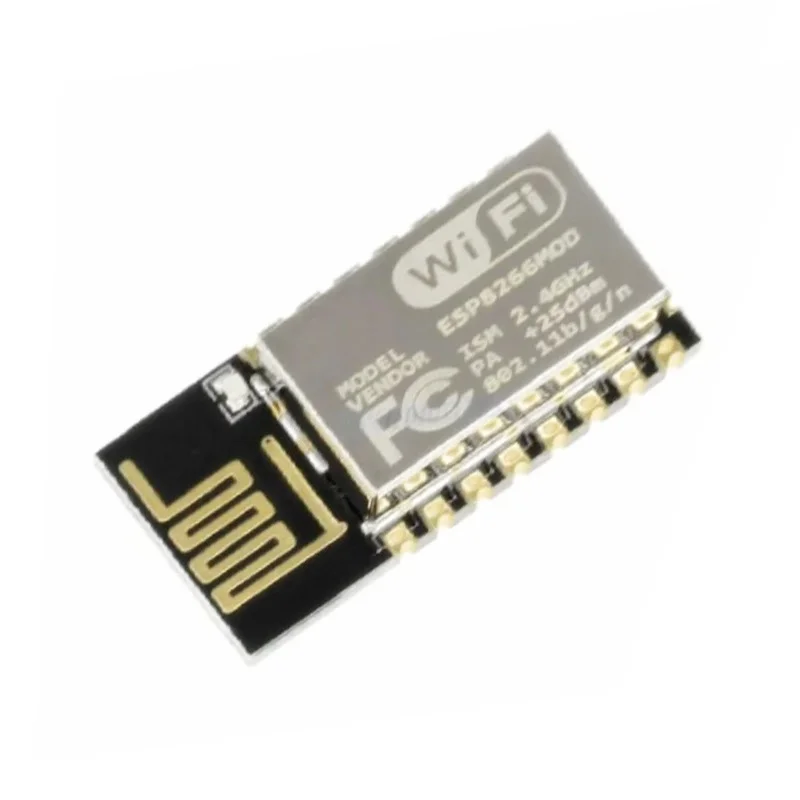
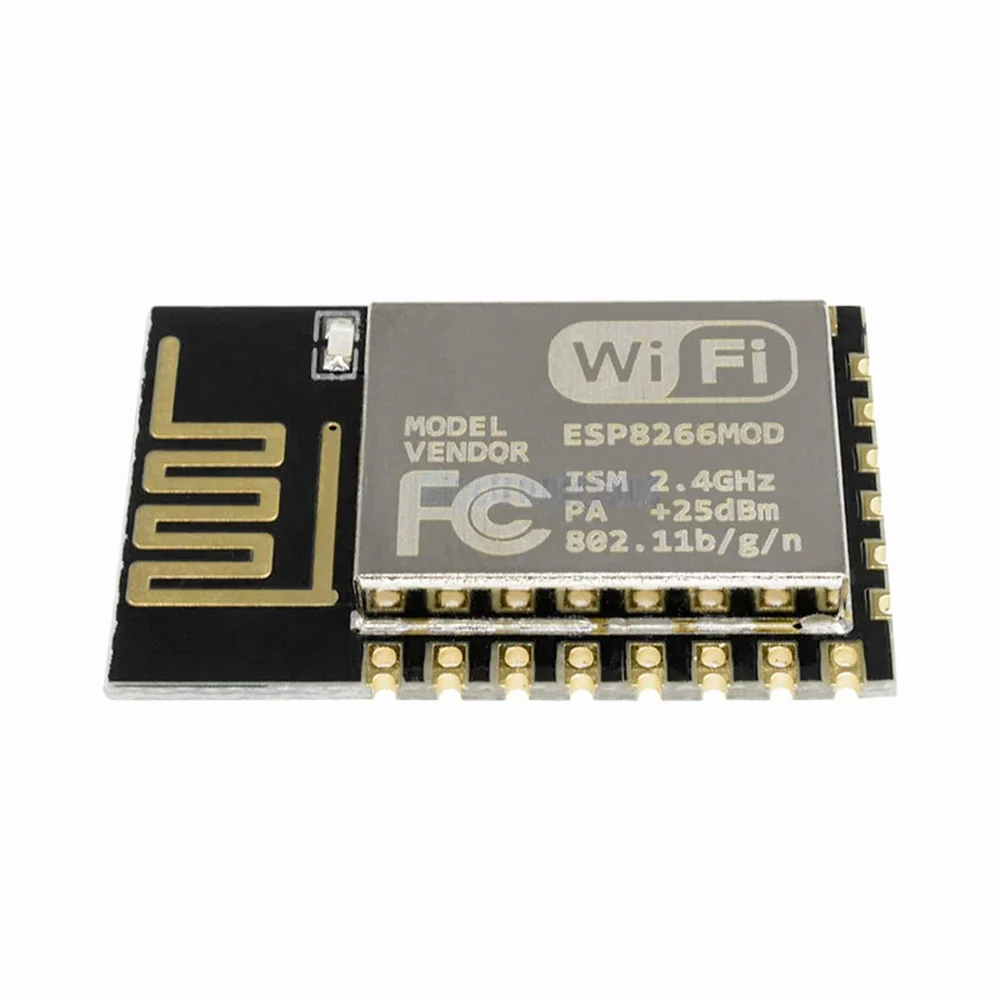
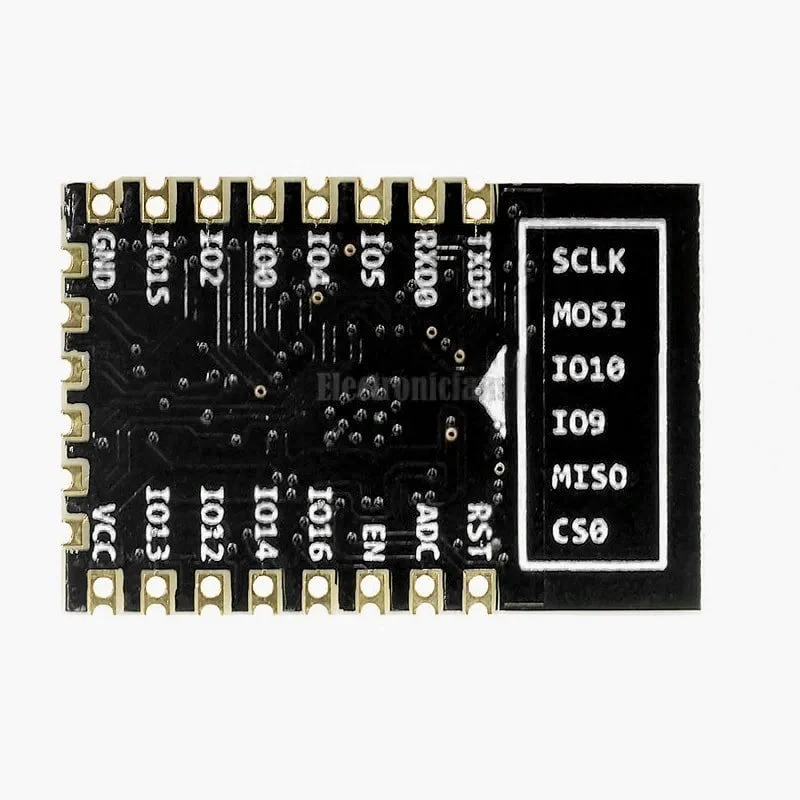
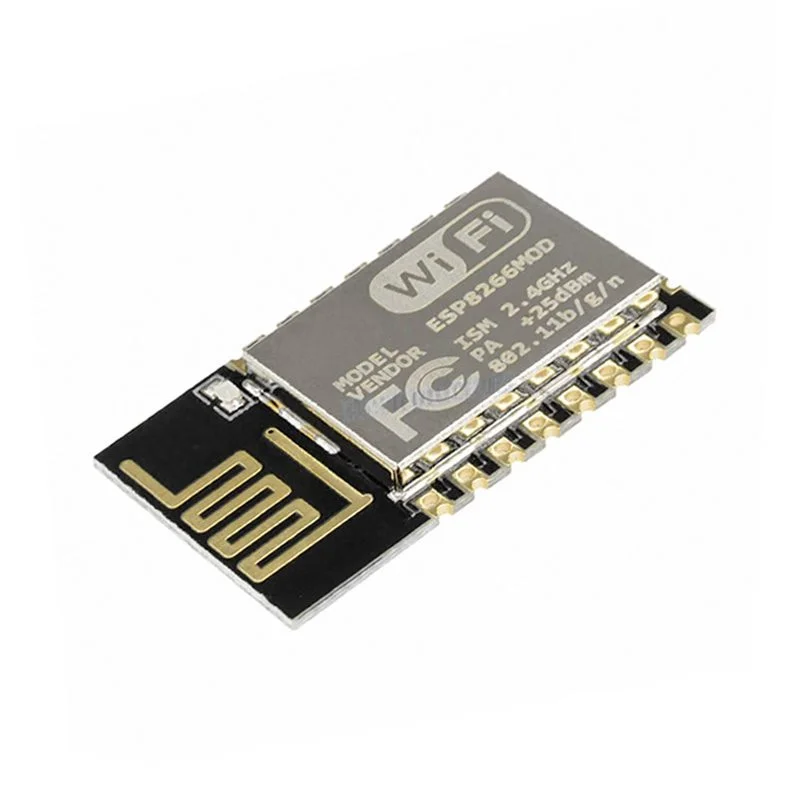
ESP-12E ESP8266 Serial Wi-Fi Transceiver Module
The ESP-12E is a compact ESP8266-based serial Wi-Fi transceiver module designed for Arduino IDE and NodeMCU Lua firmware, providing full 802.11 b/g/n connectivity with integrated TCP/IP stack for IoT and home automation applications.
Features
- Based on the ESP8266 SoC with integrated Wi-Fi MAC/BB/RF/PA/LNA for 2.4GHz 802.11 b/g/n operation.
- Features a UART serial interface for AT command control and direct MCU communication, plus HSPI, I2C, I2S, and GPIO for sensor integration.
- Includes an on-board WS2812 addressable LED for visual status indication and debugging.
- Supports Wi-Fi modes including Station, Soft-AP, and Wi-Fi Direct (P2P) for flexible network topologies.
- Operates at 3.3V with an average current draw of ~80mA, suitable for battery-powered IoT nodes.
Out of stock
The ESP-12E module encapsulates the full capabilities of the ESP8266 Wi-Fi SoC in a compact 25mm x 16mm form factor, making it a cornerstone for embedded wireless projects. It integrates a complete RF front-end including a TR switch, balun, power amplifier, and matching network, delivering up to +19.5dBm output power for robust Wi-Fi range. The module is pre-flashed with AT command firmware, allowing it to act as a serial-to-Wi-Fi bridge, or it can be reprogrammed via its GPIOs to run standalone applications using the Arduino IDE or NodeMCU Lua.
Designed for low-power IoT deployments, the ESP8266 features advanced power management with deep sleep modes and adaptive radio bias, significantly extending operational life in battery-powered sensors and automation controllers. The module’s extensive pinout provides access to most of the ESP8266’s GPIO, ADC, and communication peripherals, offering greater flexibility than more minimal variants. Its integrated TCP/IP protocol stack handles network connections natively, offloading processing from the host microcontroller.
Additional Information
| Weight | 0.085 kg |
|---|---|
| Dimensions | 5 × 3 × 2 cm |