SKU: IOWC-1583
📋 GST Invoice Available

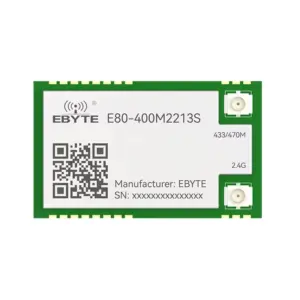
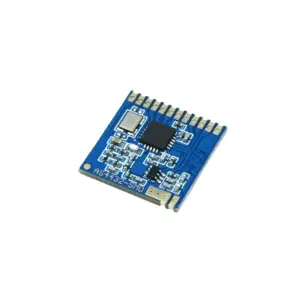
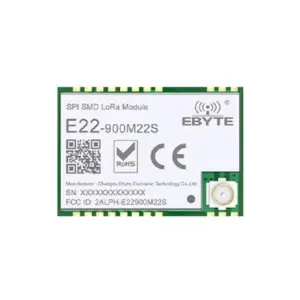
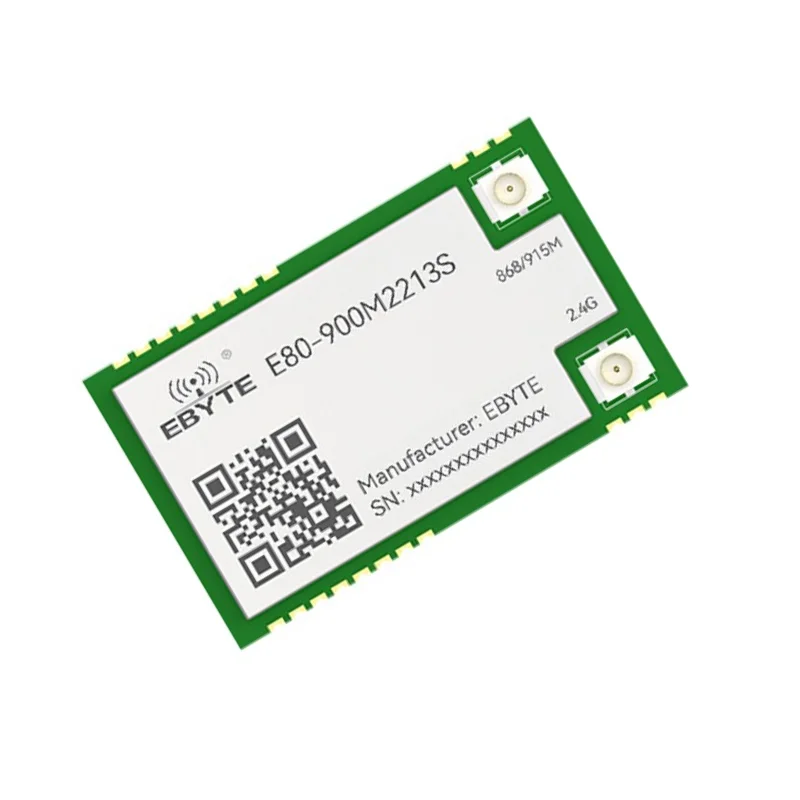
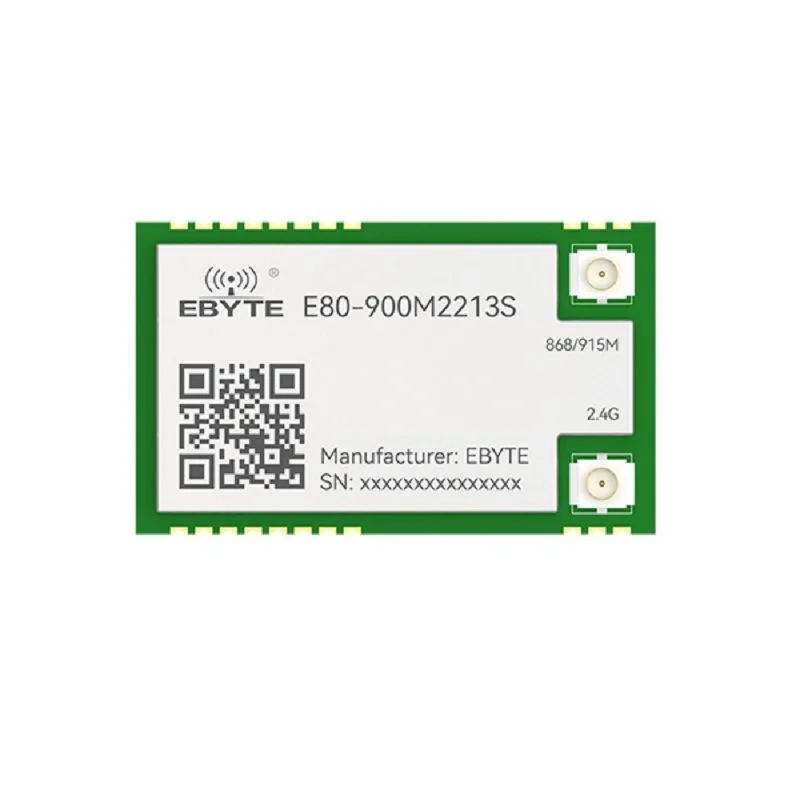
EByte E80-900M2213S LR1121 LoRa Dual-Band SPI RF Transceiver Module

₹879.00 (Inclusive of all taxes)
Out of Stock

The EByte E80-900M2213S is an industrial-grade LoRa wireless module based on the Semtech LR1121 chip, supporting dual-band Sub-GHz and 2.4GHz LoRa/LR-FHSS communication via a hardware SPI interface for long-range IoT deployments.

Features

  • Semtech LR1121 Chip: Third-generation ultra-low-power transceiver enabling multi-band LoRa, LR-FHSS, and satellite S-band connectivity.
  • Dual-Band RF Operation: Supports Sub-GHz (e.g., 868/915MHz) and 2.4GHz ISM bands for global deployment flexibility and interference avoidance.
  • Industrial Power & Stability: Features a 22dBm/13dBm transmit power option and a 48MHz high-precision, low-temperature drift crystal oscillator for robust performance.
  • Hardware SPI Interface: Provides efficient, high-speed communication with host microcontrollers (ESP32, STM32, Raspberry Pi) for streamlined firmware integration.
  • Ultra-Low Power Consumption: Achieves a sleep current of 10µA and a receive current of 9.5mA, ideal for battery-powered remote sensor nodes and trackers.

Out of stock

Description

The EByte E80-900M2213S is a surface-mount LoRa transceiver module engineered for demanding industrial IoT and global connectivity applications. Its core is the Semtech LR1121, a third-generation chipset that extends LoRa modulation and Long-Range Frequency Hopping Spread Spectrum (LR-FHSS) across both Sub-GHz and 2.4GHz ISM bands, while also offering optional satellite S-band support. This multi-band capability allows system architects to design for specific regional regulations or create resilient networks that can switch frequencies to avoid congestion.

Built for reliability, the module integrates an industrial-grade 48MHz crystal oscillator to maintain stable RF performance across the full -40°C to +85°C operating temperature range. Communication with a host processor is handled via a dedicated hardware SPI port, ensuring low-latency data transfer for time-sensitive applications. With configurable output power up to 22dBm and a receiver sensitivity as low as -129dBm, it delivers the extended range and link budget necessary for smart agriculture telemetry, remote industrial monitoring, and large-scale asset tracking networks.

Key Features

  • Multi-Band Global Connectivity: Supports Sub-GHz (e.g., 868MHz, 915MHz) and 2.4GHz LoRa & LR-FHSS, with optional satellite S-band for truly global IoT deployments.
  • Industrial-Grade RF Stability: Incorporates a high-precision, low-temperature drift 48MHz crystal oscillator ensuring consistent performance in harsh environmental conditions.
  • Configurable High Power Output: Offers dual transmit power levels (22dBm and 13dBm) to optimize for either maximum range or reduced power consumption.
  • Efficient Host Controller Interface: Hardware SPI interface allows for fast, reliable communication, simplifying integration with MCUs like ESP32, STM32, and Raspberry Pi.
  • Ultra-Low Power Operation: Engineered for battery longevity with a deep sleep current of just 10µA and a moderate 9.5mA active receive current.
  • Compact SMD Form Factor: Measures only 26.0 x 16.0 x 3.0 mm, making it suitable for space-constrained embedded designs and high-volume PCB assembly.

Applications

  • Industrial IoT (IIoT) Telemetry: Remote monitoring of equipment health, tank levels, and environmental conditions in factories and utilities.
  • Smart Agriculture Networks: Soil moisture sensing, livestock tracking, and climate monitoring across vast farms and ranches.
  • Global Asset Tracking & Logistics: Container and pallet tracking using multi-band flexibility for international supply chains.
  • Urban Smart City Deployments: Parking sensor networks, waste management bin monitoring, and smart street lighting control.
  • Remote Environmental Sensing: Deployments in conservation areas for wildlife tracking, water quality monitoring, and seismic activity detection.

Technical Specifications

Core Chipset / SoCSemtech LR1121
Wireless ProtocolLoRa, LR-FHSS (Long-Range Frequency Hopping Spread Spectrum)
Frequency RangeSub-GHz (e.g., 868/915MHz) & 2.4GHz ISM Bands
RF Transmit Power22 dBm / 13 dBm (Configurable)
Receiver Sensitivity-129 dBm
Supply Voltage3.3V
Operating Current (Tx)120 mA (at 22dBm)
Operating Current (Rx)9.5 mA
Sleep Current10 µA
Host InterfaceHardware SPI
Logic Level3.3V
Antenna ConnectorIPEX-1 (Generation 1) or Stamp Hole
Operating Temperature-40°C to +85°C
Dimensions (L x W x H)26.0 mm x 16.0 mm x 3.0 mm

Frequently Asked Questions

What microcontrollers are compatible with the E80-900M2213S module's SPI interface?

The module's 3.3V logic hardware SPI interface is directly compatible with popular MCUs like the ESP32, STM32, Raspberry Pi Pico, and Arduino boards with 3.3V I/O. You will need to connect the SPI pins (MOSI, MISO, SCK, CS) and ensure your firmware configures the SPI peripheral for the correct clock polarity and phase as specified in the LR1121 datasheet. Proper level shifting is required if interfacing with a 5V Arduino.

How do I configure the module for different frequency bands and transmit power?

Band selection and output power (22dBm or 13dBm) are configured via specific register writes sent over the SPI interface. You must use Semtech's provided LR1121 driver library or reference code to send these configuration commands during your device initialization routine. The exact register addresses and values depend on your target Sub-GHz band (e.g., 868MHz EU or 915MHz US) and desired 2.4GHz channel settings.

What antenna should I use, and how do I connect it to the IPEX-1 connector?

You should use a 50-ohm antenna tuned for your target frequency band (e.g., a 868MHz or 2.4GHz whip antenna). For the IPEX-1 connector, use a compatible IPEX-to-SMA pigtail cable to connect to an external antenna. If using the stamp hole option, you must design a 50-ohm microstrip transmission line on your PCB to the antenna pad. Proper impedance matching is critical to maximize RF performance and range.

What is the power supply requirement, and how do I minimize current consumption?

The module requires a stable 3.3V supply capable of delivering at least 150mA peak current during transmission. To minimize power, utilize the module's deep sleep mode (10µA) via SPI command when idle. Design your power management circuit to only enable the module's VCC when needed, and ensure low-noise LDO regulation to prevent voltage spikes that can disrupt the sensitive RF circuitry and crystal oscillator.

Package Includes

  • 1 x EByte E80-900M2213S LR1121 Chip LoRa Dual-Band Wireless RF Transceiver Module

Additional Information

Weight 0.00185 kg
Dimensions 2.6 × 1.6 × 0.3 cm