SKU: SENS-3010
📋 GST Invoice Available

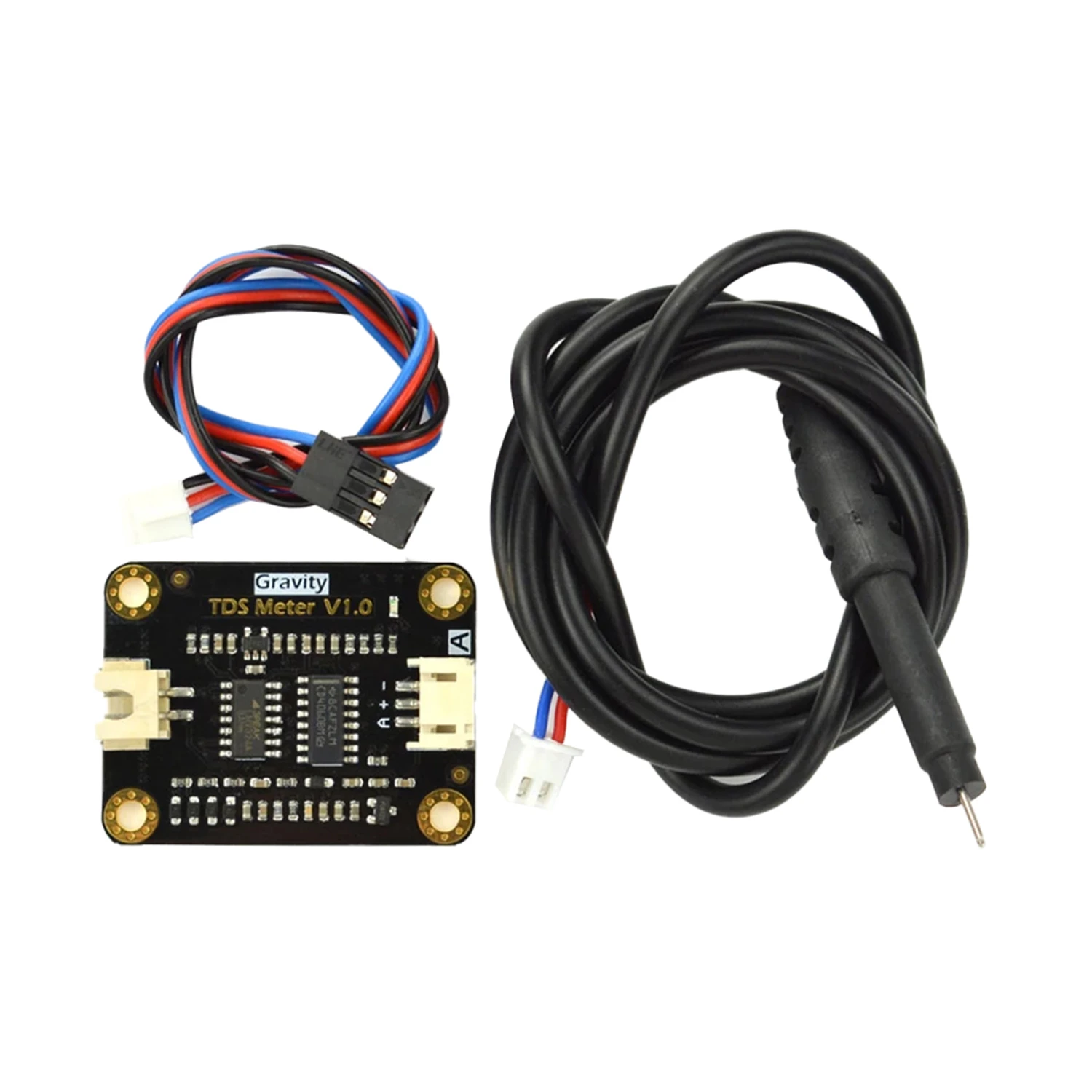
DFRobot Gravity Analog TDS Sensor Meter for Arduino - Waterproof Probe, 0-1000ppm

₹1,489.00 (Inclusive of all taxes)
Out of Stock

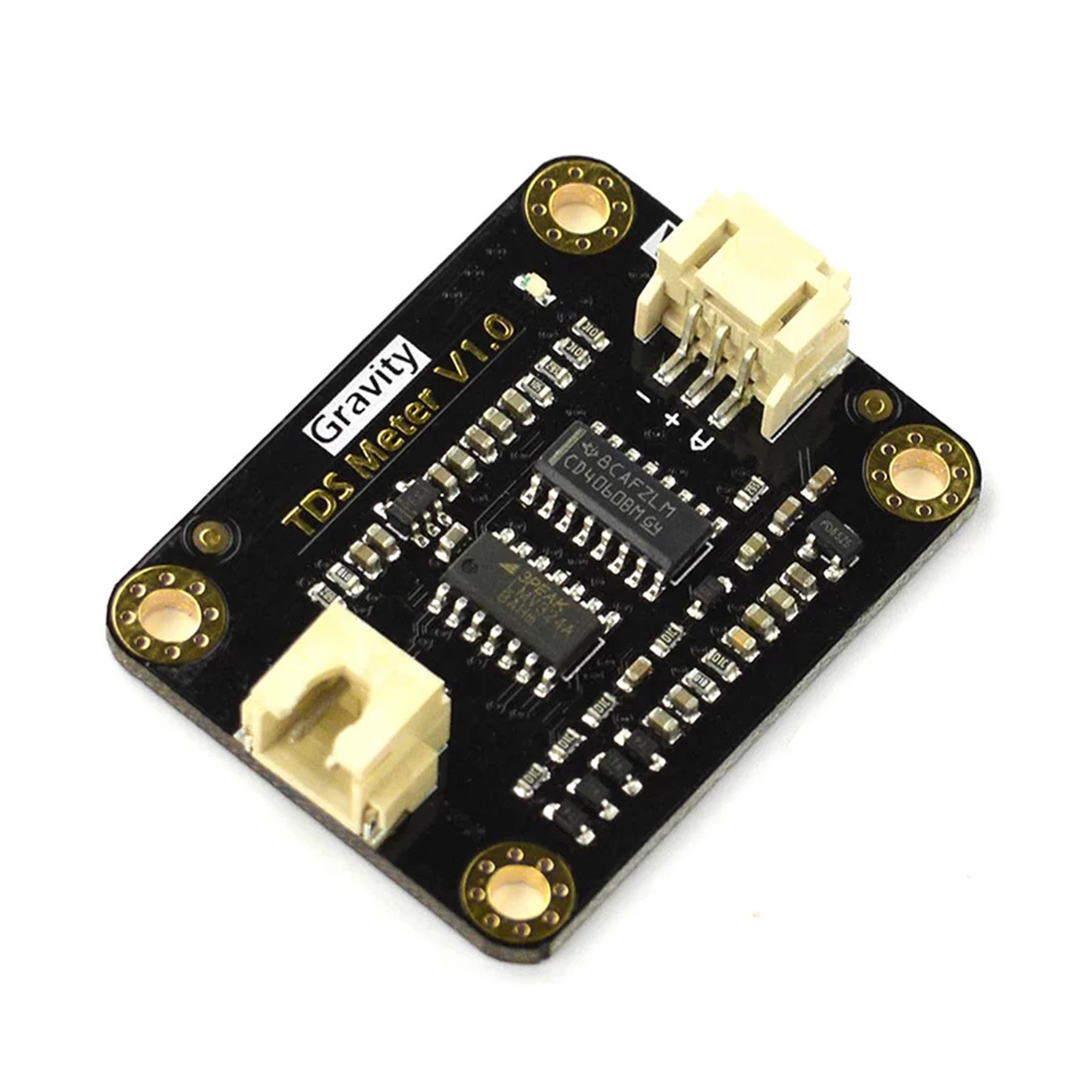
The DFRobot Gravity Analog TDS Sensor is an Arduino-compatible module for measuring Total Dissolved Solids (TDS) in water, providing a 0-2.3V analog output signal compatible with 3.3V and 5V microcontrollers like Arduino, ESP32, and Raspberry Pi.

Features

  • Measures TDS in water from 0 to 1000 ppm with ±10% full-scale accuracy at 25°C.
  • Provides a 0-2.3V analog voltage output compatible with 3.3V and 5V logic systems.
  • Features a waterproof probe for long-term immersion and continuous monitoring.
  • Uses an AC excitation source to prevent electrode polarization and ensure signal stability.
  • Plug-and-play design with PH2.0-3P and XH2.54-2P connectors for easy, solder-free integration.

Out of stock

Description

The Gravity Analog TDS Sensor operates by measuring the electrical conductivity of a solution, which correlates directly to the concentration of dissolved ionic solids. The module applies an alternating current (AC) excitation to the probe’s electrodes, a technique that prevents polarization and electrode plating, thereby extending sensor life and improving measurement repeatability. The resulting conductivity reading is converted into a linear 0-2.3V analog output proportional to the TDS value.

Designed for seamless integration, the module supports a wide 3.3V to 5.5V DC input and consumes only 3-6mA, making it suitable for portable and battery-powered data logging systems. The included probe is fully waterproof, allowing for direct and prolonged submersion in aqueous environments for applications ranging from hydroponics to domestic water quality assessment.

Key Features

  • Wide Input Voltage Range: Operates from 3.3V to 5.5V DC, compatible with most microcontroller development boards.
  • Stable Analog Output: Delivers a 0 to 2.3V linear analog signal for direct ADC connection.
  • AC Excitation Circuitry: Minimizes electrode polarization for enhanced long-term accuracy and sensor durability.
  • Waterproof Sensing Probe: Constructed for continuous immersion, enabling in-line or tank-based monitoring.
  • Plug-and-Play Connectivity: Features standard PH2.0-3P (module) and XH2.54-2P (probe) connectors for tool-free setup.
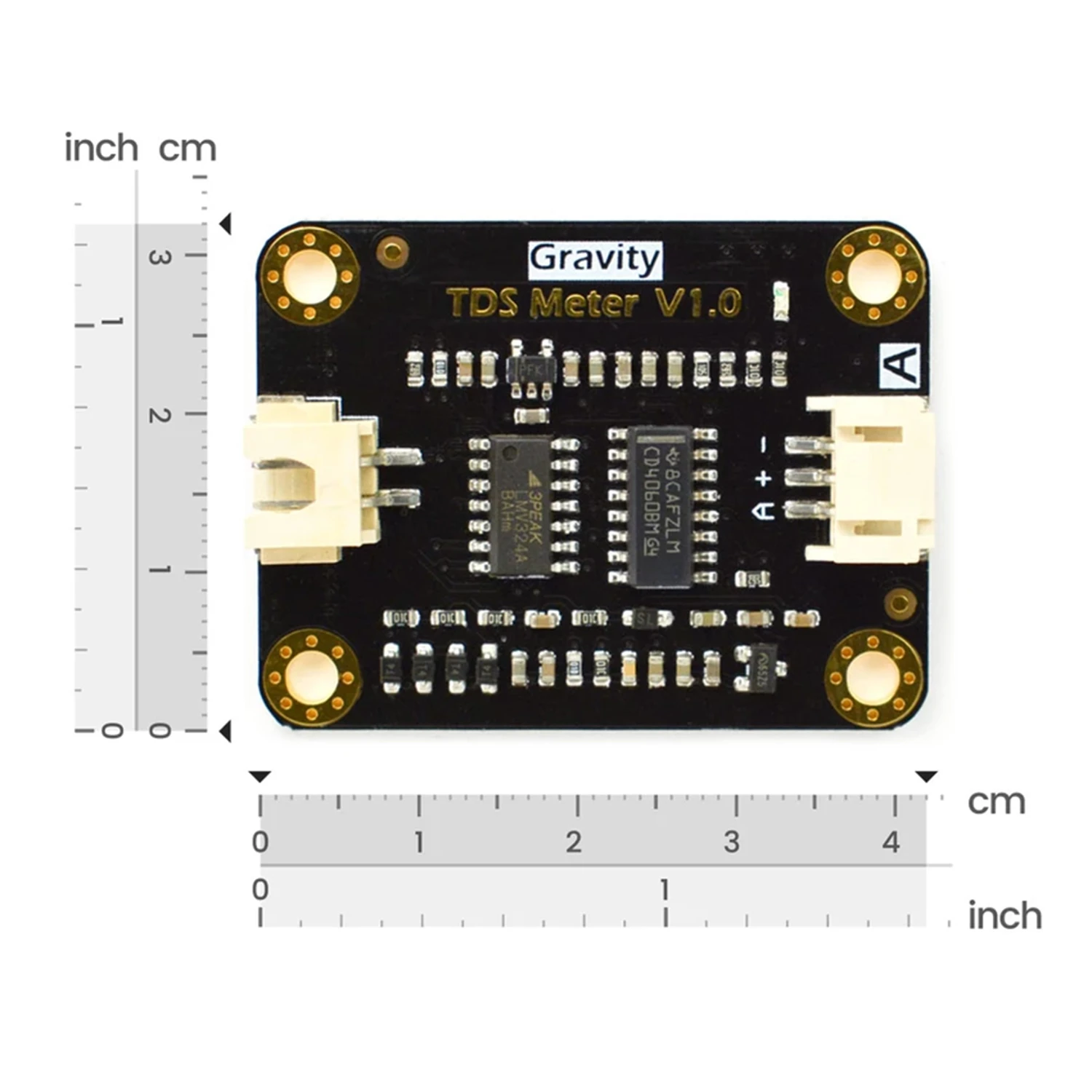
  • Compact Form Factor: The main module measures 42mm x 32mm for easy integration into enclosures and projects.
  • Low Power Consumption: Draws only 3-6 mA during operation, ideal for always-on monitoring systems.

Applications

  • Hydroponic and aquaponic system nutrient concentration monitoring.
  • Domestic water quality testing and filtration system performance validation.
  • Aquarium water cleanliness and salinity level monitoring.
  • Industrial process water and cooling tower TDS control.
  • Educational projects for environmental science and water chemistry.

Technical Specifications

Operating Voltage3.3 to 5.5 VDC
Output Signal0 ~ 2.3V Analog Voltage
Working Current3 ~ 6 mA
TDS Measurement Range0 ~ 1000 ppm
Measurement Accuracy±10% F.S. (at 25°C)
Module Dimensions42 x 32 mm
Module InterfacePH2.0-3P Connector
Electrode InterfaceXH2.54-2P Connector
Excitation SourceAC Signal
Probe ProtectionWaterproof

Frequently Asked Questions

What microcontroller boards are compatible with this TDS sensor?

The sensor is directly compatible with any microcontroller featuring an analog-to-digital converter (ADC) and operating at 3.3V or 5V logic levels. This includes Arduino Uno, Mega, Nano; ESP32 and ESP8266 development boards; Raspberry Pi (with an external ADC); and most PLC analog input modules. Simply connect the module's analog output pin to an ADC input pin on your controller.

How do I convert the analog voltage reading to a TDS value in ppm?

The sensor outputs a voltage linearly proportional to TDS. You must first calibrate the sensor using a standard solution. The general formula in code is: TDS (ppm) = k * ADC_Value, where 'k' is a calibration coefficient derived from a known TDS standard. DFRobot provides sample Arduino libraries and code that handle this linearization and temperature compensation, simplifying the integration process.

Can the probe be left submerged in water indefinitely?

Yes, the probe is designed with a waterproof housing suitable for long-term immersion in water. The use of an AC excitation source prevents rapid degradation of the electrodes due to DC polarization. For optimal long-term stability, periodic calibration is recommended, and the probe should be cleaned if biological fouling or mineral scaling is observed.

What is the purpose of the AC excitation source in this module?

The AC (alternating current) excitation applies a reversing voltage to the probe's electrodes. This prevents the buildup of ions on the electrode surfaces—a phenomenon known as polarization—which would cause measurement drift and reduce sensor lifespan. This design ensures more stable and repeatable conductivity readings over extended periods compared to DC-excited sensors.

Package Includes

  • 1 x DFRobot Gravity Analog TDS Sensor Module
  • 1 x Waterproof TDS Probe

Additional Information

Weight 0.032 kg
Dimensions 13 × 8 × 3 cm