SKU: IOWC-1644
📋 GST Invoice Available

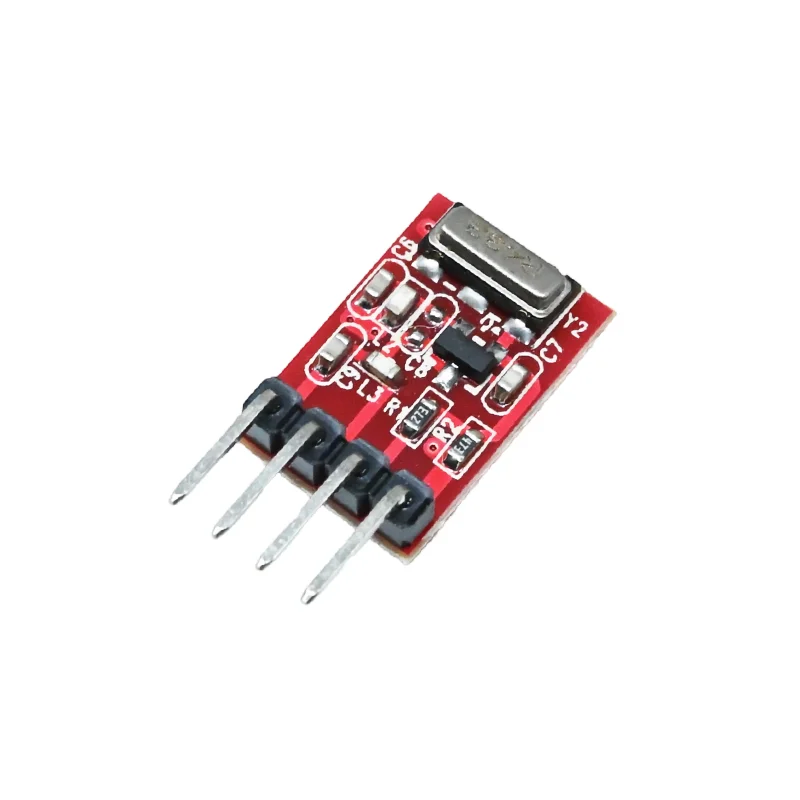
433MHz ASK Wireless Transmitter Receiver Module

₹130.00 (Inclusive of all taxes)
Out of Stock

A 433MHz ASK (Amplitude Shift Keying) wireless transceiver pair for simple, low-power RF communication links. Operates from 1.5-5V with CMOS/TTL logic compatibility, suitable for basic remote control and sensor telemetry projects.

Features

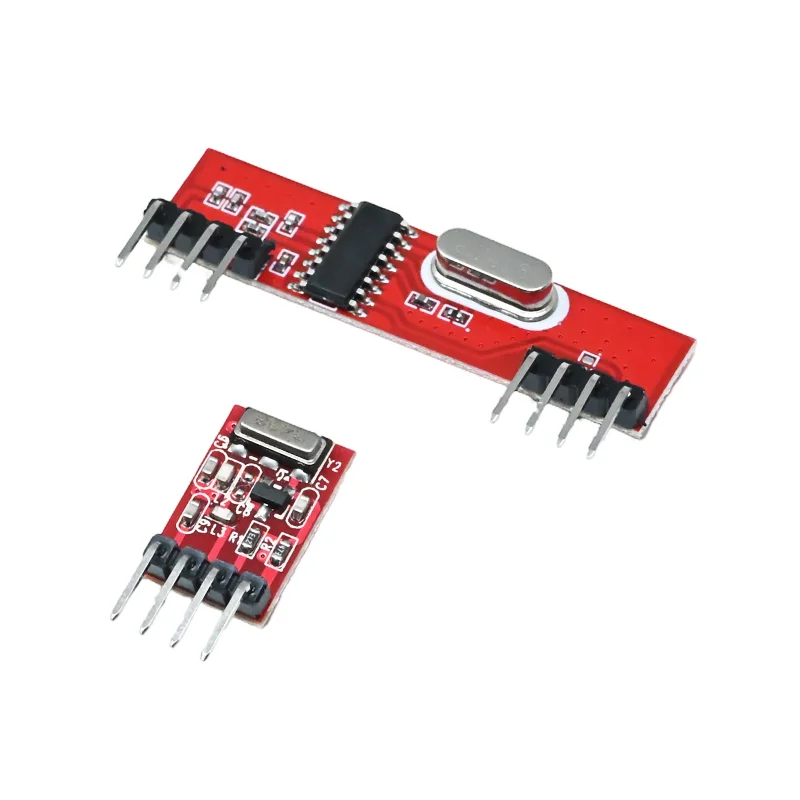
  • 433MHz ASK Transceiver Pair: Combines a transmitter and an ASK hybrid receiver module for bidirectional RF communication over distances up to 30-50 meters in open space.
  • Ultra-Low Power Operation: Features low current consumption (TX: ~11mA typ., RX: 3.5mA) and a wide operating voltage range from 1.5V to 5V for battery-powered applications.
  • Simple CMOS/TTL Interface: Directly connects to microcontroller GPIO pins for straightforward data transmission and reception without complex configuration.
  • Stable SAW Resonator Design: The transmitter utilizes a saw resonator for a very stable operating frequency, ensuring reliable communication.

Out of stock

Description

This 433MHz wireless transceiver module set provides a foundational RF link for short-range data transmission and remote control applications. The system employs ASK modulation, a common and simple method for sending digital data over radio waves, making it ideal for beginners and cost-sensitive projects. The transmitter module is designed around a stable SAW resonator, offering a compact, effective solution.

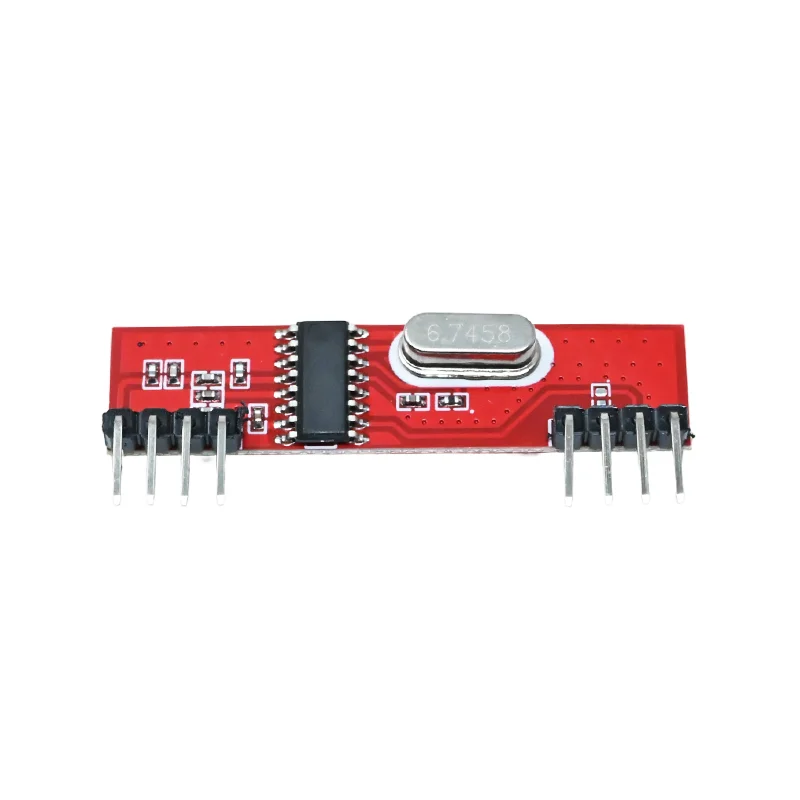
The receiver is an ASK hybrid type with a 1MHz IF frequency, providing good sensitivity (-105 dBm) for reliable data reception. The pair operates on a wide voltage range and consumes minimal current, making it suitable for integration into battery-operated IoT sensor nodes, remote keyless entry systems, and basic home automation setups where complex protocols like Wi-Fi or Bluetooth are unnecessary.

Key Features

  • Complete 433MHz ASK radio transceiver pair for bidirectional communication.
  • Very stable operating frequency enabled by SAW resonator in transmitter.
  • Low power consumption extends battery life in remote applications.
  • Wide operating voltage range from 1.5V to 5V DC.
  • Simple CMOS/TTL logic level input for direct microcontroller interfacing.
  • ASK modulation for straightforward digital data transmission.
  • Compact form factor for integration into space-constrained designs.

Applications

  • Simple remote controls for toys, garage doors, and lighting.
  • Wireless sensor reporting for temperature, humidity, or door/window status.
  • Basic automation systems and wireless security alerts.
  • Car security systems and remote keyless entry (RKE).
  • Low-data-rate telemetry for DIY IoT and maker projects.

Technical Specifications

Operating Frequency433 MHz
ModulationASK (Amplitude Shift Keying)
Transmitter Supply Voltage3 - 6 VDC
Receiver Supply Voltage1.5 - 5 VDC
Transmitter Current Consumption~11 mA (Typical)
Receiver Current Consumption3.5 mA
Receiver Sensitivity-105 dBm
Typical Open-Space Range30 - 50 meters
Receiver IF Frequency1 MHz
Transmitter Output Power4 - 12 dBm
InterfaceCMOS / TTL
Transmitter Dimensions (LxWxH)13 x 12 x 4 mm
Receiver Dimensions (LxWxH)13 x 45 x 4 mm

Frequently Asked Questions

How do I interface this 433MHz module with an Arduino or ESP32?

Connect the transmitter's DATA pin to a digital GPIO on your microcontroller. For the receiver, connect its DATA pin to another digital input GPIO. Ensure a common ground between the module and MCU. Use simple digital write/read functions or a library like VirtualWire or RCSwitch to encode/decode data. Power the modules within their specified voltage range (1.5-5V for RX, 3-6V for TX). Remember, this is a raw RF link, not UART, so you need to manage timing and encoding in your firmware.

What is the effective communication range, and how can I improve it?

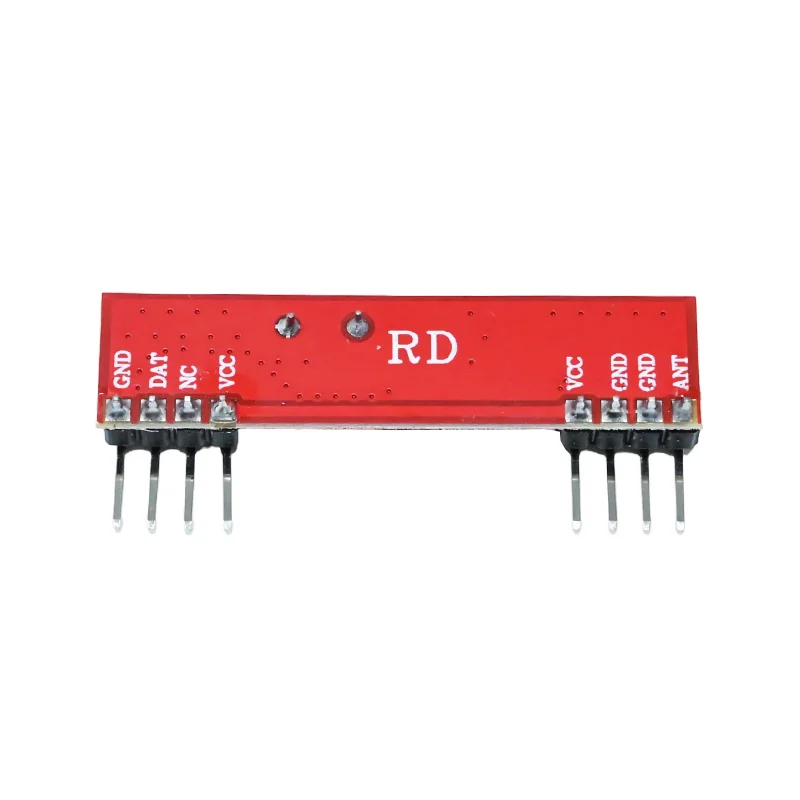
The typical range is 30 meters in open space, potentially up to 50 meters under ideal conditions. Range is significantly reduced by walls, metal obstructions, and electrical noise. To improve range, ensure a stable power supply, use a proper 433MHz antenna (like a 17.3cm wire whip) soldered to the ANT pad, elevate the modules, and orient antennas vertically. Reducing the data rate can also improve reliability. Avoid placing the modules near switching power supplies or microcontrollers, as digital noise can interfere with the sensitive receiver.

Can this module send serial UART data directly from a computer?

No, this module does not support direct UART communication. It uses ASK modulation for transmitting digital on/off signals. To send data from a PC, you would need a microcontroller (like an Arduino) to read the PC's serial data and convert it into the appropriate timing pulses for the transmitter. Similarly, the receiver outputs a demodulated digital signal that a microcontroller must interpret. The 433MHz band also has inherent noise, so implementing software-based error checking or a simple protocol in your MCU code is highly recommended for reliable communication.

What is the power consumption in sleep or idle modes?

These modules do not have a dedicated sleep or enable pin. The transmitter consumes its typical 11mA whenever powered. The receiver draws its 3.5mA continuously when powered. For ultra-low-power applications, you must physically switch off the modules using a MOSFET or transistor controlled by your microcontroller's GPIO to cut power entirely between transmissions or readings. This allows you to achieve an average current draw in the microamp range, making them suitable for battery-powered sensor nodes that wake up periodically to send data.

Package Includes

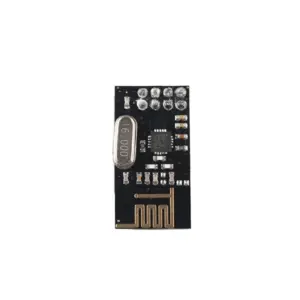
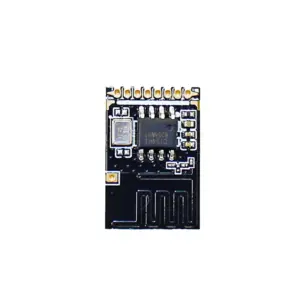
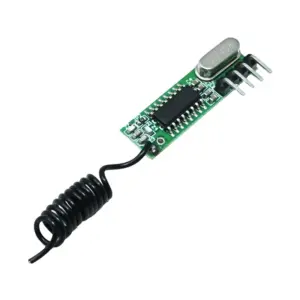
  • 1 x 433MHz Wireless Transmitter Module
  • 1 x 433MHz ASK Wireless Receiver Module

Additional Information

Weight 0.01 kg
Dimensions 2 × 5.5 × 5 cm