SKU: SENS-3274
📋 GST Invoice Available

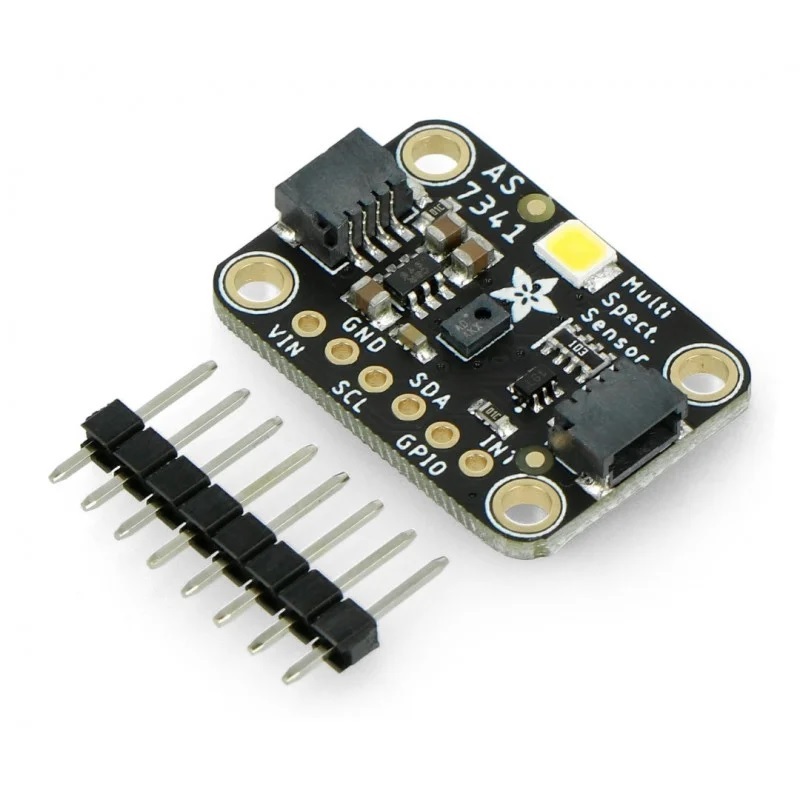
Adafruit AS7341 10-Channel Light / Color Sensor Breakout - STEMMA QT/Qwiic

₹2,719.00 (Inclusive of all taxes)
Out of Stock

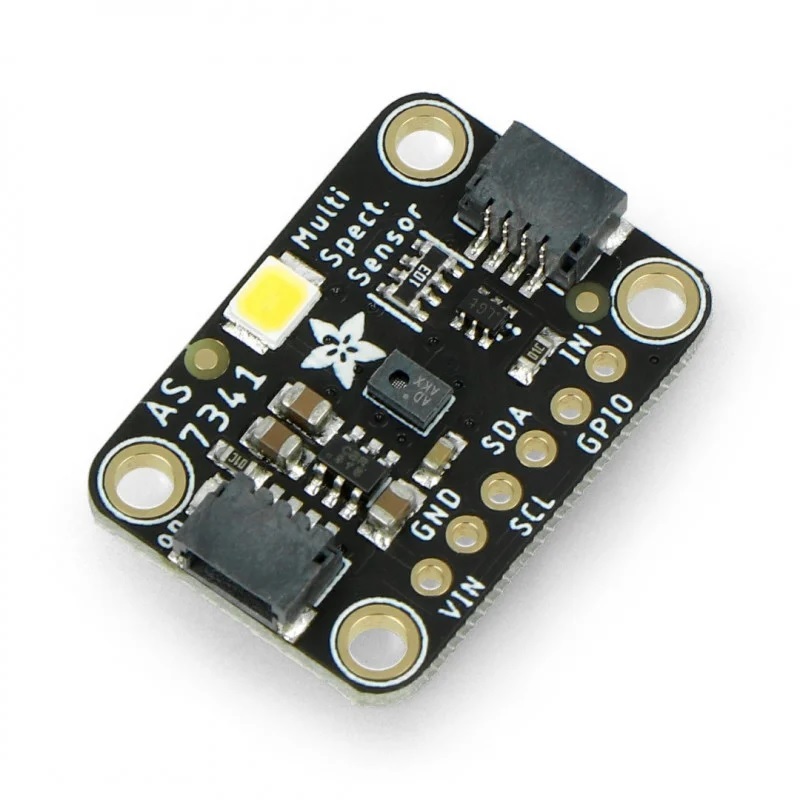
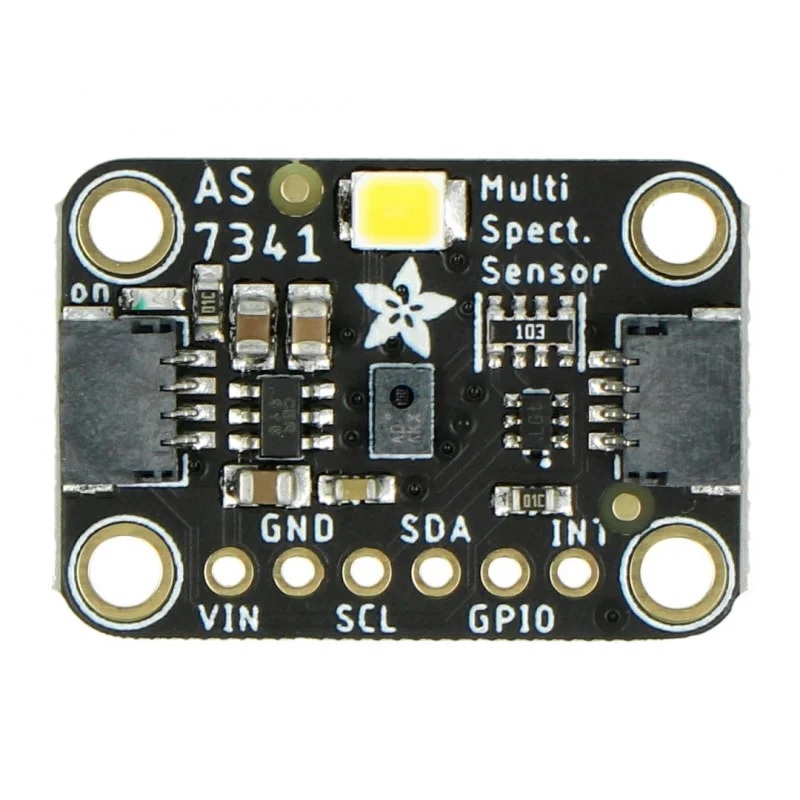
The Adafruit AS7341 breakout is a high-precision 10-channel spectral color sensor with integrated flicker detection, designed for easy integration via I2C and STEMMA QT/Qwiic connectors. It provides detailed spectral analysis across the visible and near-infrared spectrum, compatible with 3.3V and 5V systems like Arduino, Raspberry Pi, and ESP32.

Features

  • 10-channel spectral sensor with 8 visible (415nm–680nm), clear, and NIR channels.
  • Integrated 16-bit ADC and Super MUX (SMUX) for flexible sensor routing.
  • On-chip ambient light flicker detection (e.g., 50/60Hz).
  • STEMMA QT / Qwiic connectors for solderless I2C connection.
  • 3.3V/5V logic compatible with level-shifting circuitry.

Out of stock

Description

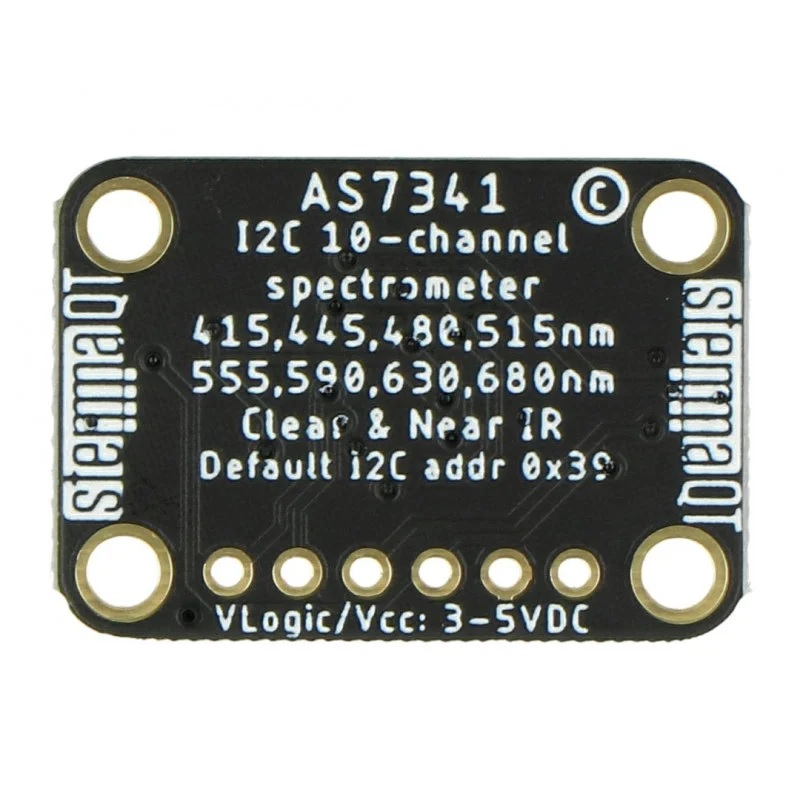
The AS7341 is a multi-channel spectrometer IC that measures not just light intensity but the precise spectral composition across ten distinct optical channels. Its 3mm x 2mm silicon die utilizes nano-optic interference filters to isolate eight overlapping bands in the visible spectrum (415nm, 445nm, 480nm, 515nm, 555nm, 590nm, 630nm, 680nm), plus dedicated clear and near-infrared (NIR) channels for comprehensive light analysis.

Signal conditioning is handled by an integrated 16-bit, 6-channel analog-to-digital converter (ADC). A configurable Super MUX (SMUX) routes any of the eleven sensor elements (ten light channels plus flicker detector) to the available ADC inputs. This architecture enables high-resolution spectral power distribution measurements, accurate Correlated Color Temperature (CCT) calculation, and detection of AC mains light flicker, making it suitable for lab-grade applications.

The breakout board provides robust I2C communication, GPIO pins for external triggering or synchronization, and built-in level shifting for seamless operation with 3.3V or 5V microcontrollers and single-board computers.

Key Features

  • High-resolution spectral analysis with 10 distinct optical channels (8 visible + clear + NIR).
  • Integrated 16-bit ADC and configurable Super MUX (SMUX) for precise digital signal acquisition.
  • On-chip ambient light flicker detection for identifying 50/60Hz AC lighting sources.
  • STEMMA QT and Qwiic compatible connectors enable plug-and-play I2C connectivity without soldering.
  • 3.3V/5V logic level shifting included for broad microcontroller and SBC compatibility (Arduino, Raspberry Pi, ESP32).
  • GPIO pins support external trigger input, light source synchronization, or connection to external photodiodes.
  • Compact and durable breakout board design with a high-value build for prototyping and integration.

Applications

  • High-precision reflective color measurement and spectral analysis for quality control.
  • Fluid color, turbidity, or reagent-based constituent analysis in laboratory settings.
  • Spectral power distribution and ambient CCT measurement for smart lighting and building automation.
  • Display color calibration and management for high-end monitors and projectors.
  • Light source identification and flicker analysis for power quality and human-centric lighting studies.

Technical Specifications

Sensor ModelAS7341
Optical Channels10 (415nm, 445nm, 480nm, 515nm, 555nm, 590nm, 630nm, 680nm, Clear, NIR)
ADC Resolution16-bit
InterfaceI2C
Connector TypeSTEMMA QT / Qwiic (JST SH 4-pin)
Logic Voltage3.3V / 5V compatible (with level shifting)
Additional FeaturesOn-chip flicker detection, Super MUX (SMUX), GPIO for trigger/sync
Package Contents1 x AS7341 Sensor Breakout Board

Frequently Asked Questions

What is the operating voltage range for this AS7341 breakout board?

The breakout board includes onboard level-shifting circuitry, making it compatible with both 3.3V and 5V logic microcontrollers and single-board computers. Power can be supplied via the STEMMA QT/Qwiic connector or the board's VIN pin, typically accepting 3.3V to 5.5V DC.

How do I connect and communicate with the AS7341 sensor?

Communication is via the I2C protocol. Use the 4-pin STEMMA QT or Qwiic connector for a solderless plug-and-play connection to compatible host boards. The default I2C address is 0x39. The board's library (Adafruit_AS7341) handles the SMUX configuration and data reading.

What is the Super MUX (SMUX) and how is it used?

The Super MUX (SMUX) is an internal switching Matrix that routes signals from any of the 11 sensor elements (10 light channels + flicker detector) to the chip's 6-channel ADC. Since not all sensors can be read simultaneously, you must configure the SMUX via I2C commands to select which sensor channels are active for a given measurement cycle.

Can this sensor detect flicker from artificial lighting?

Yes, the AS7341 has a dedicated on-chip flicker detection engine. It can identify the frequency of AC-powered light sources, such as 50Hz or 60Hz flicker from LEDs and fluorescent bulbs, which is useful for lighting quality analysis and synchronization in imaging applications.

Are the GPIO pins on the breakout accessible for external components?

Yes, the breakout board exposes the AS7341's GPIO pins. They can be configured as an external trigger input to synchronize measurements with an event, or as a synchronization output to control an external light source (like an LED). They can also be used to read external photodiodes to extend the sensor's detection range.

Package Includes

  • 1 x Adafruit AS7341 10-Channel Light / Color Sensor Breakout Board

Additional Information

Weight 0.005 kg
Dimensions 2 × 3 × 1 cm