SKU: SENS-1014
📋 GST Invoice Available

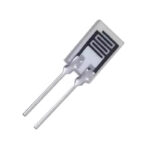
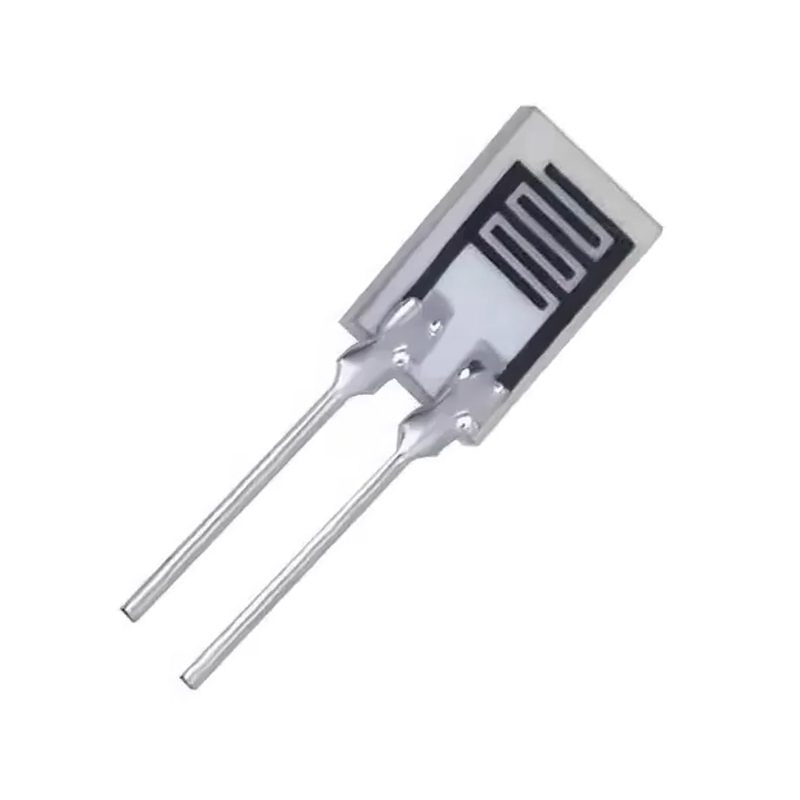
HR202L Humidity Sensor without shell - Analog Polymer Sensor

₹14.00 (Inclusive of all taxes)
Out of Stock

The HR202L is a polymer-based analog humidity-sensitive resistor designed for integration into Arduino, Raspberry Pi, and industrial control systems. It provides a wide 20–95% RH sensing range with a typical impedance of 31kΩ at 60% RH for reliable environmental monitoring.

Features

  • Analog polymer-based humidity-sensitive resistor with 20–95% RH range.
  • ±5% RH accuracy and 31kΩ typical impedance at 60% RH (25°C, 1kHz).
  • Low power consumption, max 0.2mW, for battery-powered applications.
  • Compact, shell-free design (12mm x 5mm) for easy PCB or module integration.
  • Operates optimally with an AC excitation signal between 500Hz to 2kHz.

Out of stock

Description

The HR202L Humidity Sensor is a resistive-type sensor utilizing an organic polymer film whose impedance varies predictably with ambient relative humidity. It outputs an analog signal proportional to humidity, requiring a simple AC excitation circuit (typically 1kHz) for stable operation and to prevent polarization. The sensor is designed without a protective shell, offering direct exposure to the environment for rapid response and simplified integration into custom housings or modules.

Engineered for long-term stability and low power consumption, the HR202L is suitable for continuous monitoring systems. Its performance is specified at 25°C, and temperature compensation may be required for applications with wide thermal swings. The sensor is compatible with common microcontroller ADCs for direct reading or can be paired with signal conditioning circuits for industrial 0-5V or 4-20mA outputs.

Key Features

  • Polymer Resistive Sensing: Utilizes a humidity-sensitive organic polymer film for stable, repeatable impedance changes.
  • Wide Operational Range: Measures relative humidity from 20% to 95% RH, covering most environmental conditions.
  • Low-Power Design: Maximum power dissipation of 0.2mW, ideal for portable and battery-operated devices.
  • Analog Output Simplicity: Provides a straightforward analog resistance output for easy interfacing with microcontroller ADCs.
  • Shell-Free Construction: Open-element design ensures fast response time and allows for custom environmental sealing.
  • Specified Frequency Operation: Delivers optimal performance and linearity when driven with an AC signal between 500Hz and 2kHz.

Applications

  • Indoor air quality monitors and smart HVAC system humidity feedback.
  • Agricultural greenhouse environment monitoring and control systems.
  • Consumer appliance integration in dehumidifiers, humidifiers, and weather stations.
  • Portable data loggers and handheld instrumentation for environmental surveys.
  • Industrial process monitoring where cost-effective humidity sensing is required.

Technical Specifications

Model NumberHR202L
Sensing TypeResistive (Polymer Film)
Humidity Range20% to 95% RH
Accuracy±5% RH
Typical Impedance31kΩ @ 60% RH, 25°C, 1kHz
Operating Frequency500 Hz to 2 kHz
Rated Voltage (DC)1.5 V
Max Power Consumption0.2 mW
Output SignalAnalog Resistance
Dimensions (L x W)12 mm x 5 mm
Weight0.002 kg

Frequently Asked Questions

What is the operating principle of the HR202L sensor?

The HR202L is a resistive-type humidity sensor. It uses an organic polymer film whose electrical resistance decreases as ambient relative humidity increases. This change in resistance provides an analog output proportional to the humidity level, which must be measured using an AC excitation circuit (typically 1kHz) to ensure stable operation and prevent sensor degradation.

How do I interface the HR202L with an Arduino or Raspberry Pi?

You cannot connect the HR202L directly to a digital GPIO pin. It requires an interface circuit to convert its variable resistance into a voltage readable by an ADC. A common method is to place the sensor in a voltage divider network with a fixed resistor, powered by a PWM pin filtered to create an AC signal, and then read the divided voltage with an analog input pin on an Arduino or through an external ADC for Raspberry Pi.

What are the power requirements and limitations for the HR202L?

The sensor has a maximum power dissipation rating of 0.2mW. It is typically driven with a low-voltage AC signal (1.5V max) at a frequency between 500Hz and 2kHz. Exceeding the voltage or using DC excitation can lead to inaccurate readings, reduced sensitivity, and permanent damage to the polymer film. Always use a current-limiting resistor in series.

Does the HR202L sensor require calibration?

While the sensor provides a baseline accuracy of ±5% RH, calibration at one or two known humidity points (using a calibrated reference) can improve measurement precision, especially over its full 20-95% range. Environmental factors like temperature can affect the reading, so for high-accuracy applications, implementing temperature compensation based on the sensor's datasheet characteristics is recommended.

Why is the sensor supplied without a protective shell?

The shell-free design minimizes response time by allowing the active polymer film direct exposure to air. It also provides flexibility for engineers to integrate the sensor into custom enclosures with specific filters or membranes for dust protection, or to pot it directly onto a PCB. Users must design appropriate mechanical protection and environmental sealing for their specific application.

Package Includes

  • 1 x HR202L Humidity Sensor (without shell)

Additional Information

Weight 0.002 kg
Dimensions 1.2 × 0.5 cm