SKU: SENS-0741
📋 GST Invoice Available

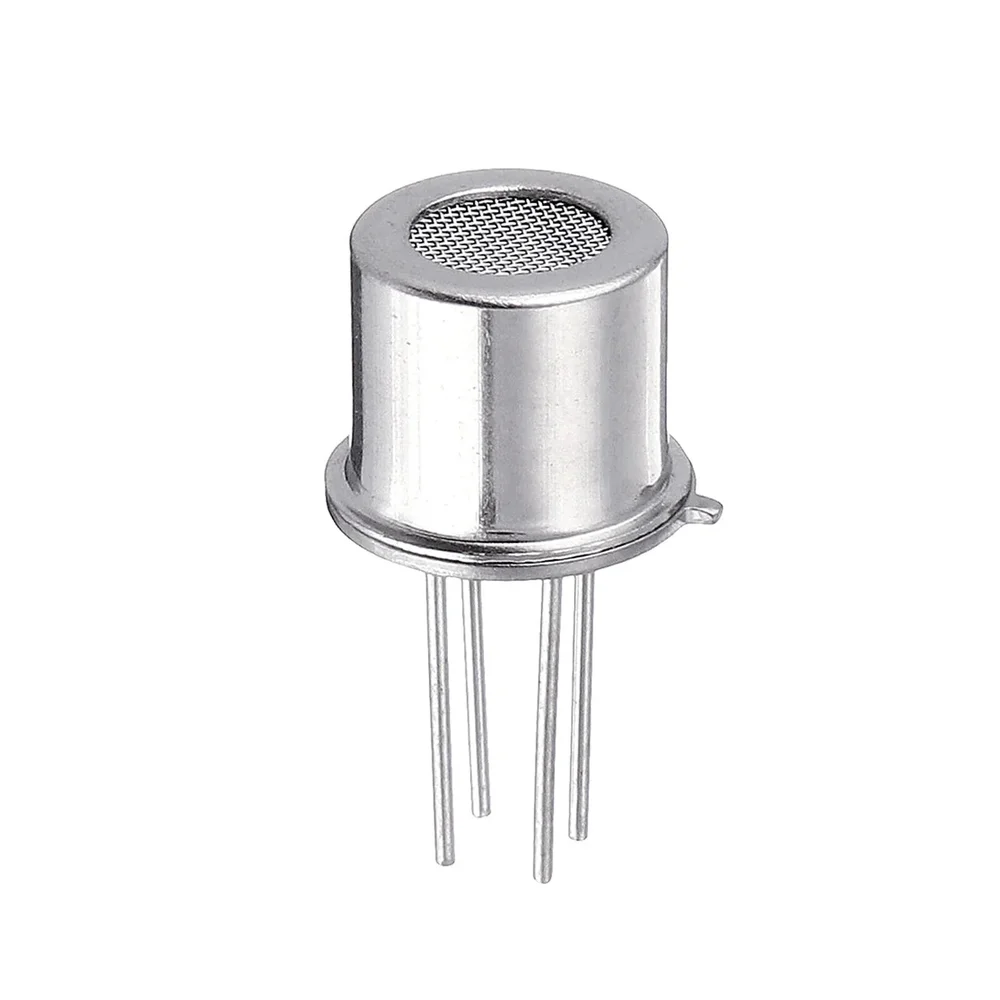
MP135 Air Pollution Gas Sensor DIP-4 - Metal Oxide Semiconductor (MOS) Analog Output

₹156.00 (Inclusive of all taxes)
Out of Stock

The MP135 is a metal oxide semiconductor (MOS) gas sensor in a DIP-4 package, providing an analog resistance-based output for detecting reducing gases like hydrogen (Hâ‚‚), carbon monoxide (CO), and alcohol vapors. It is compatible with 5V microcontroller systems such as Arduino and Raspberry Pi for indicative air quality monitoring.

Features

  • Metal Oxide Semiconductor (SnOâ‚‚) sensor for Hâ‚‚, CO, and alcohol vapor detection.
  • Analog resistance-based output suitable for direct ADC interface with microcontrollers.
  • Operates with a 5V DC heater supply and consumes ≤900 mW.
  • DIP-4 package design for easy PCB mounting and prototyping applications.
  • Fast response and recovery time for general air quality trend monitoring.

Out of stock

Description

The MP135 utilizes a tin dioxide (SnOâ‚‚) based metal oxide semiconductor (MOS) sensing element. When exposed to reducing gases, the sensor’s conductivity changes, producing a variable resistance output that can be read as an analog voltage via a simple voltage divider circuit. This makes it directly compatible with analog-to-digital converters (ADCs) on common development platforms.

As a non-selective sensor, the MP135 responds broadly to a class of reducing gases and is influenced by ambient temperature and humidity. It is designed for indicative monitoring, leak detection, and air quality trend analysis rather than calibrated, quantitative measurement. The integrated heater stabilizes the sensing element and requires a regulated 5V supply.

Key Features

  • SnOâ‚‚-based MOS sensing element for detection of hydrogen, carbon monoxide, and alcohol vapors.
  • Analog resistance output enables simple interfacing with microcontroller ADC pins.
  • Low-power heater circuit with ~31Ω resistance and ≤900 mW power consumption.
  • DIP-4 through-hole package for robust PCB integration and prototyping ease.
  • Fast sensor response and recovery characteristics suitable for real-time monitoring.
  • Optimized performance-to-cost ratio for general air pollution and gas leak detection applications.

Applications

  • Indicative air quality monitoring in indoor environments and workshops.
  • Prototype gas leak detection systems for hydrogen or carbon monoxide.
  • DIY alcohol vapor sensing for breathalyzer or fermentation monitoring projects.
  • Educational demonstrations of metal oxide semiconductor gas sensing principles.
  • Integration into hobbyist environmental data loggers for trend analysis.

Technical Specifications

Sensor TypeMetal Oxide Semiconductor (MOS)
Detection GasesHydrogen (Hâ‚‚), Carbon Monoxide (CO), Alcohol Vapors
Detection Range (H₂)10–500 ppm
Detection Range (CO)10–500 ppm
Detection Range (Alcohol)5–500 ppm
Output TypeAnalog (Resistance-based)
Operating Voltage (Heater)5V DC
Heater Resistance~31Ω ± 3Ω
Heater Power Consumption≤900 mW
Load ResistanceExternal, Adjustable
Package TypeDIP-4
Weight1 g

Frequently Asked Questions

What gases does the MP135 sensor detect?

The MP135 is a non-selective metal oxide semiconductor (MOS) sensor primarily sensitive to reducing gases. It detects hydrogen (H₂) in the 10–500 ppm range, carbon monoxide (CO) from 10–500 ppm, and alcohol vapors from 5–500 ppm. It cannot distinguish between these gases individually.

How do I interface the MP135 with an Arduino?

Interface the MP135 using its analog output. Connect the sensor's output pin to an Arduino analog input (e.g., A0) through a voltage divider circuit with an external load resistor (typically 4.7kΩ to 10kΩ). Supply a stable 5V DC to the heater pins. The Arduino's ADC will read a voltage proportional to the sensor's resistance, which changes with gas concentration.

Does the MP135 require calibration?

Yes, for meaningful readings, the MP135 requires calibration in the target environment. Its output is influenced by temperature, humidity, and the specific gas mixture. Baseline resistance should be established in clean air, and a calibration curve should be developed for the gas of interest, as the sensor is non-selective.

What is the power requirement for the MP135 heater?

The MP135's integrated heater requires a regulated 5V DC supply. The heater resistance is approximately 31Ω, resulting in a current draw of about 160mA and a power consumption of ≤900 mW. A stable voltage is critical for consistent sensor performance and baseline stability.

Package Includes

  • 1 x MP135 Air Pollution Gas Sensor DIP-4

Additional Information

Weight 0.003 kg
Dimensions 3 × 3 × 2 cm