SKU: SBCD-0288
📋 GST Invoice Available

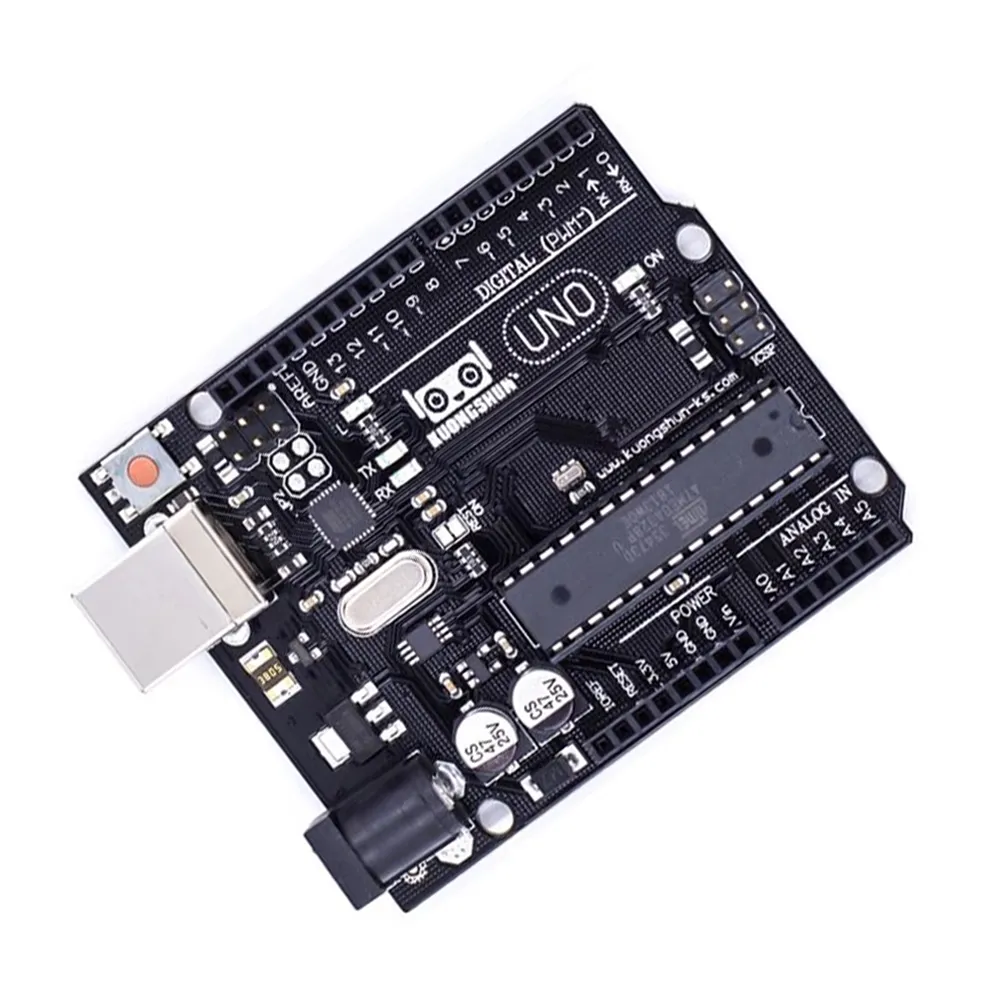
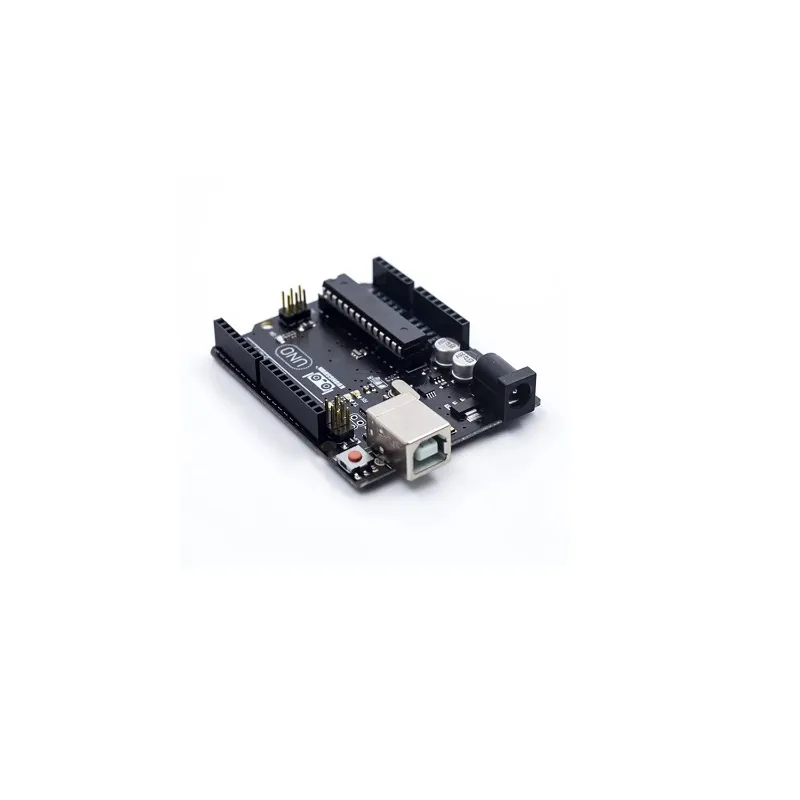
Uno R3 ATmega328 Development Board without Cable

₹618.00 (Inclusive of all taxes)
Out of Stock

The Uno R3 is a microcontroller board based on the ATmega328, offering 14 digital I/O pins, 6 analog inputs, and a 16 MHz clock, ideal for a wide range of embedded projects. This version comes without a USB cable, suitable for users who already have one.

Features

  • ATmega328 microcontroller with a 16 MHz ceramic resonator.
  • Features 14 digital I/O pins (6 capable of PWM output) and 6 analog input pins.
  • Standard Arduino Uno R3 form factor with 1.0 pinout for shield compatibility.
  • Integrated USB connection for seamless programming and power delivery.
  • Robust design for rapid prototyping, educational purposes, and DIY electronics.

Out of stock

Description

The Uno R3 is a versatile microcontroller development board built around the ATmega328. It provides a robust platform for embedded system projects, featuring 14 digital input/output pins—six of which support PWM output—and six dedicated analog input pins. The board integrates a 16 MHz ceramic resonator, a standard USB connection for programming and serial communication, a power jack, an ICSP header, and a reset button. Its comprehensive design ensures that all necessary components to support the microcontroller are readily available, requiring only a USB cable or an external AC-to-DC adapter/battery to begin development.

This iteration of the Uno series incorporates key enhancements, including an improved 1.0 pinout that adds SDA and SCL pins near the AREF pin, along with an IOREF pin near the RESET button. These additions enable shields to adapt to the board’s operating voltage, facilitating compatibility with both 5V AVR-based boards and future 3.3V platforms like the Arduino Due. Furthermore, the Uno R3 features a stronger RESET circuit and replaces the ATmega8U2 with the ATmega16U2 for enhanced USB-to-serial communication stability and performance.

Key Features

  • Microcontroller: ATmega328 with 16 MHz Clock Speed
  • Digital I/O Pins: 14 (6 with PWM output capability)
  • Analog Input Pins: 6
  • Operating Voltage: 5V DC
  • Recommended Input Voltage: 7-12V (via power jack)
  • Flash Memory: 32 KB (ATmega328)
  • SRAM: 2 KB
  • EEPROM: 1 KB (ATmega328)
  • Enhanced 1.0 pinout with SDA, SCL, and IOREF pins for improved shield compatibility.
  • Stronger RESET circuit for increased stability.
  • Utilizes ATmega16U2 for USB-to-serial conversion.

Applications

  • Rapid prototyping for IoT devices and smart home systems.
  • Educational robotics and embedded control projects.
  • Sensor data acquisition and logging systems.
  • Development of interactive art installations.
  • General-purpose microcontroller experimentation and learning.

Technical Specifications

MicrocontrollerATmega328
Operating Voltage5V DC
Input Voltage (Recommended)7-12V
Input Voltage (Limit)6-20V
Digital I/O Pins14 (6 provide PWM output)
Analog Input Pins6
DC Current per I/O Pin50 mA
Flash Memory32 KB (ATmega328)
SRAM2 KB
EEPROM1 KB (ATmega328)
Clock Speed16 MHz
USB-to-Serial ConverterATmega16U2
Dimensions (L x W x H)75 x 54 x 12 mm
On Board LEDYes
Operating Temperature-40 to 90 °C

Frequently Asked Questions

What is the primary microcontroller on the Uno R3 board?

The Uno R3 board features the ATmega328 microcontroller. This 8-bit AVR micro is central to its operation, providing the processing power, memory, and I/O capabilities for a wide range of embedded projects and applications, running at 16 MHz.

What programming environment and toolchains are compatible with the Uno R3?

The Uno R3 is primarily programmed using the Arduino IDE, which offers an easy-to-use C/C++ based environment. It also supports standard AVR toolchains for more advanced bare-metal programming, allowing flexibility for developers and integration with platforms like PlatformIO.

Can existing Arduino shields be used with the Uno R3 without issues?

Yes, the Uno R3 maintains backward compatibility with most existing Arduino shields. Its 1.0 pinout includes dedicated SDA and SCL pins, alongside IOREF, ensuring improved voltage adaptability and broad compatibility with various expansion modules, regardless of 5V or 3.3V operation.

What are the power requirements for the Uno R3 board?

The Uno R3 operates at 5V DC, typically drawing power via its USB connection or a DC power jack. It recommends an input voltage of 7-12V when powered externally, with a limit of 6-20V, ensuring stable operation for various sensors and actuators.

Package Includes

  • 1 x Uno R3 Board (Compatible with Arduino, without Cable)

Additional Information

Weight 0.026 kg
Dimensions 7.5 × 5.4 × 1.2 cm