SKU: SBCD-0693
📋 GST Invoice Available

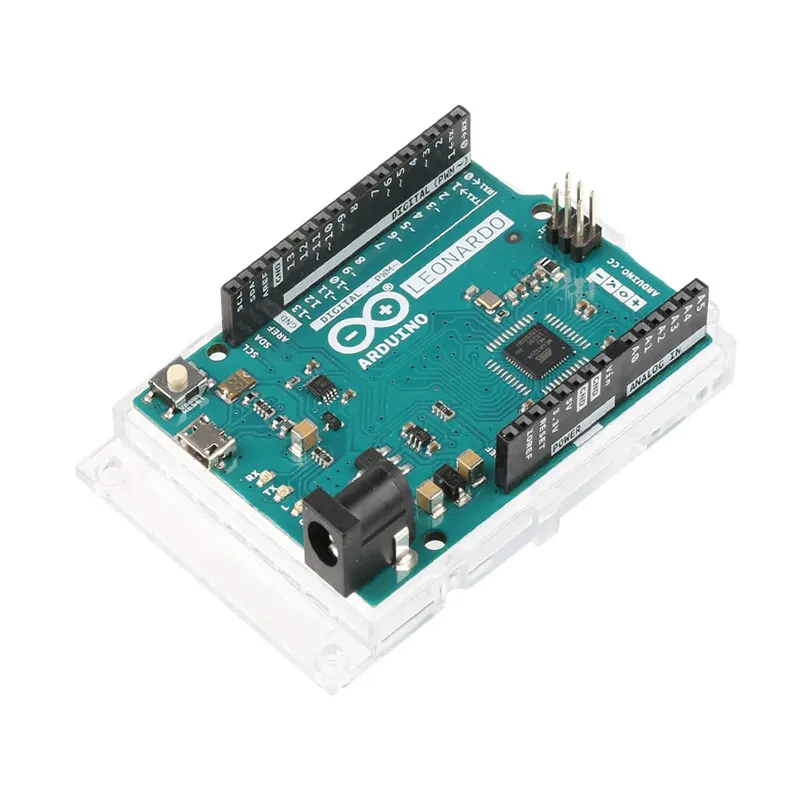
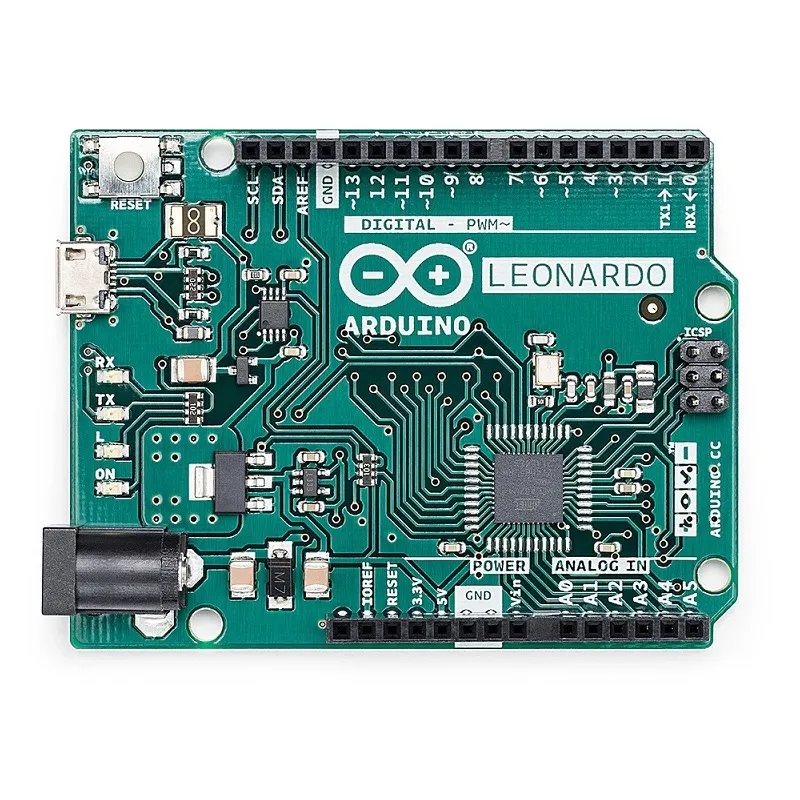
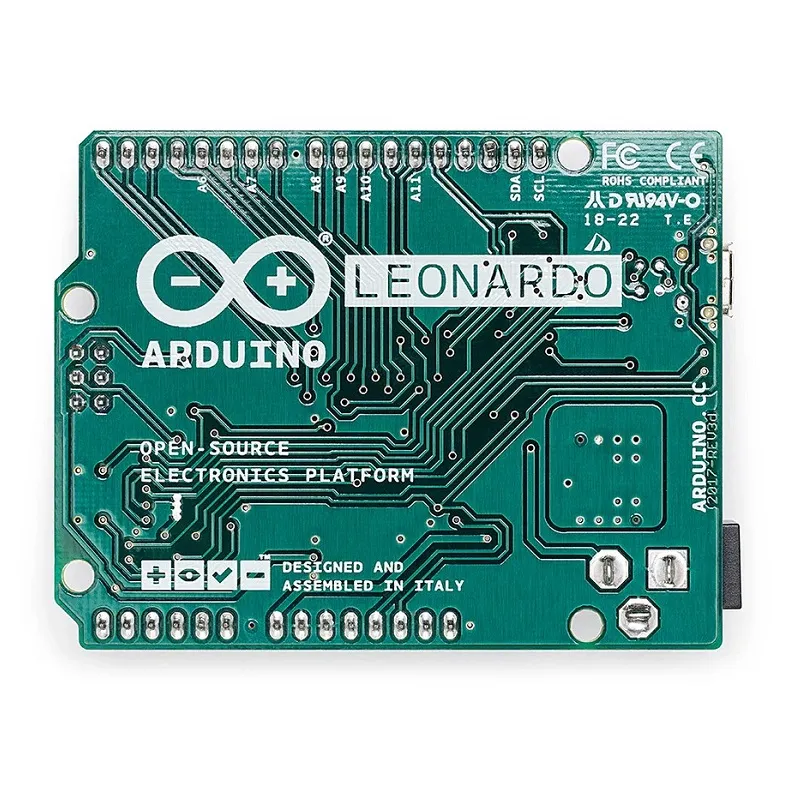
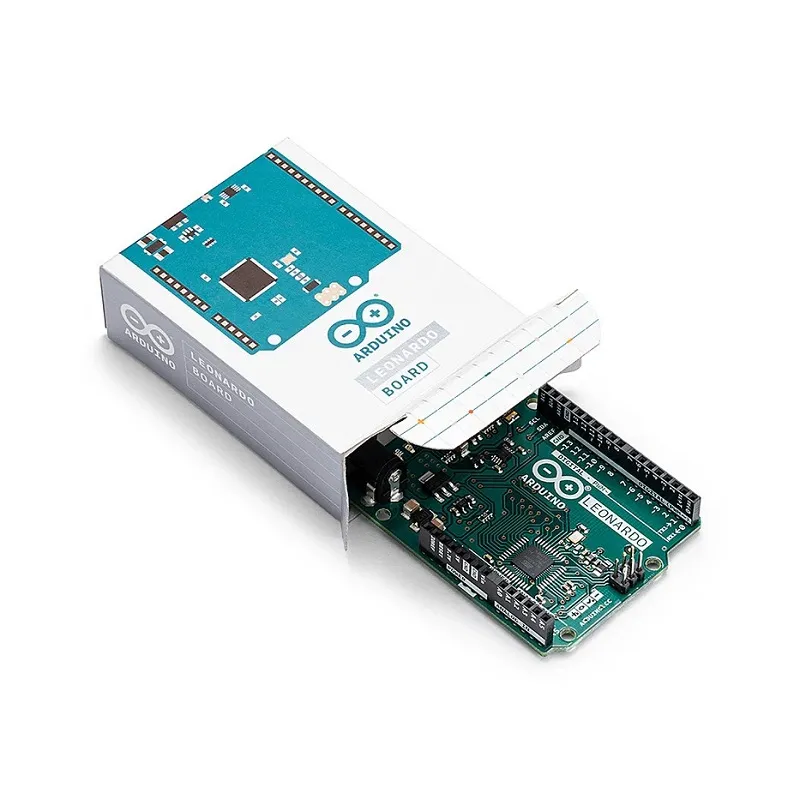
Arduino Leonardo Development Board with Headers

₹2,429.00 (Inclusive of all taxes)
Out of Stock

The Arduino Leonardo is a versatile microcontroller board featuring the ATmega32u4, which natively supports USB communication. This unique design allows it to function as a mouse or keyboard when connected to a computer, offering expanded possibilities for human interface device projects.

Features

  • Features an ATmega32u4 microcontroller with integrated USB capabilities.
  • Directly emulates a USB keyboard and mouse, simplifying HID project development.
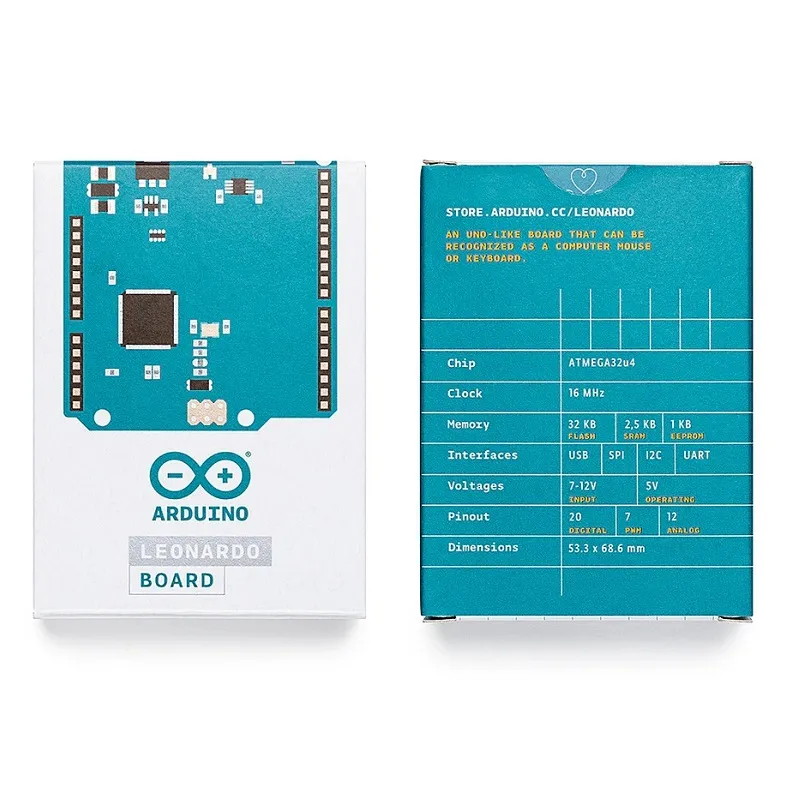
  • Offers 20 digital I/O pins, including 7 PWM outputs and 12 analog inputs.
  • Equipped with a 16 MHz crystal oscillator for robust performance.
  • Powered via USB or an external 7-12V supply.

Out of stock

Description

The Arduino Leonardo distinguishes itself from previous Arduino boards by integrating USB communication directly into its ATmega32u4 microcontroller. This eliminates the need for a separate USB-to-serial converter, leading to a more streamlined architecture and enabling the board to act as various USB Human Interface Devices (HIDs) such as a keyboard or mouse, in addition to functioning as a standard virtual serial/COM port.

Equipped with 20 digital input/output pins, the Leonardo provides extensive connectivity for a wide range of sensors, actuators, and other peripherals. Seven of these pins support Pulse Width Modulation (PWM) for precise control over motors and LEDs, while twelve serve as analog inputs, ideal for reading data from analog sensors. Its 16 MHz crystal oscillator ensures efficient processing, making it suitable for a diverse array of embedded applications.

Designed for ease of use, the Leonardo comes with a micro USB connection, a power jack for external power sources, and an ICSP header for in-circuit serial programming. Simply connect it to a computer via USB or provide external power to begin developing and deploying your projects.

Key Features

  • **Microcontroller:** ATmega32u4 with native USB communication for simplified development.
  • **USB HID Capability:** Functions directly as a USB mouse and keyboard, expanding project possibilities.
  • **Versatile I/O:** 20 digital input/output pins, including 7 PWM channels and 12 analog input channels.
  • **Clock Speed:** 16 MHz crystal oscillator ensures efficient and reliable operation.
  • **Memory:** 32 KB Flash memory (4 KB for bootloader), 2.5 KB SRAM, and 1 KB EEPROM.
  • **Power Options:** Flexible power supply via micro USB connection or external 7-12V DC input.
  • **Programming Interface:** ICSP header available for direct microcontroller programming.

Applications

  • Custom USB Human Interface Devices (HID), such as keyboards, mice, or game controllers.
  • Interactive art installations and control panels requiring USB communication.
  • Robotics projects for controlling servos and reading sensor data.
  • Educational prototyping for learning microcontroller programming and electronics.
  • Automation tasks requiring custom input devices or sensor integration.

Technical Specifications

MicrocontrollerATmega32u4
Operating Voltage5V
Input Voltage (Recommended)7-12V DC
Input Voltage (Limit)6-20V DC
Digital I/O Pins20
PWM Digital I/O Pins7
Analog Input Pins12
DC Current per I/O Pin20 mA
DC Current for 3.3V Pin50 mA
Flash Memory32 KB (ATmega32u4), 4 KB used by bootloader
SRAM2.5 KB (ATmega32u4)
EEPROM1 KB (ATmega32u4)
Clock Speed16 MHz
USBNative USB communication

Frequently Asked Questions

What is the primary difference between the Arduino Leonardo and Uno boards?

The Leonardo uses an ATmega32u4 microcontroller with built-in USB communication, whereas the Uno uses an ATmega328P with a separate USB-to-serial chip. This allows the Leonardo to act as a native USB keyboard or mouse directly, a capability not present in the Uno without additional hardware.

Can the Arduino Leonardo be powered by an external battery?

Yes, the Arduino Leonardo can be powered by an external battery or AC-to-DC adapter connected to its power jack. The recommended input voltage is 7-12V DC, with an absolute limit of 6-20V DC to ensure stable operation and longevity.

What development environment is compatible with the Arduino Leonardo?

The Arduino Leonardo is fully compatible with the standard Arduino IDE. You can program it using the familiar C++-like language, utilizing the extensive Arduino library ecosystem. Its native USB support simplifies code upload and serial communication.

How many analog input pins does the Arduino Leonardo provide?

The Arduino Leonardo offers 12 analog input pins, which can be used to read data from various analog sensors like temperature, light, or potentiometers. These pins provide 10-bit resolution for precise analog-to-digital conversion.

Package Includes

  • 1 x Arduino Leonardo with Headers

Additional Information

Weight 0.07 kg
Dimensions 9 × 7 × 5 cm