SKU: SENS-0690
šŸ“‹ GST Invoice Available

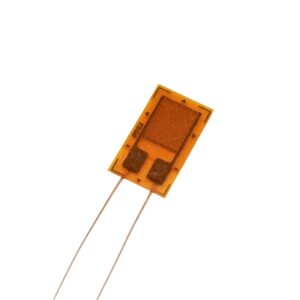
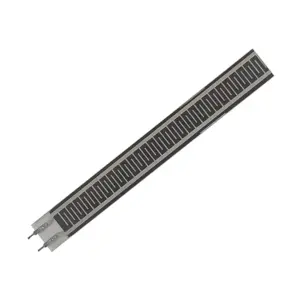
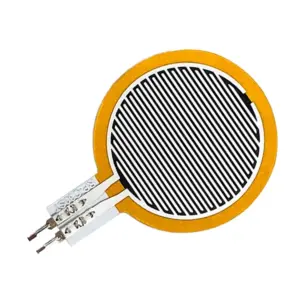
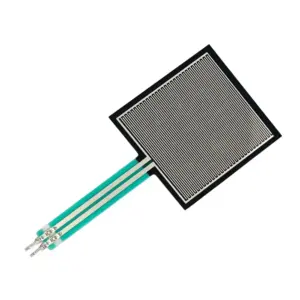
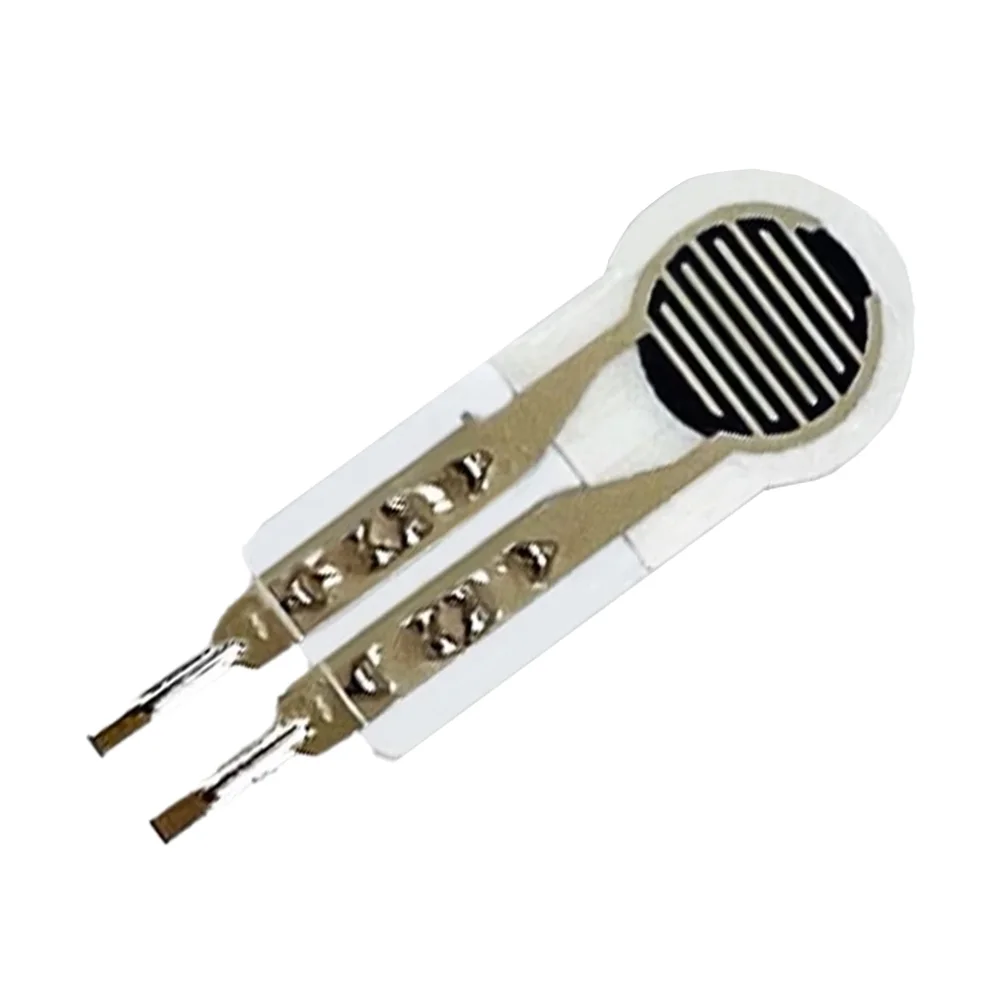
Force Sensitive Resistor RP-C7.6-ST (30g-1.5kg) - Thin Film Sensor

₹167.00 (Inclusive of all taxes)
Out of Stock

The RP-C7.6-ST is an ultra-thin force-sensitive resistor (FSR) providing analog resistance changes from 30g to 1.5kg, ideal for pressure mapping, touch interfaces, and robotic tactile sensing in Arduino, Raspberry Pi, and embedded control systems.

Features

  • Ultra-thin 0.3mm profile with rear adhesive for easy integration.
  • Wide sensing range from 30 grams to 1.5 kilograms.
  • Fast response time under 10 milliseconds for dynamic pressure detection.
  • Two-terminal variable resistor operation, compatible with simple voltage divider circuits.
  • Durable construction for long-term, repeatable force measurement applications.

Out of stock

Description

The RP-C7.6-ST Force Sensitive Resistor (FSR) is a piezoresistive sensor whose electrical resistance decreases predictably with an increase in applied force. This thin-film device operates as a two-terminal variable resistor, making it simple to interface with microcontrollers via a basic voltage divider to convert force into an analog voltage signal.

With a sensing range from a light 30-gram touch up to 1.5 kg, it is suitable for both delicate touch detection and moderate force measurement. The sub-10ms response time enables the capture of dynamic pressure changes, while its robust design ensures longevity in repeated use scenarios.
Key Features

  • Ultra-Thin Form Factor: 0.3mm thickness with integrated adhesive backing for seamless mounting on curved or flat surfaces.
  • Precise Force-to-Resistance Curve: Provides a reliable analog output corresponding directly to applied force within its specified range.
  • Rapid Dynamic Response: Less than 10ms response time suitable for real-time pressure sensing and interactive control.
  • Simple Two-Terminal Interface: Functions as a variable resistor, easily integrated with ADC inputs on Arduino, ESP32, or Raspberry Pi.
  • Durable Sensing Membrane: Engineered for high cycle life and consistent performance in both static and dynamic pressure applications.
  • Optimized Performance-to-Cost Ratio: High-value solution for adding tactile feedback and force detection to electronic projects.

Applications

  • Robotic end-effector tactile sensing and grip force feedback.
  • Interactive touch panels and pressure-sensitive control interfaces.
  • Wearable device input for gesture and activity monitoring.
  • Biometric and medical devices for pressure distribution measurement.
  • Industrial automation for presence detection and lightweight part counting.

Technical Specifications

ModelRP-C7.6-ST(30g-1.5kg)
Sensing Range30 g to 1.5 kg
Thickness0.3 mm
Response Time< 10 ms
Operating PrinciplePiezoresistive (Force Sensitive Resistor)
Terminal Configuration2-terminal
Output TypeAnalog Resistance (Variable Resistor)

Frequently Asked Questions

How do I interface this FSR with an Arduino or Raspberry Pi?

Connect the FSR in a voltage divider circuit with a fixed resistor (typically 10kΩ) between an analog input pin and ground. The FSR acts as the variable resistor. The microcontroller reads the changing voltage at the junction, which corresponds to the applied force. Ensure you use the ADC's voltage reference (e.g., 3.3V or 5V) for scaling calculations.

What is the sensing area and how is force distributed?

The RP-C7.6-ST is a single-zone sensor, meaning the entire active area responds uniformly to applied force. For consistent readings, ensure force is applied evenly across the sensing surface. The resistance change correlates with the total force applied, not pressure (force per unit area), so the effective sensitivity can be tuned by the size of the contactor.

Can this sensor be used for dynamic or impact force measurement?

Yes, its fast response time of less than 10ms makes it suitable for dynamic pressure sensing. However, for high-speed impacts, the sensor's mechanical durability and the system's sampling rate must be considered. It is ideal for measuring pressing, squeezing, or tapping forces in real-time control systems, but not for quantifying high-energy shock loads.

Does the sensor require calibration?

For quantitative force measurement, calibration is recommended. Map the ADC output readings to known weights across the 30g to 1.5kg range to create a transfer function. The resistance-force relationship is non-linear, typically following a power-law curve, so multiple calibration points will improve accuracy. For simple threshold detection (on/off), minimal calibration is needed.

Package Includes

  • 1 x Force Sensitive Resistor RP-C7.6-ST (30g-1.5kg)