SKU: IOWC-1997
📋 GST Invoice Available

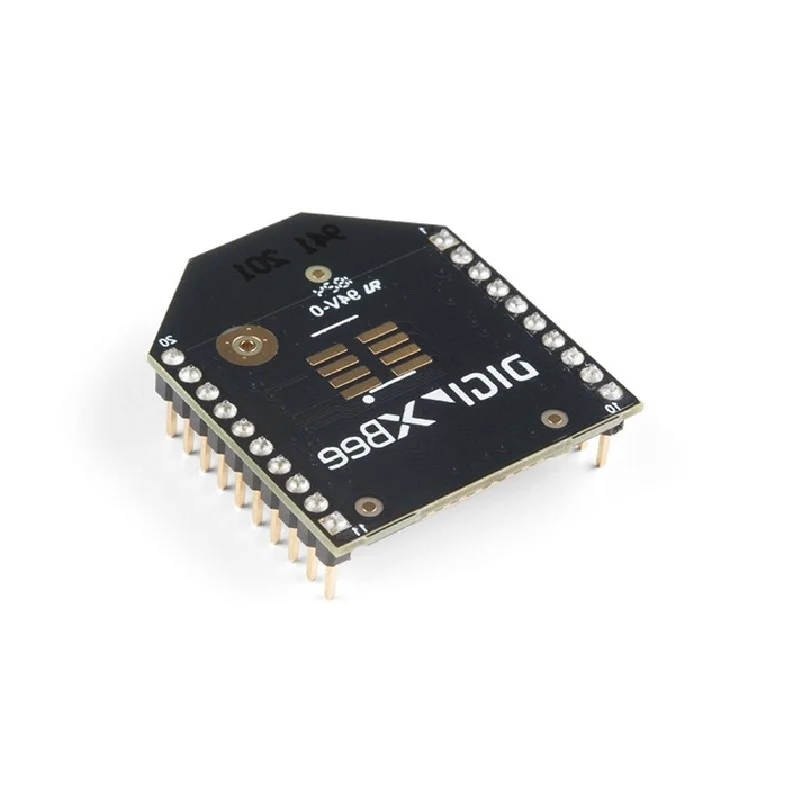
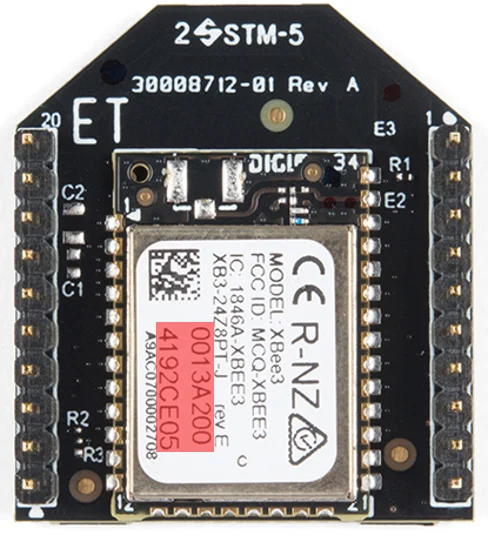
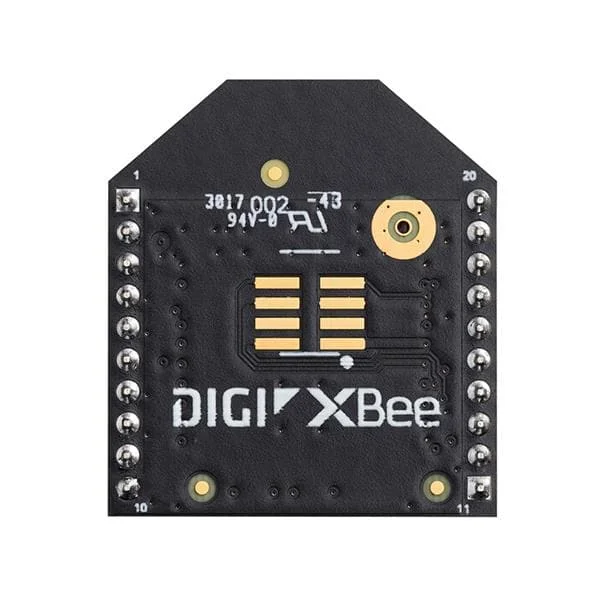
Digi International XBee3 2.4GHz ZigBee 3.0 Module w/ PCB Antenna

₹2,499.00 (Inclusive of all taxes)
Out of Stock

The Digi International XBee3 is a versatile 2.4GHz wireless module featuring the Silicon Labs EFR32MG SoC, supporting ZigBee 3.0, 802.15.4, DigiMesh, and BLE protocols. It operates from 2.1-3.6V and is programmable via MicroPython for edge computing applications.

Features

  • Multi-Protocol SoC: Features the Silicon Labs EFR32MG for ZigBee 3.0, 802.15.4, DigiMesh, and Bluetooth Low Energy (BLE) connectivity, configurable via Digi International XCTU software.
  • Integrated MicroPython Engine: Enables standalone programmable smart nodes without an external microcontroller, simplifying firmware development and edge logic.
  • Robust RF Performance: Delivers up to +8 dBm transmit power with -103 dBm receiver sensitivity, supporting ranges up to 4000 ft (1200 m) line-of-sight.
  • Comprehensive Security Suite: Incorporates Digi International TrustFence® with 128/256-bit AES encryption, providing layered security for device identity, data, and network communications.
  • Flexible Hardware Interfaces: Offers UART, SPI, and I2C serial data interfaces plus 15 digital I/O and four 10-bit ADC inputs for sensor and peripheral integration.

Out of stock

Description

The Digi International XBee3 module is a pre-certified, multi-protocol wireless transceiver built around the high-performance Silicon Labs EFR32MG System-on-Chip (SoC). Designed for scalable IoT device connectivity, it supports industry-standard protocols including ZigBee 3.0, 802.15.4, DigiMesh, and Bluetooth Low Energy, all selectable and configurable via the Digi International XCTU configuration tool. Its integrated MicroPython runtime environment allows developers to execute application logic directly on the module, enabling the creation of smart, low-power end nodes and gateways without requiring a separate host microcontroller.

Engineered for reliable operation in industrial and commercial environments, the module employs Direct Sequence Spread Spectrum (DSSS) for interference immunity and offers configurable RF output power up to +8 dBm. It features advanced power management with deep sleep currents as low as 1.7 µA, making it suitable for battery-powered remote sensing and telemetry applications. The module’s compact 13 x 19 mm micro form factor is available in through-hole, surface-mount, and RF pad variants, with this specific model featuring an integrated PCB antenna for simplified design-in.

Key Features

  • Multi-protocol wireless SoC supporting ZigBee 3.0, 802.15.4, DigiMesh, and Bluetooth Low Energy.
  • On-board MicroPython interpreter for standalone, programmable edge computing and logic.
  • Digi International TrustFence® security framework with AES-128/256 encryption for device identity and secure data transmission.
  • Flexible serial interfaces including UART, SPI, and I2C for easy host processor or sensor connectivity.
  • 15 configurable digital I/O pins and four 10-bit ADC inputs for direct peripheral and analog sensor interfacing.
  • Over-the-Air (OTA) firmware updates and remote configuration via Digi International Remote Manager.
  • Pre-certified module accelerates regulatory compliance and reduces time-to-market for OEM designs.
  • Robust RF link with acknowledgments, retries, and DSSS modulation for reliable packet delivery in noisy 2.4 GHz environments.

Applications

  • Industrial Monitoring & Control: Wireless sensor networks for machine health, environmental monitoring, and process automation in factories.
  • Smart Building Automation: Lighting control, occupancy sensing, HVAC management, and energy monitoring systems.
  • Asset Tracking & Logistics: Real-time location and condition monitoring of goods in warehouses and during transport.
  • Smart Agriculture: Remote field sensing for soil moisture, temperature, and irrigation control in distributed crop areas.
  • Home Automation & Security: DIY and professional setups for connected lights, locks, sensors, and security panels.

Technical Specifications

Wireless SoC / ChipsetSilicon Labs EFR32MG
Supported ProtocolsZigBee 3.0, 802.15.4, DigiMesh, BLE
Frequency BandISM 2.4 GHz
RF Data Rate250 Kbps
Transmit PowerUp to +8 dBm
Receiver Sensitivity-103 dBm
Supply Voltage2.1 to 3.6V DC
Transmit Current40 mA @ +8 dBm
Receive Current15 mA
Sleep Current1.7 µA (Power-down)
Serial InterfacesUART, SPI, I2C
Digital I/O15
ADC Inputs4 x 10-bit
Antenna OptionIntegrated PCB Antenna
Operating Temperature-40°C to +85°C
Form FactorMicro (13 x 19 mm), Through-hole

Frequently Asked Questions

How do I configure the Digi International XBee3 module for ZigBee networking?

Use the free Digi International XCTU software to configure the XBee3. Connect the module via a USB-to-UART adapter to your computer, launch XCTU, and detect the module. You can then set the network parameters like PAN ID, destination address, and security keys using AT commands or the API frame structure. For ZigBee 3.0, ensure the firmware profile is set to 'ZigBee 3.0' and configure the device as a Coordinator, Router, or End Device as required by your network topology.

Can I program the XBee3 module without an external microcontroller?

Yes, the XBee3 has a built-in MicroPython interpreter, allowing you to write and run Python scripts directly on the module. After enabling MicroPython mode in XCTU, you can upload .py files to the module's flash memory. Your script can then control the GPIO pins, read ADC values, manage wireless communication, and implement application logic autonomously, eliminating the need for a separate host MCU in many edge node designs.

What is the power consumption and how do I enable sleep modes?

The XBee3 consumes 40 mA during transmission at +8 dBm and 15 mA while receiving. For battery operation, utilize its sleep modes. Configure sleep settings (e.g., SM parameter) via AT commands to put the module into periodic or pin-controlled sleep. In the deepest sleep (power-down) mode, current drops to 1.7 µA. Ensure your host system or MicroPython script manages the SLEEP_RQ/DIO9 pin and wake-up intervals correctly to maximize battery life in remote sensor applications.

How do the UART, SPI, and I2C interfaces work on the XBee3?

The primary interface is a UART (configurable baud rate up to 1 Mbps) for AT commands, API data frames, and MicroPython REPL. The SPI and I2C interfaces are enabled via specific DIO pin configurations and are typically used when the XBee3 acts as a peripheral to a host processor for high-speed data transfer or to connect external sensors. You must configure the relevant DIO pins to the appropriate alternate function (SPI_MOSI, SCL, etc.) using AT commands or within your MicroPython script before using these interfaces.

Package Includes

  • 1 x Digi International XBee3 2.4GHz ZB3.0 Module (PCB Antenna, Through-hole)

Additional Information

Weight 0.06 kg