SKU: IOWC-1736
📋 GST Invoice Available

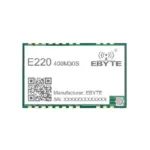
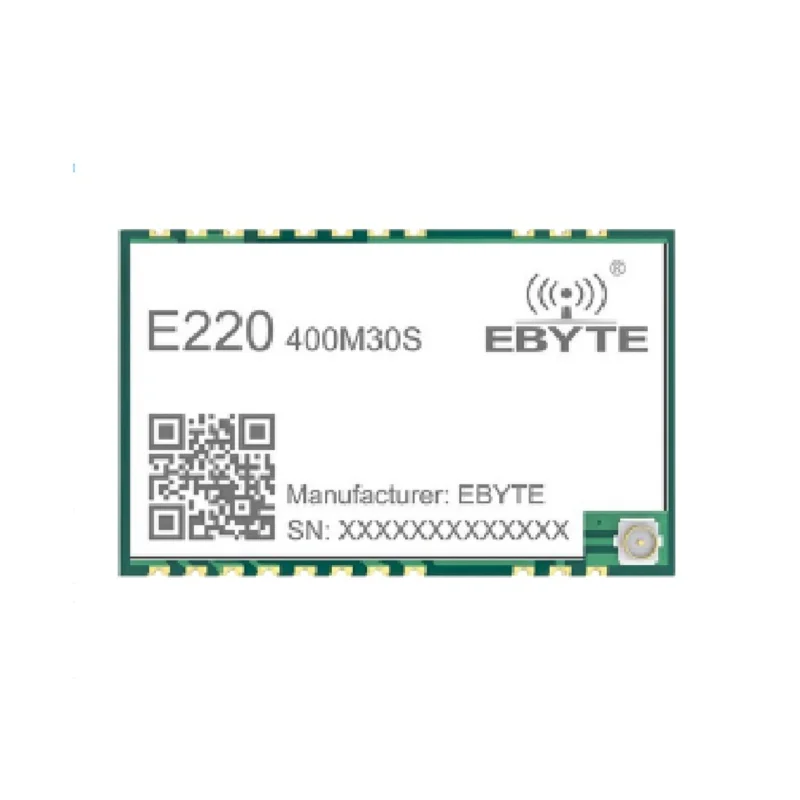
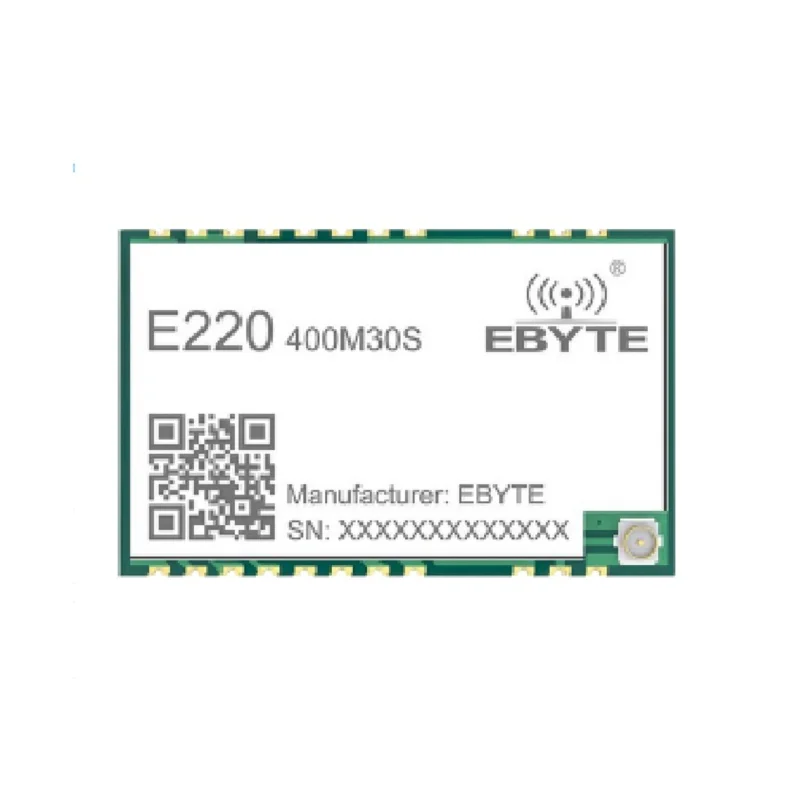
EByte E220-400M30S LLCC68 433/470MHz LoRaWAN RF Module 30dBm w/ IPEX

₹649.00 (Inclusive of all taxes)
Out of Stock

The EByte E220-400M30S is a high-power, 433/470MHz LoRaWAN RF module based on the Semtech LLCC68 chip, featuring an integrated PA+LNA for up to 30dBm (1W) output power and a measured range of up to 10km. It operates from 3-5.5V and is controlled via SPI interface for integration into long-range IoT sensor networks and industrial telemetry systems.

Features

  • High-Power LLCC68 Core: Features the Semtech LLCC68 LoRa transceiver with integrated Power Amplifier (PA) and Low Noise Amplifier (LNA) for superior range and link stability up to 10km.
  • Wide Frequency & Power Range: Covers 410-493MHz ISM bands with software-adjustable transmit power up to 30dBm (1W), optimized for 433MHz and 470MHz operation.
  • Dual Modulation Support: Operates in LoRa mode (1.76-62.5 kbps) for long-range, low-power applications and FSK/GFSK mode (up to 300 kbps) for higher data throughput.
  • Ultra-Low Power Design: Consumes only 1µA in sleep mode and 12.5mA in receive mode, making it ideal for battery-powered remote sensor nodes.
  • Flexible Antenna & Interface: Offers dual antenna options (IPEX connector or stamp hole pads) and communicates via a simple SPI interface with a 256-byte FIFO for efficient data handling.

Out of stock

Description

The EByte E220-400M30S is a professional-grade, surface-mount LoRaWAN RF module engineered for demanding IoT deployments requiring extended range and robust communication. Its architecture centers on the Semtech LLCC68 chip, a modern LoRa transceiver known for improved power efficiency and speed over previous generations like the SX1276. The module’s integrated PA and LNA significantly boost both transmit power and receiver sensitivity, ensuring reliable data links over distances up to 10 kilometers in clear line-of-sight conditions.

Designed for industrial environments, it operates across an ultra-wide 410-493MHz spectrum, supporting global license-free ISM bands at 433MHz and 470MHz. Power management is a key strength, with a wide 3-5.5V supply range and deep sleep currents as low as 1 microampere, enabling multi-year operation on battery power. The module requires an external microcontroller for configuration and data handling via its SPI interface, offering developers full control over LoRa spreading factors, bandwidth, and coding rate for optimal network performance.

Key Features

  • Core LLCC68 LoRa transceiver with integrated PA and LNA for enhanced range and stability.
  • Software-configurable output power up to 30dBm (1W) for long-distance transmission.
  • Supports LoRa modulation (SF5-SF11) for ultra-long range and FSK/GFSK for higher data rates.
  • Extremely low sleep current (1µA) and efficient receive current (12.5mA) for battery-operated designs.
  • Wide operating voltage range from 3.0V to 5.5V, with performance peaking at 5V.
  • Flexible antenna connection via IPEX connector or SMD stamp holes for easy integration.
  • 256-byte FIFO buffer for efficient SPI data management and reduced MCU overhead.
  • Industrial-grade operating temperature range from -40°C to +85°C.

Applications

  • Long-range IoT sensor networks for environmental monitoring (temperature, humidity, air quality).
  • Industrial telemetry and wireless data acquisition (IIoT) in remote or harsh environments.
  • Smart agriculture systems for soil moisture sensing, tank level monitoring, and livestock tracking.
  • Building automation and smart meter networks for energy and utility management.
  • Wireless alarm, security, and remote keyless entry systems.

Technical Specifications

RF Chipset / CoreSemtech LLCC68
Wireless ProtocolLoRa, FSK, GFSK
Frequency Range410 - 493 MHz (Optimized for 433MHz, 470MHz)
Max RF Transmit Power30 dBm (1W), software adjustable
Supply Voltage3.0V - 5.5V DC
Operating Current (Tx @ Max Power)~600 mA
Operating Current (Rx)12.5 mA
Sleep Current1 µA
InterfaceSPI
Antenna ConnectorIPEX (U.FL) & Stamp Hole Pads
Operating Temperature-40°C to +85°C
Dimensions (Shipping)Approx. 8 x 6 x 2 cm

Frequently Asked Questions

What microcontroller interface does the E220-400M30S module use, and how do I connect it?

The module communicates exclusively via an SPI interface. You must connect the module's SPI pins (SCK, MISO, MOSI, NSS) to corresponding GPIOs on your host MCU (e.g., ESP32, STM32, Arduino). Additionally, connect the BUSY and RESET pins for proper state control. Ensure your firmware uses a compatible LLCC68 driver library (like RadioLib or the Semtech provided driver) to handle SPI transactions, configure frequency, power, and LoRa parameters like spreading factor and bandwidth.

How do I achieve the maximum 10km range with this module?

To maximize range, ensure you are using a 5V power supply for optimal PA performance, attach a properly tuned 433MHz or 470MHz antenna with low-loss cable, and configure the module for its highest transmit power (30dBm). On the receiver side, use a similar high-gain module. Operate in LoRa mode with a low data rate and high spreading factor (e.g., SF12, 125kHz bandwidth) in an environment with clear line-of-sight. Antenna placement and height are critical factors for achieving the advertised distance.

What is the power consumption profile, and how can I optimize it for battery life?

The module draws ~600mA during maximum power transmission, 12.5mA while receiving, and only 1µA in sleep mode. For battery-powered nodes, minimize transmit time and power level, maximize time in deep sleep, and use efficient wake-up protocols. Design your firmware to put the module into sleep mode (via the SPI command) between communication cycles. Powering the module from a 3.3V source reduces Tx current but also slightly reduces output power and range.

Can I use this module with both 433MHz and 470MHz frequencies?

Yes, the E220-400M30S supports the entire 410-493MHz range, covering both the 433MHz and 470MHz license-free ISM bands. You select the operating frequency via software configuration sent over SPI. Ensure you use an antenna tuned for your chosen center frequency (e.g., a 433MHz antenna for 433MHz operation). The module's performance is optimized across this band, but regulatory compliance is the user's responsibility for their specific region.

What is the difference between the IPEX connector and stamp hole antenna options?

This module provides both an IPEX (U.FL) connector for attaching a removable external antenna via a pigtail and solderable stamp holes for directly connecting a wire antenna or embedding a PCB trace antenna. The IPEX option offers convenience and allows for easy antenna swapping or use of higher-gain external antennas. The stamp holes provide a more permanent, low-cost solution suitable for final product integration where an onboard antenna is desired.

Package Includes

  • 1 x EByte E220-400M30S LLCC68 LoRa RF Module

Additional Information

Weight 0.01 kg
Dimensions 6 × 8 × 2 cm