SKU: IOWC-1572
📋 GST Invoice Available

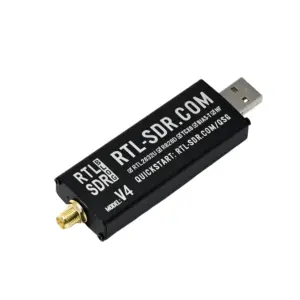
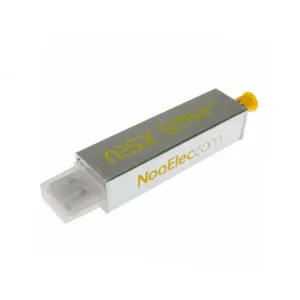
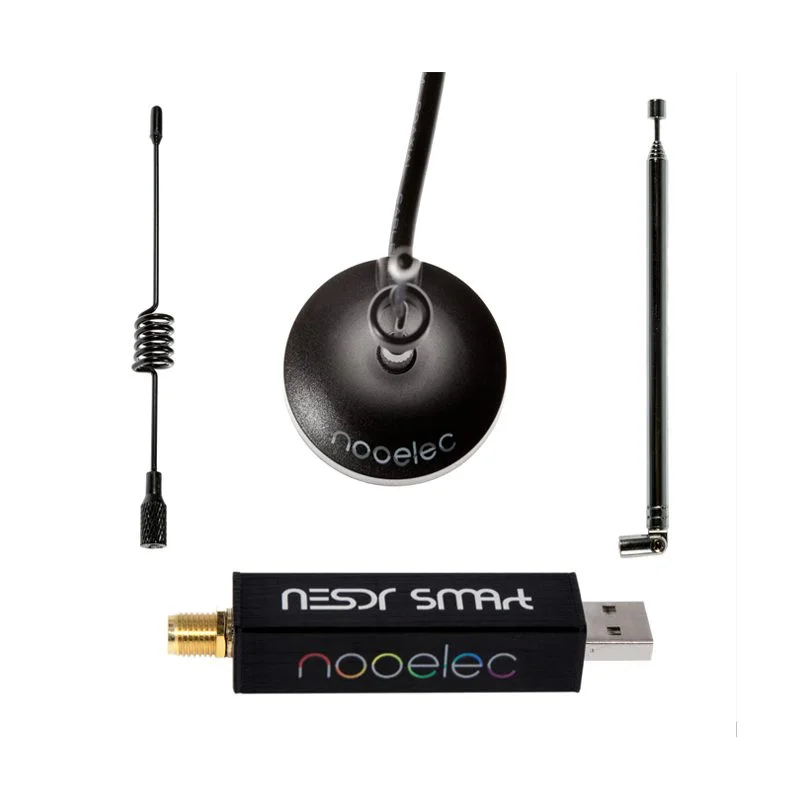
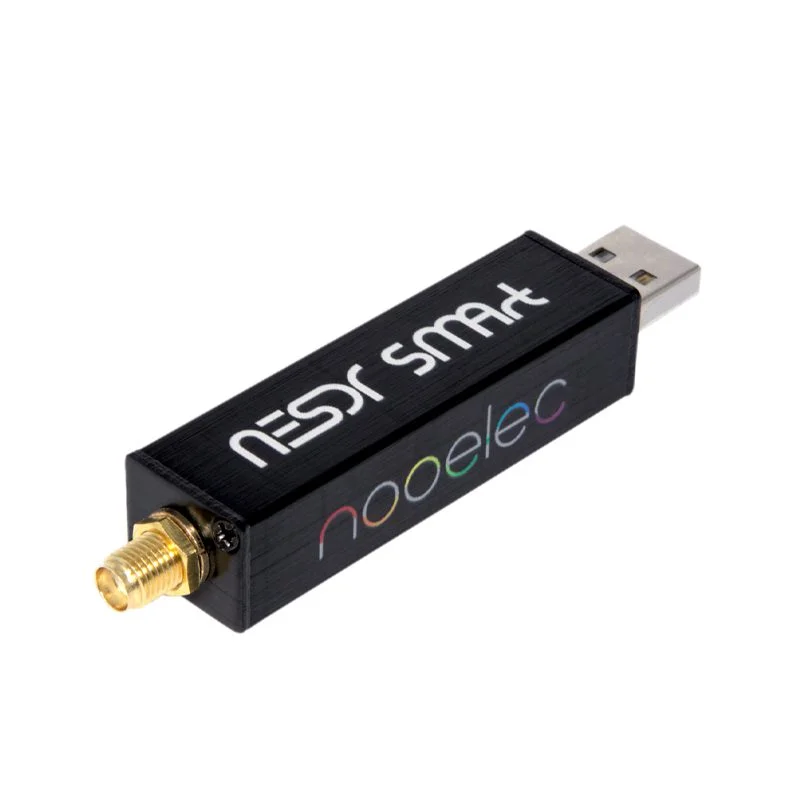
Nooelec NESDR SMArt v5 SDR - HF/VHF/UHF (100kHz-1.75GHz) RTL2832U & R820T2

₹6,399.00 (Inclusive of all taxes)
Out of Stock

The Nooelec NESDR SMArt v5 is a premium RTL-SDR Blog receiver based on the RTL2832U and R820T2 chipset, offering a wide 100kHz to 1.75GHz frequency range with up to 3.2MHz instantaneous bandwidth. It provides cross-platform compatibility with Windows, MacOS, Linux, and Android for software-defined radio applications.

Features

  • Wideband RF Receiver: Covers HF, VHF, and UHF bands from 100kHz to 1.75GHz, enabling reception of AM/FM, ADS-B, AIS, NOAA satellites, and more.
  • Enhanced Signal Performance: Features up to 15dB improved HF SNR and 6dB better VHF/UHF SNR compared to previous RTL-SDR Blog versions for clearer signal reception.
  • High-Precision Tuning: Equipped with a 0.5PPM TCXO for superior frequency stability and an average 4x improvement in tuning accuracy.
  • Compact & Robust Design: Slim brushed aluminum enclosure acts as an integrated heatsink, allowing multiple units to be stacked on embedded hosts like Raspberry Pi.
  • Direct Sampling for HF: Built-in direct sampling mode enables reception below 25MHz without an upconverter, though one is recommended for optimal HF performance.

Out of stock

Description

The Nooelec NESDR SMArt v5 SDR is a high-performance software-defined radio receiver engineered for makers, ham radio enthusiasts, and IoT developers. Its core architecture leverages the proven RTL2832U ADC and R820T2 tuner, enhanced with advanced signal conditioning and a precision temperature-compensated crystal oscillator (TCXO). This results in significantly improved signal-to-noise ratios across all bands, particularly in the challenging HF spectrum.

Power management is flexible, supporting a 3.3V to 5.5V input via USB with built-in EMI and ESD protection circuits. The compact, all-metal chassis provides effective thermal dissipation for stable long-term operation. With its expanded frequency下限 and direct sampling capability, it serves as a versatile RF front-end for spectrum monitoring, protocol analysis, and real-time signal processing applications on a wide range of computing platforms.

Key Features

  • Ultra-wide frequency coverage from 100kHz Long Wave up to 1.75GHz.
  • Major SNR improvements: Up to +15dB on HF, +6dB on VHF/UHF bands.
  • High-stability 0.5PPM TCXO ensures accurate, drift-free tuning.
  • Direct sampling mode for HF reception (below 25MHz) without additional hardware.
  • Compact aluminum enclosure with integrated heatsink for thermal management.
  • Cross-platform driver support for Windows, macOS, Linux, and Android.
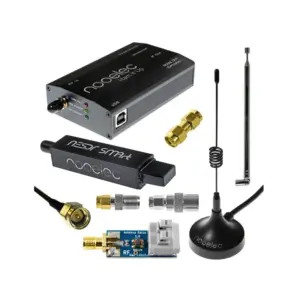
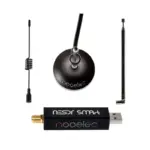
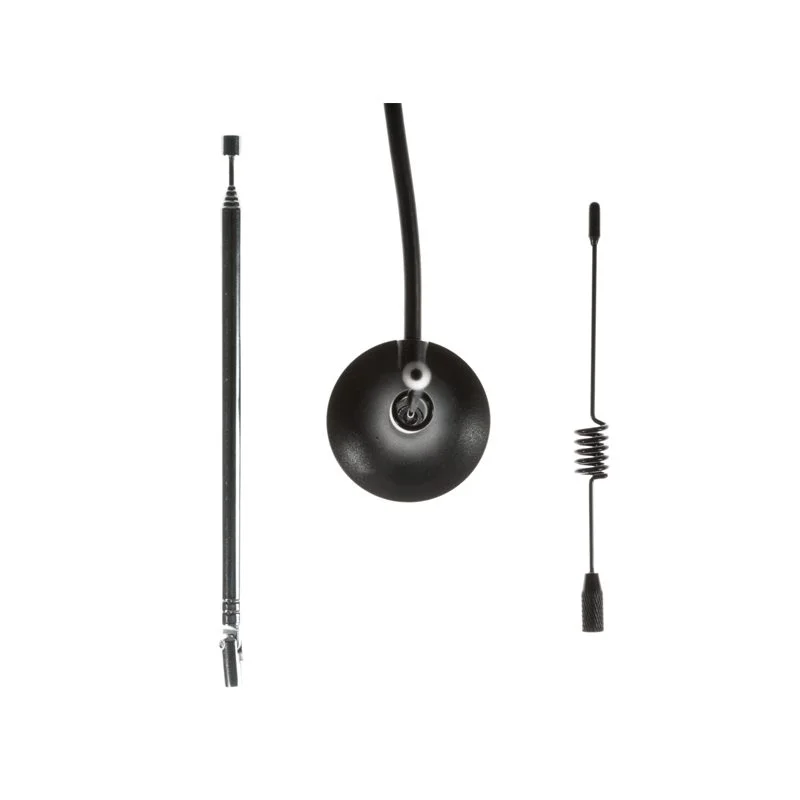
  • Includes versatile antenna kit with magnetic base, telescopic mast, and ISM-band whip.
  • USB-powered operation (3.3V-5.5V) with built-in EMI/ESD protection.

Applications

  • Amateur Radio (Ham) and Shortwave Listening.
  • Aircraft Tracking (ADS-B) and Marine Vessel Monitoring (AIS).
  • Weather Satellite Image Reception (NOAA, GOES).
  • RF Spectrum Analysis and Signal Monitoring.
  • Academic Research and Wireless Protocol Education.
  • IoT Device Testing and Signal Debugging.

Technical Specifications

RF Chipset / TunerRTL2832U & R820T2
Frequency Range100 kHz – 1.75 GHz
Instantaneous BandwidthUp to 3.2 MHz
Reference Oscillator0.5 PPM TCXO
Supply Voltage3.3V – 5.5V DC (USB)
InterfaceUSB 2.0
Antenna ConnectorSMA Female
Operating TemperatureNot Specified
Dimensions (L x W)70 mm x 40 mm
Weight27 g

Frequently Asked Questions

What software do I need to use the NESDR SMArt v5 SDR?

You need SDR software compatible with the RTL2832U driver. Popular options include SDR#, SDR++, Gqrx (Linux), or CubicSDR. First, install the appropriate Zadig drivers on Windows to replace the default USB driver. On Linux, packages like RTL-SDR Blog are typically available via your distribution's package manager. The device is then recognized as a software-defined radio source within your chosen application.

How do I receive HF signals below 25MHz with this SDR?

The v5 has a built-in direct sampling mode for HF. In your SDR software, you must enable the 'Direct Sampling (Q Branch)' input option, typically found in the device settings. For optimal performance, especially for weak signals, use a well-tuned HF antenna like a long wire or dipole, ideally connected through a 1:9 balun. For the best experience, Nooelec recommends using an external HF upconverter like the Ham It Up.

Can I power the SDR from a Raspberry Pi's USB port?

Yes, the NESDR SMArt v5 is designed for low-power USB operation and can be powered directly from a Raspberry Pi's USB 2.0 or 3.0 port, as it operates within the 3.3V to 5.5V range. Ensure your Pi's power supply is adequate, especially if running multiple peripherals. The compact form factor allows you to connect multiple SDRs side-by-side on a Pi for applications like phased array or multi-channel monitoring.

What is the purpose of the TCXO, and how does it help?

The TCXO (Temperature-Compensated Crystal Oscillator) provides a highly stable 0.5 PPM reference clock for the tuner. This greatly reduces frequency drift caused by temperature changes, which is critical for accurately tuning narrowband signals like digital ham radio modes or satellite telemetry. It ensures your tuned frequency remains locked, eliminating the need for constant manual correction during long monitoring sessions.

Package Includes

  • 1 x NESDR SMArt v5 SDR (Black Brushed Aluminum Enclosure)
  • 1 x Magnetic Antenna Base with 2m RG58 Cable
  • 1 x Telescopic Antenna Mast
  • 1 x 433MHz (ISM Band) Whip Antenna

Additional Information

Weight 0.027 kg
Dimensions 7 × 4 cm