SKU: IOWC-1445
📋 GST Invoice Available

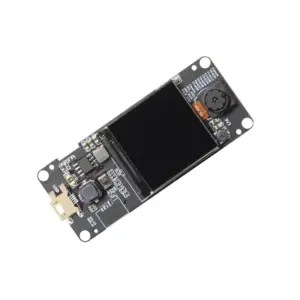
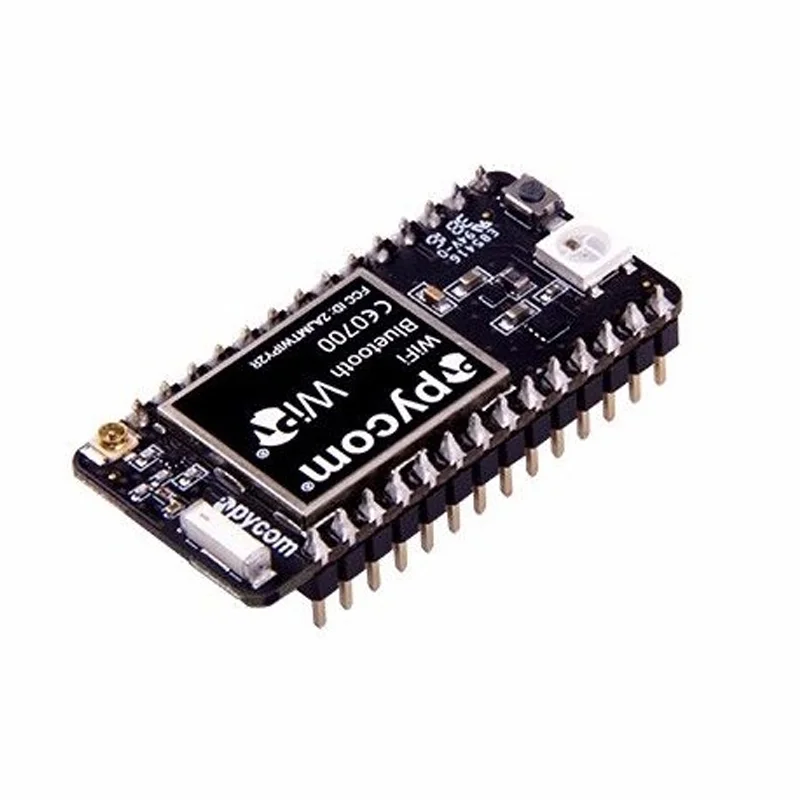
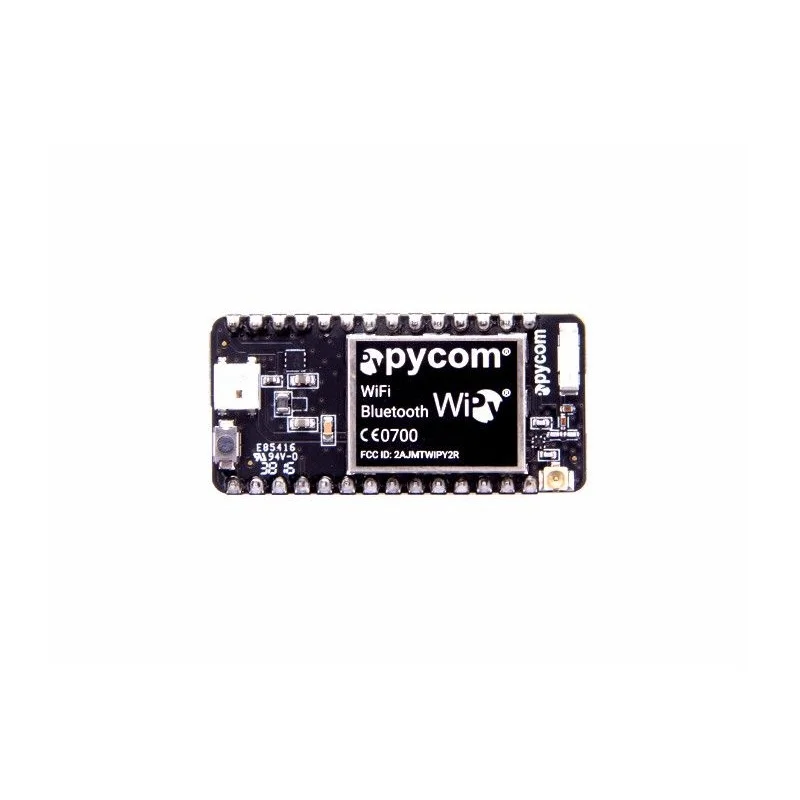
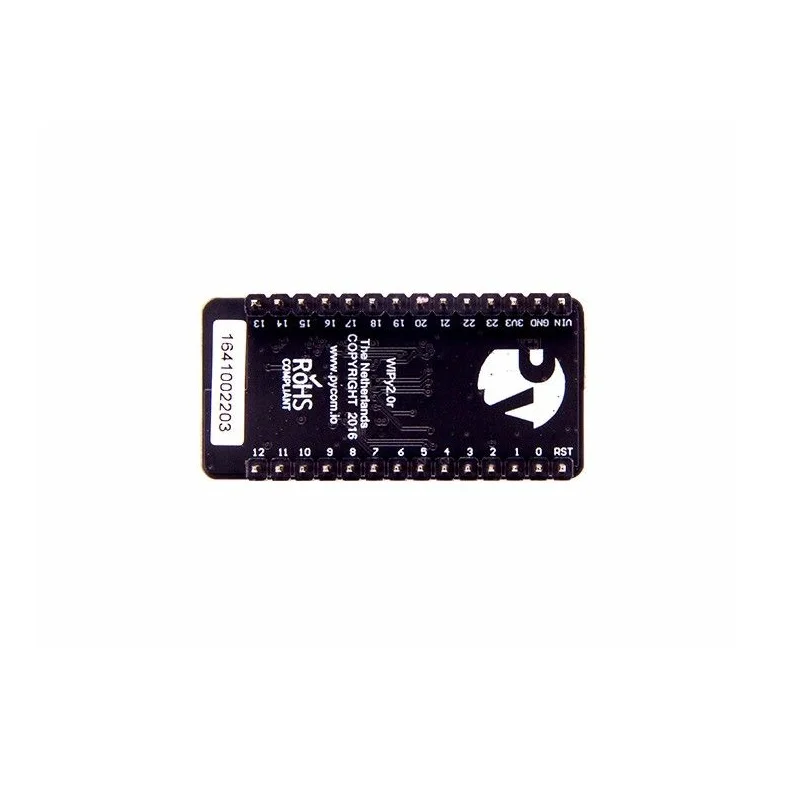
Pycom WiPy 2.0 WiFi-Bluetooth IoT Development Board

₹1,784.00 (Inclusive of all taxes)
Out of Stock

The Pycom WiPy 2.0 is a compact, MicroPython-native IoT development board built around the Espressif ESP32 dual-core chipset, featuring integrated 802.11b/g/n Wi-Fi with extended range and Bluetooth Low Energy for rapid wireless application prototyping.

Features

  • Espressif ESP32 dual-core processor with integrated 802.11b/g/n Wi-Fi and Bluetooth Low Energy/Classic.
  • Pre-loaded MicroPython firmware for rapid IoT development and deployment.
  • Extended 1km Wi-Fi range capability for long-distance sensor networks.
  • Ultra-low power architecture with a deep sleep coprocessor consuming only 25µA.
  • Rich I/O includes 2x UART, 2x SPI, I2C, I2S, up to 24 GPIOs, and a microSD card interface.

Out of stock

Description

The WiPy 2.0 by Pycom is a dedicated MicroPython development platform engineered for IoT connectivity. It leverages the powerful Espressif ESP32 System-on-Chip, which combines a dual-core Tensilica LX6 microprocessor with a fully integrated Wi-Fi and Bluetooth radio. This architecture dedicates one processor core to network management and the IPv6 stack, freeing the main application processor for user code execution, resulting in efficient, responsive wireless applications.

Designed for low-power operation, the board includes an ultra-low-power (ULP) coprocessor capable of monitoring sensors and peripherals during deep sleep, drawing a mere 25µA. This makes it ideal for battery-powered remote sensing nodes. With its compact form factor that fits a standard breadboard, 4MB of external flash, and comprehensive peripheral set including hardware encryption accelerators, the WiPy 2.0 provides a complete, production-ready foundation for building secure, connected devices.

Key Features

  • MicroPython-enabled platform for fast IoT prototyping and deployment.
  • Espressif ESP32 dual-core processor with hardware floating-point acceleration.
  • Integrated 802.11b/g/n Wi-Fi with an advertised 1km operational range.
  • Bluetooth 4.2 supporting both Classic and Low Energy (BLE) modes.
  • Ultra-low-power deep sleep mode managed by a ULP coprocessor (25µA).
  • Comprehensive security suite with SSL/TLS, WPA2 Enterprise, and hardware AES/SHA encryption.
  • Extensive I/O interfaces: 2x UART, 2x SPI, I2C, I2S, PWM, and 8x 12-bit ADC channels.
  • 4MB external flash memory for application code and file storage.

Applications

  • Long-range wireless sensor nodes for environmental monitoring (temperature, humidity, air quality).
  • Smart home automation hubs and connected appliance controllers.
  • Industrial IoT (IIoT) telemetry and asset condition monitoring.
  • Prototyping wearable devices with BLE connectivity.
  • Remote data logging units with microSD card storage.

Technical Specifications

Microcontroller / SoCEspressif ESP32 Dual-Core
Wireless Protocols802.11b/g/n Wi-Fi, Bluetooth 4.2 Classic & BLE
Frequency Range2.4 GHz
RF Transmit PowerNot Specified
Supply Voltage3.3V – 5.5V
Operating CurrentNot Specified
Deep Sleep Current~25 µA (ULP Coprocessor Active)
Interfaces2x UART, 2x SPI, I2C, I2S, Up to 24 GPIO, microSD
Antenna ConnectorIntegrated PCB Antenna
Operating TemperatureNot Specified
Dimensions42mm (Width) - Other dimensions not specified

Frequently Asked Questions

How do I start programming the WiPy 2.0?

The board comes pre-flashed with MicroPython. Connect via USB to a serial terminal at 115200 baud. Use tools like Pycom's Pymakr plugin for VS Code or Atom to edit and upload scripts directly over Wi-Fi or USB. You can also use the WebREPL or FTP for file management. Basic AT commands are available, but the primary development is done in MicroPython, leveraging its extensive libraries for networking and hardware control.

What is the power supply requirement and how do I achieve low power operation?

The WiPy 2.0 accepts 3.3V to 5.5V DC input. For battery operation, connect a LiPo or 3xAA battery pack to the VIN pin. To minimize consumption, use the machine.deepsleep() function in MicroPython, which activates the ultra-low-power coprocessor. In this mode, the main CPUs are off, and only the RTC and ULP coprocessor remain active, drawing approximately 25µA while it can still monitor GPIOs or ADCs, waking the system based on predefined thresholds or timers.

Can I use the WiPy 2.0 as a Wi-Fi access point or station?

Yes, the MicroPython network module provides full support for both Wi-Fi station (STA) and access point (AP) modes. You can connect it to an existing network as a client or create its own hotspot for direct device communication. The ESP32's networking stack also supports simultaneous STA/AP mode. For long-range links up to 1km, ensure you have a clear line of sight and configure the Wi-Fi power saving modes appropriately in your script to optimize the RF output.

Package Includes

  • 1 x Pycom WiPy 2.0 WiFi-Bluetooth IoT Development Board

Additional Information

Weight 0.0035 kg
Dimensions 4.2 cm