SKU: IOWC-1413
📋 GST Invoice Available

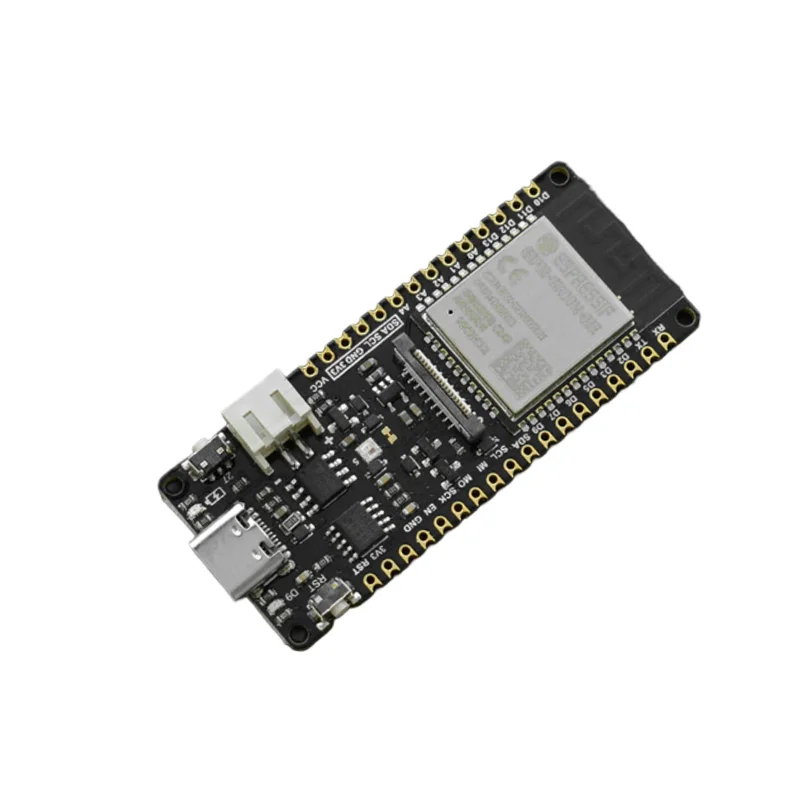
DFRobot FireBeetle 2 ESP32-E IoT Development Board

₹879.00 (Inclusive of all taxes)
Out of Stock

The DFRobot FireBeetle 2 ESP32-E is an ultra-low-power IoT development board featuring a dual-core ESP32 for Wi-Fi and Bluetooth 4.2 connectivity, designed for battery-powered smart home and industrial applications with Arduino and MicroPython support.

Features

  • Ultra-low-power ESP32 dual-core processor with deep sleep current as low as 10µA for long-lasting battery operation.
  • Integrated Wi-Fi (802.11 b/g/n) and Bluetooth 4.2 (BR/EDR + BLE) dual-mode wireless connectivity for versatile IoT communication.
  • Onboard charging circuit and PH2.0 connector for direct Li-ion battery connection and USB charging.
  • Stamp-hole PCB edge design for easy embedding into custom PCBs, accelerating prototyping and product integration.
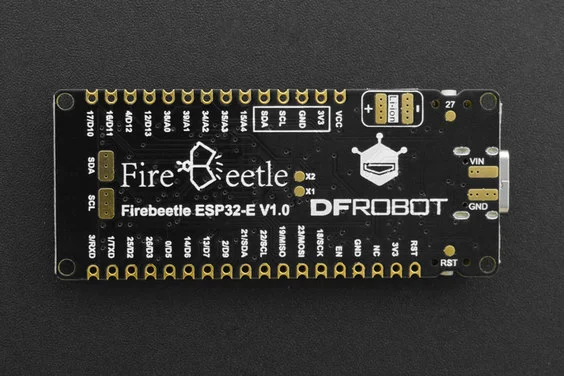
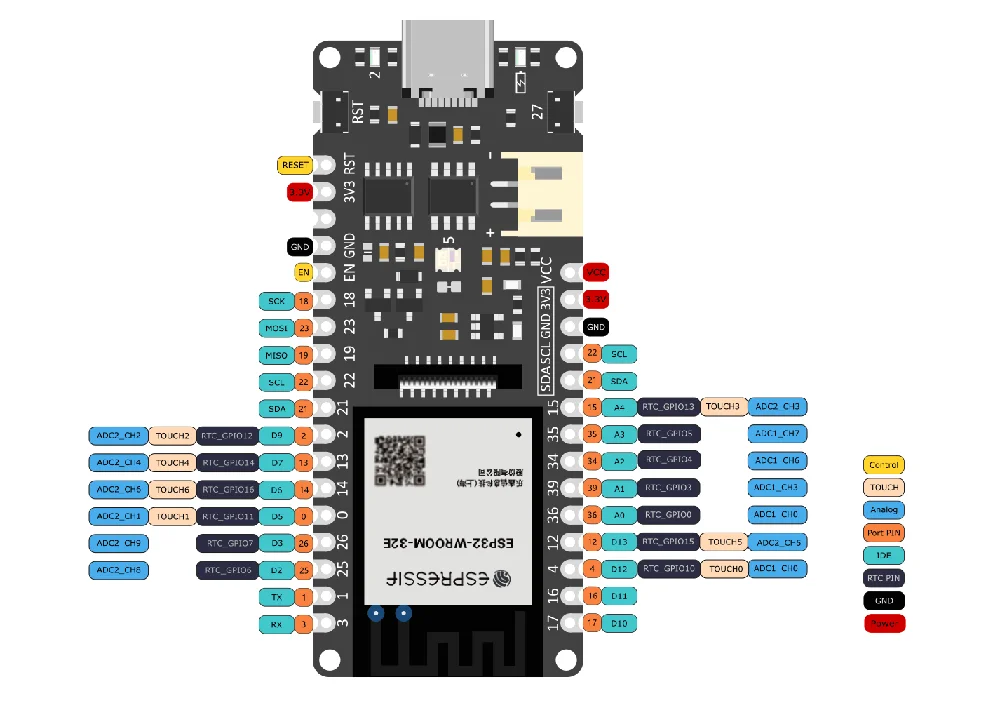
  • Comprehensive I/O set including 10 digital, 5 analog, SPI, I2C, I2S, and a dedicated GDI port for displays.

Out of stock

Description

The DFRobot FireBeetle 2 ESP32-E is engineered for power-sensitive IoT deployments, leveraging the ESP32’s dual-core Tensilica LX6 processor running at 240 MHz. Its hallmark is an exceptional deep sleep power consumption of just 10µA, enabled by advanced power gating and a dedicated 32.768 kHz RTC crystal, making it ideal for solar-powered or long-term battery sensing nodes. The board integrates a complete 2.4 GHz RF front-end with support for 802.11n Wi-Fi up to 150 Mbps and Bluetooth 4.2 protocols, providing robust wireless links for data telemetry and device control.

Hardware integration is streamlined with an onboard switching regulator accepting 3.3V to 5.5V inputs, a lithium battery management circuit, and a FireBeetle V2 series-compatible connector ecosystem. The stamp-hole perimeter allows the module to be soldered directly as a system-on-module (SOM) into end-product PCBs, significantly reducing final BOM cost and design time. Development is supported through the Arduino IDE, with forthcoming MicroPython and Scratch programming, backed by DFRobot’s extensive Gravity sensor library and application tutorials for rapid prototyping.

Key Features

  • Ultra-low-power design with ESP32 dual-core processor achieving 10µA deep sleep current for extended battery life.
  • Integrated 2.4 GHz Wi-Fi (802.11 b/g/n) and Bluetooth 4.2 (BR/EDR & BLE) for dual-mode wireless connectivity.
  • Onboard switching regulator and Li-ion battery charging circuit with PH2.0 connector for portable applications.
  • Stamp-hole (castellated) edge design allows surface-mount embedding into custom PCB layouts as a compact system-on-module.
  • Comprehensive I/O breakout including digital, analog, SPI, I2C, I2S interfaces and a dedicated GDI port for displays.
  • Wide operating temperature range (-40°C to +85°C) suitable for industrial and outdoor environmental monitoring.
  • Full Arduino IDE compatibility with extensive library support and planned MicroPython/Scratch programming environments.
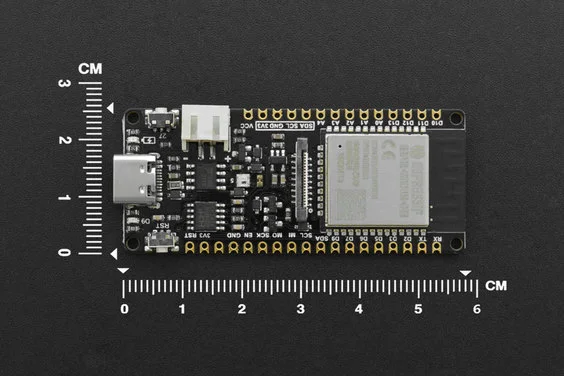
  • Compact form factor (25.4mm x 60mm) with 2.0mm mounting holes for secure mechanical integration.

Applications

  • Battery-powered smart home sensors and automation nodes (motion, environment, lighting control).
  • Industrial IoT (IIoT) telemetry for equipment monitoring, predictive maintenance, and wireless data logging.
  • Wearable and portable health/fitness devices leveraging Bluetooth Low Energy connectivity.
  • Agricultural and environmental sensing networks for soil moisture, temperature, and humidity tracking.
  • Prototyping and embedding as a wireless system-on-module in custom PCB designs for product development.

Technical Specifications

Microcontroller/SoCESP32 Dual-Core Tensilica LX6
Wireless ProtocolsWi-Fi 802.11 b/g/n, Bluetooth 4.2 BR/EDR & BLE
Frequency Range2.4 GHz ~ 2.5 GHz
CPU Clock Speed240 MHz (adjustable)
Flash Memory32 Mbit (4 MB)
SRAM520 KB
Supply Voltage3.3V ~ 5.5V DC Input
Operating Current~80 mA (average active)
Deep Sleep Current10 µA (typical)
Digital I/O10 pins (Arduino default)
Analog Input5 channels (Arduino default)
InterfacesSPI x1, I2C x1, I2S x1, GDI Display Port
Battery ConnectorPH2.0 for Li-ion
On-chip Clock40 MHz crystal, 32.768 kHz RTC crystal
Operating Temperature-40°C to +85°C
Dimensions (LxW)60 mm x 25.4 mm

Frequently Asked Questions

How do I power the FireBeetle 2 ESP32-E board for a battery-operated project?

Connect a 3.7V Li-ion or LiPo battery to the onboard PH2.0 connector. The integrated charging circuit manages USB or external 5V charging. For lowest power, ensure you configure the ESP32's deep sleep modes in your Arduino sketch, utilizing the 32.768 kHz RTC for wake-up timers to achieve the rated 10µA sleep current.

What programming environments are supported for the FireBeetle 2 ESP32-E?

The board is fully supported in the Arduino IDE using the ESP32 core by Espressif. You must install the board package via the Boards Manager. DFRobot also provides extensive libraries and examples. Support for MicroPython and Scratch graphical programming is announced for future firmware updates.

Can I embed this board directly into a custom PCB design?

Yes, the board features castellated stamp-hole edges along its perimeter. You can surface-mount solder it as a module onto your main PCB, treating its plated through-holes as SMD pads. This saves space and component count, but ensure your design provides 3.3V power and respects the I/O pin voltage levels.

What is the maximum transmit power and Wi-Fi range of the onboard ESP32?

The integrated ESP32 chip typically provides a programmable RF output power up to +20 dBm. Practical indoor range can exceed 100 meters with a clear line of sight, but this is highly dependent on antenna design, environmental obstacles, and interference. Use an external antenna via the IPEX connector footprint if populated for improved performance.

Package Includes

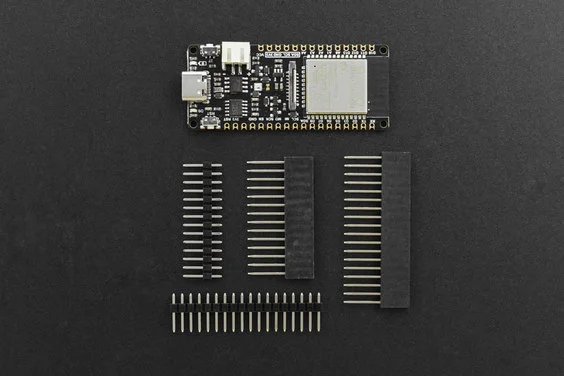
  • 1 x DFRobot FireBeetle 2 ESP32-E IoT Development Board

Additional Information

Weight 0.02 kg
Dimensions 6 × 2.54 cm